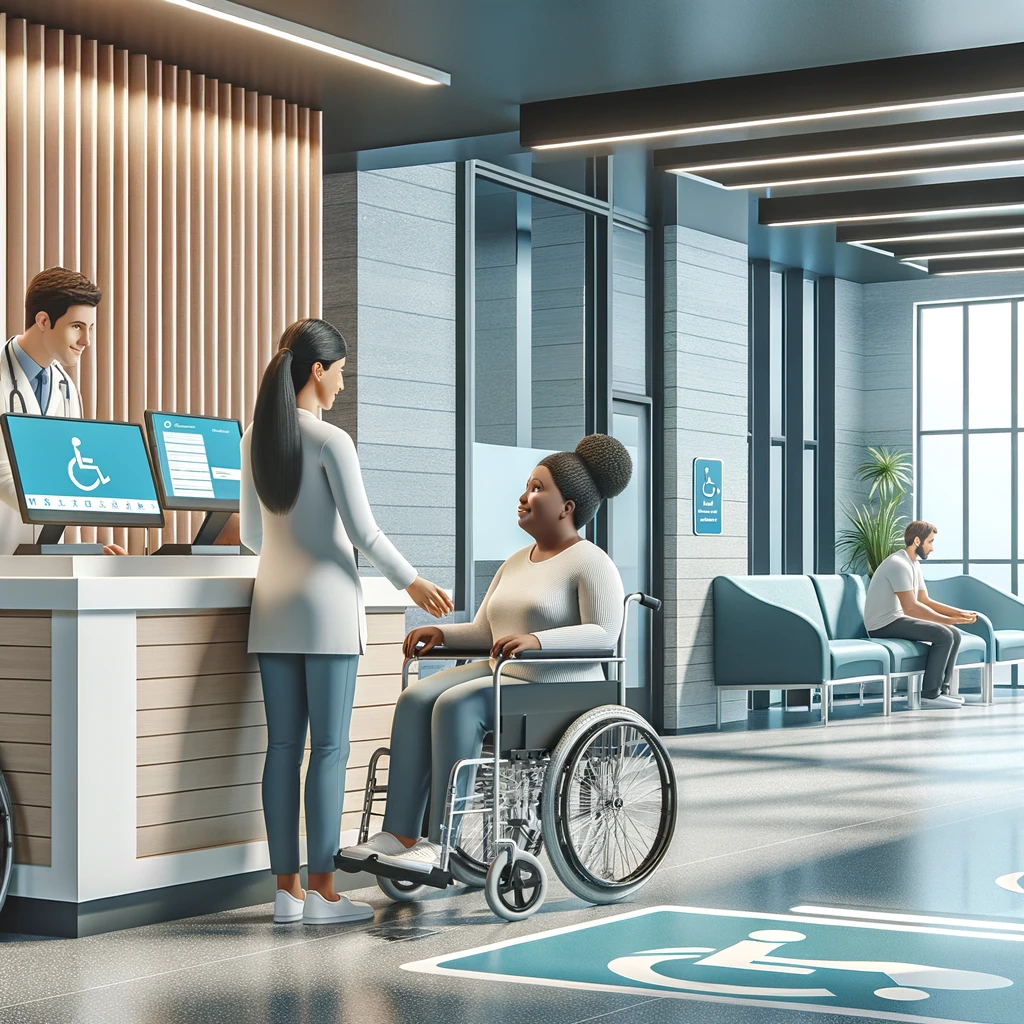
The Americans with Disabilities Act (ADA) is a landmark civil rights legislation enacted in 1990 that seeks to prohibit discrimination against individuals with disabilities in all areas of public life, including jobs, schools, transportation, and all public and private places that are open to the general public. As healthcare becomes increasingly sophisticated, individuals with disabilities encounter unique challenges, underscoring the need for the ADA’s applications in these advanced scenarios.
Navigating the intricacies of ADA compliance in healthcare scenarios can be daunting for both healthcare providers and patients. For patients, it ensures rights and access to necessary care, while healthcare providers must understand their obligations under the ADA to provide these rights. From high-stakes surgeries to routine medical visits, every interaction is governed by principles codified within the ADA.
Advanced healthcare scenarios often involve complex medical technologies and sophisticated procedures, which can sometimes unintentionally impede accessibility. This article explores ADA rights in these advanced healthcare scenarios, helping to ensure that advancements in medical technology and practice do not inadvertently marginalize patients with disabilities. This exploration will include discussions on the necessary balance between cutting-edge medical practices and fundamental rights provided by the ADA.
Accessibility in Cutting-Edge Medical Technologies
One of the paramount concerns in advanced healthcare is the accessibility of cutting-edge medical technologies for individuals with disabilities. As the medical field continues to evolve, breakthroughs in technology offer new hope for improved treatment outcomes; however, they may also present new barriers. The ADA mandates that medical equipment and diagnostic tools be accessible and usable by people with disabilities.
For example, advanced imaging technologies such as MRIs, CT Scans, and even newer diagnostic tools need to be physically accessible to patients with mobility impairments. This encompasses considerations like the height of examination tables, accessibility of control panels, and the ability of the equipment to accommodate various assistive devices. Rehabilitation centers leveraging robotic assistance and AI for physical therapy must ensure that their scenarios are adaptable to people of different abilities.
Additionally, there is an imperative to ensure that software and digital interfaces meet accessibility standards. This involves speech-to-text capabilities for patients who cannot use traditional input methods, and simplified interfaces for those with cognitive disabilities. Ultimately, the healthcare industry must constantly innovate while keeping inclusivity at the forefront to truly fulfill the spirit of the ADA.
Navigating Communication Barriers in Healthcare
Communication is a cornerstone of effective healthcare, and yet it poses significant challenges in advanced medical settings for individuals with disabilities. The ADA stipulates that healthcare providers must ensure effective communication with patients with disabilities, which means providing appropriate aids and services to ensure that they can understand and convey vital health information.
For example, patients who are deaf or hard of hearing may require sign language interpreters, real-time captioning, or telecommunications devices for the deaf (TDD). For patients with vision impairments, this might include providing materials in Braille, large print, or accessible electronic formats. In the fast-paced environment of a hospital, these accommodations might sometimes be overlooked, requiring robust systems and staff training to ensure compliance.
Moreover, as telehealth becomes more prevalent, it is critical that these platforms are accessible. Video conferencing software should support captions and have compatibility with assistive technology. Healthcare providers can foster better communication by regularly seeking feedback from patients on their communication preferences and continuously revisiting policies to incorporate new technologies and methodologies.
Legal Implications and Case Studies
The application of ADA in healthcare is robustly supported by case law which helps delineate clearer guidelines for compliance. Examining landmark cases provides educational value for both patients and healthcare providers. These cases highlight the necessity of unwavering compliance with ADA regulations to prevent discrimination and ensure equal access.
One pertinent case is the U.S. Department of Justice’s settlement agreements with healthcare entities that failed to provide appropriate sign language interpreters for hearing-impaired patients. Such settlements underscore the legal repercussions and the moral imperative for medical facilities to provide necessary accommodations.
Analyzing these cases can offer invaluable lessons. They highlight common pitfalls and reinforce the critical importance of institutional policies that prioritize ADA compliance from the top down. Reviewing these cases also provides a benchmark for healthcare institutions to measure their policies and practices against established legal standards.
Ensuring Emergency Preparedness for Patients with Disabilities
Another critical area under the ADA’s purview is emergency preparedness and response. Healthcare facilities must ensure that their emergency protocols and facilities can accommodate patients with disabilities. This responsibility extends to regular emergency drills to ensure that all staff members are trained and prepared to assist patients with disabilities effectively.
Emergency rooms and facilities need to be equipped with reasonable modifications to accommodate individuals with disabilities during emergencies. This could include considering the availability of accessible evacuation routes, appropriate signage in Braille, and ensuring that emergency communication systems are inclusive.
Healthcare providers are urged to incorporate feedback from disability advocacy groups when designing their emergency preparedness plans. By involving the very individuals these plans intend to protect, providers ensure that their strategies are both practical and effective.
Role of Healthcare Providers and Training
Ensuring ADA compliance in advanced healthcare scenarios is not solely a matter of adherence to the law—it also involves cultivating a culture of inclusivity and awareness among healthcare providers. This begins with comprehensive training programs that educate staff on the specific needs of patients with disabilities and the best practices to accommodate them.
Healthcare professionals, including doctors, nurses, and administrative staff, should receive regular training on ADA requirements. This training should cover everything from the use of accessible medical equipment to effective communication techniques and emergency preparedness. By building a knowledgeable and empathetic workforce, healthcare facilities can better serve their diverse patient populations.
Additionally, having a dedicated ADA coordinator or compliance officer within the healthcare facility can ensure ongoing adherence to ADA standards. This individual can serve as a resource for staff, address grievances, and ensure that the facility stays updated with the latest ADA guidelines and technologies.
Conclusion
The ADA has been instrumental in advocating for the rights of individuals with disabilities, particularly in the complex and ever-evolving landscape of healthcare. As medical technologies and practices advance, it is crucial that these advancements remain inclusive, ensuring that patients with disabilities are not left behind. From making cutting-edge medical technologies accessible to ensuring effective communication, ADA compliance plays a vital role in bridging the gap between innovation and inclusivity.
By focusing on legal implications and learning from case studies, healthcare institutions can better navigate the complexities of ADA compliance. Moreover, robust emergency preparedness protocols and comprehensive staff training are essential in creating an inclusive healthcare environment that meets the needs of all patients.
The ultimate goal is to create a healthcare system that not only complies with the ADA but also truly embodies the spirit of inclusivity and equality. This involves ongoing efforts, continuous learning, and a commitment to adapting to new challenges and opportunities as they arise.
By championing ADA rights, healthcare providers can ensure that all patients, irrespective of their disabilities, receive the highest standard of care and support, reaffirming the values of dignity, respect, and equal opportunity that lie at the heart of the ADA.
Frequently Asked Questions
1. What is the significance of the ADA in healthcare settings?
The Americans with Disabilities Act (ADA) plays a critical role in ensuring that people with disabilities have equal access to healthcare services. It mandates that healthcare facilities accommodate individuals with disabilities, ensuring that physical and non-physical barriers do not hinder access. This includes providing appropriate communication aids for patients with hearing impairments, such as sign language interpreters, or ensuring that medical equipment is accessible to those with mobility challenges. The ADA helps create an inclusive environment where discrimination is actively combated, and individuals with disabilities receive the same level of care as those without disabilities. It covers everything from the accessibility of hospital facilities and equipment to the attitudes and training of healthcare staff.
2. How does the ADA influence the accessibility of medical equipment?
The ADA requires that medical equipment in healthcare settings be accessible to individuals with disabilities. This can involve equipment like examination tables and chairs, scales, and diagnostic tools. For instance, some patients may have difficulty transferring onto a standard exam table, so facilities are encouraged to have height-adjustable tables or patient lifts available. Similarly, scales should accommodate wheelchair users. It’s vital that healthcare providers are aware of and comply with these requirements to ensure their equipment doesn’t pose accessibility barriers. This is part of a broader requirement to make facilities not only physically accessible but also functionally usable for all patients, regardless of disability.
3. What are common communication barriers that the ADA addresses in healthcare situations?
Communication is a vital element in healthcare, and the ADA mandates that effective communication is provided for people with disabilities. This includes ensuring that healthcare providers can communicate with patients who have hearing, vision, or speech impairments. For example, hospitals must provide sign language interpreters or text relay services for patients who are deaf or hard of hearing. They may also need to offer materials in braille or large print for patients with visual impairments. It’s about making sure that all patients understand their medical condition, treatment options, and care instructions, resulting in better outcomes and patient satisfaction.
4. How does the ADA impact logistics and transportation to and from healthcare facilities?
Transportation is a significant barrier for many individuals with disabilities, impacting their ability to access necessary healthcare services. The ADA addresses this by requiring public transportation systems to accommodate individuals with disabilities, providing accessible buses, trains, or alternative transit solutions like paratransit services. Transportation providers must also ensure their services are usable by those with mobility devices or based on other needs, like chronic illness-related fatigue or cognitive disabilities. Ensuring accessible transportation helps patients attend routine appointments, get emergency medical care when needed, and maintain overall health by removing a major barrier to healthcare access.
5. What should healthcare providers do if accommodating a disability appears infeasible?
There are situations where accommodating a specific disability might seem difficult or impractical. In these cases, the ADA doesn’t require accommodations that would fundamentally alter the nature of the service or result in undue hardship. However, it’s crucial for healthcare providers to engage in a dialogue with the patient, exploring all alternative methods or equipment that might help. This might involve consulting with experts on disability and accessibility or reaching out to organizations specializing in assistive technology. Providers should document their efforts to find a reasonable accommodation and ensure they’ve genuinely considered practical solutions to support the patient. The key is showing a commitment to inclusion and equity, which is the heart of the ADA.