Navigating public spaces can be a significant challenge for individuals with disabilities. The Americans with Disabilities Act (ADA), enacted in 1990, plays a crucial role in providing equal rights and access to public accommodations for people with disabilities. This comprehensive article aims to unravel the intricacies of the ADA, focusing on public accommodations, and provides an easy-to-understand guide on the rights and protections offered by the Act.
Understanding the ADA
The ADA is a civil rights law that prohibits discrimination against individuals with disabilities in various public and private spaces. It is structured into five titles, each addressing different areas of public life:
- Title I – Employment: Protects individuals with disabilities in the workplace.
- Title II – Public Services: Addresses accessibility and non-discrimination in all public services offered by state and local governments.
- Title III – Public Accommodations: Ensures access to facilities such as restaurants, hotels, theaters, and more.
- Title IV – Telecommunications: Facilitates communication access for individuals with hearing or speech disabilities.
- Title V – Miscellaneous Provisions: Contains miscellaneous provisions relating to the ADA.
Title III: Public Accommodations
A cornerstone of the ADA, Title III, specifically targets public accommodations. It mandates that places of public accommodation, like restaurants, retail stores, hotels, movie theaters, private schools, convention centers, doctors’ offices, homeless shelters, transportation depots, zoos, funeral homes, and day care centers, should be accessible to people with disabilities. This includes not only physical access but also modifications and adjustments necessary to accommodate individuals with disabilities effectively.
Accessibility Requirements
Under Title III, new constructions and modifications to existing structures must meet specific accessibility standards. This includes considerations for wheelchair accessibility, signage, braille indicators, and more. The 2010 ADA Standards for Accessible Design provides detailed guidance on these requirements.
Reasonable Modifications
Businesses are required to make reasonable modifications in their usual practices to accommodate people with disabilities. This could involve altering policies, practices, and procedures or providing auxiliary aids and services. This is crucial for effective communication, especially for individuals with hearing, vision, or speech disabilities.
Rights in Employment and Transportation
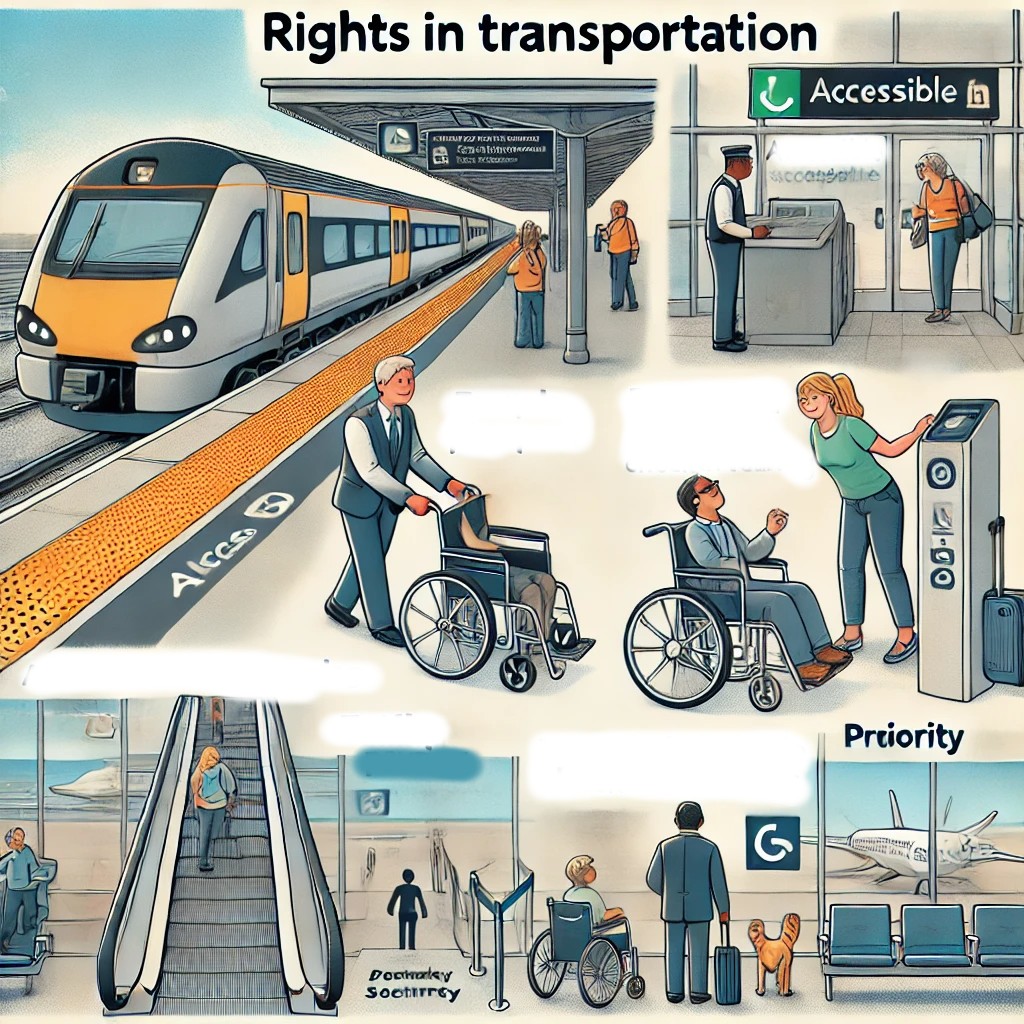
Under Title I, employers are required to provide reasonable accommodations for employees with disabilities, which could include modifications to the work environment or manner in which a job is performed. Similarly, Title II covers public transportation, ensuring that public transit systems are accessible to individuals with disabilities.
Enforcing the ADA
Enforcement of the ADA is a collective effort by various federal agencies:
- The U.S. Equal Employment Opportunity Commission (EEOC) enforces Title I.
- The U.S. Department of Justice (DOJ) is responsible for Titles II and III.
- The Federal Communications Commission (FCC) oversees Title IV.
- The U.S. Department of Transportation handles ADA compliance in public transportation.
Filing a Complaint
Individuals who believe they have been discriminated against can file a complaint with the relevant federal agency. The ADA Information Line provides assistance and information regarding the process.
The ADA’s impact on public accommodations is profound, ensuring that individuals with disabilities have equal access and opportunities in society. By understanding the rights and protections offered under the ADA, individuals can better navigate and access public spaces, fostering an inclusive and equitable environment for all.

The Scope and Application of the ADA
Broad Coverage and Its Impact
The ADA’s broad coverage extends beyond physical disabilities, including mental and neurological conditions. This expansive view ensures protection for a wide range of individuals, encompassing conditions like ADHD, dyslexia, diabetes, depression, and more. The Act emphasizes the concept that a disability does not have to be severe or visible to be valid; it simply needs to significantly impact one or more major life activities, such as walking, seeing, hearing, learning, reading, concentrating, thinking, communicating, working, caring for oneself, and interacting with others.
The ADA and Digital Accessibility
In the digital age, the ADA’s reach extends to websites and online services. This means that digital spaces are also considered public accommodations, and they must be accessible to individuals with disabilities. For example, websites should be designed to be accessible to those with visual or hearing impairments.
Practical Implementation of ADA in Public Spaces
Businesses and Their Responsibilities
Businesses and service providers are required to proactively make their services accessible. This can range from physical modifications like wheelchair ramps and accessible restrooms to policy adjustments like permitting service animals. The Act encourages businesses to consider the unique needs of individuals with disabilities and find ways to serve them effectively.
Public Transportation
Public transportation systems, whether operated by government or private entities, are required to accommodate people with disabilities. This includes ensuring accessible buses, trains, and stations, and providing necessary assistance for boarding and navigating the systems.
Access to Education
Schools, both public and private, must adhere to the ADA. They are required to provide reasonable accommodations to students with disabilities, ensuring that educational opportunities are equally accessible to all. This is crucial in creating an inclusive educational environment.
Challenges and Limitations
While the ADA has significantly improved accessibility and inclusivity, challenges remain. Small businesses, particularly those with fewer than 15 employees, often struggle with the nuances of compliance. Moreover, there are still gaps in awareness and implementation, which can lead to unintentional discrimination or inadequate accommodation.
The Future of ADA Compliance
Evolving Standards
As society and technology evolve, so too do the standards and expectations of accessibility. The ADA is not a static law; it adapts to new developments and challenges, ensuring that its protections remain relevant and effective.
Community Involvement and Advocacy
Community involvement and advocacy play a crucial role in the effectiveness of the ADA. Individuals, organizations, and advocates must continue to work together to identify areas of need, promote awareness, and ensure that the rights of people with disabilities are upheld.
Conclusion
The ADA is a dynamic and vital law that has fundamentally transformed public accommodations in America. It serves not only as a legal framework but as a guiding principle for creating a more inclusive and accessible society. Understanding and implementing its provisions is crucial for businesses, governments, and individuals alike, ensuring that everyone, regardless of their abilities, can participate fully in public life.
References
- Americans with Disabilities Act. ADA.gov. Available from: https://www.ada.gov/
- An Overview of the Americans With Disabilities Act. ADA National Network. Available from: https://adata.org/
- Americans with Disabilities Act. U.S. Department of Labor. Available from: https://www.dol.gov/
- What is the Americans with Disabilities Act (ADA)? Understood. Available from: https://www.understood.org/
- Americans with Disabilities Act (ADA) | History & Facts. Britannica. Available from: https://www.britannica.com/topic/Americans-with-Disabilities-Act
Frequently Asked Questions
1. What is the Americans with Disabilities Act (ADA) and what does it cover in public spaces?
The Americans with Disabilities Act (ADA), enacted in 1990, is landmark legislation that aims to eliminate discrimination against individuals with disabilities. It ensures that people with disabilities have equal opportunities to participate in society, including access to public spaces, employment, and government services. The ADA covers a broad range of areas, but in terms of public spaces, it specifically addresses public accommodations—facilities that serve the public, like restaurants, hotels, theaters, retail stores, and more.
The Act requires these public spaces to be accessible to individuals with disabilities. This means they need to have features like ramps, wider doors, accessible restrooms, and appropriate signage for people with visual impairments. It also means that policies must be in place to ensure equal access, such as allowing service animals in public facilities and providing auxiliary aids and services, like interpreters or assistive listening systems, for people who are deaf or hard of hearing.
2. Who is responsible for ensuring ADA compliance in public spaces, and what are some common examples of accommodations that may be required under the ADA?
Responsibility for ADA compliance in public spaces falls on the entities that provide goods and services to the public. This includes businesses, government agencies, and nonprofit organizations that serve the public. They are required to make their facilities accessible and to not discriminate based on disability.
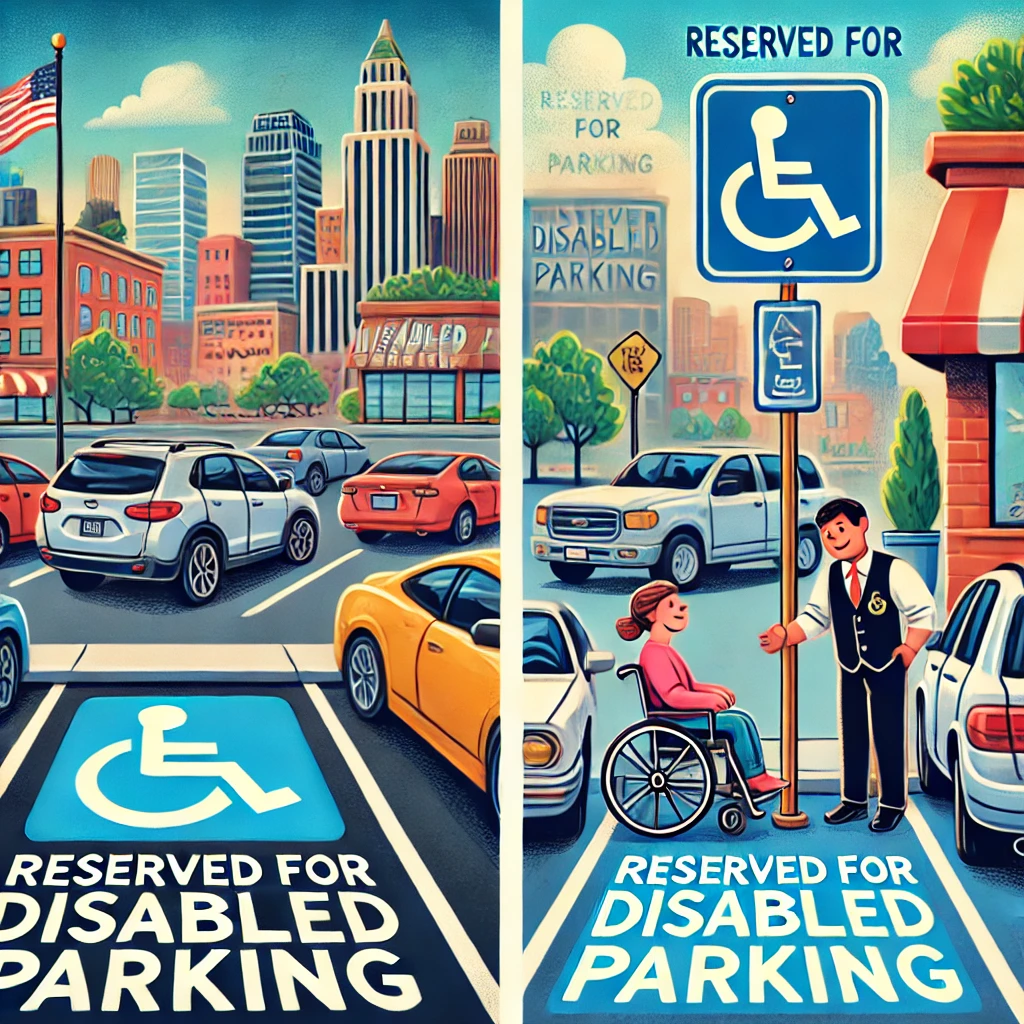
Common examples of required accommodations include installing ramps or elevators to make buildings wheelchair accessible, modifying policies to allow service animals, ensuring parking spaces are accessible, providing Braille or raised-letter signs for individuals with visual impairments, and offering assistive communication devices or interpreters for those who are deaf or hard of hearing. The goal is to ensure that people with disabilities have equal access to public accommodations and can utilize them independently.
3. How does the ADA address communication barriers in public spaces?
The ADA recognizes the importance of effective communication for people with disabilities. Title III of the ADA requires public accommodations to provide appropriate auxiliary aids and services where necessary to ensure effective communication with people who have hearing, vision, or speech disabilities. This could include providing qualified interpreters, assistive listening devices, or communication boards, depending on the situation and the individual’s needs.
For example, a movie theater may provide captioning systems or audio description services for individuals who are deaf or have low vision, ensuring they can enjoy the movie experience fully. Similarly, a hospital might provide a video relay service or a sign language interpreter for a patient who is deaf, thus ensuring that the patient can communicate effectively with healthcare providers.
4. What steps should individuals take if they encounter non-compliance with the ADA in a public space?
If an individual encounters a situation where a public space is not compliant with the ADA, there are several steps they can take. First, they should inform the person in charge of the facility, such as a manager or business owner, as they may be unaware of the issue. Often, non-compliance is due to a lack of awareness, and bringing it to their attention can lead to a swift resolution.
If the issue persists, the individual can file a complaint with the U.S. Department of Justice, the department responsible for enforcing ADA Title III, which covers public accommodations. The complaint process is straightforward and can be done online or through traditional mail. It’s important to provide as much detail as possible, such as photographs or a description of the non-compliant features, to help with the investigation. Legal assistance from disability rights organizations can also be sought to ensure protections and entitlements under the ADA are enforced.
5. Are there any exceptions to ADA requirements in public spaces?
Yes, there are some exceptions under the ADA with regard to public spaces. The ADA recognizes that not all facilities can easily comply with accessibility requirements due to structural constraints. For example, if making a physical change to a building structure is impossible due to the building’s age or historic status, this could excuse compliance under certain conditions. However, businesses must still take any available reasonable steps to provide access even if full compliance is not achievable.
Furthermore, the ADA does not require public accommodations to take any action that would result in an “undue burden,” which is defined as a significant difficulty or expense. This determination considers factors like the overall financial resources of the business and the effect on the business’s operations. Importantly, what constitutes an undue burden is judged on a case-by-case basis, so businesses should still explore all possible options to accommodate individuals with disabilities as far as possible within their means.