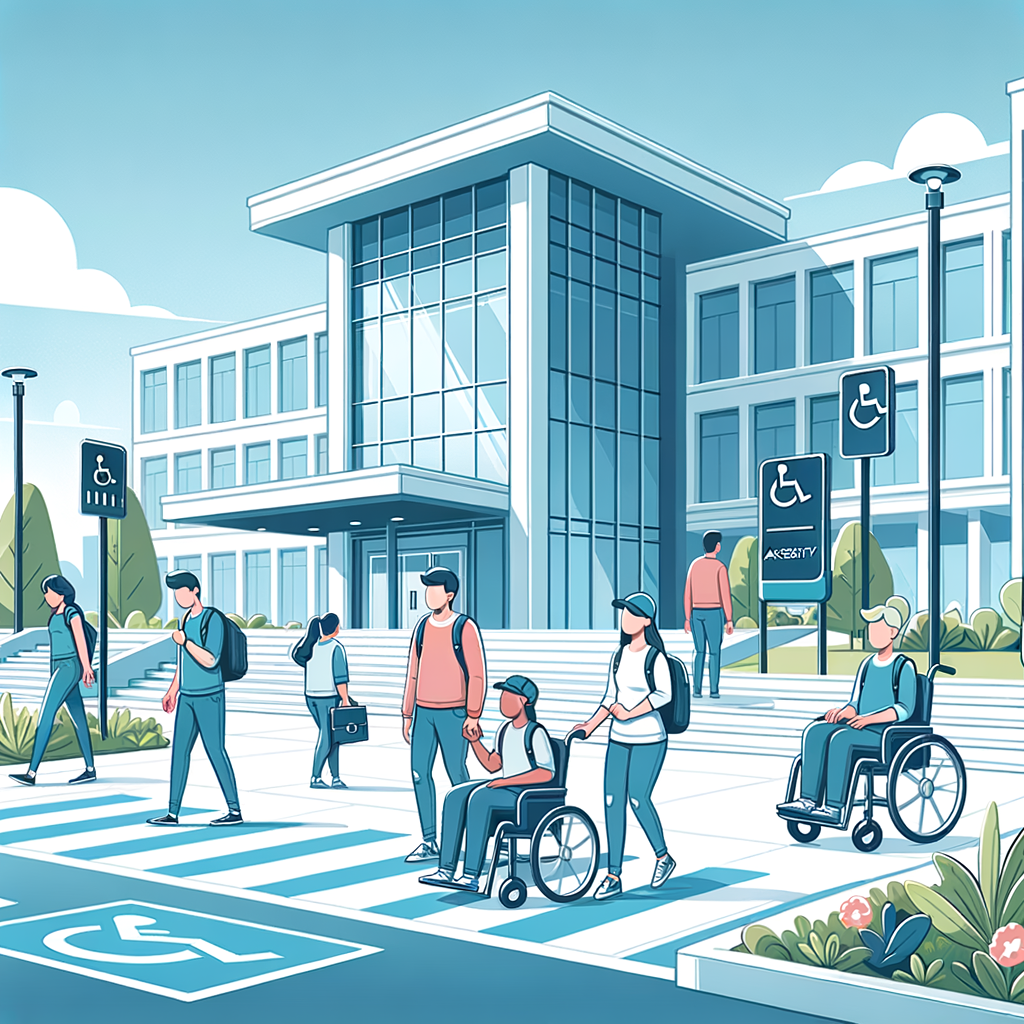
Access to public transportation services is essential for many individuals to participate fully in society — for work, education, healthcare, and social activities. The Americans with Disabilities Act (ADA), enacted in 1990, brought a significant transformation in how public transportation is managed in the United States. The ADA mandates equal access to public facilities and services, ensuring that persons with disabilities receive comparable levels of service to those without disabilities. This legislation was a landmark decision in creating an inclusive society, mandating the removal of physical, procedural, and communication barriers that restrict access to public transport among disabled individuals. ADA compliance in public transportation matters because it isn’t just a legal requirement; it impacts the daily lives and independence of millions of Americans who rely on these vital services. The needs of people who are blind, deaf, or have mobility impairments have to be addressed comprehensively, ensuring that the transportation system is usable by everyone.
Understanding ADA Compliance for Public Transit Systems
The ADA requires public transit agencies to make their services accessible to people with disabilities. This includes a broad spectrum of initiatives like making vehicles accessible, providing appropriate signage, ensuring proper maintenance of accessibility features, and offering complementary paratransit services. For example, all new buses in fixed-route service must be accessible, including features such as lifts or ramps for those using wheelchairs, kneeling buses for easier boarding, and priority seating for the elderly and disabled. A real-world example is the Washington Metropolitan Area Transit Authority (WMATA), which revamped its fleet, making sure that the facilities and vehicles are equipped with these necessary features.
Moreover, transit systems need to ensure effective communication with passengers. Visual announcements should accompany auditory alerts for those who are deaf or hard of hearing. An example of this is New York City’s subway system, which integrates visual message boards with auditory announcements to ensure all passengers are informed about delays or changes in service. While the legislation outlines specific standards, maintaining compliance requires the transit authorities to take an active role in regular evaluation and prompt response to feedback pertaining to accessibility barriers.
The Role of Paratransit Services in ADA Compliance
Paratransit services are a critical component of ADA compliance. These are specialized, door-to-door transport services catering primarily to individuals who cannot use the traditional public transit system because of their disabilities. According to the ADA, public transit agencies that provide a fixed-route bus or rail systems must offer paratransit services to eligible people within a 3/4-mile radius of the fixed route. A relevant example can be found in the Los Angeles County Metro, which offers the Metro Access Service, allowing registered users to book rides that ensure door-to-door pickup. This system is not just about providing rides; it’s about ensuring the independence and dignity of users by affording them a level of convenience that equals, or even exceeds, that of the general public transportation services.
- Eligibility Determination: The process involves evaluating the individual’s disability and how it limits their ability to use fixed-route services.
- Reservation Procedures: Federal regulations require that paratransit services operate in a manner equivalent to the fixed-route system in terms of reservation simplicity.
- Service Provision: ADA mandates equivalent response times, meaning paratransit services should pick up a passenger within a timeframe comparable to that of a fixed-route service’s headway.
These measures are not merely ticking the compliance box but are crucial to the operational efficacy and humane treatment of individuals relying on these services. Consistent reviews and updates to these policies, as done by agencies like the Chicago Transit Authority, emphasize the importance of staying current with evolving technology and expectations.
Challenges in Achieving Full ADA Compliance
Achieving full ADA compliance in public transportation is fraught with challenges. Firstly, funding is a constant obstacle. Upgrading transit systems to meet ADA standards, maintaining accessibility features and paratransit services, and ensuring staff are adequately trained requires substantial investments. For example, the debate over funding has been particularly prominent in older systems, such as Boston’s MBTA, which operates on aging infrastructure that poses significant barriers to accessibility. In many cases, acquiring federal grants or locality-specific funding can mitigate these issues, but often that is not enough, and creative financial planning is necessary.
Another key challenge is ensuring consistency across various regions with diverse city scapes and needs. For instance, rural areas might struggle with providing adequate paratransit options due to fewer resources and a larger service area. A case study in West Virginia revealed that rural transportation systems often require more innovative solutions, such as collaborating with local organizations to pool resources effectively to maintain compliance.
The procedural implementations are equally daunting to manage. Training employees to address accessibility issues effectively and handle technologies to improve services presents an ongoing challenge. For instance, San Francisco’s BART has undertaken comprehensive staff training programs to ensure ADA compliance, encompassing everything from dealing kindly with passengers’ queries to operating the vehicle lifts and ramps. However, consistency in execution across shifts and personnel remains complex, requiring regular audits and feedback loops.
Opportunities Through ADA Compliance
While challenges are inevitable, ADA compliance brings new opportunities. Primarily, it opens up the market to millions of potential users who otherwise might not use public transportation. Enhancing accessibility can translate directly into increased ridership, fostering community goodwill and potentially leading to increased funding and development. Creating a welcoming environment for everyone, as evidenced by the Seattle Sound Transit, has boosted its reputation and strengthened its community ties.
Innovation is another opportunity in disguise. The need for accessible services pushes transit authorities to harness technology creatively, innovating continuously to create solutions that increase efficiency and convenience. Applications synced with real-time updates about service changes, or apps that facilitate paratransit scheduling are great examples of such innovation. The Bay Area Rapid Transit (BART), for instance, uses its app to communicate better with users who have disabilities, offering notifications that adjust for accessibility needs. These technological advancements are beneficiaries of the pressing need to meet ADA standards, ultimately benefiting the broader community by improving overall service delivery.
| Transit System | Key ADA Compliance Feature | Notable Outcome |
|---|---|---|
| WMATA | Accessible facilities and vehicles | Improved service equity |
| NYC Subway | Integrated visual and auditory alerts | Enhanced passenger communication |
| LA Metro | Metro Access Paratransit Service | Enhanced rider independence |
| SFBART | Staff training and technology use | Service efficiency and user satisfaction |
The Future of ADA Compliance in Public Transportation
Looking forward, the future of ADA compliance in public transportation is intrinsically linked to advances in technology and policy shifts. Adopting vehicle technologies like autonomous buses, which can cater to all passengers with customized accessibility features, could revolutionize public transport. Further, policy amendments that incentivize innovation while enforcing strict compliance could drive rapid progress. Celebrated urban centers like Portland, which lead in adopting green and accessible transport solutions, are at the forefront of these discussions. Exploring partnerships and public-private collaborations could be methods to expedite comprehensive, affordable, and efficient access throughout the services. This is crucial as the population ages and the call for inclusive design becomes louder, ensuring no individual is left behind due to accessibility barriers.
Conclusion: Key Takeaways
In summary, ADA compliance is not an option but a necessity for the equitable operation of public transportation services. It means more than adhering to legal requirements; it’s about social justice, improving the quality of life for all users by removing accessibility barriers. ADA compliance carries profound importance for people with disabilities and the community as a whole. It’s a continuous challenge blending policy, practice, and innovation. This balance can foster inclusive environments that not only fulfill legal obligations but unleash potential previously untapped. By focusing on practical measures, authorities can ensure that all individuals, regardless of their disabilities, can effectively use public transportation services, thereby participating more fully in community life.
For those seeking to push further into ADA compliance, the next step could be evaluating existing systems, identifying accessibility barriers, and engaging with technology vendors to upgrade services where necessary. Continuous dialogue with disability advocacy groups, along with proactive feedback mechanisms, can keep public transport systems aligned with user needs. Authorities should aim not just for compliance but for excellence in service delivery, ensuring every ride is a step towards full equality.
Frequently Asked Questions
1. What is ADA compliance in the context of public transportation?
ADA compliance in public transportation refers to fulfilling the requirements of the Americans with Disabilities Act, which mandates that public transit systems must be accessible to individuals with disabilities. This means that facilities, vehicles, and transit services must be accessible and usable by everyone, including those who have mobility, sensory, or cognitive impairments. The ADA introduced broad civil rights protections aimed to ensure full access for people with disabilities to the same public channels and venues non-disabled people can access. In practice, this entails making sure buses, trains, and stations are equipped with ramps, elevators, auditory and visual alerts, tactile warning surfaces, and designated seating to accommodate persons with disabilities.
2. How does the ADA benefit individuals with disabilities using public transportation?
The ADA greatly benefits individuals with disabilities by providing them equal opportunity and access to public transportation. Before the enactment of the ADA, many transit systems in the U.S. were not accessible to individuals with disabilities, resulting in social isolation and restricted access to employment, education, healthcare, and leisure activities. Post-ADA, all new public transport must be accessible, eliminating significant physical and systemic barriers. For instance, individuals with mobility aids can use buses equipped with lifts or low-floor buses that reduce the need for steps, ride rail systems with gap fillers for wheelchairs, and access audio announcements for those with vision impairments. This independence in commuting fosters inclusivity and equal participation in society. Enhanced transportation access opens up opportunities that were previously limited or entirely unavailable.
3. What are the specific requirements for buses and trains under ADA regulations?
Under ADA regulations, any new buses and trains must be designed and built to accommodate individuals with disabilities. This includes having features such as lifts or ramps for buses to assist those using wheelchairs or other mobility devices to enter and exit the vehicle with ease, including securement straps to stabilize wheelchairs safely during transit. Seats should be prioritized for people using wheeled mobility devices. Trains are required to implement gap fillers to bridge the space between the platform and car door, making it easier and safer for people in wheelchairs or with limited mobility to board. Audible and visual stop announcements should be provided to assist those with visual or hearing impairments. These requirements ensure that vehicles align with safety, accessibility, and usability guidelines to provide a seamless transit experience for individuals with disabilities.
4. Are transit agencies required to provide alternative services if regular routes are inaccessible?
Yes, transit agencies are mandated by the ADA to provide equivalent services for individuals with disabilities if regular routes and services are inaccessible. This often comes in the form of paratransit services, which are a type of door-to-door or curb-to-curb service that picks up passengers at a pre-arranged time and location and takes them to their destination. Paratransit is typically employed for those who cannot use the standard transit system due to physical or functional limitations. Although paratransit must provide complementary services that mirror the same geographical areas and operating hours as fixed-route services, allowing individuals with disabilities similar opportunities to travel efficiently and safely even if mainstream routes present accessibility challenges.
5. What steps can individuals take if their public transportation provider does not meet ADA standards?
If an individual encounters a transportation provider that fails to meet ADA standards, they’re empowered to take several actions. Firstly, they can bring the issue to the attention of the transit agency directly, which often have dedicated ADA compliance officers or departments. If initial attempts to address the issue internally are unsatisfactory, individuals can file a formal complaint with the U.S. Department of Transportation’s Federal Transit Administration (FTA). The FTA is responsible for overseeing ADA compliance in U.S. public transit agencies and will investigate allegations of non-compliance. Additionally, individuals have the right to seek legal redress, which might involve engaging civil rights organizations or disability advocacy groups to provide support and resources. Active advocacy is key in ensuring that public transport consistently aligns with ADA mandates and helps further the goal of equal access for all.