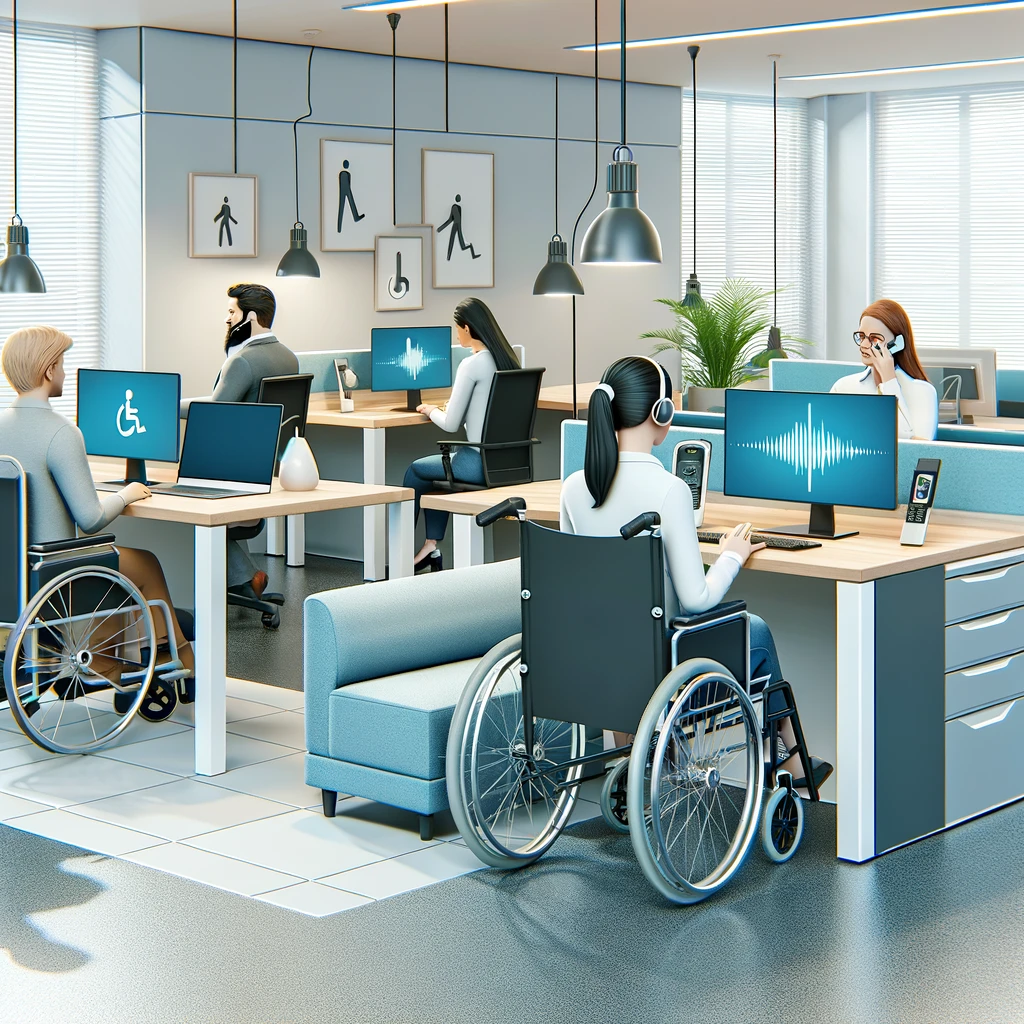
The Americans with Disabilities Act (ADA) was enacted in 1990 to ensure that individuals with disabilities have the same rights and opportunities as everyone else. The Act is a significant milestone in the effort to make American society more inclusive, covering many areas including employment, public services, public accommodations, and telecommunications. One field that has noticeably benefited from the ADA is the arts. From theatrical performances to art exhibits, the ADA ensures that cultural experiences are accessible to everyone, including those with disabilities. This article will delve into how the ADA has impacted the arts, what measures are being taken to create accessible spaces, and why these efforts are crucial for an inclusive society.
Artists have always sought to express the human experience in its entirety, and inclusivity is a natural extension of this endeavor. Creating accessible spaces in the arts not only complies with ADA regulations but also enriches the artistic landscape by welcoming diverse perspectives. As we venture deeper into the 21st century, it’s vital to revisit the principles of the ADA and assess their application in the arts. This discussion aims to highlight the ways in which the ADA has transformed the cultural sector, the ongoing challenges, and the strides being made towards a more inclusive environment for all.
ADA Compliance in Theatres and Performance Venues
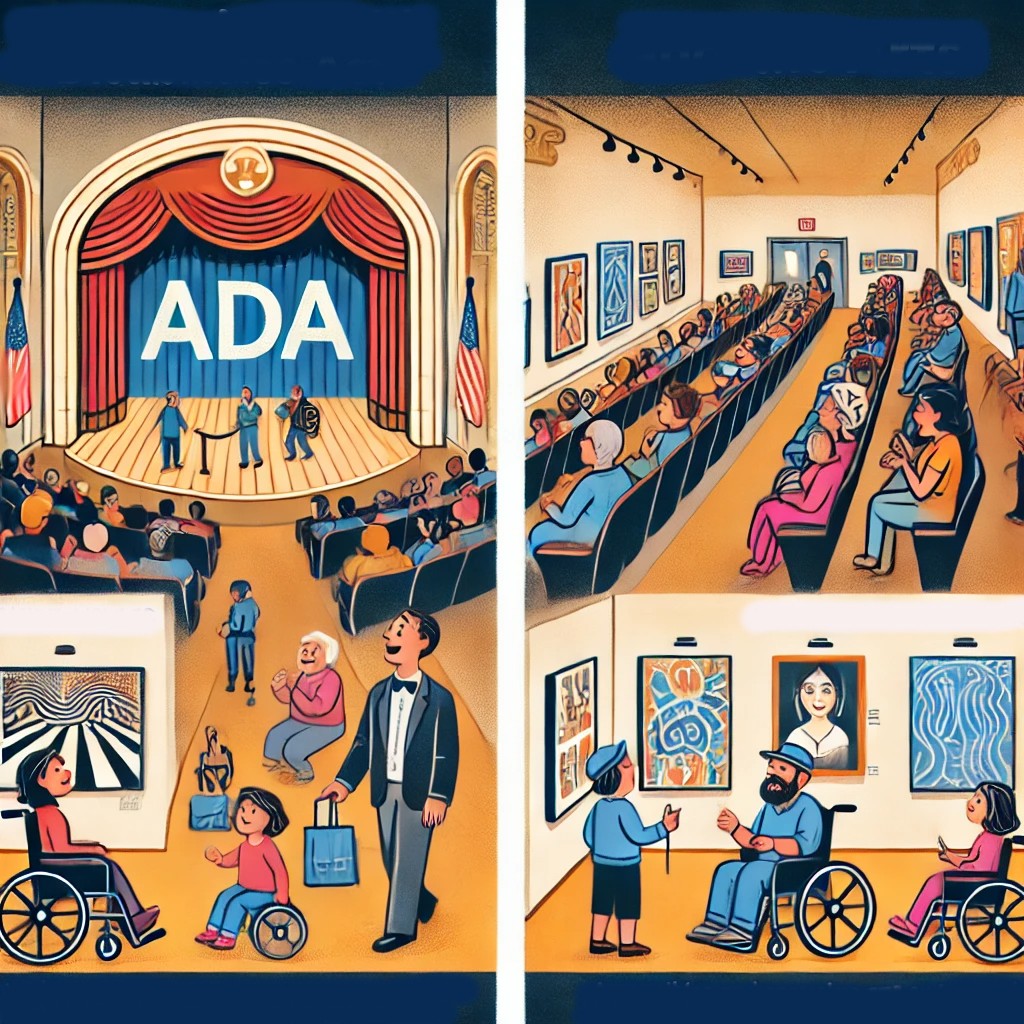
One of the outstanding areas where the ADA has made a significant impact is in theatres and performance venues. To meet ADA requirements, these spaces must provide accessible seating options, assistive listening devices, and accommodations for service animals. Theatres and performance venues are also required to provide captioning, audio descriptions, and sign language interpretation upon request.
Implementing these measures doesn’t just fulfill a legal obligation; it vastly enhances the experience for attendees with disabilities. For instance, accessible seating isn’t just about providing a space for wheelchairs; it’s also about ensuring that these seats offer comparable views and are integrated within the audience, rather than segregated to special sections. This approach promotes a sense of belonging and participation, making people with disabilities feel like valued members of the audience.
Technological advancements have also played a significant role in enhancing accessibility in theatres. Modern assistive listening devices, such as FM and infrared systems, make it easier for individuals with hearing impairments to enjoy performances. Meanwhile, real-time captioning services have made dramatic and musical performances more inclusive. The ongoing challenge is to ensure these services are well-publicized and readily available, embodying the spirit of the ADA.
Accessibility in Art Exhibitions and Museums
Art exhibitions and museums also fall under the purview of the ADA. These cultural institutions have a duty to make their spaces and programs accessible to everyone, which includes individuals with physical, sensory, and cognitive disabilities. Ramps, elevators, and other physical modifications are the first steps in making these venues more accessible, but they are only the beginning.
Audio guides and tactile tours can significantly enhance the experience for visitors with visual impairments. Braille descriptions and tactile versions of certain objects can provide a richer understanding of exhibits. For individuals with hearing impairments, American Sign Language (ASL) tours and real-time video captioning can make a world of difference.
While many museums and galleries have made strides in this area, there’s still a long way to go. One of the ongoing challenges is ensuring that staff are adequately trained to assist visitors with disabilities. Customer service training can include modules on how to guide visually impaired individuals through an exhibit or how to communicate effectively with people who are hard of hearing. The ADA not only mandates physical accessibility but also advocates for an inclusive culture, and ongoing staff training is a critical component of this.
Digital Accessibility in the Arts
The digital revolution has opened new avenues for making the arts more accessible. ADA compliance isn’t limited to physical spaces; it also extends to digital content. Websites for theatres, museums, and galleries must be designed in a way that ensures they are accessible to individuals with disabilities. This includes providing text alternatives for images, ensuring easy navigation, and offering transcripts for audio and video content.
Online exhibitions and virtual tours have become particularly popular, especially with the increased focus on remote access due to global events like the COVID-19 pandemic. These digital experiences offer an excellent opportunity to showcase inclusive practices. For instance, virtual exhibitions can include voiceovers for descriptive narration, which benefit visually impaired users, and closed captions for videos to aid those with hearing impairments.
Moreover, mobile apps developed for arts institutions should also adhere to ADA guidelines. Features like voice control, text-to-speech functionality, and customizable interfaces can make these apps more user-friendly for people with disabilities. As technology continues to evolve, so too does the potential for creating more inclusive digital art experiences. The key is to ensure that accessibility considerations are integrated into the planning stages rather than being added as afterthoughts.
Challenges and Opportunities
Despite the many advances in creating accessible spaces within the arts, several challenges remain. One significant challenge is funding. Making a space ADA-compliant can be costly, and not all arts organizations have the financial resources required. Grants and public funding can help, but these are often competitive and limited.
Another challenge is awareness. Not all arts administrators are fully aware of the requirements under the ADA or the best practices for creating accessible experiences. This is where continuous education and advocacy play crucial roles. Professional organizations and advocacy groups can provide valuable resources and training to help arts institutions better understand and meet ADA requirements.
On the flip side, these challenges present opportunities for innovation and collaboration. For example, partnerships with organizations focused on disability rights and services can yield innovative solutions that benefit the entire community. By working together, arts organizations can create more inclusive environments that not only comply with the ADA but also set new standards for accessibility and inclusivity.
The Future of ADA and the Arts
Looking ahead, the future of ADA compliance in the arts will likely be shaped by both technological advancements and evolving social attitudes towards disability. As technology continues to advance, new tools and resources will become available to help arts institutions create more accessible experiences. Virtual reality, augmented reality, and AI-driven accessibility features are just a few examples of how technology can further enhance inclusivity in the arts.
Furthermore, the growing social emphasis on diversity and inclusion will continue to drive positive changes. As the conversation around disability rights and inclusion becomes more mainstream, we can expect to see greater efforts to ensure that the arts are accessible to everyone. This cultural shift will inspire more artists and organizations to prioritize accessibility, leading to a richer and more inclusive artistic landscape.
In conclusion, the ADA has facilitated significant progress in making the arts more accessible, but there is still much work to be done. By embracing the principles of the ADA and continuously striving for inclusivity, arts institutions can create environments where everyone, regardless of their abilities, can engage with and enjoy the arts. As we move forward, a collective commitment to accessibility and innovation will be key to building a more inclusive future for the arts.
Frequently Asked Questions
What is the ADA, and how does it relate to the arts?
The Americans with Disabilities Act (ADA) is a crucial piece of legislation enacted in 1990, aiming to ensure that individuals with disabilities have the same rights and opportunities as everyone else. It encompasses various aspects of public life such as employment, transportation, and public accommodations. Specifically relating to the arts, the ADA ensures that cultural institutions like theaters, museums, and galleries are accessible to everyone. This means not just providing physical access, but also ensuring that the programs and services offered are inclusive to individuals with disabilities. For example, this might involve providing assistive listening devices at a live performance or offering braille programs and audio descriptions at an art exhibit.
How can theaters and performance venues comply with the ADA to enhance accessibility?
Theaters and performance venues must consider several key aspects to comply with the ADA and enhance accessibility for all patrons. First and foremost, physical access is vital, which involves having ramps or elevators for mobility-impaired individuals and ensuring that seating arrangements include designated wheelchair spaces. Beyond physical accessibility, theaters should provide aids to those with sensory disabilities. This can include offering sign language interpreters, captioning devices, and audio description services for the visually impaired. Also, sound amplification devices can ensure that people with hearing difficulties can enjoy performances. Providing clear signage, trained staff available to assist, and accessible online ticketing are equally significant aspects. Regularly updating these offerings, seeking feedback from patrons with disabilities, and incorporating their insights further enhances a venue’s compliance and commitment to accessibility.
What steps should museums take to ensure ADA compliance?
Museums can take various steps to meet ADA requirements and make their spaces more inclusive. Ensuring that exhibit spaces, restrooms, entrances, and other facilities are wheelchair accessible is fundamental. Elevators and ramps are necessary for any multi-level exhibits. Furthermore, museums should provide guide and service relief for seeing-eye dogs and maintain clear, wide pathways for easy navigation. To address sensory disabilities, curating exhibits with tactile components for the visually impaired can offer alternative ways to engage with the content. Braille labels, audio guides, and assistive listening devices should be available for tours and audio-visual presentations. Museums can also offer special programs or tours with sign language interpreters and schedule regular training for staff to better assist visitors with disabilities. Engaging with the disabled community for feedback and suggestions is invaluable for ongoing improvements and ensuring long-term accessibility.
How have art exhibits adapted to be more inclusive under the ADA?
Art exhibits have made significant adaptations to ensure inclusivity following the ADA’s guidelines. Physical accessibility is one major component; exhibits are structured in ways that facilitate easy navigation for people with mobility challenges. This means eliminating any unnecessary physical barriers and providing accessible routes throughout the space. Regarding sensory accommodations, exhibits are increasingly providing alternative ways for attendees to experience the art. This includes audio descriptions, tactile displays for touch interactions, and braille text for wall label information. Many galleries also employ technology, such as interactive apps or virtual tours, which offer auditory descriptions of visual art pieces. Additionally, special tours with sign language interpreters are often available upon request. Inclusion of family-friendly spaces and sensory-friendly events are also becoming more commonplace, allowing individuals of all abilities to enjoy art at their own pace and comfort level.
Why is it important for cultural events and spaces to be ADA compliant?
Cultural events and spaces being ADA compliant is essential for fostering an inclusive and equitable society. Art and culture play a significant role in how we understand the world and relate to one another, making it vital that these experiences are accessible to everyone. ADA compliance ensures that individuals with disabilities have equal opportunities to participate in, contribute to, and enjoy cultural events and activities. It diminishes barriers that historically excluded people with disabilities, allowing for increased diversity and broader perspectives in cultural discourse. Moreover, it underscores a commitment to human rights and respect for all individuals, promoting social inclusion. Venues and organizations also benefit, as increased accessibility can draw larger, more diverse audiences and improve community relations. Ultimately, ensuring accessibility in the arts not only enriches the experiences of people with disabilities but also enhances the cultural landscape as a whole by embracing inclusivity and diversity.