In today’s world, communication is key. However, this basic necessity can be a struggle for those with disabilities. Ensuring accessible telephones and TTYs (Text Telephone) aligns with the Americans with Disabilities Act (ADA) standards is crucial. The ADA is a landmark civil rights law that prohibits discrimination based on disability, and it strives to provide equal opportunities, including access to telecommunication. Telephones and TTYs equipped with accessibility features bridge the gap, allowing people with disabilities to communicate effectively. This article explores the importance of making telephones and TTYs accessible, diving into key terminology and standards, offering real-world examples, and guiding you through the ADA requirements for accessible communication devices.
Understanding Telecommunication Devices under ADA
Under the ADA, telecommunication devices must meet certain criteria to be considered accessible. This includes providing modes of communication that accommodate individuals with hearing, speech, or visual impairments. Telephones, for instance, may include adjustable volume controls, voice carry-over (VCO) capabilities, and compatibility with hearing aids.
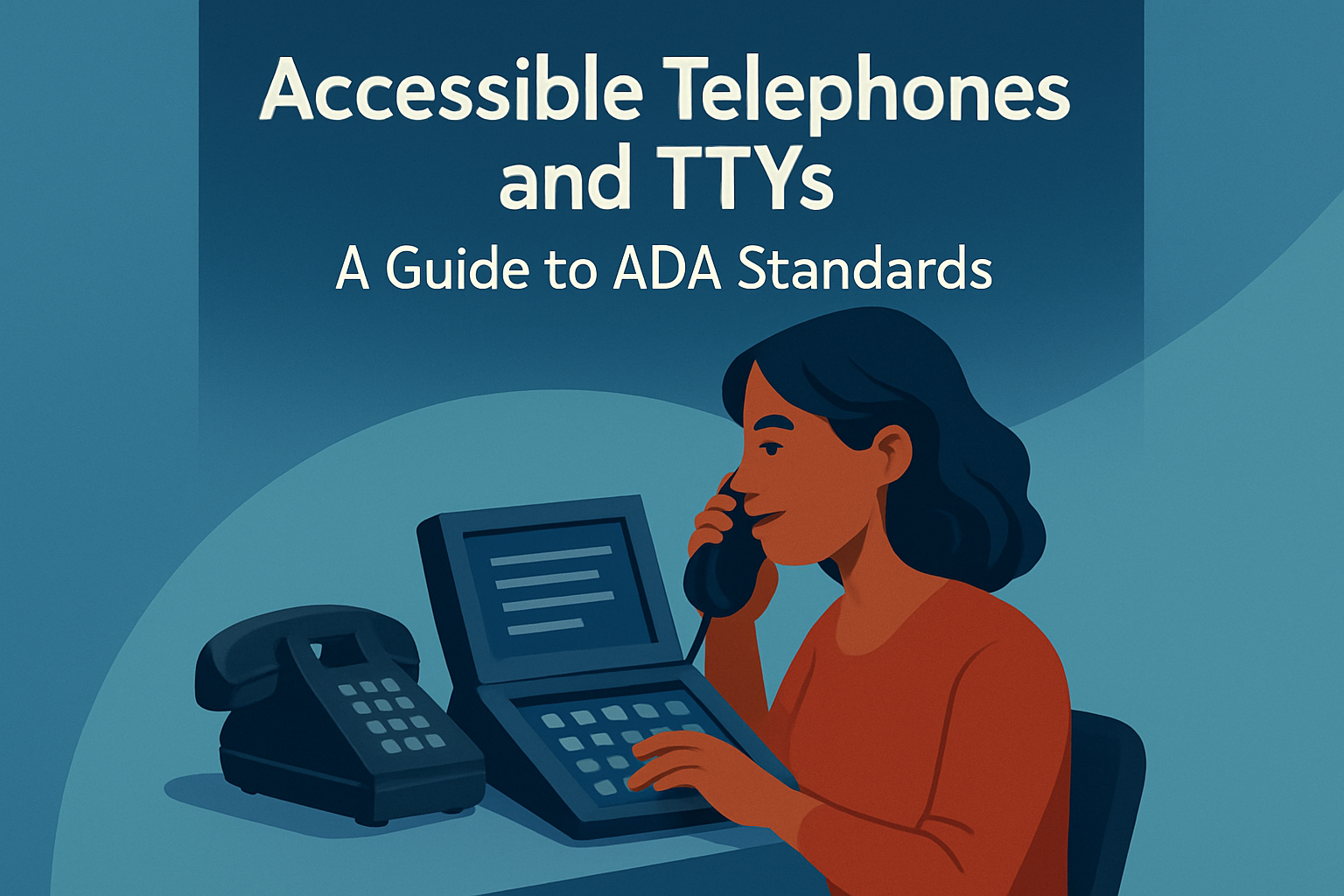
TTYs are specifically designed for individuals with hearing or speech disabilities. They operate through text-based communication and should conform to certain specifications, such as baud rate and character display options, to be ADA compliant.
Features of Accessible Telephones
Another essential feature is the visual display. Telephones with integrated screens offer text-based options for individuals who are both deaf and blind, providing a visual representation of the caller’s message. This is particularly beneficial in public phone booths and workplaces where effective communication is a necessity.
Real-world example: A bank replaces all its customer service telephones with ADA-compliant models, featuring screen displays and adjustable volume controls, ensuring that customers with hearing disabilities have equal access to financial services.
TTYs and Their Role in Accessible Communication
TTYs are fundamental in facilitating communication for those who cannot rely on traditional voice calls. They convert speech into text and vice versa, working alongside telephones to provide comprehensive communication solutions. TTYs must meet certain technical standards, such as appropriate character display, backlit screens for visibility, and a minimum baud rate of 45.5 to ensure text clarity and speed.
Additionally, the integration of relay services enhances TTY usability. These services allow users to interact with voice callers through a relay operator, who translates typed messages into speech and spoken words into text, ensuring fluid two-way communication.
Real-world example: A government agency equips its public service centers with TTYs, connecting them to relay services, ensuring people with hearing or speech difficulties can easily reach and communicate with various departments.
Meeting ADA Standards with Accessible Telecommunication
The ADA mandates accessibility in public services, which includes ensuring telecommunication devices are usable by individuals with varying abilities. This involves more than simply having the gadgets available; regular checks and maintenance are necessary to ensure they continue to function as required.
A key aspect of ADA compliance is training for staff members, enabling them to assist users of accessible telecommunication devices effectively. Facilities must also provide clear instructions and signage in accessible formats, such as braille or large print, in public spaces where these devices are available.
- Ensure telephones and TTYs are updated regularly for operability
- Provide training for staff on ADA-compliant device usage
- Display user instructions in accessible formats
Real-world example: An airport installs ADA-compliant telephones and TTYs at every terminal, paired with clear, concise instructions in multiple accessible formats, ensuring all passengers can connect with loved ones or access services during their travels.
The Impact of Accessibility on Community Engagement
Ensuring ADA-compliant telecommunication is more than just a legal obligation; it fosters an inclusive society where everyone can actively participate. By addressing the needs of individuals with disabilities, businesses and public facilities facilitate greater community engagement, encourage diversity, and garner trust and respect from all community members.
Real-world example: A community center sees increased attendance at events after installing accessible communication devices, as individuals with disabilities feel welcomed and empowered to engage in community activities.
Future Trends in Accessible Telecommunication
As technology evolves, so do the possibilities for improved accessibility. Upcoming trends include enhanced voice recognition software, AI-driven text-to-speech capabilities, and the integration of video relay services, enriching the communication experience for individuals with disabilities.
Ensuring these advancements continue to align with ADA standards is vital. Future-proofing involves not only adopting new technologies but also regular revisits to compliance regulations, ensuring devices remain accessible to all users.
Real-world example: A tech company partners with accessibility experts to develop a new smartphone with state-of-the-art voice recognition software that accommodates various speech impairments, setting a new standard for accessible mobile communication.
Conclusion: Steps Toward Inclusive Communication
Providing accessible telephones and TTYs according to ADA standards is essential for ensuring equal telecommunication opportunities for individuals with disabilities. The significance extends beyond compliance; it’s about fostering empowerment, inclusion, and community engagement. As innovations evolve, the commitment to accessibility must remain unwavering, ensuring everyone has a voice.
Remember, the journey toward accessible communication is ongoing. Start by evaluating the accessibility of your telephony systems today and make the necessary updates. In doing so, you’re not only meeting legal standards, but you’re also championing a more inclusive community where everyone can thrive.
Frequently Asked Questions
1. What is the importance of accessible telephones and TTYs under the ADA?
Accessible telephones and TTYs are essential tools that help individuals with disabilities communicate effectively, a right guaranteed under the Americans with Disabilities Act (ADA). The ADA, enacted in 1990, is a critical civil rights law that aims to provide equal opportunities to all individuals regardless of their physical or mental abilities. This includes access to telecommunication services, which are vital in today’s society. An accessible telephone means it has features such as volume control, hearing aid compatibility, and sometimes visual alerts for incoming calls. On the other hand, a TTY, or Text Telephone, allows individuals who are deaf or speech-impaired to communicate over the phone through text messages. By aligning with ADA standards, accessible telephones and TTYs help remove barriers, facilitating an inclusive environment where everyone has the chance to interact and communicate without limitations.
2. What features does an ADA-compliant telephone need to have?
An ADA-compliant telephone comes equipped with various accessibility features to cater to individuals with different disabilities. First, these phones often include volume control, allowing users to adjust the audio output to suit their hearing requirements. This feature can be a game-changer for individuals with hearing impairments. Second, ADA-compliant telephones should be compatible with hearing aids, ensuring clear communication without interference. Additionally, visual indicators or alert systems are crucial, as they notify users of an incoming call through lights or vibrations—particularly helpful for those who are hard of hearing. Lastly, some ADA-compliant phones might have large buttons and clear labeling for individuals with visual impairments or dexterity issues, ensuring they can comfortably use the device. By incorporating these features, telephones help create a user-friendly experience that adheres to ADA standards and accommodates a broader range of disabilities.
3. How does a TTY work, and who might need to use it?
A TTY, or Text Telephone, is a specialized device that enables individuals who are deaf, hard of hearing, or speech-impaired to communicate over a phone line using text. The device generally consists of a keyboard, a small display screen, and a special coupler to attach directly to the phone’s handset. When a person uses a TTY, they type their message on the keyboard, which is then transmitted over the phone line and appears as text on the recipient’s device. This allows for real-time communication between the two parties. TTY is a critical tool particularly for those who rely heavily on written language due to auditory or speech challenges. Additionally, many public places, like airports and hotels, provide TTYs as part of their accessibility offerings, ensuring equal access to telecommunication services for all patrons.
4. What steps can organizations take to ensure compliance with ADA standards for telephones and TTYs?
Organizations can take various proactive measures to meet ADA compliance standards for telephones and TTYs, thus ensuring their facilities are accessible to all. First, they should assess and evaluate existing telecommunication equipment to determine accessibility levels. Any telephones provided should feature adjustable volume controls, hearing aid compatibility, and visual or vibrational alert systems if necessary. Equipping these devices with large buttons and clear labels can further help those with visual impairments or dexterity issues. Moreover, public venues should ensure the availability of TTYs so that individuals who rely on text communication can easily connect with others. Training staff to be knowledgeable about these devices, how they work, and how to assist customers with special needs is also critical. Finally, organizations should regularly review and update their accessibility measures to align with the latest ADA guidelines and technological advancements, offering a consistent and accessible communication experience for everyone.
5. What advancements in technology are being implemented to improve access to telephones for individuals with disabilities?
Advancements in technology are continuously shaping the world of accessibility, making telephones more user-friendly for individuals with disabilities. Modern smartphones introduce speech recognition and voice command features that allow users with limited hand mobility to make calls and send messages without needing to physically touch the device. Additionally, real-time text (RTT) is gaining traction as an alternative to traditional TTY devices, allowing live text communication that can be seamlessly integrated into mobile and VoIP systems. Moreover, video calling and video relay services (VRS) have become widely popular, especially for the deaf and hard-of-hearing communities, by enabling sign language communication over calls. Accessibility settings in systems like iOS and Android, which include features like screen readers, text-to-speech, and customizable visual or vibration alerts, further enhance the user experience. Continuous technological innovations are breaking down communication barriers, empowering those with disabilities to interact more independently and effectively.