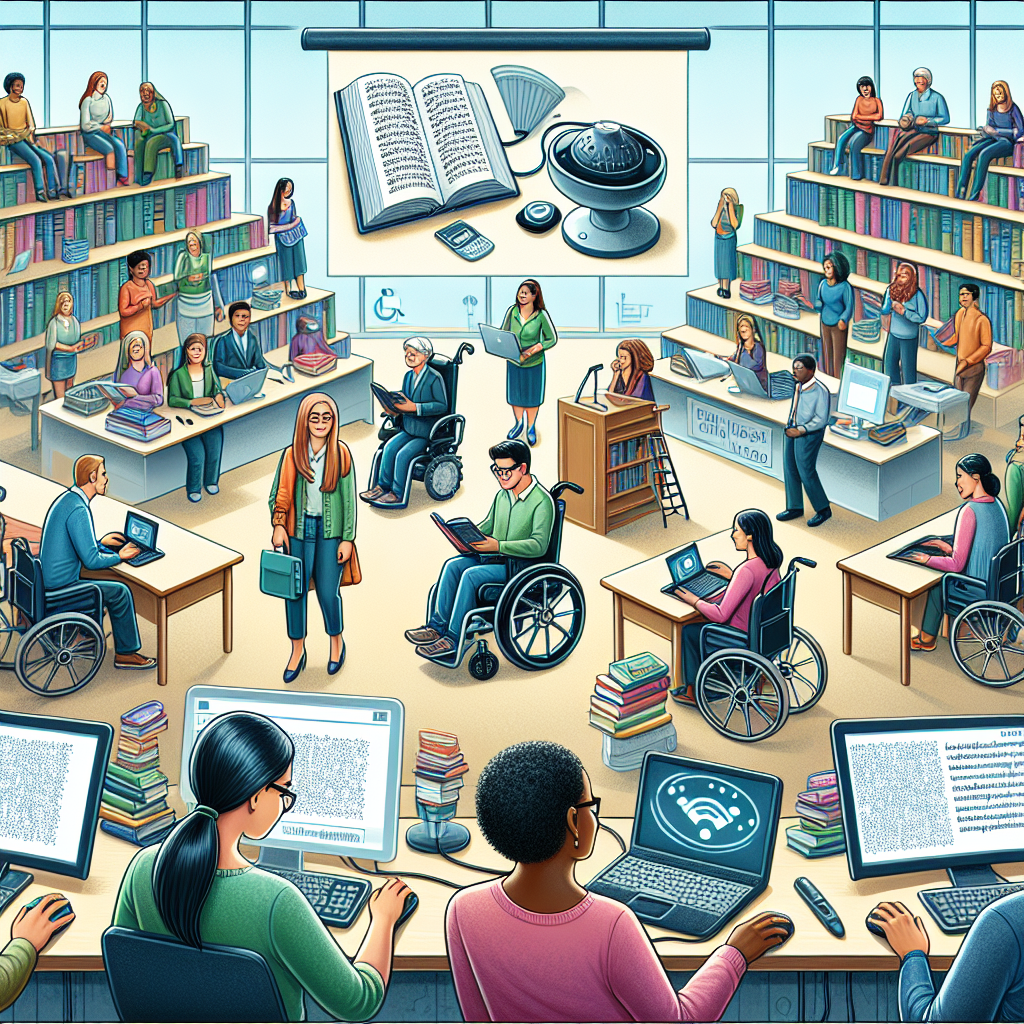
The Americans with Disabilities Act (ADA) is a cornerstone of civil rights legislation in the United States, designed to ensure that people with disabilities have the same opportunities as everyone else. Significantly, the ADA has paved the way for significant advancements in technology aimed at enhancing accessibility. One such innovation is the e-reader. These devices have revolutionized the way individuals consume written content, offering convenience and flexibility. In particular, e-readers have been a game-changer for individuals with disabilities, providing them with new ways to access literature, news, and academic material.
In the modern era, the intersection of technology and accessibility has led to the creation of digital tools designed to broaden the horizons for individuals with disabilities. E-readers encapsulate the potential of such innovations. They come equipped with features like text-to-speech, adjustable font sizes, and background color changes, which cater to the needs of a wide range of users. These devices demonstrate the practical application of ADA principles, ensuring inclusivity in the digital age.
This article delves into the relationship between the ADA and e-readers, exploring how these devices have made reading more accessible for everyone. We will examine the specific features of e-readers that enhance accessibility, discuss the legal landscape shaped by the ADA, and highlight real-world applications and success stories. Ultimately, this comprehensive overview aims to demonstrate the vital role that technology plays in advancing the goals of the ADA.
Features Enhancing Accessibility
One of the most significant ways e-readers enhance accessibility is through customizable accessibility options. Text-to-speech (TTS) functionality, for example, allows users to listen to written content and is particularly beneficial for individuals with visual impairments or dyslexia. By converting text into spoken words, TTS ensures that users can absorb information without relying on their reading ability alone.
Another feature that promotes accessibility is the adjustable font size and style. For individuals with various types of visual impairments or learning disabilities, being able to modify the size and type of text is crucial. These adjustments make it easier for users to follow along and comprehend the content. High-contrast modes and customizable background colors further enhance readability by reducing eye strain and making text stand out more prominently.
Beyond text adjustments and TTS, e-readers often support various formats, including ePub, PDF, and audiobooks. This versatility allows users to choose formats that best suit their needs. For instance, audiobooks offer an alternative to traditional reading that is accessible to people with various disabilities, from visual impairments to cognitive challenges.
Additionally, some e-readers come with built-in dictionaries and translation tools, aiding comprehension and making content accessible to a wider audience. These features open up educational opportunities for individuals with disabilities, allowing them to engage with new information in ways that are intuitive and supportive of their needs.
Legal Landscape Under the ADA
The ADA mandates that public and private entities must make reasonable accommodations to ensure accessibility for individuals with disabilities. This requirement extends to digital content and technologies, including e-readers. Specifically, Title III of the ADA emphasizes that places of public accommodation, which include libraries and educational institutions, must provide equal access to their services.
In practice, this means that e-readers used by educational institutions or provided in public libraries must meet certain accessibility standards. Failure to comply can result in legal repercussions and penalties. The legal framework established by the ADA serves as a driving force for technological innovation, pushing manufacturers to develop e-readers that are accessible to all users.
It is also worth noting that the ADA has influenced other pieces of legislation and guidelines that further promote digital accessibility. For example, the Web Content Accessibility Guidelines (WCAG) offer a set of recommendations for making online content more accessible, which includes considerations for e-readers and digital books.
Legal compliance does not only serve to prevent discriminatory practices but also opens up new markets and opportunities for businesses. By integrating ADA-compliant features, companies can reach a broader audience and demonstrate their commitment to inclusivity and social responsibility.

Real-World Applications and Success Stories
Many educational institutions have successfully integrated e-readers as part of their commitment to accessibility. Schools and universities often provide e-readers to students with disabilities, allowing them to keep up with coursework and access a wide range of reading materials. In some cases, students have reported improved academic performance and greater engagement with their studies due to these accommodations.
Public libraries across the United States have also embraced e-readers, often offering devices for loan to patrons with disabilities. These libraries are more than just book repositories; they serve as community hubs that promote lifelong learning. By offering accessible reading devices, libraries fulfill their mission to serve all members of the community.
Another area where e-readers have made a significant impact is in employment. Corporations that prioritize accessibility in their workplaces often provide e-readers as a tool for employees with disabilities, easing access to important documents and resources. These practices not only comply with ADA regulations but also foster an inclusive work environment.
Success stories are not limited to large institutions. Many individuals have found e-readers to be invaluable tools in their daily lives. For some, e-readers offer the freedom to read in ways that they never could before. Parents of children with disabilities often express their gratitude for these devices, noting how they have helped their children develop a love for reading.
Technological Progress and Future Trends
As technology continues to evolve, so too do the capabilities of e-readers. Innovations such as voice recognition and artificial intelligence (AI) are paving the way for even more advanced accessibility features. Voice recognition can allow users to control their e-readers using simple voice commands, while AI can offer personalized reading experiences based on user preferences and needs.
One exciting development is the integration of braille displays with e-readers. These displays convert digital text into braille, offering a tactile reading experience for individuals who are blind. This technology is still in its nascent stages but has the potential to revolutionize accessibility in reading.
Another trend is the rise of collaborative platforms that allow multiple users to interact with the same digital text. These platforms are particularly useful in educational settings, where students can annotate and discuss reading materials collectively. Such collaborative tools can be adapted to accommodate users with disabilities, fostering inclusive learning environments.
Tech companies are also exploring ways to make e-readers more affordable and accessible to underserved populations. Partnerships between manufacturers, non-profits, and government agencies can result in subsidized devices and training programs, ensuring that the benefits of e-readers reach those who need them most.
Challenges and Considerations
Despite the many advantages of e-readers, there are still barriers to full accessibility that need to be addressed. One challenge is that not all e-readers are created equal; some devices lack essential accessibility features due to cost-cutting measures or outdated technology. This inconsistency can lead to disparities in access and quality of user experience.
Another issue is the availability of accessible content. While many publishers have made strides in producing accessible e-books, there is still a significant amount of content that is not easily readable by individuals with disabilities. This lack of accessible content undermines the potential benefits of e-reader technology.
Additionally, there is the matter of digital literacy. Not everyone is comfortable using advanced digital devices, particularly older adults or individuals who have had limited exposure to technology. This demographic often requires additional support and training to fully benefit from e-readers.
Finally, maintaining accessibility requires ongoing attention and resources. Updates to e-reader software and hardware must continue to prioritize accessibility to keep pace with emerging technologies and user needs. It is a continuous effort that demands commitment from developers, manufacturers, and policymakers alike.
Conclusion
The intersection of the Americans with Disabilities Act (ADA) and modern technology, exemplified by e-readers, represents a critical step toward a more inclusive society. These devices have transformed the way individuals with disabilities engage with written content, offering a range of features tailored to diverse needs. From text-to-speech functionality to customizable fonts and formats, e-readers embody the principles of accessibility and equality enshrined in the ADA.
The legal landscape shaped by the ADA mandates that all digital tools and content must be accessible, driving innovation and ensuring compliance. This has led to real-world applications in education, public libraries, workplaces, and beyond, demonstrating the far-reaching impacts of accessible technology. Success stories from students, employees, and individual users underscore the significance of these advancements.
As we look to the future, technological progress promises even more sophisticated accessibility features. Concepts like voice recognition, AI personalization, braille integration, and collaborative reading platforms are on the horizon, poised to further enhance the reading experience for individuals with disabilities. However, challenges such as inconsistent device quality, limited accessible content, digital literacy gaps, and the need for continuous updates must be addressed to realize the full potential of e-readers.
In conclusion, e-readers represent a powerful tool in the quest for universal accessibility. By embracing the principles of the ADA and leveraging technological advancements, we can ensure that everyone, regardless of ability, has the opportunity to engage with and enjoy the written word. The journey toward full accessibility is ongoing, but the progress made thus far is a testament to the possibilities that lie ahead.
Frequently Asked Questions
1. How do e-readers improve accessibility for individuals with disabilities?
E-readers significantly enhance accessibility for people with disabilities by incorporating features that make reading more inclusive and adaptable. For individuals with vision impairments, e-readers often come equipped with adjustable font sizes, customizable contrast settings, and text-to-speech functionalities. These features enable users to tailor their reading experience to their specific needs, whether it’s enlarging text or having the content read aloud. For those with mobility challenges, e-readers can be easier to handle than traditional books, as they allow page turns with a simple tap or swipe, rather than physical page manipulation. Furthermore, e-readers can store thousands of books, reducing the physical burden on users who may find it difficult to handle numerous physical volumes. Lastly, the synchronization with assistive technologies like screen readers further extends their accessibility, giving users seamless access to their digital libraries.
2. What legal advancements have supported the development of accessible e-readers?
The development of accessible e-readers has been significantly influenced by legal frameworks like the Americans with Disabilities Act (ADA). This landmark legislation has mandated equal access to information and communications technology, which has driven companies to innovate with accessibility in mind. Furthermore, the Web Content Accessibility Guidelines (WCAG) have also played a crucial role by providing detailed criteria for making digital content more accessible, which many e-reader manufacturers strive to meet. The combined influence of these legal and technical guidelines ensures that e-readers can accommodate a broad spectrum of disabilities, fostering an environment where technology opens doors for all users, regardless of their physical or cognitive abilities.
3. In what ways have e-readers changed the reading experience compared to traditional books?
E-readers have transformed the reading experience by adding layers of convenience and customization that traditional books simply cannot offer. The foremost advantage is portability; an e-reader can hold an entire library’s worth of content in a slim, lightweight device, allowing readers to carry multiple books without the burden of physical weight. Additionally, e-readers offer flexibility in terms of text presentation. Users can adjust font size, change background colors, and alter line spacing to suit their personal preferences or needs. The built-in dictionaries and internet connectivity mean users can quickly look up unfamiliar terms or explore additional content related to what they’re reading. Furthermore, features like highlighting, annotating, and bookmarking are just a tap away, making it easy to interact with the text. These innovations make reading more accessible and personalized than ever before.
4. Are there any specific e-reader models or brands that are highly recommended for accessibility?
Several e-reader models are particularly noted for their accessibility features, catering to a wide variety of needs. The Amazon Kindle series, especially the Kindle Paperwhite and Kindle Oasis, are popular due to their adjustable font sizes, backlighting, and text-to-speech capabilities via Amazon’s Whispersync technology. The Kobo line, including the Kobo Clara HD, is also praised for its diverse format support and customizable reading settings. Both brands offer voice assistance features, making navigation easier for visually impaired users. Additionally, the Barnes & Noble Nook GlowLight lines have features like nighttime reading options and user-friendly interfaces, which can be especially beneficial for those with cognitive disabilities. It’s always recommended to explore the latest models from these brands, as they continuously update their devices with new and improved accessibility features.
5. How can e-readers help promote literacy and education for people with disabilities?
E-readers play a pivotal role in promoting literacy and education among individuals with disabilities by breaking down the barriers posed by traditional print media. For students with dyslexia, e-readers offer dyslexia-friendly fonts and the ability to change text spacing, which can make reading easier and more enjoyable. The accessibility features on e-readers encourage independent learning, as the text-to-speech function can assist those who struggle with reading visually, allowing them to hear the text and potentially improve understanding. In educational settings, e-readers also facilitate access to a diverse array of reading materials, from textbooks to supplementary resources, available instantly and without the logistical hassle of acquiring physical copies. These devices encourage continuous learning and provide tools that cater to individual learning speeds and styles, thereby fostering a more inclusive educational environment.