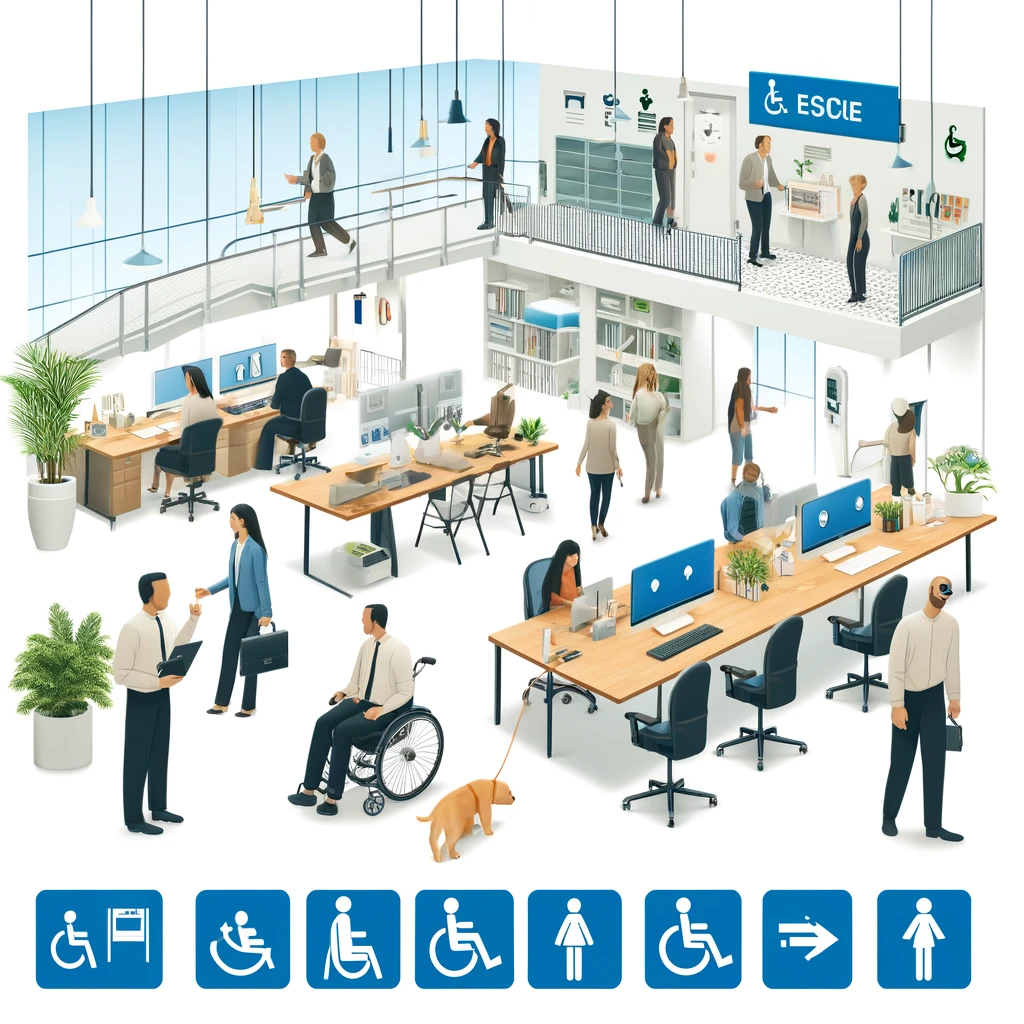
Creating a reasonable modification policy for customer-facing operations starts with a practical truth: businesses rarely struggle because they want to exclude people; they struggle because frontline teams lack clear rules for adapting service consistently, lawfully, and respectfully. A reasonable modification policy is the written framework that explains when and how an organization will adjust normal practices, procedures, environments, or communication methods so customers with disabilities can access goods and services on an equal basis. In customer-facing operations, that includes retail stores, restaurants, hotels, clinics, transportation counters, event venues, financial services offices, and digital support channels.
This topic matters because customer access failures quickly become compliance failures, complaint drivers, reputational risks, and operational inefficiencies. In my work reviewing service complaints and remediation plans, the same patterns repeat: staff deny a request because they have never seen it before, managers improvise inconsistent exceptions, and leadership discovers too late that there is no documented escalation path. A strong policy prevents those avoidable errors. It gives employees permission to solve problems, defines boundaries where safety or fundamental alteration concerns apply, and creates a record that supports complaint resolution and corrective action. It also serves as the hub for broader policies, complaints, and corrective action work, connecting accessibility commitments to training, incident logging, vendor controls, and continuous improvement. When done well, a reasonable modification policy reduces friction for customers and ambiguity for staff.
What a reasonable modification policy must cover
A complete policy begins by stating the purpose plainly: the organization will make reasonable modifications to policies, practices, and procedures when necessary to provide access to customers with disabilities, unless doing so would create a direct threat, fundamentally alter the nature of the service, or cause an undue burden where that standard applies. The policy should define who is covered, which locations and channels are included, and which teams own implementation. For customer-facing operations, scope should extend beyond physical sites to call centers, appointment scheduling, queues, websites used during service delivery, mobile apps, kiosks, and third-party contractors acting on the organization’s behalf.
Definitions matter. “Modification” should be explained with examples: reading a form aloud, allowing extra time during a transaction, accepting an alternative signature method, permitting a support person where appropriate, adjusting line procedures, or providing curbside service when an architectural barrier cannot be immediately removed. The policy should also distinguish modifications from personal devices or services the business is not required to provide. That distinction helps staff avoid promising things the organization cannot operationally sustain while still focusing on access outcomes. Reference recognized standards where relevant, such as the ADA Title III framework for public accommodations, Section 504 obligations for federally funded entities, and applicable state or local accessibility rules.
Most importantly, the policy must answer the questions employees actually face in the moment. Who can approve routine modifications? When is medical documentation unnecessary? How should staff respond if a customer’s need is not obvious? What if another customer complains about the accommodation? Can a location override a standard “no pets,” “no outside food,” “one person per fitting room,” or “photo ID only” rule? If the policy does not answer those operational questions, it will sit on a shared drive while employees continue improvising.
Building policy rules that work at the frontline
The best policies convert legal principles into decision rules a cashier, receptionist, host, or security officer can use in under a minute. I recommend organizing requests into three categories: routine, elevated, and restricted. Routine requests are common, low-risk, and presumptively approved, such as assisting with reading printed information, moving a conversation to a quieter area, or allowing a service animal in customer areas permitted by law. Elevated requests require supervisory review because they affect scheduling, staffing, privacy, medication handling, or secure areas. Restricted requests are those likely to involve direct threat, fraud controls, or a fundamental change to the service model, such as bypassing identity verification in banking or ignoring infection control requirements in a healthcare setting.
Documented examples reduce denials. A grocery store policy might allow staff to retrieve items for a customer who cannot reach shelves, open sealed packaging when requested, or process payment at a lower counter. A hotel may permit check-in from a seated position, text-based communication for a deaf guest, or relocation to an equivalent accessible room if the reserved room type becomes unavailable. A restaurant may modify ordering procedures for a customer with a speech disability or allow outside food needed for a medically restricted diet. These are reasonable because they preserve the core service while adapting the method of delivery.
Consistency depends on authority levels. Frontline staff should be empowered to approve routine modifications without manager signoff. Site managers should handle elevated cases and document rationale. Compliance, legal, risk, or an accessibility lead should review restricted cases and trends. Without that tiered authority, either too many requests are denied, or managers become the bottleneck for simple accommodations. A sound policy makes clear that speed matters: delayed access can be the same as denied access.
Complaint handling and corrective action pathways
Reasonable modification policies fail when they stop at service delivery and ignore what happens after something goes wrong. The hub function of this page is to connect policy language with complaints and corrective action. Every customer-facing operation should maintain an accessible complaint process with multiple intake options: in person, phone, email, web form, and where appropriate, relay or text channels. The process should invite reports about denied modifications, ineffective alternatives, staff conduct, inaccessible communication, and recurring barriers. If the complaint mechanism itself is inaccessible, the organization creates a second failure on top of the first.
Complaints should be categorized so patterns become visible. I use five practical buckets: request denied, request delayed, ineffective modification, communication barrier, and staff behavior concern. Each complaint should capture location, date, service line, requested modification, action taken, outcome, and whether immediate resolution occurred. Root cause analysis should then ask whether the issue stemmed from policy gaps, training failure, staffing, vendor limitations, physical barriers, or poor managerial judgment. Corrective action must address the actual cause. Retraining a cashier will not fix an inaccessible kiosk workflow, and replacing a sign will not solve a broken escalation process.
| Issue type | Common example | Likely root cause | Corrective action |
|---|---|---|---|
| Request denied | Customer refused extra assistance at checkout | Staff misunderstood policy scope | Targeted coaching and policy clarification |
| Request delayed | Manager approval took thirty minutes | No frontline authority | Expand routine approval rights |
| Ineffective modification | Printed form offered in tiny font only | No alternate format process | Create large-print and digital alternatives |
| Communication barrier | Phone-only complaint intake | Single-channel design | Add email, web, and relay options |
| Staff behavior concern | Customer asked intrusive medical questions | Training and script failure | Refresher training with approved language |
Time frames should be explicit. Acknowledge receipt quickly, resolve simple complaints within days, and set escalation deadlines for complex matters. Where remediation cannot be immediate, provide an interim solution. That practice improves trust and reduces repeat complaints. It also creates defensible records if regulators, auditors, or insurers later review the case.
Training, documentation, and governance
No reasonable modification policy survives contact with the public unless training is role-based and recurring. A generic annual module is not enough. Frontline teams need scripts, examples, and scenario drills. Supervisors need instruction on balancing access with safety, privacy, and fraud controls. Complaint handlers need taxonomy, evidence standards, and de-escalation skills. Executives need dashboard reporting that shows denial rates, recurring barriers, and corrective action closure. In practice, organizations with the fewest serious incidents are not the ones with the longest policies; they are the ones whose supervisors can explain the policy from memory and whose staff know exactly whom to call when a request falls outside routine authority.
Documentation should be proportionate. Record the request, the modification provided, and any escalation or denial rationale. Avoid collecting unnecessary medical information. In most customer service settings, staff do not need a diagnosis to provide a modification. They need to understand the barrier and the access solution. Keep records in a central log so trends can be measured across sites. Useful metrics include number of requests, approval rate, denial rate, repeat complaint rate, average resolution time, and top barrier categories by location. If one site generates far more denials than comparable sites, that is a governance signal, not random noise.
Governance also requires ownership. Assign an accountable leader for policy maintenance, legal review, training content, and data reporting. Review the policy at least annually and after significant incidents, regulatory changes, remodels, new technology deployments, or service redesigns. Vendor contracts should require cooperation with the policy, especially for security, valet, delivery, call center, and software providers. I have seen strong internal policies undermined by outsourced staff who were never trained on modifications, then blamed for failures they were never equipped to prevent.
Common mistakes and how to avoid them
The most common mistake is treating all exceptions as dangerous. A reasonable modification policy is not a loophole system; it is a managed access system. When organizations force every request through a risk lens, employees default to “no” because saying yes feels personally risky. The solution is predefined examples, approval tiers, and scripts that normalize modifications as part of standard service. Another frequent mistake is confusing consistency with rigidity. True consistency means using the same decision principles across locations, not imposing the same unchanged procedure on every customer regardless of disability-related barriers.
Another error is over-documenting. Some organizations create forms so long that staff stop using them or customers feel interrogated. Others under-document and cannot show what happened when complaints arise. The right balance is a short service log for routine matters and a fuller incident record for escalations, denials, safety concerns, or repeat failures. Technology can help: customer relationship management systems, ticketing tools like Zendesk or ServiceNow, and quality platforms can route issues and preserve evidence if configured properly.
Finally, many policies ignore digital touchpoints. If appointment booking, waitlist enrollment, payments, or complaint submission happen online, reasonable modifications must cover those moments too. A customer denied equal access through a kiosk or app experiences the same operational failure as a customer turned away at a counter. Effective hub governance therefore links this policy to web accessibility, communication access, incident management, and corrective action procedures.
A reasonable modification policy for customer-facing operations should make one promise real: access will be solved through clear rules, trained staff, and accountable follow-through. The strongest policies define scope, explain examples, assign approval authority, and build complaint and corrective action pathways into daily operations. They recognize valid limits involving safety, fraud prevention, and fundamental alteration, but they do not use those limits as excuses for avoidable denial. They also treat complaints as operational intelligence. Every denied request, delayed response, or ineffective workaround reveals whether the organization’s service model actually works for customers with disabilities.
For compliance and implementation teams, this page is the hub because policies, complaints, and corrective action are inseparable. A policy without complaint intake hides failures. Complaint logging without root cause analysis repeats them. Corrective action without governance fades after the first training cycle. Bring these elements together, review them with real customer scenarios, and test them across physical and digital channels. If your organization has not reviewed its modification process in the last year, start now: map the customer journey, identify where requests arise, and update the policy so frontline teams can deliver lawful, consistent, respectful access every day.
Frequently Asked Questions
What is a reasonable modification policy in customer-facing operations?
A reasonable modification policy is a written set of rules that explains how a business will adjust its usual way of serving customers when a person with a disability needs equal access to goods, services, programs, or facilities. In practical terms, it gives frontline employees and managers clear guidance on when they should modify standard practices, how they should respond to requests, and what steps they should take to make service accessible without creating confusion or inconsistency. Rather than leaving decisions to guesswork, the policy creates a repeatable process for handling accommodations respectfully and lawfully.
In customer-facing operations, these modifications can involve much more than physical access. They may include changing communication methods, allowing extra time during a transaction, assisting with form completion, adjusting a service process, permitting the use of assistive devices, or making exceptions to standard rules when needed to avoid disability-based barriers. The goal is not to give special treatment. The goal is to provide equal opportunity to participate in the same services that other customers receive.
A strong policy also helps organizations avoid the common operational problem of inconsistent service. Without a documented framework, one employee may say yes, another may say no, and a third may escalate unnecessarily. That inconsistency can damage customer trust and create legal exposure. A reasonable modification policy reduces that risk by defining the organization’s commitment, outlining examples of common modifications, identifying who can approve more complex requests, and explaining when a request may be denied because it would fundamentally alter the nature of the service or create a legitimate safety issue.
Why do businesses need a formal policy instead of handling accommodation requests case by case?
Handling requests one at a time without a formal policy may seem flexible, but in practice it often produces uneven outcomes. Employees under pressure tend to rely on instinct, past habits, or incomplete understanding of disability access obligations. That can lead to avoidable mistakes, such as denying a request too quickly, asking intrusive questions, applying rules too rigidly, or escalating minor issues that could have been resolved immediately. A formal policy gives staff a reliable decision-making framework so that similar situations are handled in similar ways.
A documented policy is especially important in customer-facing environments because service interactions are often fast, public, and dependent on frontline judgment. Employees need to know what authority they have, what types of modifications are commonly appropriate, what language to use with customers, and when to involve a supervisor. If those basics are not defined in writing, businesses often end up with service delays, customer frustration, and reputational harm that could have been prevented with better operational clarity.
There is also an important legal and risk-management reason for having a formal policy. A written policy shows that the organization has made a good-faith effort to create accessible and non-discriminatory service practices. It supports training, improves documentation, and helps leaders monitor how requests are handled across locations or departments. Most importantly, it shifts the culture from reactive problem-solving to proactive inclusion. Instead of treating disability-related requests as unusual exceptions, the organization treats them as a normal and manageable part of serving the public.
What should be included in a reasonable modification policy for frontline teams?
An effective reasonable modification policy should begin with a clear statement of purpose. It should explain that the organization is committed to providing customers with disabilities an equal opportunity to access its services and that it will make reasonable modifications to policies, practices, and procedures when necessary. This opening matters because it sets the tone for the entire document and tells employees that accessibility is part of standard service, not an optional courtesy.
The policy should then define key responsibilities and procedures. That includes explaining how customers may request a modification, whether requests can be made verbally or in writing, how quickly staff should respond, and who has authority to approve routine versus complex requests. It should also include examples of common modifications relevant to the business, such as reading forms aloud, offering alternative communication methods, allowing a support person in certain settings, adjusting queue procedures, or modifying a no-food or no-animals rule when legally required in connection with disability access. Specific examples make the policy easier for staff to apply in real situations.
Just as important, the policy should address limits and exceptions carefully. It should explain that the organization may deny a request if it would fundamentally alter the nature of the goods or services, create a direct safety threat that cannot be mitigated, or impose an undue burden where that standard is legally relevant. The policy should also provide an escalation path for unusual situations, basic documentation expectations, and a complaint or review mechanism if a customer believes a request was not handled appropriately. Finally, the policy should connect to training. A policy is only useful if employees understand how to use it under real-world service conditions.
How can businesses decide whether a requested modification is reasonable?
The best way to determine whether a modification is reasonable is to focus on function, necessity, and operational impact. First, staff should ask whether the modification is needed to give the customer meaningful access to the service. Second, they should consider whether the adjustment can be made without fundamentally changing what the business provides. Third, they should assess whether there are legitimate safety concerns or significant operational barriers and, if so, whether those concerns can be reduced through an alternative approach. This kind of analysis keeps the decision grounded in practical facts rather than assumptions about disability.
In many cases, the answer should be straightforward. If a customer needs information communicated in a different format, needs help navigating a standard process, or needs a small exception to a routine rule in order to receive the same service as others, that will often be reasonable. Problems usually arise when employees focus too much on whether a request is inconvenient rather than whether it is necessary and manageable. Minor disruption, extra time, or the need for a supervisor’s involvement does not automatically make a modification unreasonable.
It is also important to engage with the customer respectfully if the request is unclear. Staff should not make snap judgments or rely on stereotypes about what a person can or cannot do. Instead, they should ask limited, practical questions aimed at understanding the barrier and identifying an effective solution. If the exact request cannot be granted, the business should consider whether an alternative modification would still provide access. That approach demonstrates good faith, improves service outcomes, and greatly reduces the chance of conflict. Reasonableness is usually not about finding a perfect answer. It is about making a fair, informed, and workable effort to remove the barrier.
How should businesses train employees to apply a reasonable modification policy consistently and respectfully?
Training should turn the written policy into everyday service behavior. That means employees need more than a copy of the document. They need practical instruction on what reasonable modifications are, why they matter, what authority they have to resolve requests on the spot, and when they should escalate an issue. Training should be role-specific. Frontline staff need scripts, examples, and de-escalation techniques, while supervisors need deeper guidance on evaluating harder requests, documenting decisions, and coaching teams after incidents.
The most effective training uses realistic scenarios drawn from the business’s actual operations. For example, staff should practice what to do if a customer asks for assistance completing a form, requests extra time during a transaction, uses a service animal, needs communication support, or asks for a modification to a standard access rule. Scenario-based training helps employees move beyond abstract compliance language and build confidence in making respectful, legally sound decisions under pressure. It also helps organizations identify unclear parts of the policy before they become customer service failures.
Consistency requires reinforcement over time. Businesses should include the policy in onboarding, refresh it regularly, and update it when procedures, facilities, or legal expectations change. Managers should review trends in requests, complaints, and service breakdowns to see where staff need more support. Just as importantly, training should emphasize tone. Customers should not be made to feel burdensome, doubted, or singled out when requesting a modification. Employees should learn to respond with calm professionalism, focus on access rather than suspicion, and communicate what they can do rather than immediately explaining what they cannot. When training combines legal awareness, operational clarity, and respectful communication, the policy becomes a reliable tool rather than a document that sits unread.