Playground Ground-Level vs Elevated Play Components: ADA Scoping Made Practical starts with a simple question I hear from park directors, school facility managers, and playground sales teams every week: when a play feature is on the deck versus on the ground, what exactly changes under ADA scoping rules? In practice, that distinction drives route design, transfer systems, ramp decisions, surfacing, maintenance planning, and ultimately whether a playground serves children with disabilities in a meaningful way. For anyone responsible for recreation and sports facilities, getting this right is not a narrow compliance exercise. It shapes capital budgets, risk management, inclusion outcomes, and public trust.
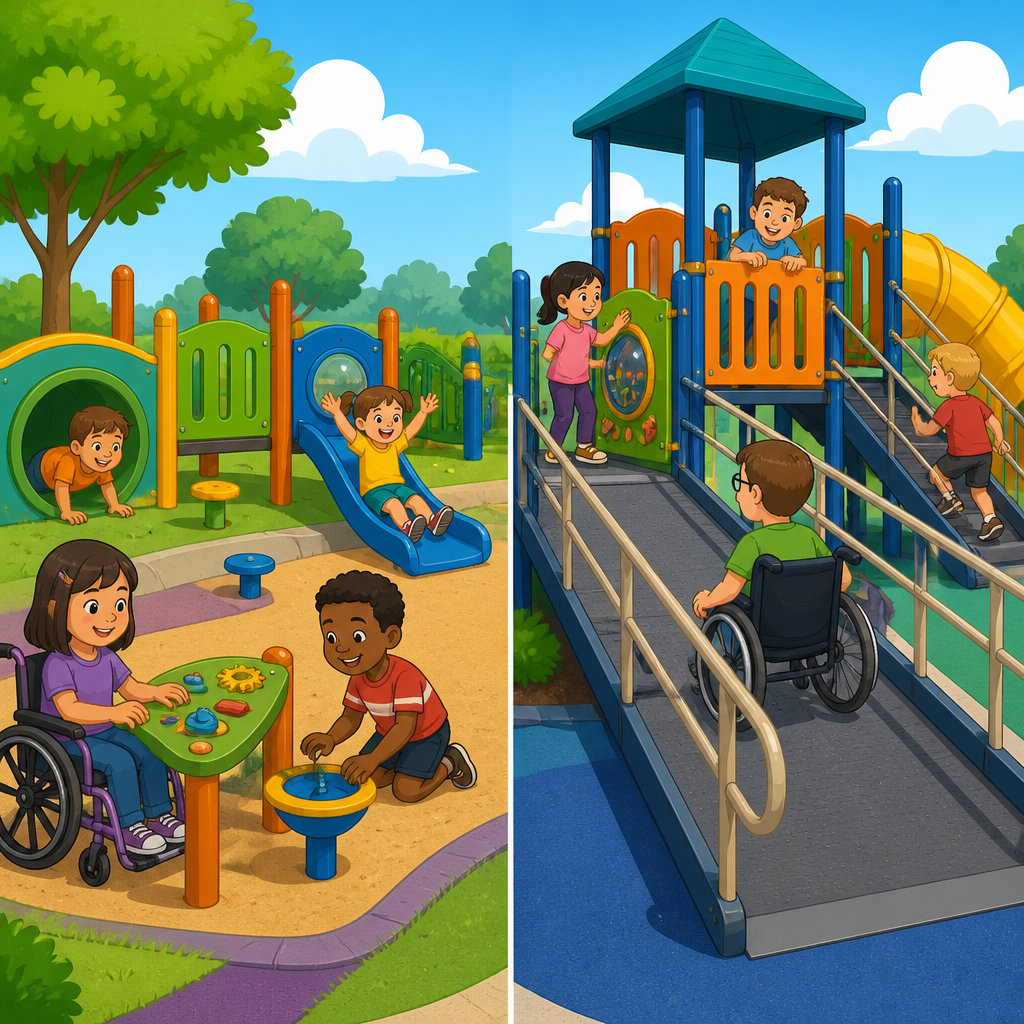
Within accessibility standards, ground-level play components are activities approached and entered from the playground surface, such as spring rockers, play panels, musical instruments, sand tables, and standalone climbers designed at grade. Elevated play components are reached from a structure or composite play deck above the surface, such as slides, overhead ladders, elevated panels, bridges, and deck-connected activity stations. The ADA standards for play areas apply scoping rules differently to each category because children use them differently and because accessible circulation to them requires different design strategies.
I have worked through these distinctions on new municipal parks, school retrofits, and warranty disputes after inspections, and the same problem appears repeatedly: teams memorize fragments of the rule but miss the logic. The practical logic is this. Children must be able to access a range of play experiences, not just enter the site. That means an accessible route into the play area, compliant surfacing along that route, and a sufficient number and variety of accessible play components. It also means designers must count components correctly, identify whether they are ground-level or elevated, and provide the required access method, whether by route, ramp, or transfer system.
This matters beyond playgrounds because recreation and sports facilities are increasingly planned as connected systems. A parent may evaluate a site as a whole: parking, route from the sidewalk, restroom access, seating, shade, spectator areas, wayfinding, and whether siblings with different abilities can participate together. As the hub page for recreation and sports facilities under ADA accessibility standards, this article explains the core playground scoping issue while situating it among related facility types such as sports fields, pools, courts, picnic areas, and outdoor recreation support amenities. If you understand the ground-level versus elevated distinction clearly, you can make better decisions across the broader recreation portfolio.
How ADA scoping treats playground components
The governing framework for play areas comes from the ADA Standards for Accessible Design, with technical support long reinforced by the U.S. Access Board’s play area guidance. The scoping rules focus on newly designed and newly constructed play areas, as well as altered portions of existing sites. A play area is defined by equipment intended for children’s play, often linked by a unified surface. Once that area includes enough components to trigger the standards, the design team must identify the number and type of components and then determine the required accessible route and distribution of accessible experiences.
Ground-level components must be connected by an accessible route directly from site arrival points and within the play area. Elevated components also require access, but the standards recognize two possible methods: ramps or transfer systems. Which method is permitted, and how many elevated components must be reached by each method, depends on the size and configuration of the play structure. In plain terms, smaller composite structures may use transfer access to reach required elevated experiences, while larger structures trigger ramp obligations for a meaningful portion of the elevated play opportunities.
The category matters because the count is not interchangeable. Teams sometimes assume that if a child can access several ground-level features, the elevated deck can remain largely inaccessible. That is wrong. The standards require both an accessible number of ground-level components and an accessible number of elevated components, with additional attention to variety. Variety is critical because a playground is not accessible if all reachable features offer only one kind of activity, such as sensory panels, while all motion, climbing, and social experiences remain out of reach.
Ground-level play components: what must be accessible
Ground-level components are often the easiest place to make or break compliance. They include freestanding items and activities approached from the surface without climbing onto a deck. Common examples are adaptive swings with route access to the transfer point, interactive panels mounted at reachable heights, talk tubes, music chimes, spinners designed for wheelchair entry, and accessible sand or water play tables. To count as accessible, the component must be connected by an accessible route and meet applicable reach and clear space requirements.
The scoping rule for ground-level components has two practical parts. First, a minimum number must be on an accessible route, based on the number of elevated components provided. Second, the accessible ground-level components must offer different types of play experiences. That second requirement is where many layouts fail plan review. I have seen projects with six accessible ground-level pieces, all manipulative panels lined along the perimeter. The count looked safe on paper, but the lack of diversity created a weak and potentially noncompliant result because children could not access a representative range of play.
In a successful design, the route serves activities that support sensory play, motion, social interaction, and dramatic or imaginative play. For example, a neighborhood park might provide a wheelchair-accessible spinner, ground-level drums, a double sand table, a communication panel, and a playhouse. That mix serves multiple play values and gives children options comparable in dignity to peers using elevated decks. The route must remain stable, firm, and slip resistant as maintained, which is why surfacing selection and testing matter as much as equipment selection.
Elevated play components: decks, ramps, and transfer systems
Elevated play components are attached to a composite structure and entered from a platform or deck above the surface. Typical examples include slides, crawl tunnels between decks, elevated steering panels, climber transitions attached to decks, and bridge-linked activity nodes. Because these elements are above grade, the key scoping question is how a child with a mobility disability reaches the deck. The standards permit access by ramp or transfer system, but they do not treat those methods as equal in all situations.
A transfer system usually includes a transfer platform and transfer steps that allow a child to move from a mobility device onto the structure. It can expand access significantly, especially on compact neighborhood playgrounds where a full ramp system would consume most of the budget and footprint. However, transfer access requires upper-body strength, balance, and caregiver judgment, so it does not provide the same level of independent use as a ramp. A ramped route, by contrast, supports broader independent access to elevated experiences and often improves circulation for caregivers as well.
Where larger structures are involved, the standards require a prescribed number of elevated components to be reached by ramp. This is the point many owners overlook when value engineering. Vendors may suggest removing a long ramp run to save cost and replacing it with a transfer station. Sometimes that is acceptable on a smaller structure. Often it is not. Once a structure reaches certain thresholds of elevated play opportunities, ramp access is no longer optional for the required portion. During design review, count every elevated component carefully, including attached play events people forget to classify.
| Component type | Typical examples | Primary access expectation | Common compliance risk |
|---|---|---|---|
| Ground-level | Music panel, spinner, sand table, spring rocker | Accessible route from entry and through play area | Too little variety among accessible options |
| Elevated | Slide, bridge activity, deck panel, overhead event from platform | Ramp or transfer access depending on structure size | Undercounting elevated events and omitting required ramps |
| Support element | Entry gate, seating, shade, route to restroom | Accessible site connection to play area | Treating equipment compliance as enough for the full facility |
Counting components correctly and avoiding plan-review errors
Accurate counting sounds simple, but it is the source of many expensive corrections. Start by listing each play component, not each structure. A single composite unit may contain dozens of individual play components: one slide, two climbers, three panels, one bridge, one overhead ladder, and so on. Then classify each as ground-level or elevated. Next, identify which are intended to be accessible and by what means. This exercise should happen before procurement, not after installation drawings are stamped.
One frequent error is counting circulation elements as play components. A deck, guardrail, or the ramp itself is not a play component unless it incorporates an actual play activity. Another error is overlooking duplicated elements. If the structure has three identical slides from different decks, they are three elevated play components for scoping purposes. Teams also misclassify berm-built designs where a deck meets grade at one side. If the child approaches and enters from the play surface at grade, it may function as ground-level access, but details matter and should be reviewed against the technical criteria.
I advise owners to request an accessibility matrix from the manufacturer showing total components, component types, elevated counts, ramp-served counts, transfer-served counts, and accessible ground-level variety. This document becomes invaluable during bid review and for future alterations. If a component is substituted later because of lead time or budget, the matrix makes clear whether the replacement changes the scoping count. Without that discipline, a seemingly minor swap can reduce variety or drop a ramp-served elevated component below the required threshold.
Surfacing, routes, and maintenance: where compliance often fails after opening day
Even when the component count is correct, the playground can fail in use because the accessible route is not truly usable. Accessible surfacing in play areas typically relies on unitary systems such as poured-in-place rubber or tiles, or engineered wood fiber installed and maintained to meet accessibility performance requirements. Each option has tradeoffs. Poured-in-place offers strong route continuity and lower daily maintenance, but it can crack, wear at swing exits, and cost more upfront. Engineered wood fiber can be compliant and cost effective, yet it requires frequent leveling, replenishment, and documentation.
ASTM F1951 is the standard test method commonly used to evaluate accessibility of surface systems for mobility over and through the surface, while ASTM F1292 addresses impact attenuation. Those standards do not replace ADA obligations, but they are essential reference points when specifying and verifying products. In the field, I have seen accessible routes across loose-fill surfaces deteriorate within months because wear mats ended too early, drainage pooled water, or maintenance staff were not trained to restore depth and firmness. Compliance is operational, not just design-based.
Route design should connect parking, passenger drop-off, sidewalks, restrooms, drinking fountains, and seating to the play area. Within the play area, turning space, clear widths, and maneuvering areas matter at transfer points and around ground-level events. Recreation and sports facilities should treat maintenance staff as part of the accessibility team. Inspection logs, surface top-off schedules, and post-storm checks are just as important as the original drawing set. A beautiful accessible playground that becomes impassable after one season does not meet the public need the standards are meant to protect.
Recreation and sports facilities: using playground scoping as the hub for broader accessibility
Playgrounds are often the gateway issue for a larger recreation accessibility program. Once an agency understands component scoping, it can apply the same disciplined thinking to sports fields, courts, pools, splash pads, picnic zones, and spectator areas. The core question stays consistent: can a person with a disability arrive, circulate, participate, and use the same essential features with dignity? For sports facilities, that may mean accessible team benches, routes to dugouts, companion seating, locker access, and clear paths to concessions and restrooms.
For aquatic facilities, accessible means of entry such as pool lifts, sloped entries, transfer walls, transfer systems, or accessible stairs come into play, depending on pool type and size. For courts and fields, the focus shifts to route continuity, gate hardware, player seating, and accessible clear floor spaces adjacent to activity areas where required. For picnic and support amenities, agencies should review table knee clearance, grill reach ranges, shade structures, drinking fountains, and toilet rooms. The lesson from playgrounds is transferable: count correctly, connect routes, verify technical criteria, and maintain the accessible features after opening.
As a content hub for recreation and sports facilities, this page should connect naturally to deeper resources on accessible play surfacing, transfer systems, pool entry requirements, sports spectator seating, outdoor routes, and restroom design. That internal structure helps facility owners answer the next question quickly. More importantly, it mirrors how real projects are managed. Accessibility decisions do not happen in isolation. A parent deciding whether to visit a park experiences the site as one integrated recreation environment, and your standards strategy should reflect that reality.
Ground-level versus elevated play components is one of the most practical distinctions in ADA playground design because it turns abstract accessibility language into countable, buildable decisions. When teams define the categories correctly, count components early, provide required ramp or transfer access, connect diverse ground-level experiences by an accessible route, and maintain the surfacing, they avoid the most common compliance failures. They also create play environments children can actually use, not just technically enter.
For recreation and sports facilities, that mindset scales well beyond the playground fence. The same discipline supports accessible pools, courts, fields, picnic areas, restrooms, and spectator amenities. Start every project by asking four questions: what are the user experiences, which elements must be accessible, how does the route connect them, and what maintenance keeps them usable over time? If your current park standards or capital plans do not answer those questions clearly, review your recreation portfolio now and build an accessibility checklist that design, procurement, and operations teams can use together.
Frequently Asked Questions
What is the difference between a ground-level play component and an elevated play component under ADA scoping rules?
The distinction is simpler than it first sounds, but it affects nearly every practical design decision on a playground. A ground-level play component is a feature approached and used at the ground surface, such as a spring rider, ground-level spinner, play panel, or standalone activity located directly on the accessible route. An elevated play component is a feature reached from a composite play structure above the ground plane, typically by steps, ladders, climbers, transfer systems, or ramps. Think of the deck or platform as the dividing line: if the child uses the feature from the ground, it is ground-level; if the child must get up onto the structure to use it, it is elevated.
Why that matters is that ADA scoping treats the two categories differently. Ground-level components are tied closely to accessible route requirements and are often used to provide variety and meaningful play opportunities that can be reached without climbing onto a deck. Elevated components trigger scoping related to how many elevated experiences must be connected by ramps or transfer systems, depending on the size and configuration of the structure. In other words, classification is not just a labeling exercise. It directly influences how many accessible play experiences must be provided, what type of route must connect them, and whether the design can realistically support children with different mobility needs.
In real-world planning, this is where teams often get tripped up. A play panel mounted under a deck may count very differently from a panel installed up on the deck. A slide reached only from a platform is elevated, even if its exit ends at grade. A musical feature installed on a freestanding post at the perimeter is ground-level if it is served by the accessible route. Getting this distinction right early helps avoid expensive redesigns later, especially when layout, surfacing, drainage, and budget are already locked in.
How does ADA scoping change when a playground has more elevated play components?
As the number of elevated play components increases, ADA scoping becomes more structured. The rules do not simply ask whether a child can get onto the structure somehow. They look at how many elevated components are provided and how many of those experiences are actually connected by an accessible means, either a ramp or a transfer system. For smaller composite structures, transfer access may satisfy the minimum requirement for reaching a certain number of elevated play components. As structures get larger and offer more elevated experiences, ramp access becomes more important because it allows broader independent use and supports children who cannot use transfer systems.
This is where practical design judgment matters. A playground with multiple decks, climbers, slides, and activity panels may technically meet a minimum by connecting a certain number of elevated elements, but that does not always translate to an equitable play experience. If the only accessible elevated route leads to one platform with limited activities, children with mobility disabilities may still be segregated from the main action. Good scoping decisions go beyond counting components and consider whether the accessible route reaches a representative range of play types, social zones, and challenge levels.
From a planning perspective, more elevated components usually mean more attention to circulation width, turning space, slopes, transitions, guardrails, and maintenance of the accessible route. Ramped systems require more footprint and cost, but they can dramatically improve usability. Transfer systems take less space and may meet minimum scoping in some cases, but they do not serve every user. That is why project teams should evaluate not only what the standard requires on paper, but also what the intended users need in practice. The more elevated the play experience becomes, the more important it is to make access intentional rather than incidental.
When is a ramp needed, and when can a transfer system be used instead?
This is one of the most common implementation questions because ramps and transfer systems solve access in very different ways. A ramp provides continuous accessible circulation onto and through elevated play areas for users who remain in a mobility device or who need a more stable route. A transfer system, by contrast, allows a child to move from a wheelchair or mobility device onto the structure by transferring to a platform and then continuing through the play system. ADA scoping allows transfer systems in certain configurations, particularly on smaller structures, but they are not interchangeable with ramps from a usability standpoint.
In practical terms, ramps are usually the stronger long-term choice when the footprint and budget allow them. They support a wider range of users, improve social inclusion because children can stay with peers on the structure, and make supervision easier for caregivers. They also help connect multiple elevated activities in a way that feels integrated rather than token. The tradeoff is that ramps take space, affect layout geometry, and can increase installation and surfacing costs. Designers also have to account for slope, landings, edge protection, and how the route ties back into the larger accessible circulation path through the site.
Transfer systems can be appropriate and compliant in some situations, especially where site constraints make ramping impractical. However, they require upper-body strength, balance, and independent transfer ability that not every child has. That means a transfer-based solution may meet a minimum scoping threshold while still leaving out many users. The smartest approach is to avoid treating this as a binary compliance decision. Instead, look at user population, age group, equipment size, available space, and desired play value. If the goal is practical inclusion rather than minimum box-checking, ramps often provide the better answer, even when a transfer system might be technically permitted.
How do accessible routes and surfacing affect compliance for ground-level versus elevated components?
Accessible routes are the backbone of playground usability, and they affect ground-level and elevated components in different but connected ways. For ground-level play components, the accessible route must bring children to the component itself so they can approach and use it. That means route continuity, width, slope, cross slope, and maneuvering space all matter at the point of use, not just at the playground entrance. A beautifully selected accessible activity does not help much if it sits beyond unstable surfacing, awkward transitions, or ponding water that makes the route unusable after rain.
For elevated components, the route question becomes more layered. First, the child has to reach the composite structure from the site entry or other site amenities such as parking, restrooms, or sidewalks. Then the structure must provide the required accessible means to the elevated components, whether by ramp or transfer system. That creates a chain of compliance: site access, entry access, internal circulation, and access to the play event itself. If any link is weak, the overall play experience is weakened. This is why route design cannot be treated as a late-stage civil detail or surfacing line item. It is central to scoping.
Surfacing is especially important because it is often the first thing to fail in the field. Engineered wood fiber, bonded rubber, poured-in-place, and hybrid systems all have different maintenance profiles. Some may be compliant when installed but become difficult to traverse if not maintained. Ground-level components are especially vulnerable to this problem because they depend so directly on a stable route at grade. Elevated access is affected too, because route failures at entry points can prevent users from ever reaching a transfer system or ramp. The practical takeaway is that compliance is not only about design intent. It is also about choosing surfacing and maintenance protocols that preserve accessibility season after season.
What are the most common mistakes owners and designers make when applying ADA scoping to playground play components?
The most frequent mistake is reducing the process to a simple component count without asking whether the accessible play experience is actually meaningful. Teams sometimes assume that if they have added a few ground-level activities and one transfer point, the project is done. But ADA scoping is not meant to encourage isolated accessible moments. It is meant to support an integrated system of play opportunities. If the accessible components are all low-interest, repetitive, or separated from where other children are playing, the design may satisfy a narrow interpretation of compliance while falling short in practice.
Another common error is misclassifying components. Features attached to a structure are sometimes counted as ground-level when they are actually elevated because they are used from a deck or platform. Conversely, freestanding items near a structure may be overlooked even though they can help satisfy ground-level variety requirements if properly connected by the accessible route. These classification mistakes can snowball into incorrect scoping calculations, poor budgeting, and last-minute revisions that affect layout, drainage, and procurement.
A third major issue is forgetting that accessibility must be durable, not just installable. Owners may choose surfacing that meets initial performance criteria but lacks a realistic maintenance plan. Designers may show compliant routes on plan while ignoring field conditions such as settlement, edge separation, or transitions between pavement and resilient surfacing. Sales teams may focus on equipment counts without coordinating with landscape architects, civil engineers, or installers on how users actually reach and move through the space. The best way to avoid these pitfalls is to evaluate the playground as a complete accessible environment: arrival, entry, circulation, play choice, social inclusion, maintenance, and long-term usability. That is what turns ADA scoping from a confusing checklist into a practical design tool.