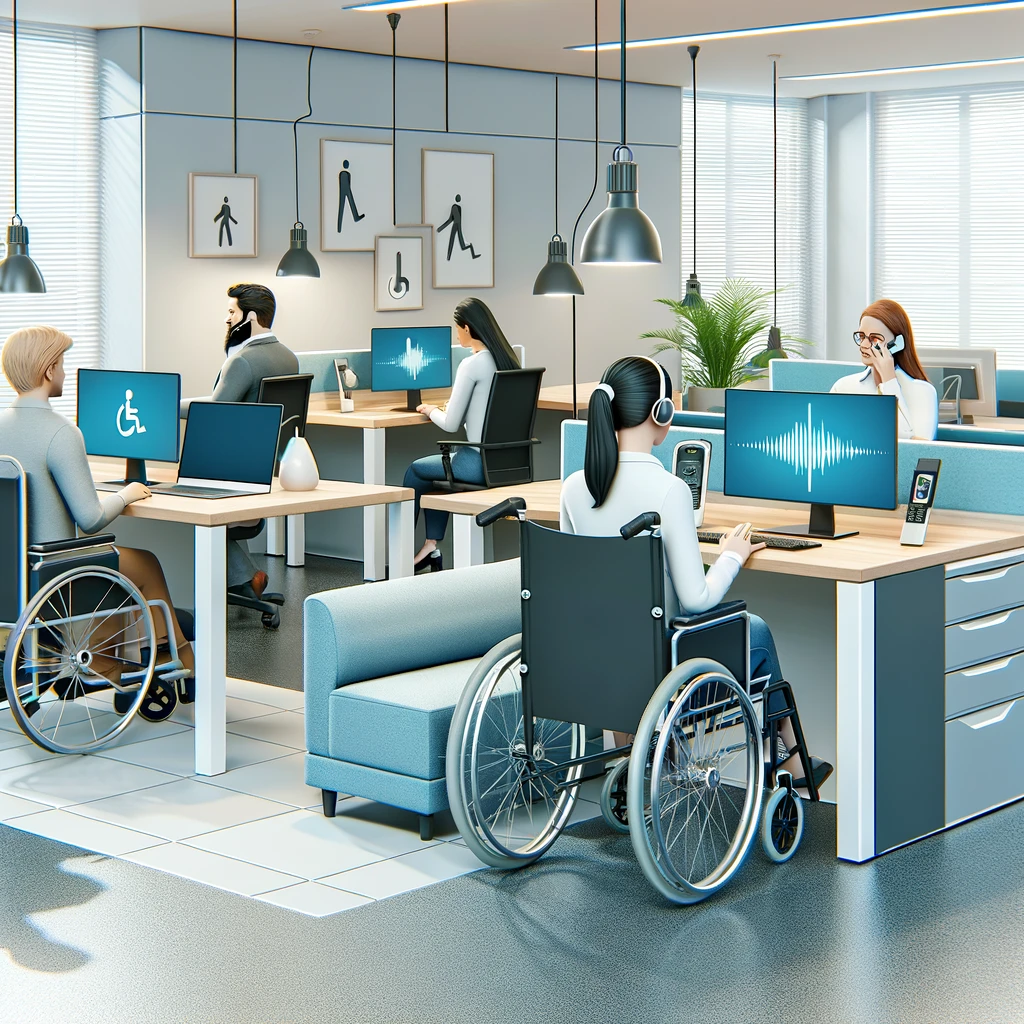
The Americans with Disabilities Act (ADA) signed into law in 1990, is a foundational piece of civil rights legislation aimed at preventing discrimination against individuals with disabilities. It has been a crucial step in creating an accessible and inclusive society by ensuring that public spaces, workplaces, schools, and more are accessible to everyone, regardless of their physical or mental capabilities.
The ADA’s scope covers various aspects of life, including employment, public services, public accommodations, telecommunications, and other critical areas. While the law sets important standards and provides vital protections, the journey toward genuine disability inclusion goes well beyond mere compliance. It involves fostering an environment that embraces diversity, actively accommodates differences, and continuously evolves to meet the needs of all individuals. Real inclusion means recognizing that accessibility is a fundamental right and a vital component of a thriving community.
This article aims to delve deeper into the ADA, exploring the ways organizations and communities can move beyond tick-the-box compliance to a more comprehensive, proactive approach towards true disability inclusion. From understanding the historical context to reviewing case studies of successful integration and offering actionable insights, we will paint a holistic picture of how inclusion can be meaningfully achieved.
Historical Context
Before the ADA, Americans with disabilities faced significant barriers in every facet of life. Accessibility in public and private spaces was a rarity, and employment opportunities were scarce due to widespread discrimination. The societal attitudes towards individuals with disabilities were pervaded with prejudices, misunderstanding, and exclusion. This resulted in marginalized lives where basic rights and dignities were often compromised.
In response to this grim reality, the disability rights movement gained momentum in the 1960s and 1970s, paralleling the civil rights movements of other marginalized groups. Advocacy from individuals, organizations, and legislative champions paved the way for the introduction of the ADA. Key figures, like Justin Dart Jr., known as the “Father of the ADA,” pushed tirelessly for systematic change and equal rights.
The passing of the ADA in 1990 marked a watershed moment. It was an unambiguous statement that discrimination against individuals with disabilities was not only morally wrong but also illegal. However, it’s essential to remember that the ADA is not the conclusion but the initiation of a continuous journey toward equality and inclusivity. Ongoing advocacy is necessary to address evolving challenges and to ensure that the progress made is not merely preserved but built upon.
ADA Title Breakdown
The ADA is structured into five titles:
- Title I: Employment – prohibits job discrimination against individuals with disabilities in the private sector and state and local governments.
- Title II: Public Services – prevents discrimination by public entities, ensuring access to all programs, services, and activities provided by local and state governments.
- Title III: Public Accommodations – mandates that businesses and non-profits that serve the public must provide accessible facilities.
- Title IV: Telecommunications – requires telephone and internet companies to provide a system of relay services for individuals who use telecommunication devices for the deaf (TTYs).
- Title V: Miscellaneous Provisions – covers various issues including relationship to other laws, state immunity, and its impact on insurance providers and benefits.
Each title introduces specific requirements and standards to be followed, making sure that no aspect of participation in public life is left unregulated. Compliance with these titles is essential in creating a baseline for accessibility and equality. However, real progress necessitates an ethos of voluntary, enthusiastic inclusion beyond the enforceable requirements of the ADA.

Success Stories of Disability Inclusion
There are numerous inspiring examples of organizations and communities that have gone above and beyond mere compliance. These entities have embraced inclusion as a core value, leading to innovative practices and remarkable success stories.
Consider Microsoft, a company that has established numerous initiatives focused on disability inclusion. Microsoft’s commitment to accessibility is showcased through their products, hiring practices, and workplace culture. Their creation of the Adaptive Controller for Xbox is a prime example of innovation born from an inclusive mindset. It significantly enhances the gaming experience for individuals with limited mobility, positioning Microsoft as a leader in technological accessibility.
Another exemplar is The Metropolitan Museum of Art, which has developed extensive programs to ensure inclusivity for visitors with disabilities. Their Access Programs provide multisensory experiences and assistive tours, making world-class art accessible to those with physical, sensory, and cognitive disabilities.
These success stories illustrate that organizations can thrive by embracing a culture of inclusion, benefiting not just the individuals involved but also the broader community and the organization itself through enhanced innovation, diversity, and social responsibility.
Practical Steps for Holistic Inclusion
Achieving true inclusion extends beyond legal obligations. Here are some practical steps to foster a genuinely inclusive environment:
- Commit to Inclusive Culture: Train staff on disability awareness and etiquette. Implement policies that explicitly support inclusivity and address discrimination.
- Accessible Physical Spaces: Go beyond minimum ADA requirements. Regularly assess and update facilities to ensure full accessibility for everyone.
- Inclusive Digital Presence: Ensure your websites and online services meet accessibility standards, such as WCAG 2.1. Test your digital properties with actual users with disabilities to identify and fix gaps.
- Hire Inclusively: Actively recruit and support workers with disabilities. Create pathways for advancement and ensure the workplace accommodates their needs.
- Engage the Disability Community: Build relationships with disability advocacy groups to gain valuable insights and feedback on how to improve inclusivity efforts.
Organizations that take these steps show a commitment to inclusivity that goes beyond compliance. They recognize the value that diverse perspectives bring to innovation and community cohesion.
The Role of Technology in Promoting Inclusion
Technology plays a pivotal role in advancing disability inclusion. From assistive devices to accessible software, the tech industry has a responsibility to design with inclusivity in mind.
Voice recognition software, screen readers, and other assistive technologies can dramatically improve the daily lives of individuals with disabilities. Companies like Apple have integrated features such as VoiceOver and Live Listen into their devices, making technology more accessible. Similarly, Google’s accessibility initiatives are setting new benchmarks for inclusivity across various platforms.
Artificial Intelligence (AI) and Machine Learning (ML) are opening new frontiers for disability inclusion. Technologies that can interpret and contextualize human needs will redefine accessibility. For instance, AI-powered speech-to-text applications are transforming how individuals with hearing impairments communicate.
To continuously leverage technology for inclusivity, it’s imperative for tech companies to collaborate with the disability community. Innovative solutions often arise from direct engagement and understanding of real-world challenges faced by individuals with disabilities.
Future Directions in Disability Inclusion
The future of disability inclusion lies in a holistic approach that embraces evolving technologies, progressive policies, and cultural shifts towards inclusivity. Trends such as remote work have opened new possibilities for individuals with disabilities, making the conversation around workplace accessibility more relevant than ever.
Legislation and policy will need continual updates to address new challenges and opportunities. The rise in mental health awareness, for instance, has brought attention to ensuring workplace practices support mental well-being alongside physical accessibility.
Intersectionality is another critical consideration. Disability inclusion efforts must recognize and address the unique challenges faced by individuals who belong to multiple marginalized groups. This intersectional approach is essential for creating truly inclusive environments.
Moreover, global perspectives on disability inclusion can offer valuable insights. Many nations are pioneering initiatives that could serve as models for others. Utilizing international frameworks and understanding diverse cultural contexts can enhance the effectiveness of local inclusivity efforts.
Conclusion
The Americans with Disabilities Act was a monumental step towards ensuring equal opportunities and rights for individuals with disabilities. However, to achieve true disability inclusion, society must move beyond the confines of legal compliance. This involves a proactive approach in creating accessible environments, adopting inclusive practices, and fostering technological innovations that cater to diverse needs.
True inclusion is a continuous journey that necessitates collective effort and unwavering commitment. Organizations, policymakers, communities, and individuals play integral roles in shaping a more inclusive world. By learning from historical contexts, celebrating success stories, implementing practical steps, leveraging technology, and envisioning future directions, we can work towards a society where accessibility and inclusion are inherent, not merely regulatory obligations.
Ultimately, embracing diversity and inclusion enriches everyone, fostering a world that values each individual’s unique contributions. It’s an endeavor that requires passion, dedication, and a vision for a more accessible and equitable future.
Frequently Asked Questions
1. What is Disability Inclusion and how does it extend beyond ADA compliance?
Disability inclusion refers to creating environments where individuals with disabilities are welcomed, valued, and empowered to participate in all aspects of society without barriers. While the Americans with Disabilities Act (ADA) plays a fundamental role in ensuring rights and accessibility, inclusion goes beyond legal requirements. It encompasses proactive engagement, community building, and systemic change to create a world where people of all abilities can thrive. This means fostering workplaces that celebrate diverse talents, promoting universal design in public spaces, and nurturing educational environments that encourage participation and equity for students with disabilities. Inclusion means moving past compliance to genuinely integrate diverse perspectives and capabilities into the heart of organizations, local communities, and broader society.
2. How can workplaces move beyond ADA compliance to achieve true disability inclusion?
Workplaces can progress beyond ADA compliance by adopting comprehensive approaches that embrace the principles of diversity and inclusion holistically. This starts with fostering an organizational culture that values diversity, where leadership is actively engaged in disability inclusion initiatives. It involves revising recruitment practices to ensure accessibility from the initial application process through to the interview and onboarding stages. Training programs for all employees on disability awareness and inclusive communication can also help create an empathetic and understanding workplace environment. Additionally, implementing mentorship programs that connect employees with disabilities to leaders and peers can facilitate professional development and empowerment. To ensure spaces are genuinely inclusive, companies should consider universal design principles in their physical and digital spaces. Beyond physical accommodations, workplaces should encourage open dialogues about disabilities and support employee resource groups that advocate for ongoing improvements in inclusion practices.
3. In what ways does the educational system need to evolve to support disability inclusion beyond ADA guidelines?
The educational system has made strides in accessibility due to ADA compliance, but true inclusion requires more than just meeting the minimum legal standards. Schools and universities need to integrate inclusive education practices, which means adapting teaching methods to cater to diverse learning needs and ensuring curricular content reflects the experiences and histories of individuals with disabilities. It involves designing classrooms and curricula that are universally accessible, where assistive technologies are readily available and educators are trained to support students with a range of abilities. Collaboration with students and their families is crucial to understand individual needs and preferences. Peer mentorship programs and inclusivity-focused student organizations can also play pivotal roles in fostering a sense of belonging and community within educational institutions. To promote holistic development, institutions must dedicate resources to career support services specifically tailored for students with disabilities, ensuring they receive equal opportunities in their transitions from education to employment.
4. How can public spaces and services advance disability inclusion beyond what ADA mandates?
Public spaces and services advancing beyond ADA mandates involve embracing the concept of universal design, which aims to make environments usable by all people, to the greatest extent possible, without the need for adaptation or specialized design. This includes designing spaces that go beyond basic accessibility features like ramps and elevators, to incorporating sensory-friendly elements and intuitive navigation aids for individuals with different cognitive or sensory needs. Public transportation systems should ensure seamless, barrier-free travel for all users, possibly by employing technology to provide real-time accessibility updates and dynamic route planning. Recreational areas such as parks, theaters, and museums should engage in programs and activities that include everyone and provide loyal experiences regardless of one’s abilities. Public services must also ensure communication access by offering sign language interpreters, braille materials, and captioning services, guaranteeing that individuals with disabilities have equal access to information and engagement opportunities. Community engagement and feedback from people with disabilities can guide these public entities in continually improving and adapting spaces and services to better meet their needs.
5. What role can technology play in promoting disability inclusion beyond the basic requirements of ADA?
Technology can be a powerful ally in promoting disability inclusion, offering innovative solutions that go far beyond the scope of ADA. Assistive technologies such as screen readers, voice recognition software, and alternative communication devices give individuals with disabilities the tools they need to navigate and interact with the world on their terms. Emerging technologies, like artificial intelligence and the Internet of Things (IoT), can further enhance accessibility by automating and customizing experiences in real-time. For example, AI can provide personalized recommendations for accessibility features in digital platforms based on user preferences. Meanwhile, IoT-enabled devices can facilitate independent living by automating household functions or providing real-time health monitoring. Virtual reality (VR) and augmented reality (AR) have the potential to transform education and training by creating immersive, adaptable learning environments that cater to various learning styles and abilities. Moreover, technology offers unprecedented opportunities for remote work and education, providing flexible options for persons with disabilities that can lead to increased participation and inclusivity in both professional and educational settings. For technology to fulfill its potential in disability inclusion, developers and businesses must prioritize accessibility and collaborate with the disability community to ensure that innovations genuinely address their needs and aspirations.