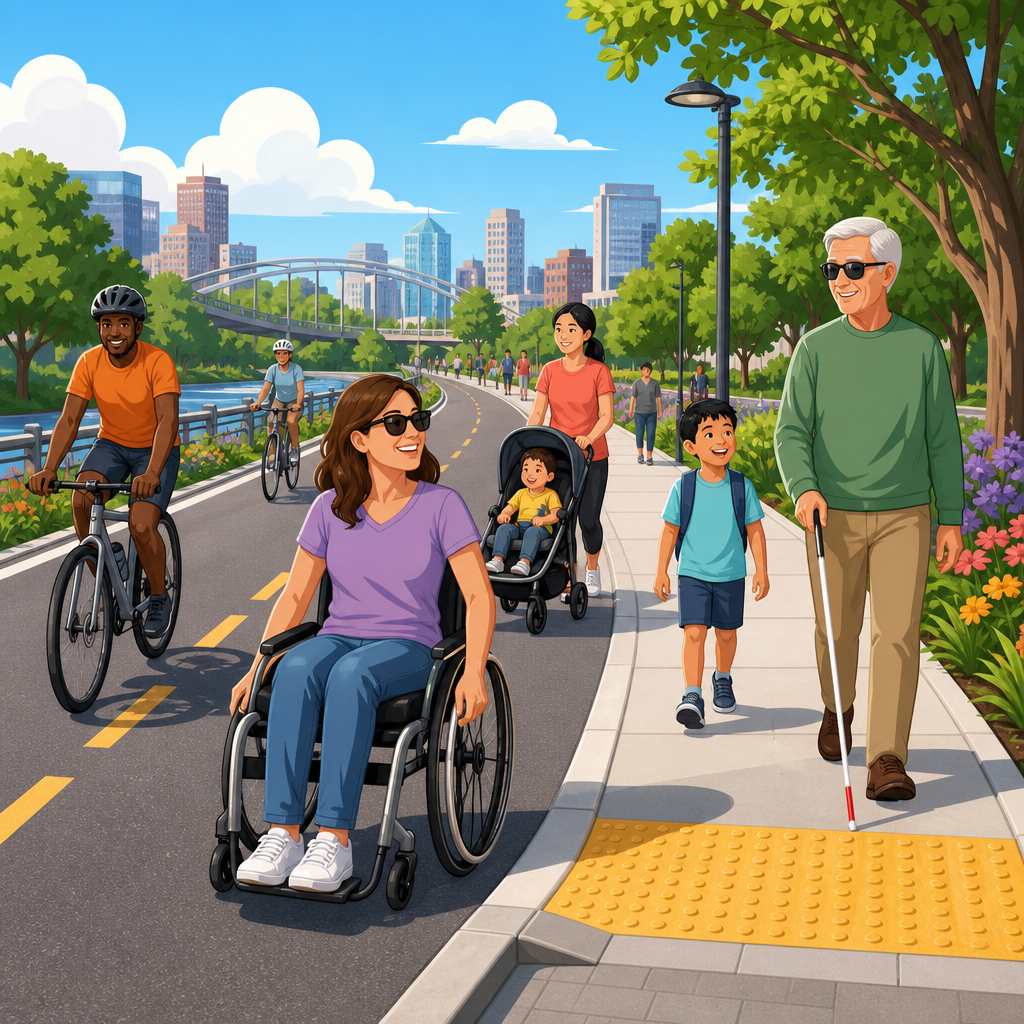
Shared use paths and sidewalks are poised to receive far more ADA attention because they sit at the intersection of civil rights, public safety, climate transportation policy, and aging infrastructure. In practical terms, shared use paths are off-street corridors used by pedestrians, bicyclists, wheelchair users, runners, and people using other nonmotorized devices, while sidewalks are the pedestrian routes within the public right-of-way that connect homes, schools, transit stops, parks, and businesses. ADA attention means stricter scrutiny of whether these facilities are accessible, usable, and maintained for people with disabilities under the Americans with Disabilities Act, related federal regulations, and guidance such as the Public Right-of-Way Accessibility Guidelines. After working with transportation and site teams on accessibility reviews, I have seen the same pattern repeatedly: agencies often understand building entrances and parking stalls, yet underestimate curb ramps, cross slopes, detectable warnings, signal timing, and maintenance barriers on outdoor routes. That gap matters because inaccessible pedestrian networks limit access to employment, education, healthcare, and community life. It also creates legal exposure, especially as cities expand active transportation networks with federal funding and measurable equity commitments.
The issue is growing more urgent for several reasons. First, public investment is shifting toward walking, bicycling, and multimodal transportation through programs linked to Complete Streets, Vision Zero, Safe Routes to School, transit access, and climate resilience. Second, demographic trends point toward more older adults, more mobility device users, and more demand for routes that work without driving. Third, digital reporting tools and organized advocacy have made barriers easier to document, map, and litigate. Fourth, courts and federal agencies increasingly treat the pedestrian network as a system, not a collection of isolated fixes. For local governments, that means ADA compliance for sidewalks and shared use paths is moving from reactive complaint handling to proactive asset management, design standardization, and capital planning. This article explains why that shift is happening, what standards and risk factors are driving it, where common failures occur, and what future ADA developments are most likely to shape this topic across planning, design, maintenance, and enforcement.
Why sidewalks and shared use paths are moving to the center of ADA enforcement
Sidewalks and shared use paths are getting more attention because they are essential links in the public realm, and inaccessible links can nullify otherwise compliant destinations. A clinic with an accessible entrance does not offer equal access if a wheelchair user cannot cross the street safely to reach it. A rail station with elevators still fails many riders if the sidewalk route includes missing curb ramps, excessive cross slope, utility poles in the clear width, or broken pavement. Federal agencies have reinforced this systems view for years through transition plan expectations, self-evaluation duties, and program accessibility principles. The Department of Justice has repeatedly emphasized that state and local governments must make programs, services, and activities accessible when viewed in their entirety. In transportation practice, that principle reaches beyond buildings into the route network people must actually use.
Enforcement pressure is also rising because sidewalks produce visible, repeatable barriers that are easy to verify. Plaintiffs do not need specialized building knowledge to document uplifted panels, missing detectable warnings, inaccessible pedestrian pushbuttons, or snow piled into curb ramps. Smartphone photos, GIS layers, and maintenance records can establish patterns. I have seen agencies struggle in discovery when they cannot show an inventory, prioritization method, or timeline for correcting barriers. That is one reason transition plans are being revisited with more seriousness. A modern ADA transition plan for pedestrian facilities is no longer a shelf document. It is increasingly expected to include a route inventory, a barrier ranking method, public input, cost assumptions, integration with pavement management and capital improvement programs, and procedures for complaint response and temporary traffic control during construction.
Another driver is funding. Federal transportation dollars now support trails, active transportation corridors, and safety retrofits at a scale that invites more oversight. When agencies reconstruct streets, alter intersections, or build new sidepaths, accessibility obligations are triggered alongside design opportunities. The legal and practical question becomes straightforward: if public money is reshaping the corridor, why were obvious barriers left in place? That logic explains why projects tied to resurfacing, signal replacement, corridor modernization, transit stop upgrades, and greenway expansion are likely to receive closer ADA review in coming years.
The standards and design issues that will shape future ADA developments
The future of ADA attention in this area will be defined by technical details. For sidewalks, recurring issues include minimum clear width, passing space, running slope, cross slope, curb ramp geometry, landing size, protruding objects, grade breaks, and the placement of street furniture. For shared use paths, agencies must additionally address user mix, horizontal clearance, edge protection where needed, rest areas on steep terrain, and accessible connections to streets, transit, parking, and trailheads. The Public Right-of-Way Accessibility Guidelines, though not adopted in every form as enforceable DOJ standards, strongly influence design expectations because they provide the clearest nationally recognized benchmark for pedestrian facilities in the public right-of-way. Designers, reviewers, and litigators all use them.
Curb ramps remain the most litigated and operationally significant element. A compliant curb ramp is not just a ramp-shaped piece of concrete. Its running slope, cross slope, flares where pedestrians walk across them, landing conditions, and alignment with the crosswalk all matter. A ramp that points a wheelchair user into the center of the intersection rather than the marked crossing can create a serious safety risk. Detectable warning surfaces must also be installed correctly, with proper depth, location, and contrast. On shared use paths, transitions between trail and street often create hidden failures: bollards narrow the path, refuge islands are too tight for turning, and pushbuttons are placed on inaccessible islands or behind drainage features.
| Issue | Why it draws ADA attention | Typical real-world example | Best corrective approach |
|---|---|---|---|
| Missing curb ramps | Blocks route continuity at crossings | Resurfaced intersection keeps old vertical curbs | Install aligned ramps during alteration project |
| Excessive cross slope | Destabilizes wheelchairs and walkers | Sidewalk warped by driveway tie-ins | Regrade panels and driveway transitions |
| Obstructed clear width | Prevents passing or independent travel | Poles and cabinets placed in pedestrian access route | Relocate objects and enforce utility coordination |
| Poor maintenance | Creates hazards after construction is complete | Tree root heave, snow storage, ponding water | Fund inspection cycles and rapid-response repairs |
Maintenance will become as important as original design. I have reviewed corridors that were nominally compliant on opening day but became inaccessible within a few seasons because root intrusion, freeze-thaw cracking, debris, vegetation, and utility cuts were not managed. Agencies that still separate ADA compliance from maintenance operations will face more problems. The stronger model is to embed accessibility checks into work order systems, winter operations, permitting, and pavement preservation. That shift is one of the clearest future trends in ADA developments: accessibility will be treated less as a one-time design checklist and more as a continuous performance obligation.
Why demographics, mobility trends, and safety policy are increasing pressure
Population change is a major reason shared use paths and sidewalks will receive more scrutiny. The United States is aging, and older adults are more likely to experience reduced vision, hearing loss, balance limitations, and slower walking speeds. At the same time, more people are using mobility scooters, power wheelchairs, walkers, and adaptive bicycles. Sidewalk design that might have been tolerated decades ago now fails a wider range of users. A narrow pinch point at a utility pole can block a scooter. A short signal phase can strand a slow walker in the crosswalk. A path gate intended to deter motor vehicles may also exclude a handcycle or a wider wheelchair.
Policy trends amplify these demographic realities. Vision Zero initiatives focus on eliminating traffic fatalities and serious injuries, and they rely heavily on safer pedestrian crossings, lower-speed street design, and more predictable nonmotorized travel paths. Complete Streets policies require agencies to design for all users, not just motorists. Climate and public health strategies encourage mode shift from driving to walking and bicycling, which increases usage of paths and sidewalks and raises expectations that they must work for people with disabilities as a matter of equal participation. In other words, as governments encourage the public to use these facilities more often, the legal and moral stakes of inaccessibility rise as well.
Transit dependence is another pressure point. Bus stops, rail stations, and paratransit pickup areas depend on an accessible pedestrian approach. A transit agency can invest millions in low-floor vehicles and platform upgrades, yet riders still encounter barriers if the connecting sidewalk lacks curb ramps or has inaccessible construction detours. That is why future ADA developments will increasingly treat pedestrian access as part of the transportation chain. Agencies that coordinate transit planning, sidewalk inventories, and crossing upgrades will be better positioned than those that manage them in silos.
Litigation, federal oversight, and data will accelerate change
Legal exposure is one of the strongest predictors of increased ADA attention. Sidewalk cases have shown that plaintiffs can challenge network barriers citywide rather than one location at a time. Settlements often require inventories, schedule-based remediation, staff training, design standard updates, and public reporting. Once an agency is operating under a consent decree or structured settlement, accessibility becomes a board-level governance issue instead of a technical afterthought. Even agencies without current litigation are watching these cases and adjusting policy because the compliance playbook is now well known.
Federal oversight is also becoming more data driven. Agencies increasingly use GIS-based asset inventories, 311 complaint feeds, crash data, demographic mapping, and project pipelines to prioritize improvements. This matters because once barriers are mapped, they are harder to ignore. The same datasets used to justify safety and equity investments can reveal inaccessible route gaps near schools, medical centers, senior housing, and transit corridors. In my experience, the organizations making the fastest progress are those that stop treating ADA records as separate files and instead connect them to capital planning, work management software, and curb ramp databases. Tools from Esri, Cityworks, Cartegraph, and transportation asset management platforms make this integration practical.
Artificial intelligence and computer vision will likely sharpen this trend. Pilot programs already use mobile LiDAR, street-level imagery, and machine learning to identify surface defects, obstructions, faded crosswalks, and curb ramp presence at scale. These tools will not replace field verification, but they will make systemwide screening cheaper and faster. That changes expectations. If a city can inventory pavement distress on roads with advanced tools, it will be asked why it cannot inventory pedestrian barriers with similar rigor. Over the next several years, better data collection will make inaccessible sidewalks and shared use paths more visible to engineers, advocates, elected officials, and courts.
What public agencies, designers, and property stakeholders should do now
The most effective response is to move from complaint-driven fixes to programmatic accessibility management. Start with a current self-evaluation and transition plan that specifically addresses sidewalks, curb ramps, signals, median refuges, transit stop access, trailheads, and shared use path crossings. Build a complete inventory or a statistically reliable phased inventory, then adopt a prioritization framework that accounts for severity, route importance, proximity to civic destinations, equity indicators, and coordination with scheduled capital work. When I help teams review these programs, the biggest gains usually come from aligning ADA priorities with projects already in the pipeline. Repaving, utility coordination, bridge work, drainage reconstruction, and signal upgrades are the moments when barriers can be corrected efficiently.
Design standards need equal attention. Agencies should update standard drawings, specifications, and inspection procedures to reflect current accessibility expectations, including temporary traffic control for pedestrians during construction. Field staff must know that an inaccessible detour is not a minor inconvenience; it can cut off access entirely. Utility permits, encroachment approvals, and private development frontage requirements should also be tied to pedestrian access route protection. Many sidewalk barriers are not caused by grand capital projects but by small, repeated decisions such as cabinet placement, outdoor dining layouts, sign posts, or poorly restored trench cuts.
Communication matters too. Public-facing request systems should make it easy to report barriers, and agencies should publish repair criteria, timelines, and progress dashboards. That transparency builds trust and helps demonstrate steady compliance efforts if legal questions arise. For consultants, contractors, and adjacent property stakeholders, the takeaway is clear: the era when outdoor accessibility could be treated as secondary to vehicular design is ending. Sidewalks and shared use paths are becoming core infrastructure, and ADA expectations will follow that status.
The main lesson is simple: sidewalks and shared use paths will get more ADA attention because they are no longer peripheral facilities. They are the daily network that determines whether people with disabilities can reach transit, jobs, parks, schools, and services with dignity and safety. Funding trends, aging populations, stronger technical guidance, better data collection, organized advocacy, and litigation risk are all pushing agencies toward a network-based approach. The practical implications are equally clear. Barrier removal will increasingly be tied to capital planning, maintenance, and performance management rather than isolated fixes. Design teams will be expected to understand curb ramp alignment, cross slope control, accessible pedestrian signals, clear width preservation, and accessible temporary routes as standard practice, not specialty knowledge.
For organizations responsible for public space, the benefit of acting early is significant. Proactive accessibility work reduces legal exposure, improves safety for everyone, supports transit and active transportation goals, and produces more resilient public investments. It also helps agencies deliver on equity commitments with visible, measurable results. As future ADA developments unfold, this subtopic will continue to connect rulemaking, case law, design standards, and implementation strategies across the pedestrian realm. If you manage, design, fund, or maintain these facilities, now is the time to review your transition plan, inventory your network, and prioritize the route gaps people encounter every day.
Frequently Asked Questions
Why are shared use paths and sidewalks expected to receive more ADA scrutiny now?
Shared use paths and sidewalks are getting more ADA attention because they are no longer seen as optional amenities. They are essential parts of the public transportation and mobility network, and they must work for everyone, including people with disabilities. Sidewalks connect homes to schools, transit stops, businesses, parks, medical offices, and civic destinations. Shared use paths often serve a similar function by providing off-street routes for pedestrians, bicyclists, wheelchair users, runners, and others using nonmotorized devices. As local governments invest more in active transportation, climate goals, and safety improvements, the accessibility of these facilities is moving to the foreground.
There is also a stronger legal and policy focus on equal access in the public right-of-way. The ADA is a civil rights law, and inaccessible pedestrian infrastructure can prevent people with disabilities from reaching everyday destinations safely and independently. That makes missing curb ramps, excessive cross slopes, broken pavement, narrow pinch points, poor maintenance, and inaccessible crossings more than just design issues; they can become civil rights concerns. At the same time, many sidewalks and paths across the country are aging, incomplete, or were built under older standards, so communities are facing increased pressure to assess, upgrade, and maintain them in a more systematic way.
Another reason is visibility. Public agencies, advocates, and courts are paying closer attention to how infrastructure actually performs in real life, not just how it appears on paper. That means routine barriers that were once overlooked are more likely to be documented and challenged. In short, shared use paths and sidewalks are where transportation policy, safety, equity, and disability rights all meet, which is exactly why ADA compliance in these spaces is becoming a much bigger issue.
What ADA issues are most common on sidewalks and shared use paths?
The most common ADA issues usually involve features that interfere with safe and independent travel. On sidewalks, this often includes missing or noncompliant curb ramps, uplifted or cracked pavement, cross slopes that are too steep for wheelchair users, sidewalks that are too narrow, utility poles or signs blocking the accessible route, and gaps in the sidewalk network that force people into the street. At intersections, inaccessible pedestrian push buttons, missing detectable warnings, poor timing at signals, and unsafe crossing geometry are also frequent concerns.
On shared use paths, similar problems can appear, but they may show up in different ways. Common issues include path widths that do not support passing or two-way travel, abrupt level changes, root damage, drainage problems, steep running slopes, inaccessible access points such as bollards placed too tightly, and transitions that create barriers between the path and nearby sidewalks, crossings, or trailheads. Because shared use paths serve a broad range of users, design details matter a great deal. A feature that seems minor to one user can create a serious barrier for a person using a wheelchair, walker, or other mobility device.
Maintenance is another major category. Snow, debris, vegetation overgrowth, standing water, and deteriorated surfaces can all make an otherwise compliant facility inaccessible. This is important because ADA attention is not limited to new construction. Ongoing usability matters too. Agencies that treat accessibility as a one-time construction issue often miss the fact that sidewalks and paths require continuous inspection, upkeep, and responsive repair to remain accessible over time.
How do shared use paths differ from sidewalks when it comes to ADA compliance?
Sidewalks and shared use paths have different roles, even though both must support accessible travel. Sidewalks are typically part of the public right-of-way and function as the primary pedestrian network along streets. They connect directly to intersections, driveways, transit stops, building entrances, and curb ramps. Because of that, sidewalk accessibility is closely tied to street crossings, signal systems, and right-of-way design. ADA review for sidewalks often focuses on continuity of the pedestrian access route, curb ramp design, passing space, width, surface condition, and intersection accessibility.
Shared use paths are usually off-street facilities designed for multiple nonmotorized users, which can include pedestrians, bicyclists, wheelchair users, skaters, and runners. Their ADA considerations still include width, slope, surface, transitions, and maintenance, but they also raise additional questions about user mix, crossing treatments where the path intersects with roads, and whether access controls unintentionally block mobility devices. Because these paths often cover longer distances and may traverse parks, greenways, drainage corridors, or utility alignments, designers and public agencies must think carefully about grade, rest opportunities, wayfinding, and how the path connects to the surrounding accessible network.
In practical terms, the biggest difference is context. Sidewalks are embedded in the everyday street environment, while shared use paths may have more varied geometry and setting. But from an ADA standpoint, both are expected to provide meaningful access. If either facility is built, altered, or maintained in a way that excludes people with disabilities, it can draw significant legal and regulatory attention. The key takeaway is that agencies should not assume off-street paths are exempt from the same accessibility expectations simply because they are recreational or separated from the roadway.
Why do public agencies and municipalities face growing risk if these facilities are not accessible?
Public agencies face growing risk because inaccessible sidewalks and shared use paths can lead to ADA complaints, formal investigations, litigation, project delays, and costly retrofits. When barriers prevent people with disabilities from reaching transit, schools, public services, parks, or commercial areas, the issue is not just inconvenient design. It can be framed as denial of access to public programs, services, or activities. That increases the stakes considerably, especially when agencies have known about recurring barriers and failed to address them in a consistent, documented way.
There is also a planning and funding risk. Communities are investing heavily in complete streets, Vision Zero programs, trails, transit access, and climate-oriented transportation improvements. If those investments do not incorporate accessibility from the start, agencies may find themselves rebuilding work they recently completed. That is inefficient, expensive, and politically difficult. Accessibility gaps can also weaken public trust, particularly when agencies promote equity and multimodal transportation goals but leave core pedestrian infrastructure unusable for many residents.
Operationally, the risk grows when agencies lack strong self-evaluation processes, transition planning, maintenance protocols, and prioritization frameworks. A municipality that can show it has inventoried barriers, adopted standards, scheduled improvements, and responded to complaints is in a far better position than one reacting case by case. In other words, growing ADA attention is not only about legal exposure. It is also about whether a jurisdiction can demonstrate that accessibility is built into its governance, budgeting, design review, construction oversight, and maintenance practices.
What should cities, planners, and property owners do now to prepare for increased ADA attention?
The most effective step is to treat accessibility as a core infrastructure responsibility rather than a narrow compliance exercise. Cities and agencies should begin with a thorough inventory of sidewalks, curb ramps, crossings, transit connections, and shared use paths to identify barriers such as surface failures, excessive slopes, obstructions, missing links, and inaccessible intersections. That inventory should feed into a realistic transition plan that prioritizes improvements based on safety, network importance, community needs, and proximity to key destinations such as schools, medical facilities, transit stops, and government buildings.
Agencies should also strengthen design and construction review. That means using current accessibility standards, checking field conditions carefully, requiring quality control during construction, and making sure final built conditions actually match approved plans. For shared use paths, special attention should be paid to width, grades, access controls, drainage, crossings, and seamless connections to sidewalks and curb ramps. For sidewalks, continuity of the pedestrian route is critical. A compliant segment is not enough if it ends at an inaccessible crossing or a missing curb ramp.
Maintenance deserves equal attention. Snow removal, pavement repair, vegetation management, debris clearing, and prompt response to complaints are all essential to ongoing accessibility. Training is another important piece. Engineers, planners, inspectors, public works staff, parks staff, and contractors all need a shared understanding of what accessible design and maintenance require. Property owners may also have responsibilities depending on local ordinances, especially where sidewalks border private property. The agencies and organizations that will be best prepared are the ones that move now, document their efforts, engage disability stakeholders, and build accessibility into every phase of transportation and public space decision-making.


