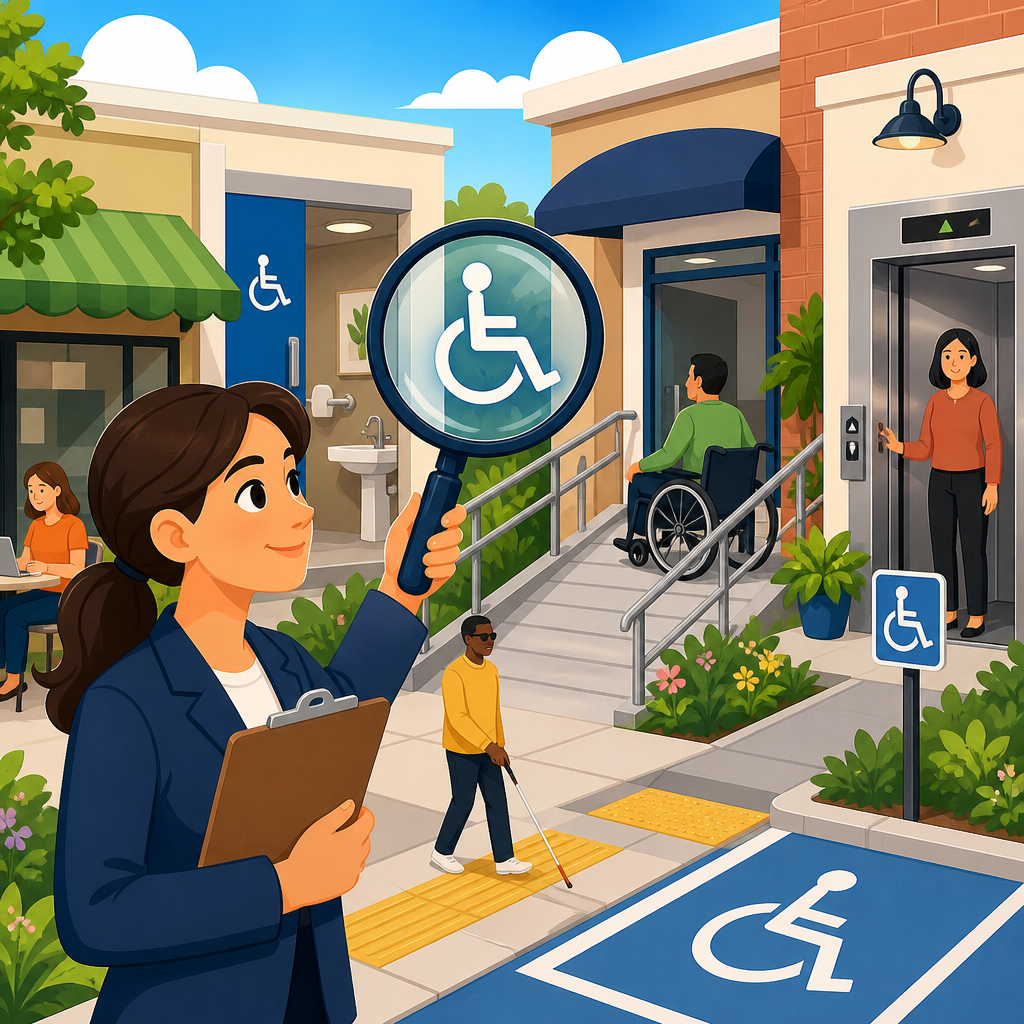
ADA enforcement is entering a new phase shaped by digital dependence, aging infrastructure, and rising expectations that accessibility be built in rather than patched later. For organizations that follow disability law closely, the central question is no longer whether enforcement will expand, but where regulators, courts, and private plaintiffs will focus next. Understanding those priorities matters because the Americans with Disabilities Act reaches employment, state and local government services, transportation, public accommodations, and increasingly the technologies that mediate everyday life. When priorities shift, compliance budgets, litigation exposure, procurement standards, and customer experience all shift with them.
In practice, ADA enforcement means actions by the U.S. Department of Justice, the Equal Employment Opportunity Commission, the Department of Transportation, federal grantmakers, state attorneys general, and private litigants. It also includes settlement agreements, technical assistance, rulemaking, and investigations triggered by complaints. I have worked with website remediation teams, HR leaders, and municipal service departments on accessibility issues, and the pattern is consistent: enforcement pressure grows first where disabled people encounter systemic barriers at scale. That is why future trends and predictions in ADA developments point toward digital access, effective communication, housing-adjacent services, algorithmic decision systems, and measurable accountability. Organizations that treat accessibility as governance, not just legal defense, will be better positioned.
Several terms are essential. Public accommodations are private businesses open to the public under Title III. State and local government programs fall under Title II. Reasonable accommodation usually refers to adjustments that enable disabled employees or applicants to participate in work under Title I, unless doing so causes undue hardship. Effective communication covers auxiliary aids and services, from captions to screen-reader-compatible documents. Accessible design can refer to built environment standards like the 2010 ADA Standards for Accessible Design, but it now also includes digital interfaces tested against the Web Content Accessibility Guidelines, commonly called WCAG. Enforcement increasingly connects these domains because a transit station kiosk, telehealth portal, job application platform, and self-checkout machine all combine physical and digital accessibility.
This hub article maps the likely next priorities in ADA enforcement and explains why they are emerging now. It also serves as a foundation for related updates and developments articles on website accessibility, AI and disability discrimination, transportation access, employment accommodation trends, and state-level enforcement. If you need the short answer, expect the next wave to emphasize barriers that affect high-volume public interaction, barriers created by automation, and failures to maintain accessible services after launch. The details matter, however, because each area has different legal triggers, technical standards, and operational fixes.
Digital accessibility will remain the clearest enforcement priority
The strongest prediction is also the least speculative: digital accessibility will stay at the top of enforcement agendas. Businesses, schools, hospitals, retailers, banks, and local governments now deliver core services through websites, mobile apps, PDFs, kiosks, and online forms. When those systems are inaccessible, disabled people can be excluded entirely, not merely inconvenienced. Regulators understand this, and so do plaintiffs’ firms. The Department of Justice has repeatedly stated that the ADA applies to web content and has pointed organizations toward WCAG 2.1 Level AA as the practical benchmark in settlements and guidance, even where regulations are incomplete.
What will be prioritized next inside digital accessibility? First, transactional barriers. A missing alt attribute matters, but enforcement becomes more urgent when a customer cannot book a hotel room, refill a prescription, complete an application, access account statements, or submit a complaint. Second, mobile app parity. Many organizations fixed desktop sites while leaving iOS and Android experiences behind; that gap is becoming harder to defend. Third, document accessibility. In audits I have seen, inaccessible PDFs cause more user harm than homepage issues because forms, notices, and policy documents often contain the information people actually need. Fourth, post-launch maintenance. A one-time remediation project does not prevent future violations if content editors, product teams, and vendors keep publishing inaccessible components.
Organizations should expect a more evidence-driven approach to digital enforcement. Investigators increasingly ask for accessibility policies, training records, testing protocols, vendor contract terms, user complaint logs, and timelines for remediation. Automated scans using tools such as Axe, WAVE, and Siteimprove help identify common failures, but they do not replace keyboard testing, screen-reader testing with JAWS, NVDA, or VoiceOver, and task-based usability testing with disabled users. The likely trend is simple: agencies and courts will care less about broad promises and more about whether an organization can show repeatable controls that prevent inaccessible releases.
State and local government services will face tighter scrutiny
Public sector accessibility is likely to draw even more concentrated attention because state and local governments provide essential services that residents cannot easily obtain elsewhere. Tax filing, court access, emergency alerts, voting information, transit updates, utility billing, school communications, and benefits administration are all high-impact functions. When these services move online or into kiosks and apps, accessibility failures can deny civic participation and legal rights. Recent federal attention to digital accessibility under Title II signals that municipalities, counties, public universities, and school districts should expect less tolerance for fragmented compliance.
A recurring weakness is decentralized ownership. One department posts accessible web pages, another uploads image-only PDFs, and a third buys scheduling software that cannot be used by keyboard or screen reader. From an enforcement standpoint, that fragmentation is not a defense. Agencies will likely prioritize whether governments have enterprise-wide standards for procurement, content publishing, emergency communication, and third-party platforms. They will also look at whether residents can request accommodations through an accessible process and receive timely responses. In my experience, the governments that improve fastest create a central accessibility office or coordinator with authority over procurement and digital standards, not just advisory influence.
Emergency communication deserves special attention. Wildfire notices, hurricane evacuation maps, boil-water alerts, and public health directives must reach people quickly in accessible formats. Captioning livestreams, making maps screen-reader usable, providing text alternatives for infographics, and ensuring alert systems work with assistive technologies are not optional niceties. Future trends and predictions in ADA developments strongly suggest that failures in urgent communications will be treated as especially serious because the consequences are immediate and potentially life threatening.
Employment enforcement will focus on process quality and technology
ADA employment enforcement is likely to concentrate on how employers handle accommodation requests in real workflows, not just whether a written policy exists. The Equal Employment Opportunity Commission has long emphasized the interactive process, medical inquiry limits, and non-discrimination in hiring, promotion, and termination. What is changing is the operational environment. Candidates now apply through automated hiring platforms. Employees request leave or accommodations through HR portals. Performance is tracked through productivity software. Each system can create disability barriers if not designed or governed carefully.
Expect closer scrutiny of online job applications, pre-employment assessments, and video interview tools. If a timed assessment cannot be navigated with assistive technology or an AI interview tool penalizes atypical speech patterns linked to disability, the risk is obvious. The same applies to return-to-office rules implemented without individualized assessment, attendance policies that ignore disability-related flexibility, or inflexible scheduling systems that block accommodations. Employers should also watch enforcement around mental health conditions, neurodivergence, pregnancy-related impairments where ADA thresholds are met, and long COVID, all of which continue to generate accommodation questions.
The strongest employers document decision quality. They train managers to recognize accommodation requests even when employees do not use legal terms. They standardize intake but avoid rigid scripts. They evaluate essential job functions honestly rather than copying outdated descriptions. They coordinate ADA, FMLA, workers’ compensation, and state leave obligations instead of handling each in isolation. That operational discipline reduces complaints because employees receive timely answers, and it strengthens defenses when disputes arise.
Built environment enforcement will target maintenance and modernization gaps
Physical accessibility enforcement is not going away, but its next emphasis may be less about obvious new-construction errors and more about ongoing maintenance, altered facilities, and modernization projects that overlook access. The 2010 ADA Standards are mature, and most sophisticated owners know baseline requirements for routes, restrooms, parking, counters, and signage. Yet barriers persist because accessible features break, get blocked, or are value-engineered out during renovations. Automatic door openers fail, tactile warnings wear down, accessible hotel rooms are sold incorrectly, and restaurant paths are narrowed by furniture or seasonal displays.
Transit-adjacent spaces, healthcare facilities, higher education campuses, and mixed-use developments are especially important. These environments combine legacy architecture, heavy foot traffic, and layered service delivery. When organizations renovate entrances, add self-service kiosks, redesign waiting rooms, or convert office space into public-facing service areas, they create fresh obligations. Enforcement will likely favor cases where physical and digital barriers compound each other, such as inaccessible parking tied to an inaccessible check-in tablet or a clinic with accessible exam rooms but no accessible online scheduling.
Another likely trend is closer review of maintenance policies. The law does not stop at compliant installation. Accessible features must remain usable. That means snow removal plans that keep curb ramps clear, inspection routines for lifts and doors, procedures for keeping service counters available, and staff training on movable furniture. When I review incident histories, recurring complaints often trace back to weak maintenance ownership rather than ignorance of design standards.
Healthcare, education, and financial services are high-risk sectors
Some sectors consistently draw more enforcement because barriers there affect essential life functions. Healthcare is near the top. Hospitals, clinics, insurers, pharmacies, and telehealth platforms handle urgent, sensitive transactions where inaccessible communication can directly affect treatment. Common issues include missing captions for patient education videos, inaccessible portal messages, intake forms incompatible with screen readers, inaccessible medical equipment, and failure to provide qualified interpreters. Enforcement here is likely to keep emphasizing effective communication and equal access across the entire care journey, not just at the front desk.
Education is similarly exposed. K–12 districts and universities rely on learning management systems, lecture capture, classroom polling tools, digital textbooks, and campus apps. When these tools are inaccessible, students can miss assignments, discussions, and grading opportunities. Public institutions face Title II responsibilities, and private institutions may face Title III exposure depending on context. Financial services also remain vulnerable because inaccessible banking, lending, and insurance systems can block independent participation in daily life. If a user cannot authenticate into an account, read disclosures, compare loan terms, or complete fraud recovery steps without assistance, accessibility failures become a consumer protection problem as well as an ADA problem.
| Sector | Likely enforcement focus | Common trigger |
|---|---|---|
| Healthcare | Effective communication, portals, equipment | Patients cannot access care information independently |
| Education | Learning platforms, course materials, classroom tech | Students are excluded from instruction or assessment |
| Financial services | Authentication, statements, disclosures, apps | Customers cannot complete transactions securely |
| Government | Forms, alerts, benefits, court and transit information | Residents lose access to essential public services |
Algorithmic systems and self-service technology will draw new challenges
One of the most important future trends and predictions in ADA developments is the collision between disability rights and automation. Organizations increasingly use algorithms to rank applicants, detect fraud, moderate content, set productivity targets, route customer service, and personalize user experiences. They also deploy kiosks, self-checkout, biometric verification, and speech interfaces to reduce staffing. These systems can unintentionally screen out disabled people even when no one intended discrimination.
Regulators are already signaling concern. If a resume screener downgrades nontraditional employment patterns tied to disability, if voice authentication fails for users with speech disabilities, or if a kiosk requires gestures some customers cannot perform, the accessibility problem is built into the decision path. Enforcement here will likely focus on validation, alternative pathways, and procurement diligence. Organizations should be able to explain how they tested tools for accessibility and adverse impact, what accommodations exist, and how users can complete the task another way without stigma or delay.
This area is especially important because vendors often market products as efficient without documenting disability impacts. Buyers should demand VPATs for digital products, accessibility conformance language in contracts, and audit rights where systems are high stakes. They should also involve disability stakeholders early. In several technology rollouts I have seen, the least expensive preventive step was including disabled users in pilot testing before enterprise deployment.
What organizations should do now
The practical response to shifting ADA enforcement priorities is not guesswork. Start with an enterprise accessibility inventory covering websites, mobile apps, documents, kiosks, buildings, employment systems, communication channels, and vendor platforms. Rank assets by user impact and legal exposure, then remediate the highest-risk barriers first. Adopt standards: WCAG 2.1 or 2.2 Level AA for digital properties, the 2010 ADA Standards for facilities, and documented accommodation procedures for HR and public services. Build accessibility into procurement, quality assurance, change management, and incident response. Most importantly, assign accountable owners with executive support and budget.
Monitoring matters as much as remediation. Track complaints, test critical user journeys, review vendor updates, and train staff who publish content or interact with the public. Accessibility statements should include real contact methods and response workflows, not empty promises. If litigation or an agency inquiry comes, organizations with mature governance can show good-faith effort backed by records, timelines, and measurable controls. ADA enforcement is likely to prioritize places where exclusion is widespread, repeatable, and preventable. The clearest advantage, therefore, goes to organizations that treat accessibility as an operating requirement. Use this hub as your starting point, then review your highest-impact services and fix the barriers users face first.
Frequently Asked Questions
What areas of ADA enforcement are most likely to receive greater attention next?
ADA enforcement is likely to concentrate on the places where accessibility failures now have the biggest real-world impact: digital platforms, public-facing services, and essential programs that people increasingly access online first. That includes websites, mobile apps, online application systems, patient portals, customer account dashboards, transportation tools, and self-service technologies such as kiosks and check-in systems. Regulators and private plaintiffs are paying closer attention to whether these systems are usable by people with visual, hearing, mobility, cognitive, and speech disabilities from the start, rather than only after complaints are made.
Another major priority is aging physical infrastructure that has not kept pace with current access expectations. Facilities may technically be old, but if barriers continue to prevent equal access to entrances, restrooms, service counters, routes of travel, seating, or emergency procedures, they remain enforcement risks. State and local government programs are also likely to face heightened scrutiny because the ADA requires meaningful access to services, programs, and activities, not just nominal compliance. In practical terms, that means enforcement may focus less on isolated design defects and more on whether people with disabilities can actually complete important tasks such as applying for benefits, receiving healthcare, using transportation, participating in public meetings, or obtaining employment on equal terms.
Why is digital accessibility expected to be such a major enforcement priority?
Digital accessibility is emerging as a central enforcement issue because daily life now depends on digital access in a way that leaves little room for exclusion. Applying for jobs, scheduling medical appointments, completing school forms, paying bills, requesting public services, shopping, banking, and communicating with employers or government agencies often happens through websites and apps. When those tools are inaccessible, the barrier is not minor inconvenience; it can mean complete denial of access to a service, opportunity, or benefit covered by the ADA.
Enforcement pressure is increasing for several reasons. First, digital barriers are often widespread and repeatable, affecting large groups of users at once. Second, accessibility problems in code, navigation, labels, captions, keyboard operation, color contrast, screen-reader compatibility, and time-based interactions are increasingly measurable and difficult to dismiss. Third, courts and enforcement agencies have shown continued interest in whether covered entities provide effective communication and equal access through modern technology, even when statutory text predates today’s digital environment. As a result, organizations should expect closer examination of whether accessibility standards are being built into procurement, design, testing, content publishing, and maintenance workflows. In other words, enforcement is moving toward the idea that accessibility is an operational requirement, not a one-time technical cleanup.
How might ADA enforcement affect employers in the next phase?
For employers, the next phase of ADA enforcement will likely extend beyond traditional accommodation disputes and focus more directly on whether accessibility is embedded throughout the employment lifecycle. Hiring systems are a prime example. If online applications, pre-employment tests, interview scheduling tools, onboarding platforms, timekeeping systems, or internal HR portals are inaccessible, qualified applicants and employees with disabilities may be shut out before an accommodation request is even made. That creates legal risk because equal employment opportunity under the ADA depends on both non-discrimination and practical accessibility.
Employers may also see more scrutiny of accommodation processes themselves. Enforcement may prioritize whether requests are handled promptly, whether the interactive process is meaningful rather than perfunctory, and whether disability-related policies are applied flexibly when job performance can still be achieved with reasonable accommodation. Remote and hybrid work arrangements add another layer. Organizations may be asked to justify when an in-person requirement is truly essential, and whether digital collaboration tools, virtual meeting platforms, training materials, and internal communications are accessible. The broader trend is clear: enforcement is less likely to accept accessibility as a side issue handled only by HR after a problem arises. Instead, employers should anticipate expectations that accessibility and reasonable accommodation be coordinated across recruiting, technology, management training, facilities, and workplace policy.
Will enforcement focus more on proactive compliance rather than fixing issues after complaints?
Yes, that is one of the most important shifts underway. The direction of enforcement increasingly favors proactive compliance, meaning organizations are expected to anticipate accessibility needs and address barriers before they become legal disputes. This reflects a broader understanding that retroactive fixes are often too slow, too narrow, and too disruptive to provide equal access in practice. If a person cannot use a website to register for a service, cannot enter a building independently, or cannot participate in a meeting because auxiliary aids were not planned in advance, a later correction does not fully undo the exclusion.
In practical terms, proactive compliance means organizations should be prepared to show systems, not just intentions. That includes accessibility policies, staff training, vendor requirements, documented testing, remediation plans, escalation procedures, and leadership oversight. It also means integrating accessibility into capital planning, software development, content creation, procurement, and program administration. Regulators and plaintiffs are increasingly interested in patterns: whether the same issues recur, whether complaints are handled consistently, and whether accessibility responsibilities are clearly assigned. Organizations that wait for demand letters or lawsuits before acting may find themselves exposed not only because barriers exist, but because they lack a credible governance structure for preventing those barriers in the first place.
What should organizations do now if they want to reduce ADA enforcement risk?
Organizations should start by identifying the parts of their operations that matter most to equal access and carry the greatest legal exposure. Usually that means public websites, mobile apps, online forms, customer service channels, hiring systems, physical access points, communications practices, and any core program or service that people rely on regularly. A realistic risk review should examine how a person with different disabilities actually experiences those systems from beginning to end. That is often where organizations discover that compliance efforts have been too fragmented, with facilities, IT, HR, legal, procurement, and communications all working separately.
From there, the most effective strategy is to build an accessibility program rather than chase isolated fixes. That program should include leadership ownership, written standards, periodic audits, user-centered testing, clear accommodation procedures, and procurement controls requiring vendors to support accessibility. Training is also essential, especially for managers, developers, content creators, frontline staff, and anyone responsible for responding to requests for assistance. Just as important, organizations should document what they are doing. In an enforcement context, the ability to show a serious, ongoing, and organized effort can matter significantly. The next phase of ADA enforcement is likely to reward institutions that treat accessibility as a core compliance and service-quality obligation, not as an afterthought triggered by complaints.


