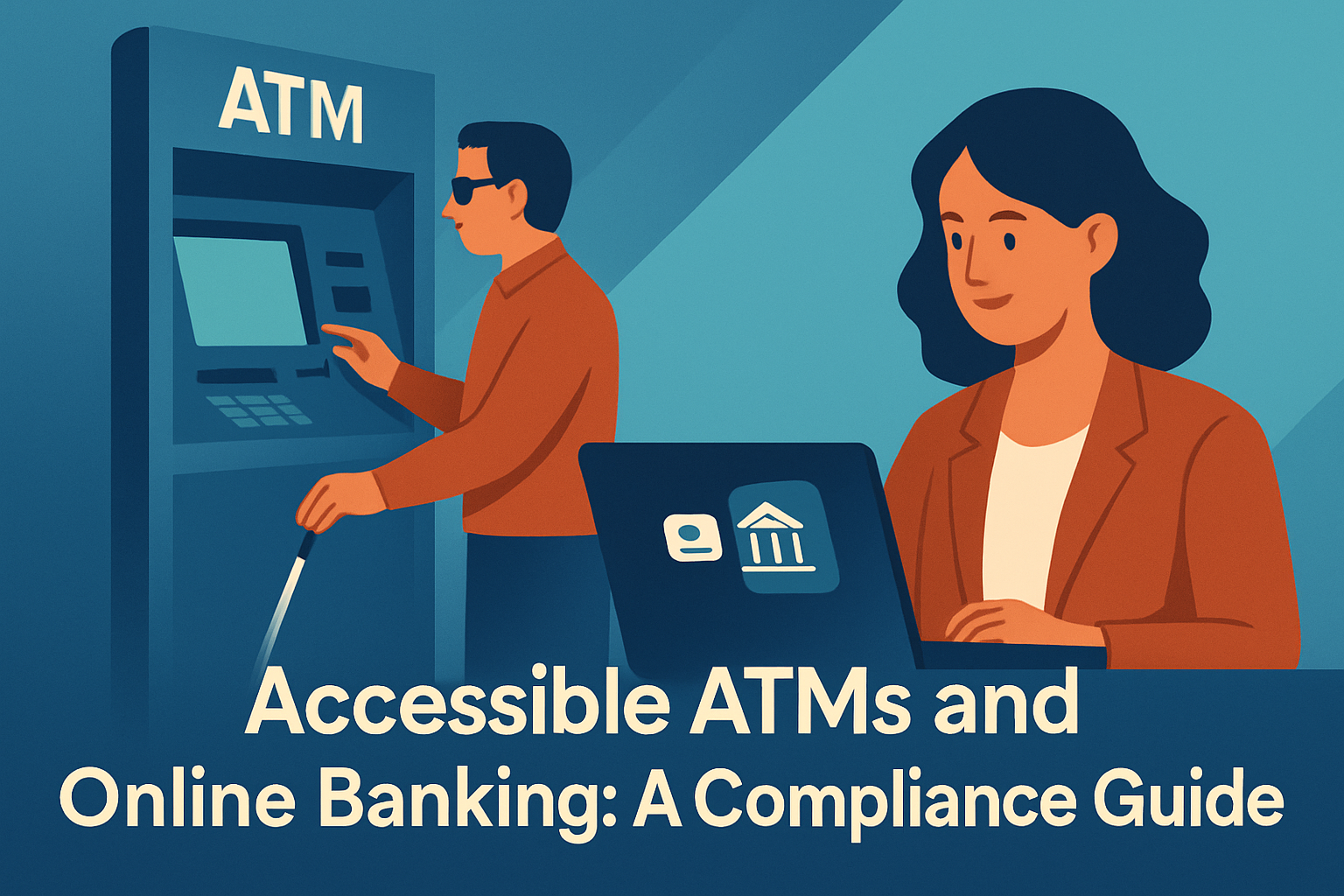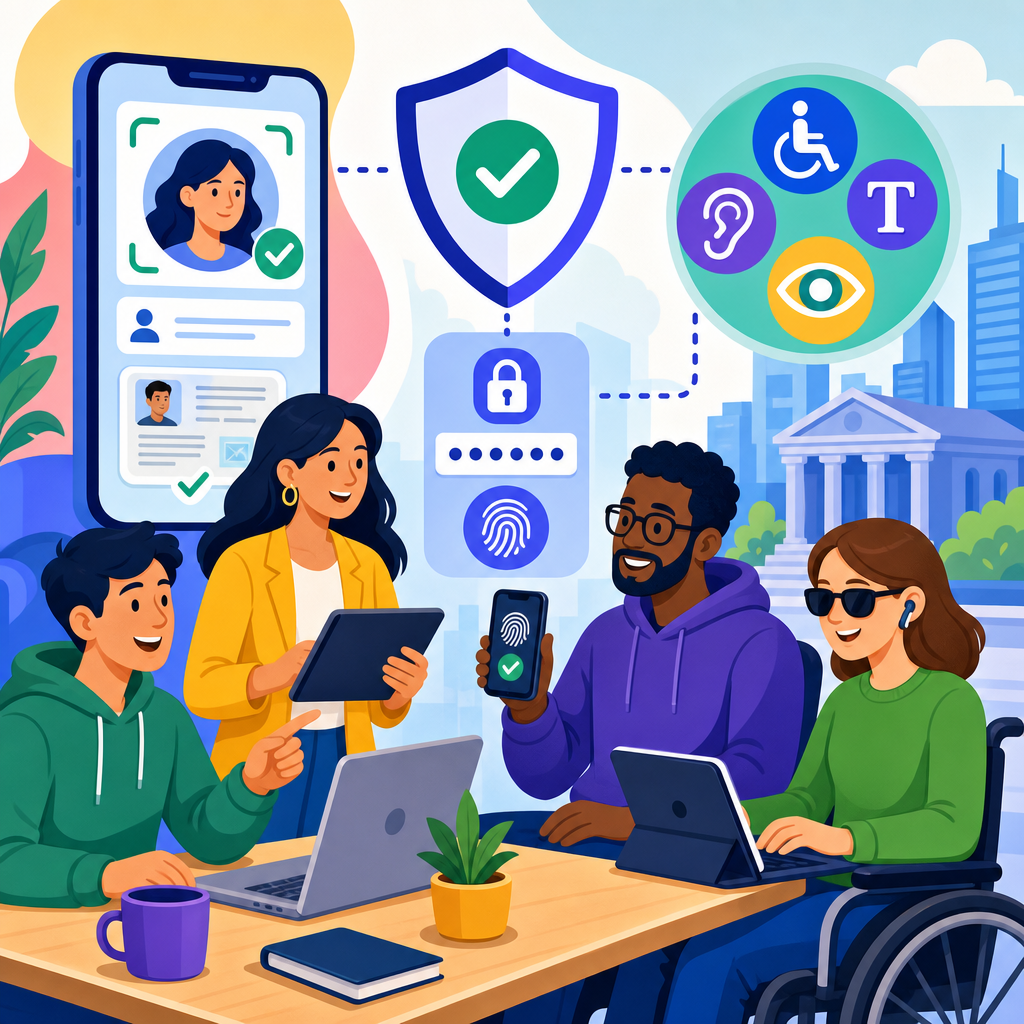
Financial services teams face a hard truth: growth means little if onboarding is risky, authentication is weak, or critical workflows exclude customers with disabilities. In fintech, three obligations sit at the center of product design and operations: know your customer, multi-factor authentication, and disability access. KYC is the process of verifying a customer’s identity and assessing risk before and during an account relationship. MFA requires users to prove who they are with more than one factor, usually something they know, have, or are. Disability access means people with visual, hearing, motor, cognitive, or speech impairments can use financial products without losing security, privacy, or dignity.
I have worked with fintech teams that treated these as separate compliance tracks, and that approach always created rework. The better model is to treat them as one operating system for trust. A customer cannot complete KYC if the identity flow is unreadable by a screen reader. Strong MFA fails in practice if a user cannot receive a text code, cannot use a fingerprint sensor, or is locked out during travel. Accessibility also cannot be bolted on after launch, because authentication and identity proofing are often the hardest journeys to retrofit. For a financial services hub page, the key idea is simple: secure access, lawful verification, and inclusive design are interconnected controls, not competing priorities.
Why does this matter now? Regulatory scrutiny is rising, fraud is becoming more adaptive, and digital onboarding has become the default for banking, lending, payments, wealth, insurance, and embedded finance. In the United States, firms must align with Customer Identification Program obligations under the Bank Secrecy Act framework, anti-money laundering expectations, sanctions screening, and suspicious activity monitoring. In Europe and the United Kingdom, teams must account for AML directives, payment security rules, and equality obligations. At the same time, platform expectations are higher: users compare your account opening flow not just with another bank, but with the best consumer apps they use every day. Friction that feels arbitrary reduces conversion; friction that is clearly justified by safety is more acceptable.
This article serves as a hub for financial services teams building or modernizing identity, authentication, and access. It explains what good looks like across onboarding, login, ongoing monitoring, customer support, vendor selection, and governance. It also gives plain-language guidance that product managers, compliance leaders, engineers, designers, fraud teams, and operations managers can use together. If a fintech team can connect KYC, MFA, and disability access in one lifecycle, it reduces fraud losses, improves approval rates, lowers support volume, and serves more customers fairly.
Build KYC as a risk-based customer lifecycle, not a one-time document check
Good KYC in financial services starts before a document upload screen appears. The real job is to establish reasonable belief that the customer is who they claim to be, understand expected account behavior, and decide what level of risk controls is proportionate. In practice, that means collecting core identity data, validating it against reliable sources, screening against sanctions and politically exposed person lists where required, and assigning a risk rating that determines whether simplified review, standard due diligence, or enhanced due diligence applies. Many teams still confuse KYC with identity verification alone. That is too narrow. Identity proofing answers “is this person real?” KYC also asks “should we open and maintain this relationship under our risk program?”
In consumer fintech, I have seen the strongest onboarding systems combine passive and active checks. Passive checks include device reputation, IP geolocation consistency, velocity signals, email tenure, phone intelligence, and consortium fraud data. Active checks include document capture, selfie comparison, database verification, liveness testing, and knowledge or possession checks when needed. A neobank serving freelancers may accept lower initial limits after lightweight verification, then request stronger evidence when transaction volume rises. A lending platform may require beneficial ownership collection for business accounts and source-of-funds review for unusual patterns. This risk-based sequencing protects conversion while still meeting AML and fraud obligations.
The most important design decision is not which vendor has the flashiest demo. It is whether your KYC architecture supports step-up verification, manual review, and exception handling without forcing every customer through the same path. For example, a customer whose address cannot be matched due to a recent move should not be automatically rejected if alternate evidence can resolve the discrepancy. Equally, a perfect document scan should not override sanctions or adverse media concerns. In mature programs, KYC is a living process tied to transaction monitoring, periodic review, and trigger events such as account recovery, suspicious payee changes, or jurisdiction shifts.
Choose MFA methods that resist account takeover without excluding legitimate users
MFA is effective only when the chosen factor mix matches the threat model and the customer base. In fintech, the main threats are credential stuffing, phishing, SIM swap fraud, malware, social engineering, and support-channel takeover. Because of that, not all MFA options are equal. SMS one-time passcodes remain common, but they are vulnerable to SIM swaps, interception risk, and delivery failures. Authenticator apps are stronger and usually cheaper at scale. Push-based approval can work well if paired with number matching or transaction details to defeat prompt bombing. Hardware security keys based on FIDO standards provide the strongest phishing resistance, especially for admins, treasury users, and high-value business accounts. Biometrics can reduce friction, but they should unlock a cryptographic credential on the device rather than serve as a standalone identity claim.
Financial services teams should avoid forcing a single MFA method on every user. A retiree using a landline, a deaf customer who relies on relay services, and a gig worker changing phones frequently do not have the same access pattern. I have seen successful fintech products offer a primary method and at least one secure fallback, then protect fallback enrollment with stronger proofing. Recovery is where many systems fail. If an attacker can reset MFA through a weak call center script, expensive login controls are meaningless. Support teams need clear playbooks, elevated verification for recovery, cooldown periods for risky changes, and event logging that feeds fraud monitoring.
Adaptive authentication is often the practical middle ground. If a returning user logs in on a known device from a typical location and performs a low-risk action, a device-bound passkey or app-based factor may be enough. If the same account suddenly changes password, updates a payout destination, and initiates a large transfer from a new environment, step-up verification should trigger automatically. The objective is not maximum friction. It is maximum resistance to account takeover with minimum unnecessary burden on legitimate customers.
| Control area | Stronger practice | Common weakness | Financial services example |
|---|---|---|---|
| KYC onboarding | Risk-based verification with step-up review | One rigid path for all users | Higher transfer limits require added proof of address |
| MFA login | Passkeys, authenticator apps, hardware keys | SMS-only authentication | Business treasury admins use security keys for approvals |
| Account recovery | High-assurance recovery checks and delays | Call center resets after basic questions | Locked account requires verified document plus monitored review |
| Accessibility | Keyboard support, screen reader labels, alternatives to biometrics | Visual-only and touch-only flows | User completes identity verification without needing facial match alone |
Disability access must cover identity proofing, login, payments, and support channels
Accessibility in fintech is often discussed as a website issue, but the highest-risk failures happen inside identity and money movement journeys. A fully accessible marketing page does not help if document capture times out before a user with motor impairments can position an ID, or if a screen reader cannot announce why a selfie was rejected. Financial services teams should align product design and QA with WCAG 2.2 success criteria, use semantic labels, maintain keyboard operability, support zoom and reflow, provide sufficient contrast, and avoid instructions based only on color, sound, or gestures. Native mobile apps need the same discipline through platform accessibility APIs, dynamic text support, focus order, and error messaging that is announced correctly.
Accessible security means offering equivalent outcomes, not weaker protections. If a biometric step is convenient for most users, there must be a secure alternative for users who cannot use face or fingerprint recognition consistently. If a fraud challenge relies on audio, provide a visual and text path. If a user cannot receive SMS because of device or service limitations, allow app-based codes, passkeys, or hardware keys. I have seen firms reduce abandonment by adding simple fixes: longer timeout windows during verification, plain-language error explanations, captioned support videos, and the ability to save progress without restarting the entire application.
Support accessibility is just as important as interface accessibility. Customers who are locked out, flagged for review, or asked for additional documents often need human help. That means trained agents, compatible chat systems, relay-friendly phone processes, email and secure message options, and policies that do not penalize customers for requesting accommodation. In disputes about fraud or identity mismatches, documentation should reflect what happened in a way the customer can understand. Accessibility is not a side requirement in financial services; it is part of fair access to essential economic life.
Connect product, compliance, fraud, engineering, and service into one control model
The biggest operational mistake in financial services is assigning KYC to compliance, MFA to security, and accessibility to design, then hoping coordination happens later. It rarely does. Effective teams create shared ownership with one journey map covering onboarding, login, recovery, transactions, case review, and support. Each stage needs defined controls, failure states, escalation routes, and measurable outcomes. Product sets customer experience requirements. Compliance defines regulatory obligations and acceptable risk thresholds. Fraud operations tune rules and review queues. Security manages authentication standards, secrets, device trust, and incident response. Design and engineering ensure all of it works for real people across devices and assistive technologies.
Metrics should reflect both safety and access. Useful KYC measures include approval rate by segment, false positive rate, manual review turnaround time, sanctions screening disposition time, and fraud loss from first-party and third-party abuse. For MFA, track enrollment completion, challenge success rate, account takeover rate, recovery rate, and method distribution. For disability access, measure completion by assistive technology path, time to task, error frequency, support contact rate, and accommodation outcomes. If a stronger control causes abandonment for a protected group or pushes users into insecure support channels, the program is not working as intended.
Vendor management also matters. Many fintech stacks rely on separate providers for identity proofing, sanctions screening, fraud scoring, passwordless authentication, customer communications, and accessibility testing. Contracts should cover data handling, model transparency where possible, service levels, fallback procedures, audit support, and responsibilities during incidents. Teams should run tabletop exercises for scenarios like deepfake-assisted onboarding, mass phishing, OCR outages, or inaccessible app releases. A resilient financial services program assumes dependencies will fail and plans graceful degradation instead of total shutdown.
Use this hub to set standards across banking, lending, payments, wealth, and insurance
As a hub for financial services, this page should anchor more detailed guidance for each business model. Banking teams need strong CIP workflows, sanctions screening, transaction monitoring hooks, and durable account recovery controls. Lending platforms need income and identity checks that prevent synthetic fraud without unfairly rejecting thin-file borrowers. Payments companies must secure merchant onboarding, payout changes, chargeback disputes, and beneficiary verification. Wealth platforms need stronger protection for account linking, wire requests, and privileged user actions. Insurance products need accessible claims and policy servicing, especially when customers are under stress and timelines matter.
The shared rule across every subtopic is to design trust as a lifecycle. Verify proportionately, authenticate intelligently, and provide equivalent access for users with disabilities at every critical step. Write requirements in plain language, test them with real users and adversarial scenarios, and review outcomes continuously. When fintech teams do this well, they do more than satisfy regulators. They reduce fraud, protect customer assets, improve conversion, and make financial services available to more people. Use this hub to audit current journeys, prioritize the highest-risk gaps, and build a roadmap where KYC, MFA, and disability access reinforce each other instead of colliding.
Frequently Asked Questions
1. Why do KYC, MFA, and disability access need to be planned together in fintech products?
KYC, MFA, and disability access are often treated as separate workstreams, but in practice they affect the same customer journey and the same operational risk profile. A user cannot complete KYC if identity verification screens are inaccessible, cannot secure an account if MFA options do not work with assistive technology, and cannot safely manage funds if core flows exclude people with visual, hearing, motor, or cognitive disabilities. In other words, compliance, security, and accessibility are not competing priorities. They are interdependent parts of a trustworthy financial product.
Planning them together helps fintech teams avoid a common failure pattern: building a compliant onboarding flow that creates abandonment, building strong authentication that locks out legitimate users, or adding accessibility late through patches that do not address structural problems. A coordinated approach lets product, compliance, engineering, security, fraud, and support teams define shared requirements early. For example, if a business uses document verification for KYC, it should also think about whether the capture flow works with screen readers, whether error states are understandable, and whether there is an equivalent assisted path for users who cannot complete a camera-based process. If a team requires MFA at login or during high-risk transactions, it should offer accessible methods such as authenticator apps, passkeys, or well-designed email and voice alternatives where appropriate, instead of assuming SMS alone is sufficient.
There is also a strong business case for integrating these obligations. Better alignment reduces fraud exposure, lowers support costs, improves conversion, and decreases the chance of regulatory complaints or reputational damage. Customers judge fintech products on whether they feel safe and usable, especially when money, identity, and urgent account access are involved. Teams that design KYC, MFA, and accessibility as one connected system are better positioned to protect users while preserving a smooth and inclusive experience.
2. What does effective KYC look like without creating unnecessary friction for legitimate customers?
Effective KYC is not about collecting the maximum amount of information from every user. It is about collecting the right information at the right time, validating it reliably, and applying risk-based decisioning throughout the customer lifecycle. In fintech, that usually begins with customer identification and verification at onboarding, but it should continue through ongoing monitoring, sanctions screening, suspicious activity review, and periodic refreshes when customer risk changes. A strong KYC program is both defensible from a compliance standpoint and practical from a customer experience standpoint.
To reduce friction, teams should start with a clear risk model. Different products, geographies, transaction limits, funding methods, and customer types create different exposure levels. A low-risk account may justify a lighter initial review with additional checks triggered later, while higher-risk use cases may require documentary verification, source-of-funds review, or enhanced due diligence from the start. This risk-based design prevents overburdening every applicant with the same intrusive process and helps compliance resources focus where they matter most.
Operationally, good KYC also depends on clean workflow design. Instructions should be plain-language, mobile-friendly, and accessible. Data fields should be minimized, error messages should explain what went wrong, and users should be able to save progress where possible. If identity documents are required, teams should support common formats, provide clear capture guidance, and offer fallback review paths when automated tools fail. Names, addresses, and date formats should account for international variation, and teams should avoid false declines caused by overly rigid matching logic. Manual review queues also need service-level expectations so legitimate applicants are not left waiting without updates.
Most importantly, fintech teams should remember that KYC does not end at onboarding. Customer behavior, device patterns, transaction activity, and changes in account use can reveal risk that initial checks did not capture. Ongoing due diligence, audit trails, model tuning, and governance around third-party verification vendors are all part of a mature KYC program. The goal is not simply to pass a regulatory checklist. The goal is to know who the customer is, understand the level of risk they present, and maintain that understanding over time without creating avoidable barriers for honest users.
3. Which MFA methods are most appropriate for fintech, and how can teams balance security with usability?
In fintech, MFA should be strong enough to protect accounts and transactions against credential theft, phishing, SIM swapping, and account takeover, while still being usable for a broad customer base. The best approach is usually not a single method for every situation, but a layered authentication strategy that combines stronger default options, contextual risk signals, and step-up controls for sensitive actions. Teams should think about MFA not only at login, but also during password resets, device enrollment, payee changes, withdrawals, and other high-risk events.
From a security perspective, phishing-resistant methods such as passkeys or hardware-backed authenticators are generally stronger than SMS one-time codes. Authenticator apps are also a strong option when implemented well, especially compared with SMS, which is widely used but more vulnerable to interception and SIM-swap attacks. Email-based codes can be useful in some scenarios, but they inherit the security posture of the email account and are usually better as a fallback than as a primary control for high-risk actions. Push approvals can work well if they include clear transaction context and strong device trust, but they should be protected against fatigue attacks and prompt bombing.
Usability matters just as much. If MFA is too confusing or brittle, customers will abandon onboarding, flood support channels, or become locked out during urgent moments. Teams should offer more than one factor option, give users understandable setup guidance, and make recovery flows secure but humane. It is especially important to think through edge cases: customers who lose a device, travel internationally, change phone numbers, or rely on assistive technology. Recovery should never become the weakest link. High-assurance identity re-verification, trusted-device controls, cooldown periods for critical changes, and behavioral monitoring can help reduce abuse while still letting real users regain access.
A balanced fintech MFA program usually includes risk-based authentication. Instead of forcing the same challenge every time, teams can use device reputation, geolocation anomalies, velocity checks, impossible travel, and behavioral indicators to determine when additional verification is needed. This reduces unnecessary friction for normal activity while escalating controls when risk is elevated. The key is to document the rationale, test the customer experience thoroughly, and monitor both fraud outcomes and user drop-off so the MFA program remains effective over time.
4. How should fintech teams make KYC and MFA workflows accessible for customers with disabilities?
Accessibility in fintech is not limited to website compliance checklists. It directly affects whether customers can open accounts, verify identity, authenticate securely, and manage money independently. KYC and MFA workflows often introduce barriers because they rely on time-limited prompts, image capture, color-dependent instructions, complex CAPTCHA tools, or device-specific gestures that may not work for users with disabilities. To address this properly, teams need to build accessibility into the design, engineering, quality assurance, and vendor selection process from the beginning.
For KYC, accessible design starts with semantic forms, proper labels, predictable focus order, keyboard navigation, screen-reader compatibility, strong color contrast, and clear instructions written in plain language. If document upload or selfie verification is used, the flow should include accessible guidance and meaningful feedback when capture fails. Teams should not assume every customer can position a camera, read visual cues, or complete a liveness challenge in the same way. When automated verification cannot be completed accessibly, there should be an equivalent alternative path, such as assisted review, secure manual submission, or support escalation that does not penalize the customer.
For MFA, accessibility means offering factor choices that work across different needs and technologies. Some users may not be able to interact easily with SMS prompts, tiny app interfaces, or rapid push approvals. Voice options, authenticator apps with strong screen-reader support, passkeys that work with platform accessibility features, and carefully designed backup methods can all improve access. Timeouts should be reasonable, errors should be specific, and the interface should avoid unnecessary complexity. Recovery flows are especially important because inaccessible recovery can effectively lock a person out of their finances.
Teams should also evaluate third-party identity and authentication vendors for accessibility, not just accuracy or fraud performance. If a critical vendor flow fails accessibility standards, the fintech product still inherits that user harm and business risk. Regular testing with assistive technologies, audits against recognized accessibility standards, and direct usability testing with disabled participants provide far better insight than automated scans alone. The practical goal is simple: every customer should be able to complete identity verification and secure account access with dignity, independence, and comparable protection.
5. What internal processes help fintech teams stay compliant, secure, and inclusive as they scale?
As fintech companies grow, success depends less on one-time feature launches and more on repeatable operating discipline. KYC, MFA, and disability access each require governance, ownership, monitoring, and continuous improvement. The most effective teams establish clear accountability across compliance, product, security, engineering, design, legal, fraud, operations, and customer support. These functions need shared decision-making frameworks so tradeoffs are made deliberately rather than in isolation.
A strong foundation starts with documented policies and controls. Teams should define customer identification procedures, risk-tiering rules, escalation paths for suspicious activity, authentication standards by risk level, vendor oversight requirements, and accessibility acceptance criteria for every critical workflow. Product