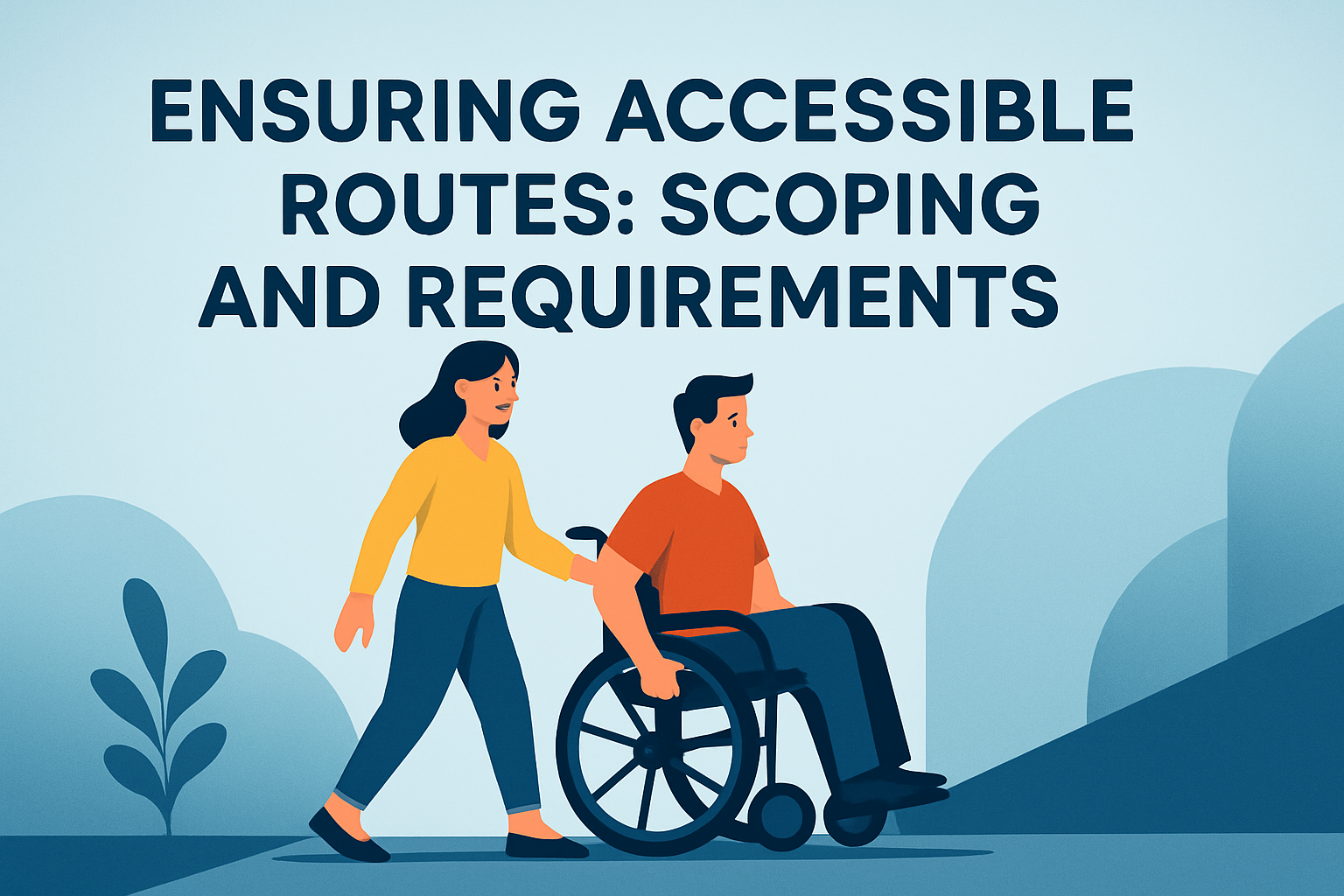
In today’s world, creating inclusive and accessible environments is more important than ever. With over a billion people living with some form of disability, ensuring that public spaces and buildings are designed to accommodate everyone is crucial. The Americans with Disabilities Act (ADA), enacted in 1990, has played a significant role in advocating for accessible design. However, achieving truly accessible routes requires careful scoping and adherence to established requirements. Understanding these elements not only helps in meeting legal standards but also contributes to creating environments where everyone, regardless of their physical abilities, can navigate comfortably and safely.
Before diving into the specifics, let’s define the key terms involved in accessible route planning. An “accessible route” refers to a continuous, unobstructed path that connects all accessible elements and spaces of a building or facility. This includes but is not limited to corridors, ramps, elevators, and doorways. “Scoping” pertains to determining where accessibility features are required and how many are needed in a given space. “Requirements,” on the other hand, are the specific standards set by regulations, like the ADA, to ensure these routes are truly accessible. Failing to meet these can lead not just to legal repercussions but also to a community that excludes a significant portion of its members.
Understanding Scoping: Determining Accessibility Needs
Scoping is the first step in designing accessible routes. It involves assessing the space and services to identify where accessibility features must be implemented. While the ADA provides a framework for these requirements, it’s essential to consider the unique nature of each building. For example, a multi-story shopping mall will have different scoping requirements compared to a single-story community hall.
Let’s consider a real-world example: a newly built public library. In this case, scoping would involve ensuring that all major points, such as the entrance, restrooms, reading areas, and exits, have accessible routes. One must assess the need for ramps, elevators, and wider doorways and their placements throughout the building. These elements, when strategically scoped, allow all patrons, including those with mobility issues, to fully enjoy the library’s offerings. Without proper scoping, certain areas could inadvertently become inaccessible, inhibiting inclusivity.
Accessibility Requirements: The Core Standards
Once scoping is completed, the next step lies in adhering to specific accessibility requirements. These requirements detail the dimensions, slopes, and placements of accessible features. Generally, the ADA Standards for Accessible Design serve as the benchmark. They outline how features such as door widths, ramp slopes, and signage should be configured to ensure usability for everyone.
A critical aspect is the construction of ramps. ADA standards specify that ramps should have a slope ratio of 1:12, meaning for every inch of height, twelve inches of length are needed. This ensures that ramps are gentle and usable for wheelchair users. Let’s take an example of a school attempting to provide access to all classroom levels. Implementing the proper slope on ramps not only satisfies ADA standards but it also gives students, parents, and staff with disabilities a safe and independent route throughout the school environment. Failure to follow these guidelines could result in unsafe conditions and even injuries.
Real-World Application: Creating an Accessible Shopping Center
Take, for instance, a project aimed at building a new shopping center. Ensuring accessibility here is crucial due to the high foot traffic and diverse population of shoppers. The scoping would need to capture the entire retail environment, ensuring each store, restroom, parking lot, and pedestrian walkway adheres to accessibility requirements.
Within the center, pathways should be wide enough to accommodate wheelchairs and should be well marked to guide individuals with visual impairments. Accessible parking spaces should be clearly designated, situated close to entrances, and equipped with proper signage.
| Element | ADA Requirement | Implementation |
|---|---|---|
| Entrances | 32 inches minimum clear width | Install automatic sliding doors |
| Ramps | 1:12 slope ratio | Construct gradual ramps at store entrances |
| Parking | 1 accessible space per 25 total spaces | Designate and label accessible parking with signage |
| Signage | Braille and tactile characters | Visible and readable signage at all accessible routes |
Meeting these standards ensures a compliant, user-friendly environment. Failure to address these elements could not only exclude potential customers but also lead to legal challenges.
Challenges in Accessibility Design
While the guidelines may seem straightforward, real-world application often faces hurdles. Budget constraints can limit the extent of accessible features implemented. Moreover, retrofitting older buildings poses additional challenges, as they were not originally designed with modern standards in mind.
A relevant example is the renovation of historical buildings, which often requires creative solutions to balance preservation with accessibility. For instance, in a historical hotel, installing an elevator might disrupt the building’s integrity or aesthetics. In such cases, architects need to innovate, possibly by introducing less invasive lifts or reaching compromises that enhance accessibility without compromising historical significance.
The Importance of Inclusive Design
Accessibility is about more than compliance; it’s about fostering inclusion. Spaces designed with accessibility in mind not only benefit those with disabilities but enhance usability for everyone, including parents with strollers and elderly individuals with mobility concerns. Striving for inclusivity ensures that public spaces are welcoming to all community members.
Consider a community park as an example. When designed with accessible pathways, seating, and restrooms, it becomes a haven for everyone, encouraging those who may have felt marginalized to partake in community life. A simple aspect of integrating accessible routes ensures that the park serves its community fully rather than partially.
Integrating Accessibility into Design Culture
To achieve long-lasting accessibility, adopting a design culture that prioritizes accessibility from the outset is essential. This proactive approach can prevent issues that may arise from afterthought solutions. Encouraging designers and architects to consider accessibility as a fundamental aspect of their work rather than a regulatory nuisance is vital.
One successful example can be seen in forward-thinking architectural firms that specialize in accessibility-focused design principles. By integrating these practices into their standard operations, they create inherently accessible buildings. This forward-thinking approach reflects a commitment to inclusion and innovation in design.
Conclusion: Moving Towards Universal Accessibility
In summary, ensuring accessible routes through careful scoping and adherence to requirements is critical in fostering inclusive environments. By understanding and applying these guidelines, designers and architects can create spaces that serve everyone’s needs, promoting independence and dignity for all users.
The benefits of accessible design extend beyond legal compliance—they foster community, enhance user experiences, and ensure that public spaces are universally welcoming. As we move towards greater inclusivity, let us prioritize accessibility in all design endeavors. This commitment not only enriches our built environments but also reflects our dedication to a more equitable society for all.
Whether you’re an architect, designer, or just someone interested in building inclusive spaces, now is the time to integrate accessibility into your projects. Study the requirements, engage with communities, and educate others on the importance of accessible design. Together, let’s craft environments that ensure no one is left behind.
Start by reviewing the areas you engage with daily—whether at work, play, or home—and consider how accessible they truly are. Initiate conversations with stakeholders and advocates for accessibility improvements where needed. By taking these steps, you contribute to a world more attuned to the needs of all its inhabitants.
Frequently Asked Questions
What is an accessible route and why is it important?
An accessible route is essentially a continuous, unobstructed path that complies with the standards set by the Americans with Disabilities Act (ADA). It is designed to accommodate people with disabilities, ensuring they can maneuver through spaces with ease and independence. This encompasses not just those who use wheelchairs, but also individuals with mobility challenges, visual impairments, and more. Accessible routes include sidewalks, entrances, hallways, elevators, and restrooms, among other pathways.
The significance of accessible routes lies in the promotion of inclusivity and equality. With over a billion people worldwide living with disabilities, creating environments that facilitate easy access is not just a legal requirement but a social imperative. Accessible routes ensure that everyone can participate fully in society, access services, enjoy public spaces, and live independently to the greatest extent possible.
What are the key components of ensuring accessible routes?
Ensuring accessible routes involves adhering to specific components outlined by ADA standards. Key components include:
1. Width and Clearance: An accessible route must generally be at least 36 inches wide to accommodate wheelchairs and other mobility aid devices. This width ensures maneuverability and safe passage for everyone, including those using crutches, canes, or walkers.
2. Surface: Routes should have stable, firm, and slip-resistant surfaces. They should be made of materials that provide easy traction and are not prone to shifts or movements that could lead to tripping hazards.
3. Slope: Accessible routes should have a gentle slope. Ramps, for example, must not exceed a 1:12 slope ratio, meaning for every inch of height, there should be at least twelve inches (one foot) of ramp length. This facilitates smooth transit for wheelchair users and those with limited strength or endurance.
4. Barriers: Obstructions and protruding objects should be minimized or eliminated altogether. Clear headroom and the absence of sharp corners help prevent injuries.
5. Signage and Visual Cues: Clear signage and tactile warnings, such as detectable warnings on curb ramps and at stair landings, are essential for people with visual impairments, offering guidance to ensure their safety.
What are the steps to implement accessible routes in existing buildings?
Implementing accessible routes in existing buildings requires a thoughtful approach and adherence to ADA requirements. Begin by conducting a comprehensive accessibility audit, evaluating current paths of travel for both their compliance and user-friendliness. Engage with disability advocacy groups for insightful feedback. The next step involves prioritizing adjustments, beginning with high-demand areas such as entrances and restrooms. Modifications may include widening doorways, installing ramps, ensuring adequate signage, and upgrading lighting. However, it’s crucial to remember that physical changes are only one aspect. Training staff to assist individuals with disabilities and understanding the day-to-day challenges they face are equally important. Legal professionals specializing in ADA compliance should be consulted to ensure that all adaptations meet current standards.
How do the ADA requirements for accessible routes apply to outdoor spaces?
ADA requirements for accessible routes extend beyond buildings to outdoor spaces, encompassing parks, recreational areas, and streetscapes. The principles remain consistent with indoor requirements but often require adaptation to natural landscapes. For instance, in parks, paths must be firm, stable, and slip-resistant, with consideration given to the natural environment. Trails intended for universal access should be of a grade and width that cater to those with mobility aids, with rest areas and viewing points provided at reasonable intervals. It’s crucial to balance accessibility with maintaining the environmental and aesthetic qualities of outdoor areas. Urban streetscapes require crosswalks with proper curb cuts, well-maintained sidewalks, and visible pedestrian signals for those with visual impairments. Strategies like these ensure that all individuals, regardless of ability, can enjoy and access outdoor environments safely and independently.
What role do state and local governments play in ensuring accessibility?
State and local governments play a crucial role in implementing and enforcing accessibility standards. They are responsible for adopting ADA standards within their jurisdictions and can introduce additional requirements that exceed federal mandates. These governments are often tasked with improving infrastructure, ensuring new public works projects adhere to accessibility criteria, and retrofitting existing amenities. They collaborate with disability advocacy organizations to incorporate accessible design from the planning stages. Furthermore, state and local governments serve as oversight bodies, ensuring compliance and addressing complaints from citizens about accessibility barriers. They also play an educational role, providing resources and guidance to help businesses and public entities understand their obligations and responsibilities under the ADA. Their active involvement ensures that accessibility is not just a theoretical ideal but a practical reality that improves the lives of all community members.