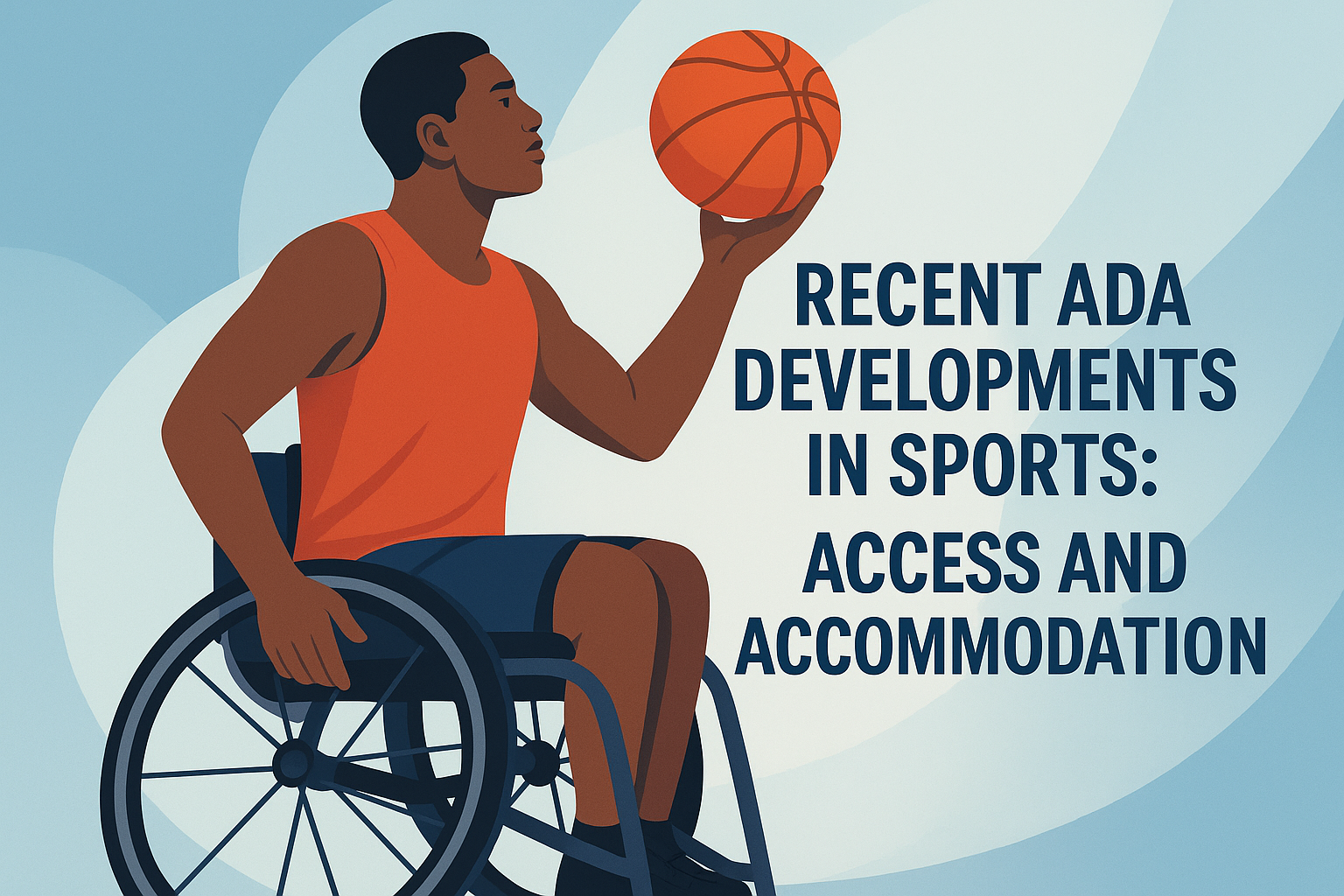
The realm of sports, with its rich history and dynamic present, is a fascinating intersection of athleticism, culture, and societal values. Recently, advancements in laws concerning accessibility and accommodation have emerged at the forefront of sports. This is primarily due to the Americans with Disabilities Act (ADA), a comprehensive civil rights law that prohibits discrimination based on disability. The ADA’s influence extends beyond mere inclusion, embracing access to opportunities, accommodation of diverse needs, and transforming the experience of sports for athletes and spectators alike. Discussions around this topic are more pertinent than ever as society seeks to leverage sports as an inclusive platform accessible to everyone. Understanding recent ADA developments is essential for everyone – from policymakers and sports governing bodies to coaches, athletes, and fans – to contribute to a more equitable sporting world.
Enhancing Athlete Participation through ADA
In recent years, more attention has been given to ensuring athletes with disabilities can compete in sporting events without facing unnecessary barriers. The ADA has been the primary driver of these changes. The landmark change was seen when the ruling by the United States Supreme Court in the case of PGA Tour, Inc. v. Martin endorsed Casey Martin’s right to use a golf cart during tournaments due to a disability. This pivotal judgment underscored the importance of reasonable accommodation in sports.
Later, this principle was echoed in various smaller circuits and amateur sports leagues. By mandating necessary accommodations like prosthetic limbs, specialized equipment, or assistants where needed, the spirit of ADA has allowed many athletes to thrive. One illustrative example is the case of track and field, where adjustments have been made for sprinters who require starting blocks tailored to prosthetics. These accommodations have ensured that competition is fair and that athletes have the support they need to reach their full potential.
Venue Accessibility Improvements
The second significant impact of recent ADA developments is evident in sports facilities. Initially enacted in 1990, the ADA required that public accommodations, including sports venues, be accessible to individuals with disabilities. Over the years, updates and stricter compliance measures have enhanced access features in stadiums, arenas, and other sports venues.
An excellent example of venue adherence is the renovation of Oracle Park, home of the San Francisco Giants, which now includes elevators, ramps, and wheelchair-accessible seating spread throughout the stadium. The ADA’s guidelines also extend to auxiliary aids and services, ensuring accessibility to visual and auditory content, such as sign language interpreters and adequate captioning on displays.
| Enhancements | Examples in Sports Venues |
|---|---|
| Visual Aids | Captioning on scoreboards |
| Mobility Access | Wheelchair ramps and accessible seating |
| Auditory Services | Hearing loops and sign language interpreters |
Such developments illustrate how ADA compliance not only helps individuals with disabilities but enriches the sports experience as a whole by promoting an inclusive atmosphere.
Programs and Initiatives Supporting Inclusion
The ADA has also encouraged the proliferation of programs and initiatives designed to integrate individuals with disabilities more fully into sports. Many programs now prioritize training and development for athletes with disabilities, recognizing the skill and competitiveness these athletes bring to the table.
The Special Olympics, for example, has adopted ADA principles by creating Unified Sports programs that bring together athletes with and without disabilities. This initiative has gained traction globally, reinforcing that teamwork and competitive spirit transcend physical abilities. Moreover, high-profile endorsements and partnerships have fostered an environment where these programs receive the necessary funding and television exposure, raising awareness and breaking stereotypes.
Technological Innovation and Accessibility
Technological innovation has significantly bolstered ADA developments in sports, providing new tools and mediums for athletes to engage with sports more inclusively and interactively. Adaptive sports equipment has been the focus, with innovations like advanced prosthetics, sport wheelchairs, and sensory sports technology leading the charge.
For instance, new advances in sensor technology allow visually impaired athletes to receive real-time audio feedback about their performance. Another breakthrough includes improvements in virtual reality experiences that enable athletes to train in safer environments while simulating competitive scenarios, providing a crucial training tool for many individuals with disabilities.
Legal and Policy Changes Impacting Sports
The continuous evolution of legal frameworks around the ADA also plays a crucial role. Recent legislative efforts and administrative adjustments seek to close existing gaps in the ADA, ensuring compliance and further reinforcing its principles. These adjustments focus on stronger enforcement mechanisms and incentives for organizations to adopt inclusive practices voluntarily.
One notable legislative update is the Reflecting Inclusive Sports Act, which seeks to enhance existing laws, emphasizing the need for educational institutions to provide more comprehensive supports for student-athletes with disabilities. In addition to legal advocacy, partnerships between non-profit organizations and sports institutions have been pivotal in driving policy changes and fostering inclusive environments.
Summary and Implications for Future Development
Recent developments concerning the ADA in sports underline the evolving nature of accessibility and accommodation, profoundly impacting athletes, venues, and broader sports culture. By fostering inclusivity, ADA-inspired initiatives have transformed sports into a universal platform where all individuals, irrespective of their physical limitations, can compete, participate, and spectate.
The impact of these developments is significant – they enhance the quality of life for individuals with disabilities, promote equality, and engender a deeper appreciation for diversity within athletic communities. As these advances continue to unfold, stakeholders must remain committed to enforcing ADA principles and seeking innovative solutions to emerging challenges.
Advancing ADA initiatives, integrating technology, and enacting supportive policies will ensure a future where sports are accessible and accommodating for everyone. So, let’s champion inclusivity in sports, recognizing it as a vital step toward a more equitable and diverse society.
Frequently Asked Questions
1. What recent developments in the ADA are impacting sports accessibility?
In recent years, there has been significant progress in ADA compliance and advocacy within the sports realm. One notable development is the adaptation of facilities to accommodate spectators and athletes with disabilities. This includes the installation of ramps, elevators, and accessible seating areas in stadiums and sports venues. Additionally, there’s been a push to ensure that sports programs at various levels, from local community teams to professional leagues, offer modified equipment and adaptive sports opportunities tailored to the needs of participants with disabilities.
The ADA requires that sports organizations provide reasonable accommodations unless doing so would result in an undue hardship. This often involves ensuring there are policies, practices, and procedures that afford equal participation opportunities. Furthermore, recent legal precedents have clarified the scope of accommodations that must be offered, making it increasingly difficult for organizations to sidestep these obligations. Organizations now face heightened accountability for creating inclusive environments that promote participation for all individuals, regardless of disability.
2. How does the ADA address accommodations for athletes with disabilities in professional sports?
The ADA’s influence in professional sports is profound, serving as both a guiding framework and a strong advocacy tool for athletes with disabilities. Under the ADA, professional sports leagues are required to provide reasonable accommodations to athletes, enabling them to participate fully in their sport. This can manifest in several ways, such as providing sign language interpreters for athletes who are deaf or facilitating the development of specialized gear that accommodates specific needs. Moreover, the ADA prohibits discrimination in recruitment, allowing athletes with disabilities the same opportunities to trial and compete in professional circuits as their non-disabled peers.
For instance, professional leagues are increasingly recognizing the importance of identifying and eliminating barriers to participation. This means investing in better training for coaches and staff to ensure they understand the needs of athletes with disabilities and can provide the necessary support. It also involves drafting policies that specifically outline the rights and procedures for requesting accommodations, creating an environment of transparency and empowerment for the athletes.
3. What are some common misconceptions about ADA requirements in sports?
One prevalent misconception is that compliance with ADA requirements is optional or only applicable to large organizations. In reality, the ADA mandates that all public and private entities, regardless of size, eliminate barriers to access and provide necessary accommodations for individuals with disabilities. This means community sports clubs, schools, and even small-scale tournament organizers have obligations to ensure inclusivity under the ADA.
Another misunderstanding is that ADA compliance equates to a lower standard of performance or competitiveness. However, the ADA’s goal is to level the playing field by ensuring that athletes with disabilities have the same access to training, facilities, and competition. It emphasizes fairness and equality, not reduced standards. Lastly, some assume that accommodating athletes with disabilities inevitably leads to significant financial burden. While accommodations can require investment, the ADA encourages practical and cost-effective solutions, and many organizations are finding that making their programs accessible can be achieved without excessive expenditure.
4. How does the ADA ensure access to sports facilities for spectators with disabilities?
Beyond athletes, the ADA also enforces regulations to ensure that spectators with disabilities can enjoy sports events with the same convenience as everyone else. Accessibility features in sports arenas and stadiums are mandated under the ADA, involving not just physical access but also communication access. This means providing accessible seating options that include not only specific allotments of wheelchair spaces but also companion seating so families can sit together.
To further illustrate, the ADA also requires the availability of assistive listening devices for individuals with hearing impairments, braille signage, and audible messaging systems within venues. Moreover, sports venues are increasingly offering descriptive services and braille programs for blind and visually impaired spectators. These efforts ensure that no fan misses out on the full experience of attending a live sport, embracing the spirit of inclusion that is central to the ADA.
5. How can sports organizations implement ADA accommodations effectively?
To effectively implement ADA accommodations, sports organizations need to start with a thorough assessment of their current facilities, programs, and policies to identify potential barriers to access. This often involves consulting with experts in ADA compliance or working alongside disability advocacy groups to gain valuable insights into necessary modifications. An essential step is to provide ongoing training for staff and volunteers to foster a welcoming environment and ensure they understand their role in upholding accessibility standards.
Moreover, organizations should establish clear procedures for athletes and spectators to request accommodations and provide feedback. This feedback loop is crucial for continual improvement and can involve setting up advisory committees that include individuals with disabilities to guide decision-making. Additionally, leveraging technology, such as accessible websites and mobile apps, can enhance the experience of individuals with disabilities by simplifying the process of purchasing tickets, accessing event information, or booking accommodations.
By taking an inclusive and proactive approach, sports organizations can not only meet ADA standards but also enrich their programs and services, fostering a culture of diversity and inclusion that aligns with modern societal values.


