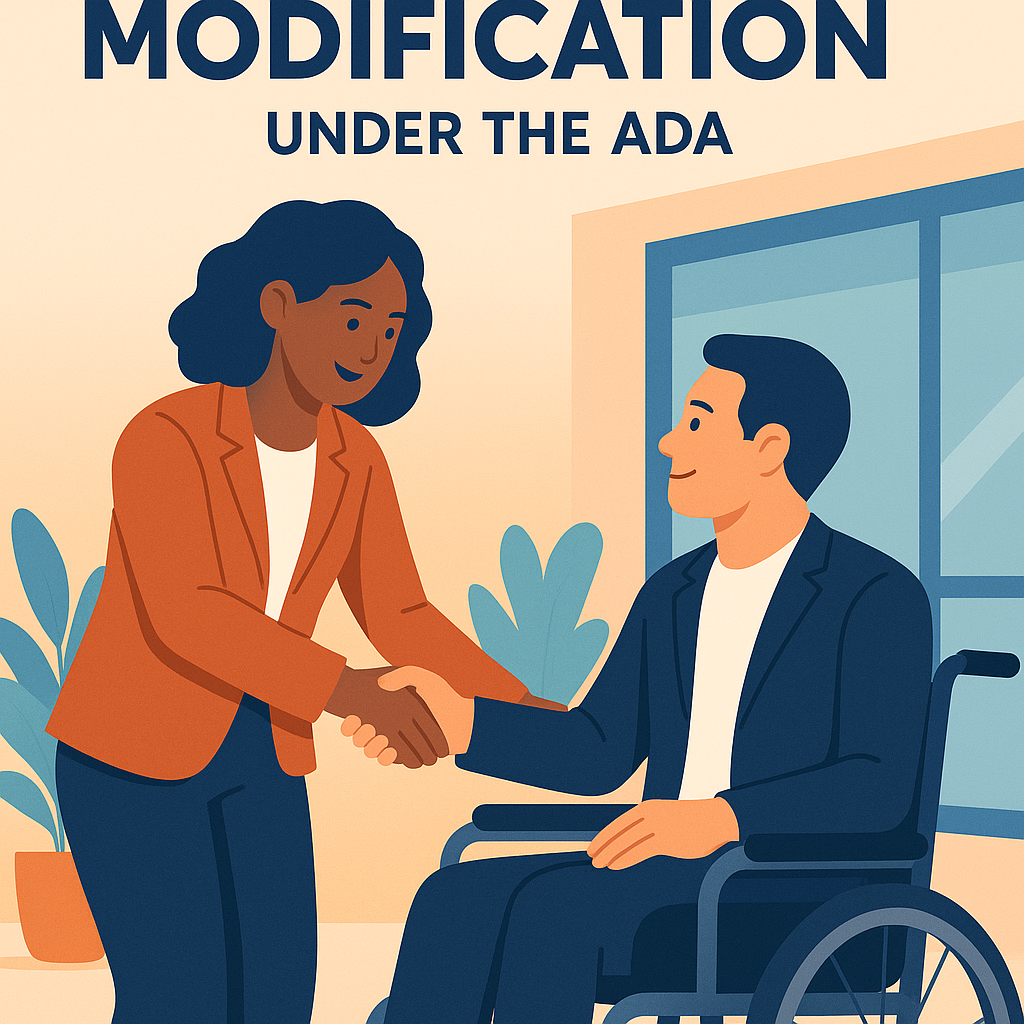
In the intricate world of law, groundbreaking cases provide clarity to multifaceted issues, and Martin v. Kansas is no exception. Centered around the Americans with Disabilities Act (ADA), this case sheds light on what constitutes a “reasonable modification” for individuals with disabilities. Originating from a dispute between a deaf employee and his employer, the state of Kansas, the case has monumental implications. To understand its significance, one must first unravel the core components. The Americans with Disabilities Act, enacted in 1990, prohibits discrimination and ensures equal opportunity for persons with disabilities in employment, amongst other areas. A crucial aspect of ADA compliance is the provision for reasonable modifications – adjustments or changes that enable an individual with a disability to perform essential job functions. The Martin v. Kansas case challenges interpretations of what is deemed “reasonable.” Clarifying this is essential, not only for legal professionals but also for employers, employees, and the broader community, as it defines workplace inclusivity practices. Amid evolving societal attitudes towards inclusivity, this discourse becomes even more paramount.
The Background of Martin v. Kansas
The case of Martin v. Kansas stems from Michael Martin, a qualified employee who is deaf, working for the state of Kansas. He contended that his employer failed to provide effective communication during meetings, undermining his job performance and professional growth. Despite requests for interpreters, he often faced resistance, with the state arguing the costs were prohibitive, hence unreasonable. This situation raises a pivotal question: What costs and efforts must an employer undertake to be deemed compliant with ADA requirements? Beyond the legal ramifications, this touched on ethical considerations regarding employee rights and employer responsibilities.
- Background: Michael Martin’s role and his challenges in communication
- Employer’s argument: Cost and feasibility of providing interpreters
- Implications: Ethics in interpreting “reasonability” beyond just financial metrics
Beyond its immediate legal context, Martin’s case reveals wider societal tensions about accommodating disabilities. In workplaces where resources are finite, such dialogues generate debates about prioritization and ethical responsibility. Key here is understanding both the legal precedent and societal meaning of “reasonable modification.” For employers, learning from Martin’s case is crucial. Not only about compliance but about crafting a more inclusive culture.
Decoding “Reasonable Modification”
Reasonable modification, within the ADA, underscores the need for adjustments so that an individual can perform their duties effectively despite impairments. Distinguishing between what was possible and what was reasonable was central to Martin v. Kansas. By putting the term under scrutiny, the case has prompted many organizations to rethink and potentially reassess their approaches. As this discourse unfolds, the primary query remains – where does one draw the line between feasible and burdensome? Factors influencing this balance include financial health, size of the organization, potential changes’ impact, and most critically, the actual necessity and benefit of the requested accommodation.
For instance, a small business with limited resources may argue undue hardship more convincingly than a large corporation. This distinction not only highlights disparities in resources but also brings to light varied interpretations across case-law. Importantly, ADA stipulates that employers are not required to make modifications that will cause undue hardship, defined as an action requiring significant difficulty or expense. However, this is heavily context-dependent. An effective strategy is to evaluate on a case-by-case basis considering both legal precedences and empathy-driven practices.
| Factor | Relevance to Reasonable Modification |
|---|---|
| Size of Organization | Financial and logistical capacity to accommodate |
| Nature of Job | Necessity of accommodation to perform essential functions |
| Cost of Accommodation | Whether it poses an “undue hardship” financially |
| Potential Disruption | Impact on operations and other employees |
Real-world Implications and Employer Responsibilities
A practical application of lessons from Martin v. Kansas involves structuring human resource policies to adapt swiftly to ADA claims. Embedding a culture of inclusivity necessitates not just policy language but actionable initiatives that transcend basic compliance. For many organizations, this may involve reviewing procedures for handling disability claims. For instance, offering transparency in decision-making and involving consistently trained HR personnel in these discussions can mitigate misunderstandings. Reacting to Martin’s experience, some companies have adopted case study methods where typical scenarios are examined, equipping staff with pragmatic solutions related to ADA compliance. Real-world implications span beyond employee-employer dynamics, touching on corporate reputation and public perception. Foresight in these areas can catalyze advancements in corporate responsibility, sending positive signals to stakeholders.
Case Study: Revisiting Previous ADA Cases
While Martin v. Kansas serves as a critical touchstone, revisiting precedents can provide nuanced insights into judicial reasoning around ADA claims. Examining previous cases where the ADA’s scope was challenged, one can derive strategic patterns or shifts in adjudication. Highlighting notable cases where “reasonable modification” was central, we learn that courts often consider broader societal narratives influencing disability rights. For instance, in the case of Humphrey v. Memorial Hospitals Association, the court dealt with performance issues stemming from a mental health condition. The verdict underscored the obligation to engage in an interactive process between employee and employer, emphasizing dialogue and adaptation. As Martin v. Kansas steers the conversation further, it invites scrutiny of decision-making processes, compelling entities to cultivate environments that organically promote inclusivity instead of being reactive.
Conclusion: Implications Moving Forward
In deciphering Martin v. Kansas, stakeholders glean an enriched comprehension of “reasonable modification” under the ADA. The case underscores an evolving narrative, where what is reasonable hinges not just on legal interpretation, but collaborative, empathetic dialogue. Key takeaways for organizations include an urgent need to re-evaluate ADA-related frameworks and facilitate constructive communication. For employees, an understanding of one’s rights fosters empowerment and proactive engagement in discussions surrounding accommodation. For policy-makers, the case accentuates the urgency to narrate clearer guidelines, ensuring interpretations align with today’s socio-cultural ethos. Ultimately, this discussion lays groundwork for advancing disability rights. Many can take proactive steps, whether reassessing workplace policies, advocating inclusivity training, or engaging in supportive dialogue. This movement towards a more inclusive work environment speaks to broader societal progress, one that honors individuals’ diverse needs while balancing practical realities.
As workplaces evolve, the case of Martin v. Kansas stands as both a legal marker and a catalyst. It propels the ongoing narrative about disability rights, reminding all of the robust, ever-evolving nature of fairness within professional landscapes.
Frequently Asked Questions
1. What is the significance of Martin v. Kansas in relation to the ADA?
The case of Martin v. Kansas is profoundly significant because it adds much-needed clarity to the interpretation of “reasonable modification” as outlined in the Americans with Disabilities Act (ADA). This landmark case emerged from a dispute where a deaf employee felt the state of Kansas, their employer, did not provide necessary accommodations to ensure equal access to work opportunities. This case forces us to closely examine how employers are required to facilitate a work environment that is inclusive of employees with disabilities. The court’s ruling provides precedence and guidance for similar cases, helping to elucidate what constitutes reasonable adjustments that should be made to accommodate and support disabled individuals in the workplace. The broader implication is an enriched understanding of an employer’s responsibilities under the ADA, especially regarding communication barriers.
2. How does the case define “reasonable modification”?
In defining “reasonable modification,” the Martin v. Kansas case deeply examines the obligations of employers under the ADA to make tangible changes that allow employees with disabilities to perform their job duties effectively. The definition encompasses adjustments or alterations to the workplace or the manner in which tasks are conducted, which do not cause undue hardship to the employer. This could range from providing sign language interpreters, making structural adjustments, or altering work schedules. What this case highlights is not just the need for modifications but also the need for an interactive, flexible process between the employee and employer to determine the modifications necessary for the employee to work on an equal basis with others. Most importantly, the case sets a precedent that reasonable doesn’t mean exhaustive or maximum possible, but it ensures accessibility and opportunity.
3. What challenges do employers face in implementing “reasonable modifications” following Martin v. Kansas?
In the wake of Martin v. Kansas, employers face the significant challenge of balancing the needs of their employees with disabilities against the potential disruption or expense that modifications might introduce. The verdict emphasized the importance of engaging in an interactive process, posing challenges such as assessing what modifications are reasonable without incurring undue hardship, both financially and operationally. Employers must now be more vigilant and proactive in evaluating their work environments and potential impediments to accessibility. Additionally, there is a challenge in understanding the nuances of various disabilities and determining what modifications could be considered reasonable or sufficient. This requires a committed effort in terms of resources, time, and often legal counsel to ensure compliance with the ADA while maintaining workplace efficiency.
4. How does Martin v. Kansas impact the relationship between employers and disabled employees?
This case sets a transformative precedent in how employers engage with disabled employees, fostering a more open and collaborative atmosphere for discussing and implementing necessary accommodations. It highlights the importance of an interactive process—an ongoing dialogue between the employer and the employee—to identify and facilitate reasonable modifications. This interaction builds trust, as both parties need to communicate effectively about the needs and limitations present, leading to practical solutions. Moreover, the decision enforces accountability, encouraging employers to genuinely consider and prioritize accommodations instead of dismissing requests quickly, thus actively promoting an inclusive work culture. Ultimately, Martin v. Kansas empowers employees, reassuring them that their rights to a fair workplace will be protected and respected, while guiding employers on how to fulfill these duties.
5. How might this case influence future ADA-related legal proceedings?
Martin v. Kansas stands as a pivotal case with the potential to influence numerous future ADA-related legal proceedings by shaping how courts interpret “reasonable modification.” It provides a tangible guideline for assessing what modifications are necessary and feasible, ensuring that ADA provisions are upheld throughout the legal system consistently. Future cases will likely reference Martin v. Kansas when determining the appropriateness of adjustments requested by employees with disabilities. By emphasizing the need for a balanced approach that considers both the employer’s capacity and the employee’s needs, courts may rely on this example to deliver rulings that reflect both the letter and the spirit of the ADA. Consequently, the case heightens awareness around disability rights among employers, catalyzing potential changes in policy and practice to prevent similar legal disputes.


