The Americans with Disabilities Act (ADA) was enacted to protect the rights of individuals with disabilities and ensure they have the same opportunities and access as everyone else. In the context of air travel, ADA compliance is an essential aspect for both airlines and airports to address. As travel becomes an integral part of modern life, it’s crucial that the aviation industry embraces inclusivity. Ensuring full accessibility and accommodation for individuals with disabilities throughout their airport and flight experience is not just a matter of legal compliance, but one of dignity and human rights. But what does ADA compliance look like in air travel? What are the guidelines that airlines and airports must adhere to, and how can they implement these practices effectively? This article will explore these essential questions, aiming to illuminate the current standards and guidelines while offering insights into the various measures airlines and airports can take to enhance accessibility for all travelers. Whether it’s the check-in process, navigating the airport, or boarding the aircraft, every step of the journey matters. Ensuring ADA compliance improves the overall travel experience, making it more seamless and satisfying for passengers with disabilities. With dedication and awareness, the aviation industry can stand as a beacon of inclusion, showcasing how sincere efforts can lead to substantial changes.
Understanding ADA Compliance in Air Travel
ADA compliance in air travel refers to adhering to the guidelines and standards set forth to ensure individuals with disabilities receive equal opportunities when flying. Air travel can pose unique challenges for individuals with physical, sensory, or cognitive impairments, from booking tickets to deplaning upon arrival. Therefore, ADA compliance encompasses a broad range of considerations that address these challenges holistically.
To create a truly accessible experience, airlines and airports must consider several key areas. Effective communication is one of these crucial elements, ensuring that all travelers receive necessary information in accessible formats. This could mean providing information in Braille, large print, or digital accessible formats, ensuring that passengers who are blind or have vision impairments can stay informed smoothly throughout their journey.
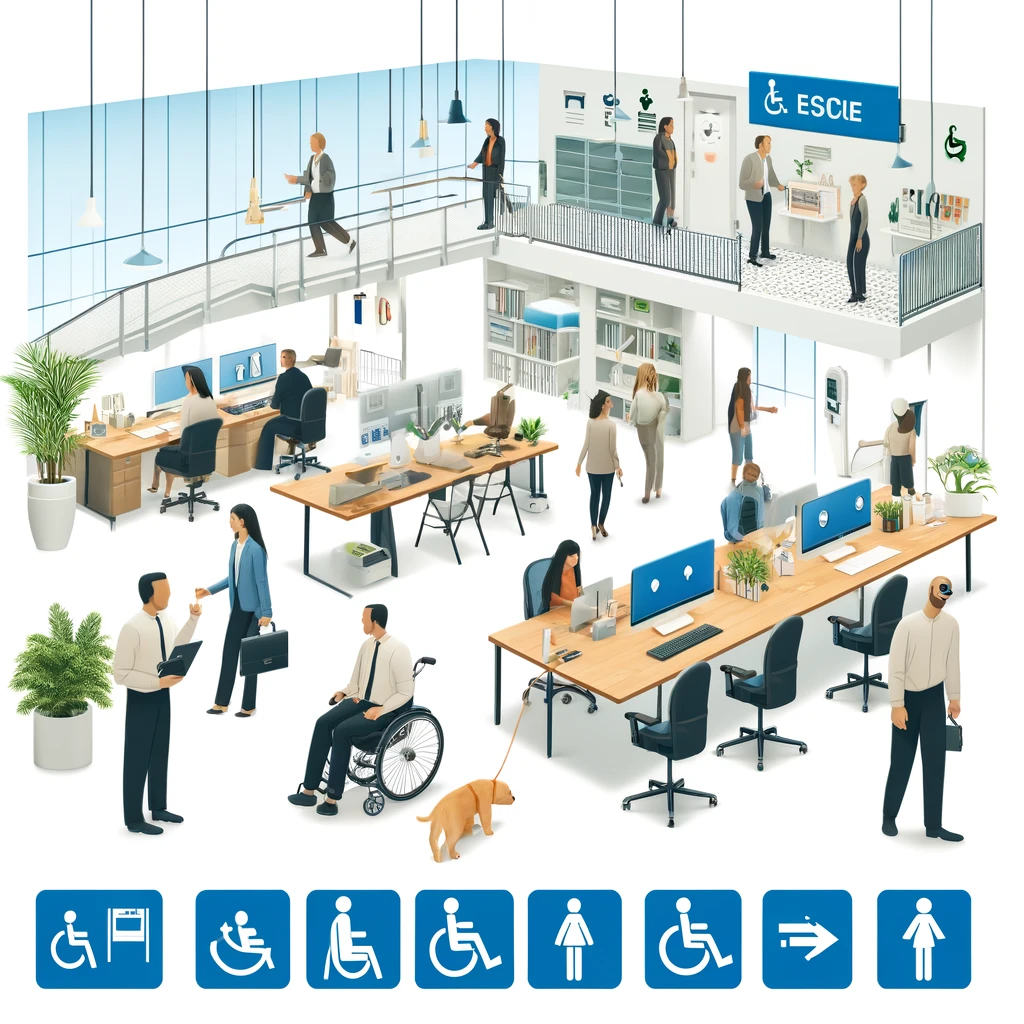
Another aspect is physical accessibility within airports and aircraft. This includes accessible counters, restrooms, seating, and boarding areas, as well as reasonable accommodations like wheelchair assistance. Designing interactive and navigable environments that consider ramps, lifts, tactile guidance paths, and accessible gates can significantly enhance the travel experience for those with mobility challenges.
Key Guidelines for Airlines
Airlines play a critical role in ensuring ADA compliance and must follow specific procedures and guidelines to provide inclusive services. The Air Carrier Access Act (ACAA) complements the ADA by prohibiting disability-based discrimination in aviation. These statutes require airlines to accommodate travelers with disabilities in several ways.
First and foremost, airlines must allow service animals to accompany passengers freely in cabins, recognizing their critical support role. Service animals are not considered pets, and the policies should reflect their significance in travel.
Another guideline is seating accommodation. Passengers with disabilities should be able to request seating that meets their needs, including bulkhead seating or extra legroom for a companion or service animal. Efforts must be made to ensure that bulkhead seats are available and that those needing them are prioritized without extra charges.
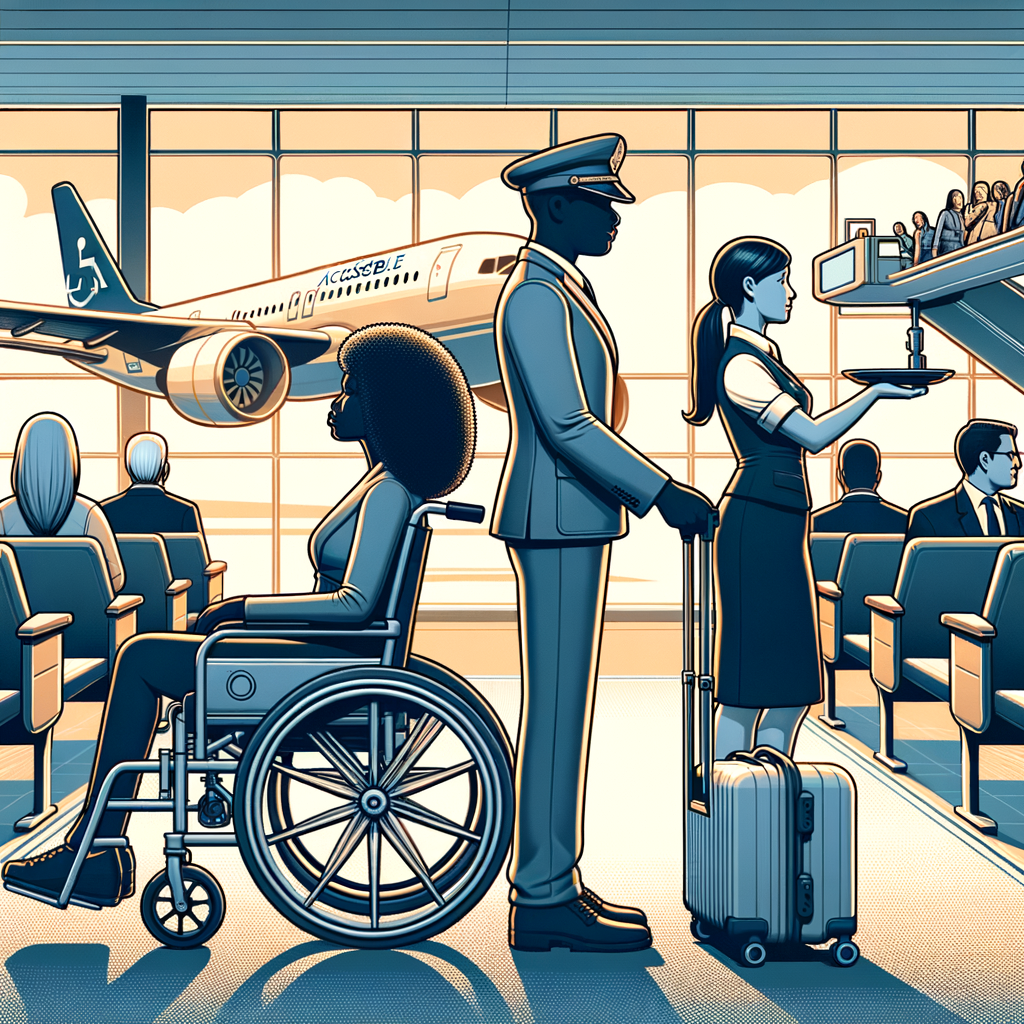
Airlines must also provide timely assistance for boarding and deplaning. This includes necessary wheelchair services and accommodations for people unable to ascend stairs or requiring specialized boarding devices. Timely staff assistance at gates and during layovers is critical.
In-flight accommodations are essential. Airlines need to ensure that cabins include accessible lavatories on longer flights and stowage for mobility aids. Accessible safety briefings and entertainment systems, with closed captioning or audio descriptions, are also necessary so that all passengers can be informed and entertained equally.
Guidelines for Airports
Airports have an equally important role in facilitating an inclusive travel experience. Designing with accessibility in mind means creating environments that everyone can use with ease. Airports should offer convenient and accessible parking and taxi areas, with clearly marked accessible routes leading to terminals.
Signage throughout the airport should be clear and understandable, using universally recognizable symbols. Having interactive information kiosks that are accessible to people with different abilities is another critical aspect.
Security screening processes need particular attention. The Transportation Security Administration (TSA) has specific procedures for screening travelers with disabilities. Airports must ensure collaboration with TSA to train staff effectively, so screenings are conducted respectfully and expeditiously.
For travelers needing assistance, designated waiting areas and services desks should be accessible and easy to locate, ensuring that travelers needing help are assisted promptly. Trained personnel should be readily available to provide necessary support such as directions, emotional support, or physical assistance.
Furthermore, accessible emergency protocol is critical. Emergency plans and protocols need to accommodate individuals with varying disabilities, providing clear instructions and accessible exits. Measures like backup audio signals, designated evacuation chairs, and trained staff to assist those events contribute significantly to overall safety.
Implementing Effective Policies
The implementation of ADA compliance policies should not merely be a checkbox exercise. Airlines and airports need to foster a culture of accessibility, where every employee understands the importance of inclusivity and accessibility, and where services go beyond the minimum legal compliance.
Comprehensive training programs for staff across all touchpoints are essential. Employees must be aware of the sensitivity and practical handling of different disabilities, enabling them to provide authentic, empathetic assistance rather than mechanical service.
Travelers should have access to clearly written policies on a company’s website and through various other communication channels. Providing information and a central point of contact for queries and assistance requests can help passengers plan their journeys smoothly.
Regular auditing and feedback mechanisms are pivotal for sustaining ADA compliance. Airlines and airports should collect feedback actively from travelers with disabilities to identify areas for improvement. Conducting regular audits and assessments of facilities and services helps ensure they remain inclusive.
Innovations in Accessibility
Technological advancements have opened up new horizons for ADA compliance in air travel. Airlines and airports are increasingly looking towards technology to bridge accessibility gaps. Digital interfaces providing real-time information and services can greatly assist travelers with disabilities.
Chatbots, AI-driven customer service systems, and adaptive mobile applications can offer personalized support and assistance throughout the travel process. Voice recognition software and text-to-speech technology can enhance communication for passengers with visual or hearing impairments.
Airlines and airports are also exploring virtual reality (VR) and augmented reality (AR) solutions that simulate the travel experience. Such technologies allow travelers with disabilities to familiarize themselves with airport layouts, aircraft cabins, and procedures, reducing anxiety and preparing them better for actual travel.
Conclusion
ADA compliance in air travel is vital to ensuring that individuals with disabilities can enjoy a seamless, respectful, and safe travel experience. With an emphasis on inclusive design and service practices, airlines and airports carry the responsibility of implementing guidelines that champion access and opportunity for all.
The journey towards universal accessibility is ongoing and requires continuous commitment and adaptation. By embracing innovations and fostering cultures of empathy and respect, the aviation industry can set international standards for disability inclusion.
Air travel has the power to connect people, cultures, and places worldwide. By ensuring it is accessible to everyone, regardless of their physical or mental capabilities, airlines and airports underscore the fundamental importance of equal access and the enriching diversity within the human experience.
As the sector evolves, stakeholders must ensure that ADA compliance is instinctively embedded into every process. The costs and efforts undertaken today will cultivate a world that reflects our highest values of accessibility, proving that our skies are genuinely inclusive for everyone.