Part I: Introduction to the Americans with Disabilities Act
The Americans with Disabilities Act (ADA) of 1990 is a landmark civil rights law that prohibits discrimination against individuals with disabilities in all areas of public life. The ADA guarantees equal opportunity and seeks to ensure that people with disabilities have the same rights and opportunities as all other Americans. The law is a comprehensive national mandate for the elimination of discrimination on the basis of disability, applying to a wide range of public and private entities.
The ADA is structured into five distinct titles, or sections, each addressing a different facet of public life to ensure accessibility and nondiscrimination. Title I focuses on employment, helping to ensure that people with disabilities have equal opportunities in the workplace. Title II addresses public services, programs, and activities of state and local governments, including public transportation. Title III covers public accommodations and commercial facilities, mandating accessibility in privately operated businesses and spaces open to the public. Title IV mandates telecommunications relay services for individuals with hearing and speech impairments. Finally, Title V contains a series of miscellaneous provisions, including protections against retaliation.
This report provides a detailed glossary of key terms foundational to understanding the ADA. It goes beyond simple definitions to explore the legal context, judicial interpretations, and regulatory guidance that have shaped the law since its enactment.
Part II: Foundational & Cross-Cutting Definitions
Disability
Under the ADA, a person is considered to have a disability in one of three ways:
- The person has a physical or mental impairment that substantially limits one or more major life activities.
- The person has a record of such an impairment.
- The person is regarded as having such an impairment.
The ADA does not provide an exhaustive list of all covered impairments, but examples can include visual, speech, and hearing impairments; cerebral palsy; epilepsy; multiple sclerosis; cancer; and heart disease. The third prong of the definition, “regarded as having such an impairment,” is designed to protect individuals from discrimination based on myth, fear, or stereotypes, regardless of whether a functional limitation exists.
A significant evolution in the law’s interpretation occurred with the ADA Amendments Act of 2008 (ADAAA). The ADAAA was a direct legislative response to a series of Supreme Court decisions from 1999, collectively known as the Sutton Trilogy. In these cases, the Court adopted a narrow interpretation of the term “disability,” holding that the determination of whether a person’s impairment substantially limits a major life activity should be made by considering any “mitigating measures” the person uses, such as medication, prosthetics, or eyeglasses. This decision had the effect of excluding many individuals from ADA protection who were able to control their conditions. Congress responded to this development in 2008 by passing the ADAAA, which explicitly overturned the Court’s interpretation and directed that the definition of “disability” be construed broadly in favor of comprehensive coverage. This sequence of events, where a judicial interpretation of a civil rights law was reversed by a legislative act, demonstrates the law’s dynamic and evolving nature.
Qualified Individual with a Disability
A “qualified individual with a disability” is a person with a disability who, with or without reasonable modifications to rules, policies, or practices, the removal of barriers, or the provision of auxiliary aids, meets the essential eligibility requirements for a service, program, or job.
In the context of employment, this means a person who has the requisite skills, experience, education, and other job-related requirements and can perform the essential functions of the position with or without reasonable accommodation. The requirement to perform “essential functions” ensures that an individual is not considered unqualified simply because of an inability to perform minor or incidental job duties.
For public services, a “qualified individual” is a person with a disability who meets the eligibility requirements for participation in a program, service, or activity provided by a public entity. This may involve meeting certain academic or health and safety criteria, provided those criteria are based on actual risks and are not discriminatory.
Major Life Activities
Major life activities are the fundamental functions central to most people’s daily lives. The list is broad and includes, but is not limited to:
- Caring for oneself.
- Performing manual tasks.
- Walking.
- Seeing.
- Hearing.
- Speaking.
- Breathing.
- Learning.
- Working.
Courts have clarified that the assessment of a limitation in a major life activity must be based on a broad range of tasks important to daily life, rather than being limited to job-specific tasks. This case-by-case determination prevents the definition from being narrowed to a point that would undermine the ADA’s protections.
Direct Threat
A “direct threat” is defined as a significant risk of substantial harm to the health or safety of the individual or others that cannot be eliminated or reduced to an acceptable level by reasonable accommodation. This is a key legal concept that acts as a limited exception to the nondiscrimination requirements of the ADA. For example, a public entity may set safety requirements that are necessary for the safe operation of a program. However, such requirements must be based on objective, actual risks and not on speculation, stereotypes, or generalizations about the abilities of people with disabilities.
Service Animal
Under the ADA, a service animal is any dog that is individually trained to do work or perform tasks for the benefit of an individual with a disability. Examples of such tasks include guiding individuals with low vision, alerting a person who is deaf to sounds, pulling a wheelchair, or assisting an individual during a seizure. Other species of animals, whether wild or domestic, trained or untrained, are not considered service animals under this definition. An exception to this rule is that a miniature horse, if individually trained to perform a task for a person with a disability, must also be allowed on the premises of a public entity or private business.
It is important to understand that the provision of emotional support, well-being, comfort, or companionship does not constitute work or tasks under the ADA’s definition of a service animal. While a public entity or private business may ask if an animal is required because of a disability and what tasks it has been trained to perform, they are prohibited from inquiring about the nature or extent of the individual’s disability.
The definition of a service animal is not uniform across all federal regulations. While the Department of Justice’s definition applies to state and local governments (Title II) and places of public accommodation (Title III), the Department of Transportation (DOT) has a separate and broader definition for transportation entities, allowing for “any guide dog, signal dog, or other animal individually trained to work or perform tasks for an individual with a disability”. This difference in regulatory language highlights the complexity of federal disability law, where the precise meaning of a term can vary depending on the context and the specific agency with enforcement authority.
Part III: Title I – Employment
Title I
Title I of the ADA prohibits discrimination by a covered entity (any employer, employment agency, labor organization, or joint labor-management committee) against any qualified individual with a disability in all aspects of employment. This includes job application procedures, hiring and firing, promotion, training, pay, and other privileges of employment. This title is designed to help people with disabilities access the same employment opportunities and benefits available to people without disabilities. The law applies to private employers, state and local governments, employment agencies, and labor unions with 15 or more employees. Federal agencies are covered by Section 501 of the Rehabilitation Act, not Title I of the ADA.
Reasonable Accommodation
A “reasonable accommodation” is any change or adjustment to a job, the work environment, or the way a job is performed that enables a person with a disability to enjoy equal employment opportunities. These accommodations are intended to remove workplace barriers, which may include physical obstacles, as well as rules or procedures. There are three general categories of reasonable accommodations:
- Changes to a job application process to ensure equal opportunity.
- Changes to the work environment or how a job is usually performed.
- Changes that enable an employee with a disability to enjoy equal benefits and privileges of employment, such as access to training or social activities.
Examples of reasonable accommodations can be wide-ranging and include making existing facilities accessible, job restructuring, providing part-time or modified work schedules, acquiring or modifying equipment, adjusting policies, or providing qualified readers or interpreters. The process of identifying and implementing a reasonable accommodation is a collaborative, informal dialogue known as the “interactive process,” which involves both the employer and the individual with a disability. An individual is not required to use specific legal terminology to initiate this process; they only need to inform the employer that they need an adjustment or change at work for a reason related to a medical condition.
Undue Hardship
An employer is not required to provide a reasonable accommodation if it would impose an “undue hardship” on the operation of the business. “Undue hardship” is defined as an “action requiring significant difficulty or expense”. This is not a static standard but is determined on a case-by-case basis, taking into consideration several factors:
- The nature and cost of the accommodation.
- The overall financial resources of the business, including the number of employees and the effect on expenses and resources.
- The overall size of the business in relation to the resources of the larger organization, if applicable.
- The impact of the accommodation on the business’s operation.
The concept of undue hardship represents a fundamental economic principle within the ADA. It creates a flexible legal standard that balances the civil rights of individuals with disabilities against the financial realities of businesses. A larger employer with greater resources is generally expected to provide accommodations that might be considered an undue hardship for a smaller, less-resourced employer. This graduated obligation ensures that the law is not an insurmountable barrier to business, providing a dynamic framework for compliance. If a specific accommodation is determined to be an undue hardship due to its cost, the individual with the disability can be given the option to pay for the portion of the expense that constitutes the hardship.
Essential Functions
“Essential functions” are the fundamental job duties of a position; they are the reason the job exists. For an individual with a disability to be considered qualified for a job, they must be able to perform its essential functions, with or without a reasonable accommodation. The ADA differentiates between essential and marginal job duties to ensure that an individual is not disqualified from a position simply because they cannot perform an incidental task. If an employer has a written job description prepared in advance of advertising or interviewing, this document is considered evidence, though not conclusive, of the essential functions of the job.
Equal Employment Opportunity Commission (EEOC)
The Equal Employment Opportunity Commission (EEOC) is the federal agency responsible for enforcing Title I of the ADA. Individuals who believe they have been subjected to employment discrimination on the basis of disability must file a complaint with the EEOC. In most cases, a person can only file a lawsuit in federal court after receiving a “right-to-sue” letter from the EEOC.
Part IV: Title II – State & Local Governments
Title II
Title II of the ADA prohibits discrimination against qualified individuals with disabilities in all programs, activities, and services provided or operated by state and local governments. This includes, but is not limited to, public education, employment, transportation, recreation, healthcare, courts, voting, and town meetings. Title II applies to all state and local governments and their departments, regardless of their size or whether they receive federal funding.
Public Entity
A “public entity” is defined as any state or local government, including its departments, agencies, special purpose districts, or other instrumentalities. Public entities are subject to Title II’s nondiscrimination requirements for all of their services, programs, and activities.
Program Accessibility
“Program accessibility” is a key technical term under Title II that requires public entities to ensure that their programs, services, and activities, when viewed in their entirety, are accessible to individuals with disabilities. This does not require a public entity to make every single existing building physically accessible. Instead, it allows for nonstructural solutions to achieve access. For example, a public entity can relocate a program or service to an accessible location if the original site is inaccessible due to architectural barriers. This principle allows public entities to fulfill their accessibility obligations without undergoing extensive and expensive renovations of every old building.
Auxiliary Aids and Services
Auxiliary aids and services are provided to ensure effective communication for individuals with sensory or speech disabilities. The specific aid or service provided depends on the nature, length, and complexity of the communication. Examples include:
- Qualified interpreters (e.g., American Sign Language interpreters, oral interpreters).
- Taped texts, audio recordings, or qualified readers for individuals with visual impairments.
- Brailled and large-print materials.
- Communication Access Real-time Translation (CART) services.
- Telecommunication devices for the deaf (TDD) or teletypewriters (TTY).
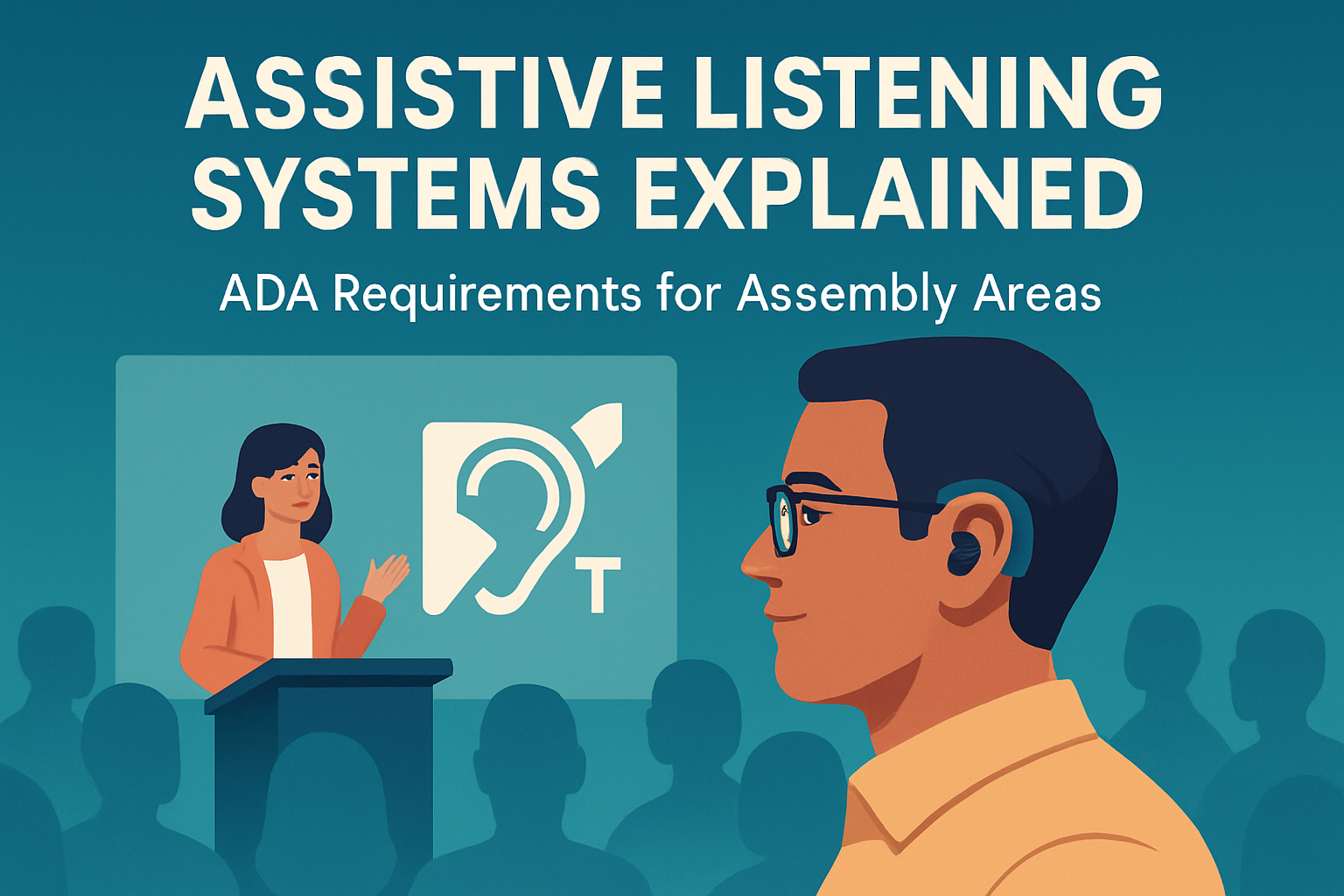
- Audio listening device systems.
A public entity is required to give “primary consideration” to the choice of aid or service requested by the person with a disability, meaning it must honor the person’s choice unless it can demonstrate that an equally effective alternative is available or that the request would result in a fundamental alteration of the program or an undue burden. This higher standard of obligation for public entities is a key distinction from the requirements for private businesses under Title III, which are only “encouraged” to consult with the individual.
Public Transportation
Title II seeks to ensure that individuals with disabilities have access to public transportation services. This applies to various systems, including fixed-route buses and rail, as well as complementary paratransit services. Requirements include:
- All newly purchased buses must be accessible with features like lifts or ramps.
- Lifts and ramps must be in good working order and maintained promptly.
- Operators must announce stops at transfer points and major intersections.
- Complementary paratransit services must be provided for individuals with disabilities who cannot use a fixed-bus route.
Requests for reasonable modifications in transportation can be denied if they would cause a direct threat to the safety of others, result in a fundamental alteration of the service, are unnecessary, or would result in an undue financial or administrative burden.
Part V: Title III – Public Accommodations & Commercial Facilities
Title III
Title III of the ADA prohibits private places of public accommodation from discriminating against individuals with disabilities. It applies to a wide range of privately owned, leased, or operated facilities, including all businesses, even small ones. The title sets minimum standards for accessibility in new construction and alterations, and it requires public accommodations to make “reasonable modifications” to their policies and remove architectural barriers in existing buildings where it is “readily achievable” to do so. Religious organizations and private clubs are exempt from the requirements of this title.
Public Accommodation
A “public accommodation” is a privately operated place that is open to the public for business. The ADA lists 12 general categories of public accommodations. These include:
- Places of lodging (e.g., hotels, motels).
- Food and drink establishments (e.g., restaurants, bars).
- Places of exhibition or entertainment (e.g., movie theaters, sports stadiums).
- Places of public gathering (e.g., auditoriums, convention centers).
- Sales or rental establishments (e.g., retail merchants, grocery stores).
- Service establishments (e.g., banks, doctor’s offices, laundromats).
- Stations used for public transportation.
- Places of public display or collection (e.g., museums, libraries).
- Places of recreation (e.g., parks, golf courses).
- Places of education (e.g., private schools, day care centers).
- Social service center establishments (e.g., homeless shelters).
Commercial Facility
A “commercial facility” is a privately operated nonresidential facility whose operations affect commerce, such as factories, warehouses, and office buildings. All new commercial facilities must comply with ADA accessibility standards. If an existing commercial facility undergoes alterations, the altered portion must be made accessible to the maximum extent feasible. If a commercial facility also contains a “place of public accommodation” (e.g., a medical clinic within an office building), it must also comply with all Title III requirements for public accommodations, including removing architectural barriers where readily achievable.
Readily Achievable
The standard for removing barriers in existing places of public accommodation is “readily achievable,” which is defined as “easy to do without much difficulty or expense”. This is a flexible standard that is determined on a case-by-case basis, taking into account the business’s size and resources. A business with more resources is expected to remove more barriers than a business with fewer resources.
Examples of readily achievable barrier removal can include:
- Installing ramps.
- Installing accessible door hardware or automatic door openers.
- Repositioning shelves, rearranging furniture, or widening doorways by installing offset hinges.
- Eliminating or modifying raised thresholds.
- Adding grab bars in restrooms or lowering paper towel dispensers.
- Lowering telephones or restriping parking lots to create accessible spaces.
- Making interior changes such as adjusting the height of display shelves or widening aisles.
Architectural Barriers
Architectural barriers are physical elements of a building that impede movement or access for people with disabilities. Examples include stairs that prevent wheelchair users from entering an entrance, narrow doorways, or inaccessible restrooms. Places of public accommodation have a continuing obligation to remove these barriers where doing so is readily achievable.
Part VI: Title IV & V – Telecommunications and Miscellaneous Provisions
Title IV: Telecommunications Relay Services (TRS)
Title IV requires that telephone companies provide nationwide, 24-hour Telecommunications Relay Services (TRS). These services enable individuals with hearing or speech impairments to communicate by wire or radio with a hearing individual in a manner that is functionally equivalent to voice communication. This includes the use of devices like teletypewriters (TTYs) or other non-voice devices. The law also requires that public service announcements produced or funded by the federal government include closed captioning. The Federal Communications Commission (FCC) is the agency responsible for enforcing Title IV.
Title V: Miscellaneous Provisions
Title V contains a collection of miscellaneous provisions that apply across all titles of the ADA. These provisions include:
- A prohibition against coercion, intimidation, threats, or retaliation against individuals who assert their rights under the ADA.
- A clarification that nothing in the ADA requires an individual with a disability to accept a special accommodation or service that they do not want.
- Provisions that authorize courts to award attorney’s fees to the prevailing party in an ADA lawsuit, which helps to cover legal expenses and makes the law more enforceable for individuals.
- A clarification of the relationship between the ADA and other federal and state laws, ensuring that the ADA does not preempt state laws that provide equal or greater protection.
Part VII: The ADA in the Courts: Landmark Cases
Judicial decisions have played a crucial role in shaping the ADA’s interpretation and enforcement.
Olmstead v. L.C. (1999)
This landmark Supreme Court case established what is known as the “integration mandate”. The Court ruled that the unjustified segregation of people with disabilities in institutions constitutes a form of unlawful discrimination under Title II of the ADA. The decision requires states to provide services to individuals with disabilities in the “most integrated setting appropriate to their needs”. The Court found that institutionalization severely limits a person’s ability to interact with the community, work, and make a life for themselves. This mandate applies when a treating professional determines that community-based care is appropriate, the affected person does not oppose the placement, and the state can reasonably accommodate the placement. The Department of Justice actively enforces this ruling by investigating complaints and entering into settlement agreements to help individuals transition from institutional to community settings.
Sutton v. United Air Lines (1999) and the Sutton Trilogy
As discussed in Part II, this trio of cases significantly limited the definition of “disability” under the ADA by holding that mitigating measures must be considered when determining if an impairment is substantially limiting. This narrow reading of the statute was seen as a major legal setback for disability rights advocates, as it barred many individuals with correctable conditions from receiving the law’s protections. The ruling demonstrated how judicial interpretation could create new legal barriers that did not exist in the original text of the law, prompting Congress to act with the ADAAA to restore the original, broad intent of the ADA.
Other Foundational Cases
- Southeastern Community College v. Davis (1979): A pre-ADA case that helped lay the groundwork for later laws. The Supreme Court ruled that a program receiving federal funds did not have to admit a student with a hearing impairment if it would require a “fundamental alteration” to the program’s nature. The case first defined the term “otherwise qualified” and set forth a legal analysis for what accommodations are reasonable and which are not.
- Pushkin v. Regents of the University of Colorado (1981): This case established that decisions about an individual’s abilities must be based on an individualized inquiry, not on broad stereotypes. It made clear that employers and educational programs cannot deny an applicant based on their disability if the person is otherwise qualified for the position.
Recent Enforcement Actions
The Department of Justice continues to enforce the ADA through lawsuits and settlement agreements across various domains. Recent actions from 2024 and 2025 demonstrate the law’s ongoing relevance:
- The DOJ filed a statement of interest explaining how the ADA’s requirements apply to voting, specifically to ensure that website and voting processes are accessible.
- Agreements were secured with health providers to ensure people with disabilities have equal access to care and can use lawfully prescribed medications.
- Investigations were launched into transportation companies for alleged failures to maintain accessible equipment, such as lifts, and for improperly denying access to service animals.
Part VIII: The ADA in a Modern Context: Emerging Trends
Digital Accessibility
The ADA’s principles are being applied to the digital world as public life and commerce increasingly move online. While the original law focused on the physical environment, the Department of Justice has been interpreting existing law to require that websites, mobile apps, and other digital content be accessible to people with disabilities. The DOJ has issued new rules and guidance on this topic, with public entities (state and local governments) being required to comply by deadlines in 2026 and 2027.
These new regulations often incorporate the Web Content Accessibility Guidelines (WCAG), a set of internationally recognized technical standards. This trend shows how the ADA is not a static law but an adaptable civil rights framework. By applying its core principles to new technologies, the law remains relevant and powerful in addressing modern-day barriers to participation for people with disabilities. Examples of these requirements include ensuring websites are keyboard-navigable, providing descriptive alternative text for images, offering captions and transcripts for multimedia content, and ensuring sufficient color contrast for readability.
Part IX: Comparative Analysis: ADA vs. Other Civil Rights Laws
The ADA is one of several federal laws that protect the rights of individuals with disabilities. A complete understanding of the ADA requires a comparison with other key pieces of legislation, particularly the Rehabilitation Act of 1973 and the Fair Housing Act.
ADA vs. Section 504 of the Rehabilitation Act
The Rehabilitation Act of 1973, specifically Section 504, is a foundational civil rights law that prohibits discrimination on the basis of disability. The ADA was built upon the legal groundwork laid by Section 504. The primary distinction between the two is their scope: Section 504 applies specifically to programs and activities that receive federal financial assistance or are conducted by the federal government, while the ADA extends nondiscrimination requirements more broadly to both public and private life, regardless of federal funding.
| Feature | The ADA | Section 504 of the Rehabilitation Act |
| Scope of Coverage | Broad coverage for public and private life, including employment, state and local government services, public accommodations, transportation, and telecommunications. | Limited to programs, services, and activities that receive federal financial assistance or are conducted by a federal agency. |
| Enforcement Agency | Enforced primarily by the Department of Justice (DOJ) and the Equal Employment Opportunity Commission (EEOC). | Enforced by the Office for Civil Rights (OCR) and other federal agencies that provide financial assistance. |
| Application in Schools | Applies to all public schools (Title II) and non-parochial private schools (Title III). | Applies to all schools that take federal funding, including public K-12 and most public and private postsecondary schools. |
ADA vs. The Fair Housing Act (FHA)
The Fair Housing Act (FHA) is the primary federal law that protects people from housing discrimination. It prohibits discrimination based on disability in the rental or sale of most housing. The ADA’s requirements for housing are more limited, applying specifically to government-provided housing (Title II) and to public-facing areas of private housing, such as a rental office (Title III). A key point of distinction between the two laws is how they handle accommodations and modifications.
| Feature | The ADA | The Fair Housing Act (FHA) |
| Scope of Coverage | Applies to government-provided housing and public-facing areas of private housing. | Applies to most private housing. |
| Terminology | Uses “reasonable accommodation” and “reasonable modification” interchangeably. | Distinguishes between “reasonable accommodation” (changes to rules/policies) and “reasonable modification” (physical changes). |
| Financial Responsibility | The housing provider must pay for reasonable accommodations and modifications unless it is an undue financial or administrative burden. | The tenant or homeowner may be required to pay for physical modifications and to pay to undo the changes when they move out. |
| Initiating a Request | Housing providers must offer reasonable accommodations to applicants or tenants they know have a disability, even without a specific request. | Housing providers are not required to provide an accommodation unless the person with a disability specifically requests it. |