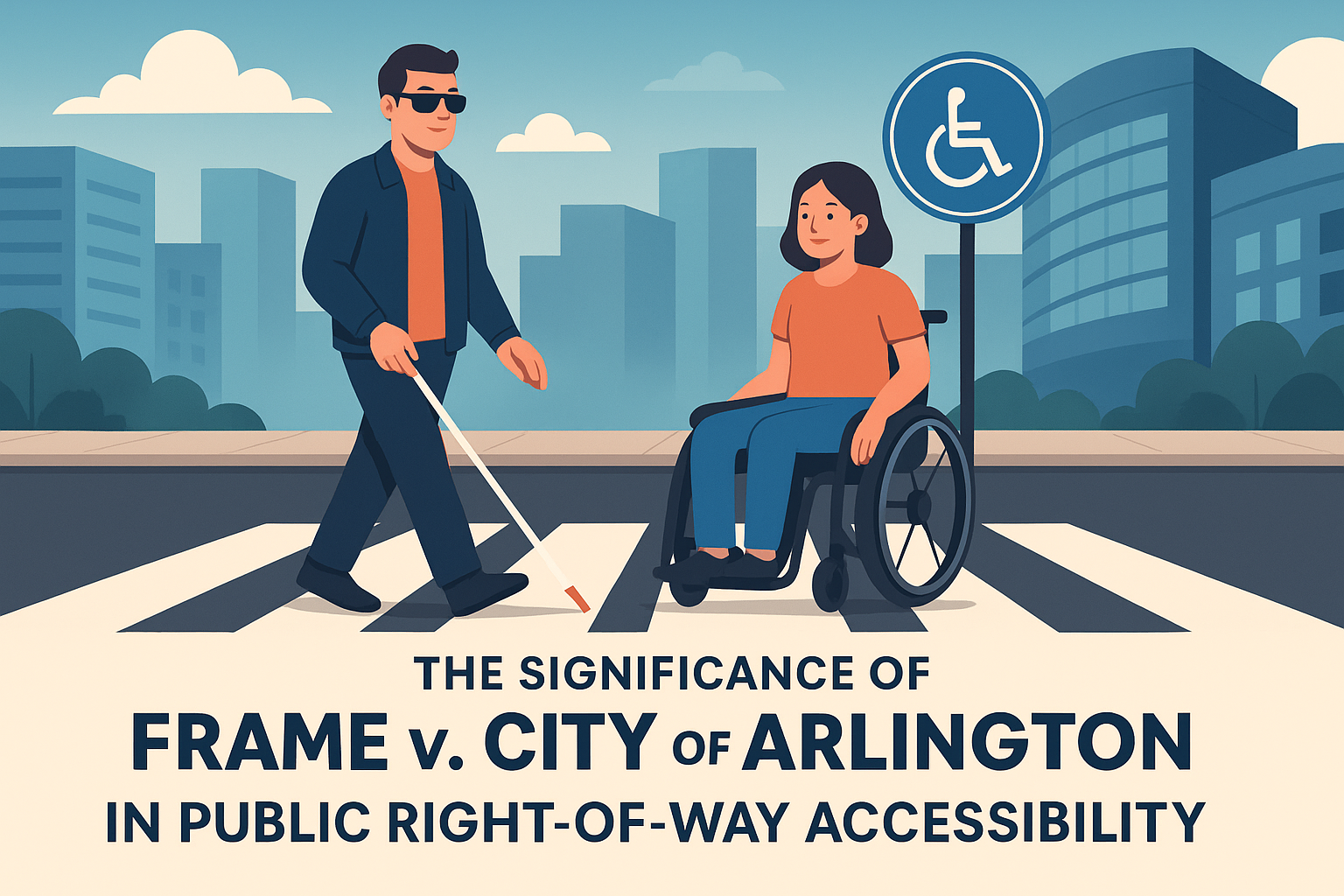
The legal landscape that governs public spaces is continually evolving to ensure equity and accessibility for all individuals, including those with disabilities. Central to this progression is the landmark case, Frame v. City of Arlington, which tackled the fundamental issue of public right-of-way accessibility under the Americans with Disabilities Act (ADA). This pivotal case underscored the necessity of making public rights-of-way — sidewalks and pedestrian crossings — accessible to everyone, regardless of their physical capabilities. The issue of accessibility isn’t just about compliance with the law; it’s a matter of social justice and equality. Ensuring accessible public spaces can profoundly affect the quality of life for millions of Americans who rely on these pathways for accessing essential services, employment, and community activities. Understanding the implications of this case is vital for public policy makers, urban planners, and society at large who aim to create inclusive environments. In this article, we will explore the details of Frame v. City of Arlington, examining its legal ramifications, the mechanisms of compliance, and its impact on communities.
Understanding the Case: Frame v. City of Arlington
Frame v. City of Arlington was a groundbreaking case decided by the United States Court of Appeals for the Fifth Circuit in 2010. The plaintiffs, who were individuals with mobility impairments, brought the case against the City of Arlington because of inaccessible sidewalks and pedestrian crossings that violated the ADA. In essence, the plaintiffs argued that the city’s neglect to maintain and construct accessible sidewalks created barriers to their full participation in public life. In their view, the ADA mandated the city to ensure all public walkways were usable by all individuals, regardless of disability status.
One of the significant aspects of this case was its emphasis on the interpretation of the ADA’s reach concerning public right-of-way. The court held that the ADA does indeed encompass public sidewalks, further asserting that these pathways are an integral part of public services and must comply with federal accessibility standards.
- Case Year: 2010
- Court: United States Court of Appeals for the Fifth Circuit
- Key Issue: Public sidewalk accessibility under ADA
- Outcome: Public sidewalks are covered under the ADA
This case set a precedent, establishing that local governments have an obligation to construct and maintain accessible public sidewalks. Decoding the court’s decision shows how it reinforced the ADA’s commitment to removing barriers for individuals with disabilities.
Legal Ramifications and ADA Compliance
In the aftermath of Frame v. City of Arlington, jurisdictions across the United States faced increasing pressure to reevaluate their infrastructure in terms of compliance with ADA standards. The case signified that any neglect in sidewalk maintenance, if it resulted in inaccessibility, could be deemed discriminatory under federal law. Consequently, municipalities needed to seriously commit to upgrading non-compliant walkways to avoid litigation and ensure inclusivity.
ADA compliance involves several critical aspects. Municipalities must ensure proper design and construction techniques that include installing curb ramps, maintaining appropriate sidewalk width, and eliminating obstructions. This requirement extends to both new constructions and alterations of existing public pathways.
Real-World Impact: Communities Adopting Change
The implications of Frame v. City of Arlington have had a noticeable impact on urban development and community planning. Cities like Portland and Chicago have taken proactive measures to accommodate individuals with disabilities by investing in infrastructure upgrades. For instance, following this ruling, Portland established a city-wide ADA Transition Plan, which maps out continuous improvements and modifications to provide barrier-free access within the city.
In contrast, a failure to comply with updated ADA standards can lead to profound societal impact. Consider a city that disregards these directives. Individuals with mobility impairments may struggle with simple daily tasks, such as walking to a grocery store or accessing public transportation, isolating them from engaging fully with the community. This isolation is preventable and directly linked to how urban landscapes are designed and maintained.
Implementation Strategies: Balancing Cost and Obligation
While the commitment to ADA compliance requires financial investment, cities have devised strategies to manage these costs. Establishing phased improvement plans allows municipalities to spread the financial burden over several years, integrating sidewalk upgrades into regular road maintenance schedules to minimize additional expenses.
| Implementation Strategy | Key Consideration |
|---|---|
| Phased Improvement Plans | Distribute costs over time |
| Integrate with Regular Maintenance | Reduce additional financial burden |
| Community Involvement | Foster public support and feedback |
Also noteworthy is the role of community involvement. Engaging the public in planning and decision-making processes empowers all citizens, particularly those affected by accessibility issues, ensuring their voices and needs are considered. This collaborative approach ultimately results in more effective solutions that truly serve all community members.
The Broader Social Implications
The significance of the Frame case extends beyond the legal sphere; it has instigated a broader social evaluation of accessibility, advocating for universal design principles in civic planning. Universal design focuses on creating environments that can be accessed, understood, and used to the greatest extent possible by all people, regardless of their age, size, or disability.
By promoting public awareness about the necessity for accessible infrastructure, the case encourages a shift in societal perspectives, viewing accessibility not as a favor granted to individuals with disabilities, but as a fundamental right ensuring equal opportunities for all. This shift is vital for creating communities that value diversity and strive for equity.
Key Takeaways and Conclusion
The Frame v. City of Arlington case serves as a critical reminder of the essential need for accessible public infrastructure. It defines and reinforces the responsibility municipalities and local governments bear under the ADA, mandating the creation and maintenance of accessible public rights-of-way. Underlining both legal and ethical considerations, the case prompts an ongoing dialogue on accessibility, emphasizing that equitable access is a fundamental aspect of modern society.
Readers should recognize this landmark case as a catalyst for considerations in city planning and legal compliance, encouraging a broader movement towards inclusive urban environments. By advocating for accessible designs, communities support not only individuals with disabilities but enhance the quality of public life for everyone.
In conclusion, those involved in city planning, policy making, and advocacy should take proactive steps by assessing and revising their own approach to accessibility. Embracing inclusive strategies fosters communities where mobility, freedom, and equality are priorities for all citizens, thus transforming public spaces into genuine communal assets. Let’s commit to making public spaces truly public for everyone.
Frequently Asked Questions
What is the Frame v. City of Arlington case about, and why is it significant?
The Frame v. City of Arlington case is a landmark legal battle that fundamentally addressed the issue of accessibility in public rights-of-way, specifically focusing on sidewalks and pedestrian crossings. The case arose when several individuals with disabilities challenged the City of Arlington, Texas, alleging that the city had failed to ensure that its public sidewalks were accessible in compliance with the Americans with Disabilities Act (ADA). This case is significant because it highlighted the obligations of municipalities under the ADA to provide equal access to public spaces. The ruling reinforced the concept that public pathways are essential components of a city’s infrastructure, requiring accommodations for individuals with disabilities to ensure inclusive and equitable access. The case set a vital precedent for how cities must prioritize accessibility when constructing and maintaining public spaces.
How did the Frame v. City of Arlington address accessibility under the Americans with Disabilities Act (ADA)?
The lawsuit in Frame v. City of Arlington delved into the requirements set forth by the Americans with Disabilities Act (ADA) concerning equal access to public spaces. The plaintiffs argued that the City of Arlington did not provide the necessary accommodations for individuals with disabilities in its public sidewalks and pedestrian crossings, as required under the ADA. The court’s decision reaffirmed that the ADA mandates not only the construction of accessible public rights-of-way but also their ongoing maintenance and modification to ensure accessibility. This interpretation of the ADA underscores the responsibility of local governments to proactively plan and ensure that individuals with disabilities have the same access and opportunities as individuals without disabilities when navigating public spaces. This case effectively established the expectation that accessibility must be an integral part of urban planning and civic design from the outset.
What legal precedents were set by the Frame v. City of Arlington ruling?
The ruling in Frame v. City of Arlington set several critical legal precedents regarding public right-of-way accessibility. Primarily, it clarified the circumstances under which individuals with disabilities could pursue legal recourse if their rights under the ADA were violated by inadequate access to public infrastructure. The court’s decision asserted that cities and municipalities have a continuing obligation to assess and address accessibility issues and that failure to comply with ADA standards constitutes discrimination against individuals with disabilities. Furthermore, it solidified the principle that retrofitting existing infrastructure is not merely optional but a legal requirement when existing facilities do not meet ADA standards. This precedent has since guided numerous cases and municipal policies to advance the cause of accessibility nationwide.
What impact has the Frame v. City of Arlington decision had on city planning and public infrastructure development?
The impact of the Frame v. City of Arlington decision on city planning and infrastructure development has been substantial. Municipalities are now more aware of their responsibilities under the ADA to ensure that their public spaces are accessible to everyone, regardless of physical abilities. As a direct result of the case, cities across the United States have increasingly incorporated accessibility into the core of their urban planning strategies. This includes not just complying with the basic standards set by the ADA but actively seeking to enhance and improve accessibility through thoughtful design and regular evaluation. The case has encouraged cities to prioritize the creation of barrier-free environments by implementing features such as curb ramps, tactile paving, adjusted signal timings for pedestrian crossings, and clear, unobstructed pathways. Moreover, public awareness and accountability concerning accessibility issues have been heightened, prompting more community engagement and activism in advocating for disability rights in the built environment.
How can communities continue to promote accessibility in public spaces following Frame v. City of Arlington?
In the wake of Frame v. City of Arlington, communities can continue to promote accessibility by embracing inclusive practices rooted in both policy and community engagement. Key strategies include regularly assessing public infrastructure to identify barriers, engaging with individuals with disabilities to understand their challenges and needs, and incorporating Universal Design principles in public projects. Public meetings and consultations should prioritize the input of disability advocacy groups and affected individuals to ensure that accessibility solutions are practical and effective. Additionally, fostering partnerships between governmental entities, non-profits, and the private sector can enhance innovation and resource allocation to address accessibility challenges. Communities can also invest in education and training for planners, architects, and city officials on accessibility requirements and best practices. By cultivating a culture of inclusivity, communities ensure that public spaces are welcoming and usable for everyone, paving the way for an equitable society.