In today’s digital age, accessibility is more than just a consideration; it’s a necessity. The Americans with Disabilities Act (ADA) serves as a cornerstone in advocating for the inclusion and accessibility rights of individuals with disabilities. Two critical elements of ADA compliance in the digital sphere are audio description and captioning. These tools are vital not only for adhering to federal mandates but also for promoting inclusivity and equal access to information for all users, including those with disabilities. The ADA was enacted in 1990 to prohibit discrimination against individuals with disabilities in all areas of public life, including jobs, schools, transportation, and all places that are open to the general public. This landmark legislation mandates that individuals with disabilities should have equal opportunities to participate and benefit from public services, employment, telecommunications, and places of public accommodation.
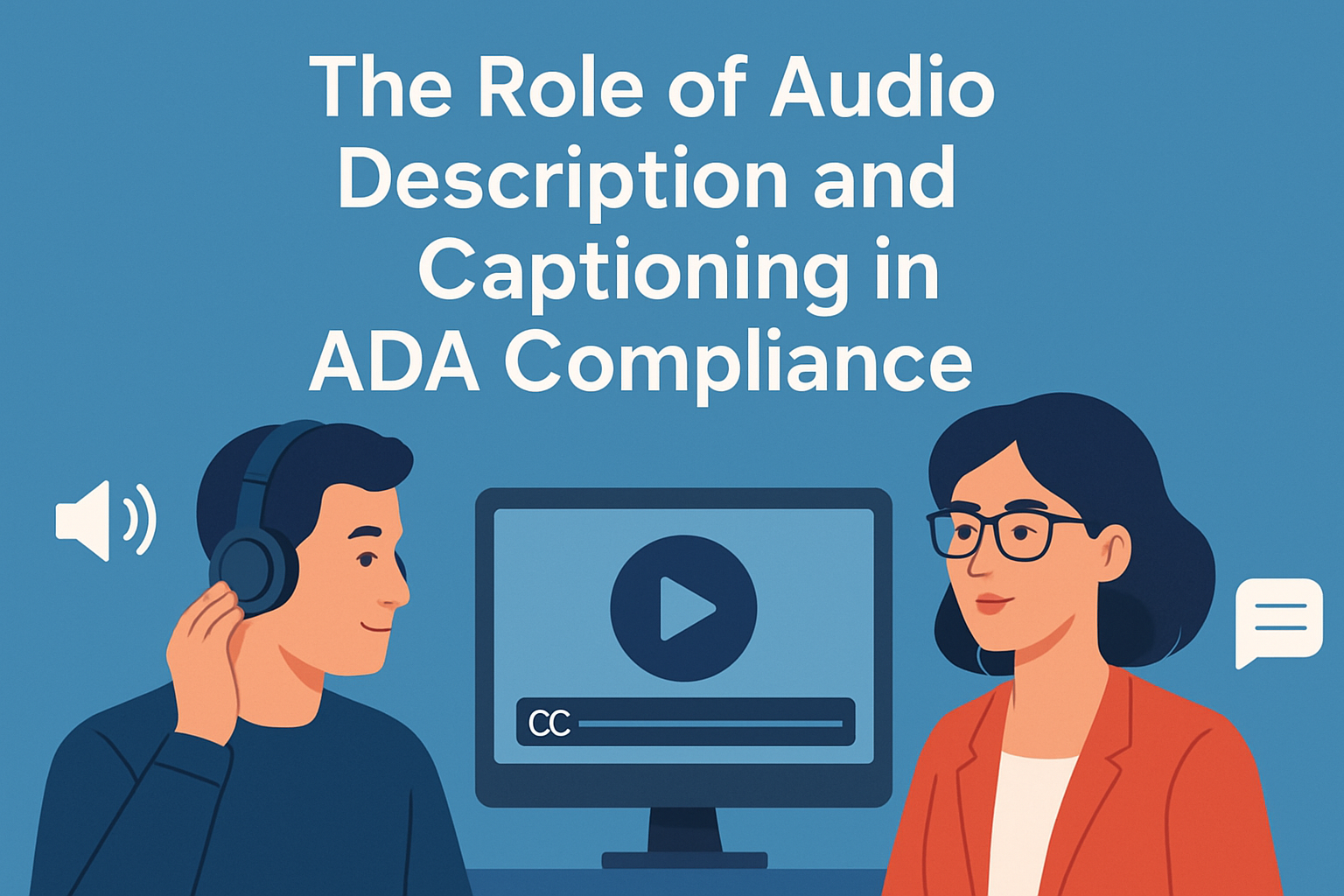
Audio description and captioning play pivotal roles in ensuring content accessibility. Audio description involves providing a spoken account of visual content, enabling blind or visually impaired individuals to understand and enjoy media experiences. Captioning, on the other hand, delivers text-based representations of spoken dialogue and sound cues in visual media, making it accessible to deaf or hard of hearing audiences. Both of these enhance accessibility, helping bridge the gap between disability and inclusion. As businesses continue to innovate, creating accessible content is not just compliance—it’s a social responsibility ensuring everyone is invited to partake in the digital landscape. This article will delve into the integral roles these tools play and why they matter in ADA compliance.
Understanding Audio Description and Its Importance
Audio description is an accessibility feature that provides a narrated account of key visual elements in media content. This service helps individuals who are blind or have low vision to perceive visual media by describing images, actions, and other visual information that occur in videos, films, or live performances. Implementing audio description ensures equal access to media content for everyone, regardless of their visual ability.
An excellent example of audio description is the Netflix service for original series and films. Netflix offers an option for audio description on select programming, demonstrating a strong commitment to ADA compliance. By providing rich, detailed narratives through an audio description track, Netflix ensures its visually impaired users can experience the different tones, settings, and character actions in its content.
Developing such an option requires collaboration between scriptwriters, accessibility specialists, and voice talents. The creation of audio description involves capturing the essence of a scene, focusing on providing vivid, concise descriptions that fit naturally within the program’s natural audio breaks. Beyond enhancing compliance with ADA regulations, offering audio description enables media creators to reach wider audiences. As the world becomes more inclusive, these efforts facilitate opportunities for businesses to demonstrate social responsibility and thought leadership in accessibility.
The Role of Captioning in Content Accessibility
Captioning acts as a crucial accessibility feature by providing a textual display of audio content. Primarily designed to assist those who are deaf or hard of hearing, captions integrate dialogue, speaker identification, sound effects, music cues, and other relevant audio information to provide a fully rounded experience for viewers. Captioning is divided into two categories: closed captions (CC) and open captions (OC).
Closed captions can be turned on or off by the viewer and are controlled through a media player’s settings. Open captions, conversely, are embedded permanently into the video, and viewers cannot control their presence. These options give users flexibility depending on their particular needs or environment. An example of effective caption usage can be observed in YouTube’s auto-captioning feature. This allows users to add or edit captions, thereby making user-generated and official videos accessible to a broad spectrum of audiences.
| Type of Caption | Description | Control |
|---|---|---|
| Closed Captions (CC) | Text that can be turned on/off. Includes dialogue and sound descriptions. | User-controlled via media player settings. |
| Open Captions (OC) | Text permanently embedded in the video. | Cannot be controlled or turned off by the viewer. |
Captioning not only improves accessibility admissions, it also boosts SEO for video content by providing text data for search engines to crawl. By implementing closed captioning, creators are able to meet required accessibility standards and grow their potential audience by ensuring that all individuals, irrespective of their hearing ability, have access to the same content experience.
Legal Implications and Compliance with the ADA
The ADA enforces requirements to accommodate individuals with disabilities, and failure to comply can result in legal implications for businesses and organizations. This means the integration of audio description and captioning is a legal necessity for media content distributed across public and online spaces.
Even more pressing, recent ADA lawsuits shed light on the importance of integrating dynamic captioning and audio description. In one prominent case, the National Association of the Deaf (NAD) filed a lawsuit against streaming services, leading to mandates that major public platforms incorporate expansive captioning availability. Non-compliance can lead not only to significant financial penalties but also to reputational damages, highlighting the robust need for immediate action from media creators.
Ensuring compliance is multi-faceted, involving more than just adding captions and audio descriptions. It requires understanding how to effectively integrate these tools into organizational media systems and adhering to specific standards and guidelines, such as the Web Content Accessibility Guidelines (WCAG). Aligning with these requirements enhances accessibility while reducing risk, ultimately creating value for both organizations and users.
Embracing Technology to Enhance Accessibility
The implementation of captioning and audio description has been revolutionized by technological advancements. Nowadays, innovative tools and platforms aid businesses in seamlessly integrating these features into their digital content. AI-driven software and machine learning algorithms automate and facilitate the accurate creation of captions and audio descriptions, helping reduce costs and complexity for businesses.
One real-world example involves Disney’s use of technology to transform how it renders its audio description services. By utilizing automation technologies, Disney can now efficiently create high-quality descriptions at scale, ensuring universal access to its content. This demonstrates how innovation and technology can be leveraged to effectively meet regulatory requirements and simultaneously broaden content reach.
Technology further provides opportunities for viewers with disabilities to customize their media experiences, adjusting the format, language, and granularity of captions, ensuring the solution fits their unique accessibility needs. The scalability and diversity offered by advancing technologies empower businesses to redefine their accessibility approaches, meeting ADA compliance with greater ease and ensuring broader inclusivity.
The Broader Impact of Accessibility on Society
Beyond adhering to ADA regulations, the promotion of accessibility through audio description and captioning fosters a more inclusive society. Ensuring that everyone, regardless of their abilities, has equal access to media content fosters a stronger sense of community and enriches cultural engagement.
Consider the example of public service announcements and educational technology platforms that have embraced these features. By integrating comprehensive captioning and description, educational institutions enable all students, including those with disabilities, to engage in learning activities effectively and equitably. This inclusion paradigm enhances learning opportunities and encourages a more diverse, informed society.
Emphasizing the benefits of accessibility tools also encourages continued investment and innovation in creating more inclusive technologies and platforms. This promotes a cycle of improvement and helps drive advancements in user experience standards that benefit all users, providing broader societal benefits.
Conclusion
The integration of audio description and captioning is not only a regulatory compliance requirement under the ADA; it represents a core component of creating an inclusive and accessible digital environment. From media creators and streaming services to educational institutions and public venues, providing equal access and participation opportunities is essential for growth and inclusivity. Audio description and captioning serve as bridges in enabling individuals with disabilities to participate fully in media and online experiences.
Real-world examples—from Netflix and Disney to YouTube—underline the tangible benefits of embracing these accessibility features. They highlight how forward-thinking companies are leveraging technology to meet ADA compliance while simultaneously ensuring social inclusivity. Accessibility is a journey, not just a destination. As businesses and content creators, there is an obligation to continually assess and innovate accessibility practices. By doing so, they can not only meet legal requirements but also enrich user experiences for all viewers.
To this end, involving stakeholders from the disability community in the design and implementation of accessible media continues to be paramount. By championing accessibility initiatives, organizations contribute significantly to an inclusive society, ultimately benefiting their brand and bottom line. As a call to action, businesses should audit their current media offerings for accessibility and employ best practices to integrate audio description and captioning where missing. This investment is not only a step toward compliance but a profound statement of commitment to all customers.
ADA compliance ensures that the digital world is an inclusive space for everyone—meeting moral imperatives while enabling new opportunities for content engagement. Accessibility innovation and compliance are powerful catalysts for achieving these goals. Embrace the journey towards an accessible future, ensuring everyone can access, enjoy, and benefit from digital content equally.
Frequently Asked Questions
1. What is ADA compliance and how do audio description and captioning fit into it?
ADA compliance refers to meeting the standards set by the Americans with Disabilities Act, which aims to prevent discrimination and ensure equal opportunities for people with disabilities. In the context of digital media, ADA compliance includes making online content accessible to everyone, which involves removing barriers that might prevent someone with a disability from accessing information. Audio description and captioning are key tools in this effort.
Audio description provides additional audio tracks that describe visual content for individuals who are visually impaired. This includes narrating what’s happening on-screen, such as actions, settings, or non-verbal cues, which a viewer might otherwise not be able to perceive.
Captioning involves displaying text on a screen to represent spoken dialogue and relevant non-speech information, such as sound effects or speaker identification. This makes video content accessible to individuals who are deaf or hard of hearing. By incorporating both audio description and captioning into digital content, organizations can better meet ADA requirements and ensure their media can be enjoyed by everyone, regardless of physical abilities.
2. Who benefits from the use of audio description and captioning?
While primarily designed to aid individuals with visual and hearing impairments, audio description and captioning offer benefits to a much wider audience. For example, captions are useful to anyone in noisy environments or when sound cannot be turned on. They also aid those who are trying to learn a new language or improve their understanding of the content in noisy or noise-restricted settings.
Audio description can provide a richer experience for all viewers by including details that might otherwise be missed. In scenarios where visual media is consumed while commuting or multitasking, audio descriptions allow everyone, regardless of their ability, to absorb content without needing to focus entirely on a screen. Additionally, these tools enhance user engagement, ensuring that no part of a company’s audience feels excluded.
3. How does implementing audio description and captioning support business goals?
Businesses that prioritize inclusivity by incorporating audio descriptions and captions into their media can tap into the estimated 61 million adults in the United States living with a disability. This large segment of the population represents significant purchasing power. Ensuring ADA compliance through these accessibility features can help businesses avoid potential legal action related to non-compliance with federal laws, which can often result in costly penalties.
Beyond legal considerations, businesses that promote accessibility demonstrate a commitment to corporate social responsibility, which can enhance their brand image and improve customer loyalty. Accessible content can also result in increased engagement rates as it becomes consumable by a broader audience. Consequently, this often leads to better customer satisfaction and can significantly enhance a company’s reputation in the marketplace.
4. What are the legal implications of failing to include audio description and captioning?
Failing to comply with ADA regulations by not including proper audio description and captioning may have serious legal implications. Several organizations have faced lawsuits for their lack of accessibility features, which often leads to significant financial settlements and reputational damage. The legal precedent has strongly affirmed the application of the ADA to digital content as a crucial component of providing equal access to information.
Courts have consistently ruled in favor of requiring digital accessibility, emphasizing it as a civil right under the ADA. Thus, businesses, educational institutions, and public entities should ensure that their media meets the standards for accessibility to avoid legal challenges. Moreover, proactive compliance reinforces a commitment to inclusion, promoting a positive image and potentially avoiding lawsuits down the line.
5. What steps can organizations take to implement audio description and captioning effectively?
Organizations should start by conducting an audit of their current media to identify where audio descriptions and captions are needed. Partnering with experienced accessibility consultants can provide guidance and clarity through the process. There are also numerous software tools and professional services specializing in creating and implementing these features.
Once identified, the next step involves selecting the right tools or service providers to create high-quality audio descriptions and captions. It’s vital to ensure these accessibility features meet established accessibility standards. Regular training for content creators and ongoing reviews are also crucial to maintaining ADA compliance and incorporating accessibility best practices in future projects.
Organizations can also engage with focus groups consisting of individuals with disabilities to get direct feedback on the accessibility of their content. Incorporating their insights ensures going beyond compliance and genuinely enhancing the user experience. By taking concrete steps towards full accessibility, organizations not only meet legal requirements but also broaden their audience reach and embody their commitment to inclusivity.