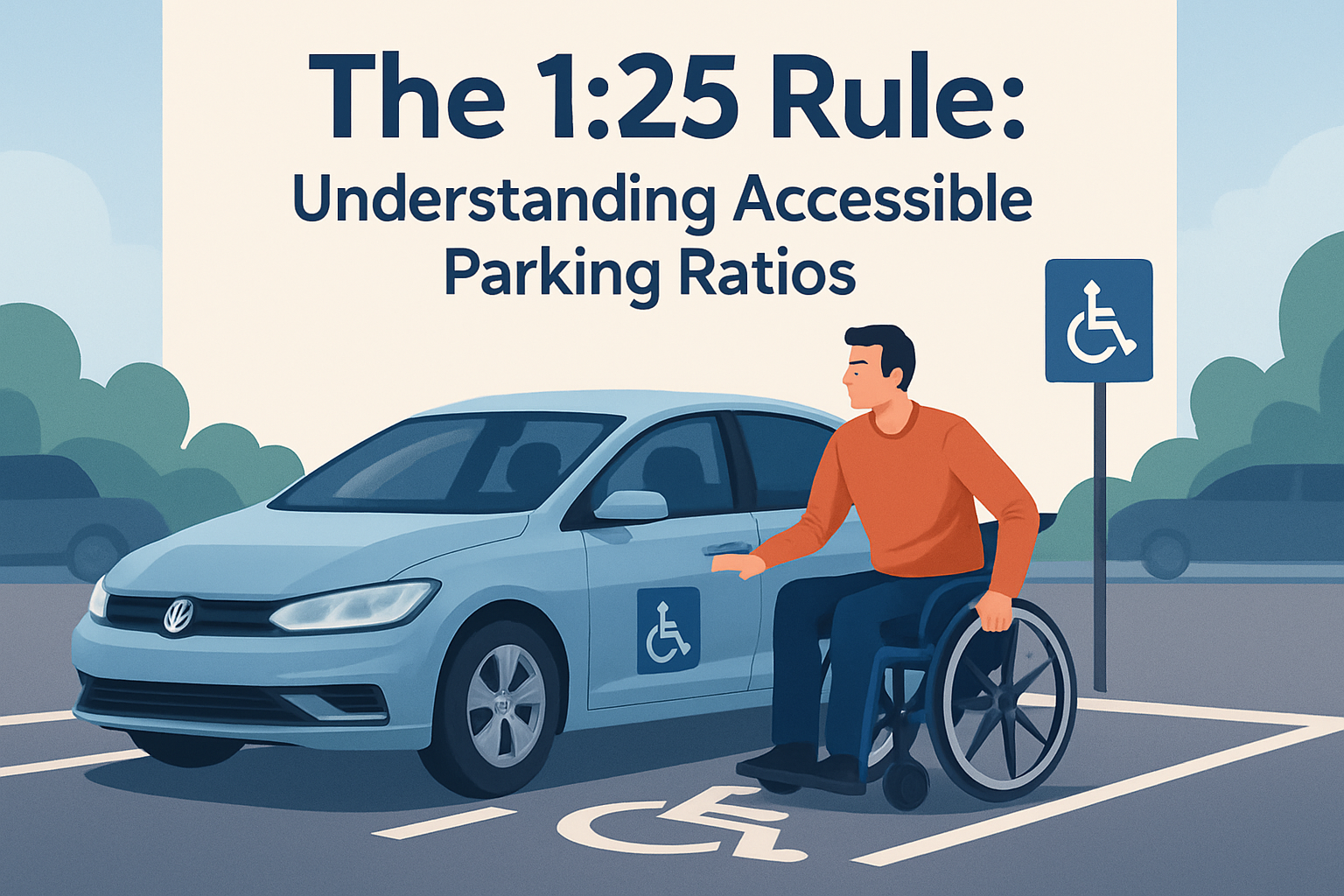
In the world of urban planning and construction, ensuring accessibility for all individuals is both a legal obligation and a moral duty. One critical aspect of this accessibility is the provision of parking spaces for people with disabilities. The 1:25 rule serves as a guideline to ensure that accessible parking spaces are adequately provided in parking facilities. This article aims to delve into the intricacies of the 1:25 rule, providing a comprehensive understanding of its implications, significance, and how it is applied in real-world scenarios.
Accessible parking ratios refer to the proportion of parking spaces reserved for individuals with disabilities compared to the total number of parking spaces available. The 1:25 rule specifically dictates that for every 25 parking spaces in a parking lot, at least one must be designated as an accessible space. This rule not only facilitates easier access for individuals with disabilities but also ensures compliance with regulatory standards, such as the Americans with Disabilities Act (ADA) in the United States. Understanding and correctly implementing the 1:25 rule is crucial for property developers, facility managers, and urban planners, as failure to comply can result in legal repercussions and fines.
The Historical Context and Legal Framework Behind the 1:25 Rule
The 1:25 rule originated from efforts to create a more inclusive and accessible society, especially after legislation like the ADA was enacted in 1990. The ADA established comprehensive civil rights protections for individuals with disabilities, which included aspects of public accommodation and accessibility standards. Prior to ADA, people with disabilities often faced significant barriers when attempting to access public services, which included parking facilities.
Under the ADA, guidelines ensure that people with disabilities have equal access to services and facilities, which includes the proper allocation of parking spaces. The rationale behind the 1:25 rule is to ensure a minimum level of accessibility, reflecting a balanced approach to accommodating individuals with differing needs. By establishing a uniform ratio, the guideline provides clarity for facility managers and developers while enhancing accessibility for disabled individuals. An exemplar of this in action can be seen with shopping centers across the United States, where during peak shopping hours, accessible parking spaces are often critical for inclusivity.
Real-World Application of the 1:25 Rule
Implementing the 1:25 rule transcends mere compliance; it involves strategic planning and consideration of various factors to optimize its effectiveness. In practice, this rule can present challenges, particularly when it intersects with existing structures or in densely populated urban areas where space is at a premium.
For instance, consider a large shopping mall with a parking facility totaling 1,000 spaces. According to the 1:25 rule, at least 40 of these spaces must be allocated for disabled parking. Developers must analyze pedestrian traffic flow, proximity to entrances, and safety considerations when designating these spaces. In urban centers like New York City, despite limited space, developers integrate this rule by using multi-level parking and maximizing the use of vertical space to mitigate spatial constraints.
Design and Features of Accessible Parking Spaces
A crucial component in understanding the 1:25 rule is the design standards required for accessible parking spaces. These spaces are not simply ordinary parking spaces painted with the accessibility symbol; they have specific design criteria that must be met to ensure they are truly usable by individuals with disabilities.
- Width and Access Aisle: Accessible parking spaces should be wider than standard spaces to accommodate wheelchair access. Typically, these spaces include an access aisle, which can be shared between two spaces, allowing for the loading and unloading of wheelchairs.
- Signage: Proper signage is essential, with the international symbol of accessibility prominently displayed. These signs must be mounted at a height where they are visible even if a vehicle is already parked.
- Proximity to Entrances: Ideally, accessible parking spaces should be located closest to the accessible entrance, minimizing the travel distance for individuals with mobility impairments.
- Surface and Slope: The parking surface must be stable and slip-resistant, and the slope should not exceed 2% in any direction to provide a level area suitable for individuals using wheelchairs.
These design features play a crucial role in ensuring that the parking spaces are effective and safe for those who need them. Consider the parking facility at a large hospital, where timely access can be critical. Hospitals often go beyond minimum standards by increasing the number of accessible spaces and ensuring they are well-protected from weather conditions with covered parking.
Challenges and Misconceptions Surrounding Accessible Parking Ratios
Despite clear guidelines, there are common misconceptions and challenges associated with the implementation of the 1:25 rule. Misunderstandings about what constitutes “accessible” can lead to non-compliance and user dissatisfaction. Additionally, some property developers view the reallocation of regular parking spaces as an inefficient use of space, particularly when demand for parking is high.
One prevalent misconception is that simply marking a space with the accessibility symbol is sufficient. However, without meeting the design specifications highlighted earlier, these spaces do not truly serve their intended purpose. Real-world examples include several retail parking areas where accessibility features are overlooked, leading to fines and necessary renovations to comply with regulations. Moreover, a challenge faced in sectors like entertainment venues is ensuring the availability of accessible parking during significant events when demand surges, requiring temporary adaptations or increased enforcement.
The Impact and Benefits of Implementing the 1:25 Rule
Implementing the 1:25 rule offers substantial benefits beyond legal compliance. By ensuring that the needs of individuals with disabilities are considered, facilities enhance their public image and demonstrate a commitment to inclusivity. Increased access can open commercial opportunities, as individuals who might otherwise be deterred by accessibility issues are more likely to frequent establishments that cater to their needs.
For example, a sporting arena that goes out of its way to exceed the minimum standards can see a surge in attendance from individuals with disabilities and their companions. This not only fulfills ethical obligations but also taps into a broader customer base, highlighting how accessibility can be advantageous from both operational and promotional perspectives. In contrast, neglecting the rule can lead to negative publicity, potential boycotts, and legal challenges, which can ultimately affect profitability and brand reputation.
Conclusions and Moving Forward
Understanding and applying the 1:25 rule is a vital step toward creating an inclusive environment that accommodates everyone, regardless of their physical abilities. By integrating accessible parking into the broader design of parking facilities, developers and city planners can ensure compliance with legal standards while promoting social equity. This rule offers a practical framework for addressing the parking needs of individuals with disabilities and underscores the importance of inclusivity in public spaces.
As property owners, managers, and developers continue to face evolving regulations and societal expectations, it is crucial to remain informed and proactive in the implementation of accessibility guidelines. By embracing the principles behind the 1:25 rule, businesses and public entities alike can foster environments that are welcoming and accessible to all. The next step for readers, especially those involved in planning and construction, is to review their own compliance and make necessary adjustments to ensure that accessibility is fully integrated into their operations.
Frequently Asked Questions
1. What is the 1:25 rule in the context of accessible parking?
The 1:25 rule is a widely recognized guideline within urban planning and construction aimed at ensuring parking facilities are accessible for individuals with disabilities. Essentially, it states that for every 25 parking spaces in a parking facility, at least one of those spaces must be designated as accessible for disabled individuals. This ratio is designed to ensure that parking facilities do not exclude people with disabilities and are in compliance with legal accessibility requirements. It’s not just about legal compliance, though. Morally, it’s about fostering inclusivity and ensuring everyone has equal access to opportunities and facilities.
2. Why is the 1:25 rule important for urban planning and construction?
The 1:25 rule is crucial because it directly impacts the accessibility of public spaces. By mandating a specific ratio of accessible parking spaces, the rule ensures that people with disabilities can navigate parking facilities with greater ease. This is vital in promoting independence and facilitating their full participation in societal activities, such as shopping, working, and accessing services. From a planning perspective, incorporating the 1:25 rule from the outset aids in seamlessly integrating accessibility into the architectural design, reducing the need for expensive retrofits later on. It also helps to preemptively meet legal requirements, minimizing the risk of penalties or legal challenges due to non-compliance with accessibility standards.
3. How does the implementation of the 1:25 rule affect businesses and customers?
For businesses, implementing the 1:25 rule means committing to inclusivity and demonstrating a proactive stance in serving all customers, including those with disabilities. By providing accessible parking, businesses make their services available to a broader audience, which can increase customer satisfaction and loyalty. Additionally, showing a commitment to accessibility can improve a business’s reputation, potentially attracting more diverse customer demographics. Customers benefit significantly from the 1:25 rule because it ensures that they have convenient and equal access to facilities. For individuals with disabilities, accessible parking can mean the difference between being able to independently access a business or event and being hindered by accessibility barriers.
4. What are the legal implications of not following the 1:25 rule?
Failing to adhere to the 1:25 rule can have significant legal consequences for property owners and developers. In many jurisdictions, accessible parking requirements are not just guidelines but enforceable legal regulations. Non-compliance can result in hefty fines, lawsuits, and the need to make costly alterations to bring facilities into compliance. Beyond financial implications, there’s also the risk of reputational damage that can arise from failing to meet accessibility standards. Legal bodies and advocacy groups actively monitor compliance with accessibility laws, and being cited for violations can place a business under increased scrutiny and public criticism.
5. How can builders and developers ensure they comply with the 1:25 rule?
To comply with the 1:25 rule, builders and developers should integrate accessibility considerations early in the planning process. This includes conducting a thorough analysis of parking layouts to determine the appropriate number of accessible spaces required by the rule. Employing architects and planners who specialize in accessibility and staying informed about local accessibility laws and regulations is also critical. Furthermore, developers should engage with disability advocacy groups to better understand the specific needs of individuals with disabilities. By taking these proactive steps, developers can ensure their parking lots and structures not only meet legal requirements but also genuinely serve the needs of all community members.