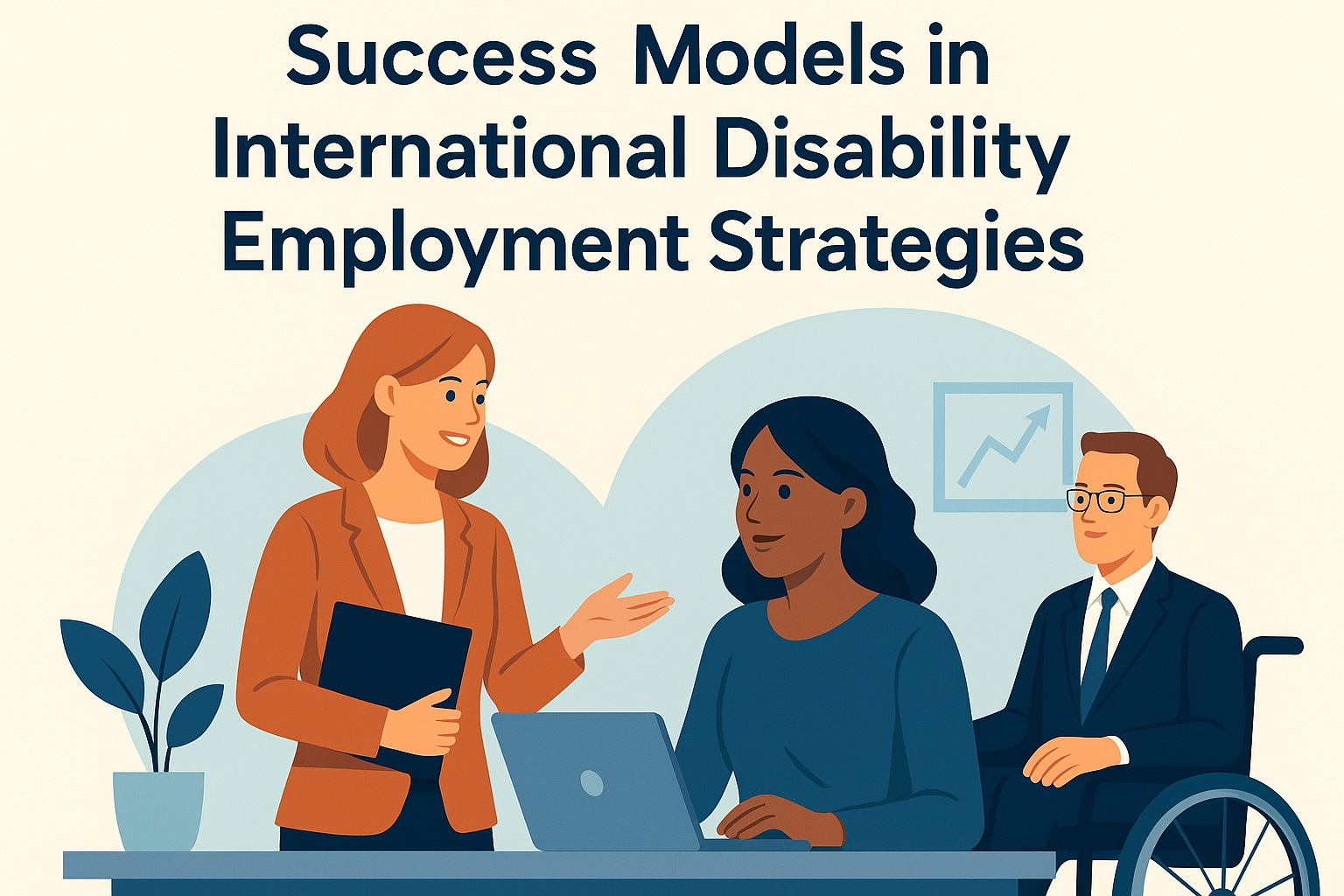
Disability employment encompasses the integration of individuals with disabilities into the workforce, ensuring they have equitable opportunities to work and contribute economically. This is not just a matter of human rights, but also a crucial component of economic growth and social development. Understanding disability employment strategies involves recognizing their impact on societies and economies on a global scale. Key terms such as “disability,” “employment,” and “inclusion” often come up in this context. “Disability” refers to a physical or mental condition that limits a person’s movements, senses, or activities. “Employment” involves the process of providing jobs, while “inclusion” refers to creating workplaces where everyone’s potential is valued and utilized effectively. Identifying and implementing successful disability employment strategies is important because they promote diversity, contribute to workforce productivity, and ultimately help eradicate poverty. These strategies not only provide individuals with disabilities the dignity of work but also encourage societal acceptance and equality. As we delve into various international success models, the lessons drawn are universally applicable and can guide policy makers, organizations, and communities to foster inclusive workplaces.
Role Models for Inclusive Employment Policies: The Case of Australia
Australia stands out as a model in developing policies that support the inclusion of disabled individuals in the workforce. The Australian government has implemented various strategies to ensure that employment opportunities for individuals with disabilities are not limited. One exemplary initiative is the Disability Employment Services (DES). DES is a comprehensive program providing job support to over 200,000 people with disabilities. The program focuses on both job placement and ongoing support once employment is secured. A key feature of DES is its tailored approach, which matches individuals’ skills with job openings. Furthermore, Australia promotes awareness and training initiatives to help businesses understand the benefits of hiring individuals with disabilities. This approach ensures a supportive environment where disabled employees can thrive. The effectiveness of these policies can be seen through increased employment rates among disabled working-age adults and higher retention rates for those employed through the program. By crafting policies that address workplace attitudinal barriers and provide necessary accommodations, Australia exemplifies the positive impact of supportive governmental frameworks on disability employment.
Corporate Strategies for Success: Technology Firms Leading the Way
Technology companies have made significant strides in creating inclusive workplaces for people with disabilities. Leaders such as Microsoft and IBM have implemented revolutionary practices that prioritize accessibility and inclusion. Microsoft’s Inclusive Hiring Program, for instance, has made considerable changes in recruitment processes to include individuals with autism. The program involves specialized recruiters who understand autistic challenges and create accommodating interview processes. Moreover, Microsoft provides cross-functional teams to support newly hired autistic employees, facilitating smooth transitions into their roles. IBM, another pioneer, emphasizes inclusivity in their workplace through their Human Ability and Accessibility Center. This center is instrumental in developing accessible products, ensuring all employees, including those with disabilities, can effectively use technology in their day-to-day tasks. They also focus on long-term retention by providing skill training tailored to the needs of their disabled workers. These strategic efforts by tech firms demonstrate that when businesses view disability employment through a lens of innovation, they not only foster diversity but also drive competitive advantage.
Non-Governmental Organizations and Their Impact: The Role of Global INGOs
International Non-Governmental Organizations (INGOs) play a pivotal role in advancing disability employment strategies worldwide. One noteworthy example is the International Labour Organization (ILO), which operates numerous programs focusing on equitable employment opportunities for all. ILO’s Promotion of Rights to Disabled People in Southern Africa is an excellent case in point. This initiative emphasizes training, advocacy, and strengthening legal frameworks to support inclusive employment. Efforts include collaboration with local and national governments to evaluate and reform existing policies that hinder disabled workers. Additionally, ILO’s campaigns raise awareness about the economic benefits of employing people with disabilities, shifting perceptions in workplaces. A tangible outcome of these efforts is the improvement of workplace policies in partner countries, leading to higher employment rates for people with disabilities. INGOs like ILO illustrate the importance of global collaboration and advocacy in overcoming systemic barriers to disability employment, while reinforcing the significance of rights-based approaches.
| Country | Key Strategy | Outcome |
|---|---|---|
| Australia | Disability Employment Services | Increased employment rates |
| U.S.A (Microsoft) | Inclusive Hiring for Autism | Improved retention and recruitment |
| South Africa (ILO) | Rights Promotion Programs | Stronger legal frameworks |
Educational Interventions: Universities as Catalysts for Change
Universities play a crucial role in preparing disabled individuals for meaningful employment by providing inclusive educational environments and fostering accessibility. Programs such as the Disability Resource Centers (DRC) widely found across American and European universities offer resources and systems to aid students in navigating higher education. These centers provide accommodations like note-takers, accessible materials, and assistive technologies, which collectively enable disabled students to compete on an equal footing with their peers. Beyond support systems, universities are spearheading initiatives like the Disability Studies programs, which actively advocate for more understanding of disability issues through education and research. Institutions such as the University of Leeds and the University of California, Berkeley, are at the forefront of such programs. The tangible application of these efforts is evidenced by graduates who enter the workforce not only academically prepared but also equipped with the confidence and resilience fostered through an inclusive academic setting. As such, universities act as critical facilitators of transition from education to employment, empowering disabled students in the process.
The Legal Blueprint: Legislation in the European Union
Legislative measures form the backbone of effective disability employment strategies, providing a framework that advocates for equal opportunities. The European Union (EU) has established robust legislative measures designed to ensure the rights of disabled individuals within the workplace. The EU legislation, such as the European Accessibility Act, requires member countries to adhere to set standards that enhance the accessibility of products and services for persons with disabilities. This act obligates businesses and employers to consider accessibilities in their offerings and workplaces, fostering a more inclusive environment. Another significant piece of legislation is the Employment Equality Directive, which prohibits discrimination in the workplace and mandates reasonable accommodations for disabled employees. The impact of these legal frameworks is evident in improved compliance by organizations and the adoption of proactive employment practices across EU member states. By focusing on enforceable legal measures, the EU sets an international standard, reinforcing that comprehensive legislative efforts are key drivers of sustainable disability employment.
Entrepreneurship as a Pathway: Self-Employment Initiatives for Disabled Individuals
Promoting self-employment as a viable option for individuals with disabilities is an innovative approach gaining momentum worldwide. Programs like the Business Development Fund in Ghana focus on providing training, financial assistance, and mentoring to aspiring entrepreneurs with disabilities. By equipping individuals with the necessary skills and resources, these initiatives empower them to establish and grow their businesses. Another inspirational case is the #SameDream project in Japan, which encourages disabled individuals to harness their unique talents as a foundation for entrepreneurship. Success stories from these programs include thriving ventures in various industries ranging from technology to arts and crafts. Self-employment not only builds confidence and self-reliance but also generates economic growth, challenging conventional perceptions of disability in the workforce. Encouraging entrepreneurship among disabled individuals offers an alternative pathway that aligns with their capabilities and aspirations, illustrating the significant potential for success and satisfaction in self-directed careers.
Conclusion: Key Takeaways and Future Directions
The examination of international disability employment strategies reveals a myriad of successful approaches, each offering valuable lessons and models that can be adapted and implemented in various contexts. Australia’s policy-driven framework, the innovative practices of technology firms, the pivotal role of INGOs, the empowering structures within universities, and the foundational legislative efforts of the European Union exemplify diverse strategies facilitating the employment of individuals with disabilities. These initiatives underscore the importance of inclusive employment as a critical factor for economic growth and societal equality. They serve as reminders of the shared responsibility to create an inclusive society where everyone can contribute to their fullest potential. The benefits to readers are clear: adopting these strategies can lead to enriched workplace diversity, enhanced productivity, and greater societal equality. Organizations, policymakers, and individuals are encouraged to consider these global models as they work to implement or enhance their own disability employment strategies. The path forward involves continued commitment, innovation, and collaboration to build a truly inclusive future. Next steps include actively advocating for policy changes, encouraging corporate responsibility, and fostering educational and entrepreneurial opportunities for disabled individuals, thereby ensuring sustained progress in this vital area.
Frequently Asked Questions
1. What are the key elements of successful international disability employment strategies?
Successful international disability employment strategies are built on several foundational elements. Firstly, they focus on creating a diverse and inclusive work environment where people with disabilities are not only accommodated but valued for their unique contributions. This could involve adapting workplaces to be more accessible and providing appropriate assistive technologies.
Moreover, these strategies often emphasize the importance of inclusive education and skills development. By providing individuals with disabilities access to education and training tailored to their needs, they can gain the skills required for various jobs, thus enhancing their employability.
Another critical component is developing strong policies and legislation that support the employment of disabled individuals. Countries with successful strategies often have legal frameworks that protect the rights of disabled workers, ensuring non-discrimination and equal opportunities in the hiring process, as well as career advancement.
Lastly, awareness and sensitivity training for employers and coworkers play a vital role. These initiatives aim to dismantle stereotypes and prejudices, facilitating a culture of acceptance and understanding within workplaces. Such trainings can encourage employers to recognize the potential of disabled employees, not just view them through the lens of their disability.
2. How can disability employment strategies contribute to economic growth?
Disability employment strategies can significantly bolster economic growth by tapping into an often-underutilized segment of the workforce. By effectively integrating individuals with disabilities into work environments, countries can increase overall productivity and labor force participation rates. This not only boosts the GDP but also diversifies the economy by enhancing creativity and innovation through varied perspectives and experiences.
Moreover, employing people with disabilities can reduce dependency on social welfare systems. As more individuals with disabilities find gainful employment, there is less reliance on social assistance programs, which can, in turn, decrease government expenditure in these areas.
Businesses that embrace inclusive hiring practices also benefit from an enhanced brand reputation, which can lead to increased consumer loyalty, especially as consumers become more socially conscious and prefer to engage with companies that reflect their values of diversity and inclusion.
Furthermore, by fostering an inclusive economy, countries are better positioned to leverage international markets. They can attract foreign investment from organizations and partners who value inclusivity as part of their global corporate responsibility mandates.
3. What role does technology play in improving disability employment outcomes?
Technology plays a transformative role in improving disability employment outcomes by breaking down barriers that have traditionally hindered access to the workplace for individuals with disabilities.
The development and implementation of assistive technologies—such as screen readers for the visually impaired, voice recognition software for those with mobility issues, and hearing assistance devices—have made it possible for individuals with disabilities to perform tasks that would have been challenging or impossible without such technology.
Aside from personal assistive devices, technology also encompasses infrastructure that promotes accessibility. For instance, software solutions can ensure that digital content is accessible to all employees by being compatible with various assistive devices.
Moreover, technology facilitates better remote working options, which can be particularly beneficial for individuals with disabilities who may have difficulties with transportation or require a flexible work environment.
By investing in and prioritizing technological advancements, employers can greatly improve the participation rate of disabled individuals in the workforce, ultimately contributing to a more inclusive and productive economy.
4. How can workplaces be made more inclusive for employees with disabilities?
Creating an inclusive workplace for employees with disabilities involves both physical adaptations and cultural shifts within the organization. To start with, ensuring physical accessibility is crucial. This includes providing wheelchair access, accessible restrooms, and adaptive office equipment like adjustable desks and specialized computer hardware.
The culture within the workplace is equally important. Promoting a culture of inclusivity requires training and educating all employees about disability awareness and etiquette to foster understanding and eliminate discriminatory attitudes and behaviors. Companies can hold workshops and engage external experts to help with effective training sessions.
Diversity and inclusion policies should be clearly communicated and upheld at every level of the organization. This involves establishing practices for inclusive recruitment, onboarding, career development, and promoting accessibility in meetings and corporate communications.
It’s important to include people with disabilities in decision-making processes, particularly concerning policies affecting them. This not only empowers disabled employees but ensures that policies are practical and effective. Finally, creating support networks or mentoring programs within the organization can provide employees with disabilities with guidance and encouragement, helping them integrate into the company structure and culture.
5. What are the barriers to implementing effective disability employment strategies globally?
Multiple barriers hinder the implementation of effective disability employment strategies globally, ranging from societal attitudes to infrastructural limitations. One of the most significant challenges is persistent stigma and discrimination. Despite advances in awareness, negative stereotypes about the capabilities of individuals with disabilities continue to pervade many societies and workplaces.
Another major barrier is the lack of adequate legislation and enforcement of existing policies. In many regions, even where policies exist, they are not effectively implemented or monitored, leading to frequent violations of the rights of disabled individuals regarding employment.
In developing countries, limited access to resources and technology poses another significant challenge. The cost and availability of assistive devices can be prohibitive, restricting employment opportunities for many. Additionally, the lack of education and training opportunities specifically tailored to individuals with disabilities limits their skill development and employability.
Finally, infrastructural barriers such as inaccessible transportation systems, workspaces, and communication tools can prevent disabled individuals from participating fully in the workforce. Overcoming these barriers requires comprehensive strategies involving collaboration between governments, businesses, and civil society to build an equitable labor market.