The Americans with Disabilities Act (ADA), enacted in 1990, stands as a landmark civil rights law that aims to protect individuals with disabilities against discrimination in all areas of public life, including jobs, schools, transportation, and all public and private places that are open to the general public. Despite the far-reaching impact of the ADA, one critical area that demands ongoing attention and advocacy is the right of people with disabilities to engage in the political process. It is essential to ensure that this fundamental democratic right is accessible, inclusive, and unhindered by barriers.
The political engagement of individuals with disabilities is essential to a truly representative democracy. This engagement covers multiple aspects, from voting rights and accessibility to participating in political campaigns and holding public office. The ADA establishes a framework through which these rights are protected, but practical implementation often faces numerous challenges. This article explores the ADA’s role in facilitating political participation for people with disabilities, examining how current laws protect these rights and what more needs to be done to overcome existing barriers.
ADA and Voting Rights
One of the foundational aspects of political participation is the right to vote. The ADA mandates that all public entities, including polling places, provide accommodations to ensure that individuals with disabilities can cast their votes as easily and privately as anyone else. The law is quite specific, requiring accessible voting machines, physical access to polling locations, and alternative means of voting such as absentee ballots for those who cannot physically get to a polling station.
Despite these mandates, many polling places across the country are not fully accessible. Physical barriers, such as steps without ramps, narrow doorways, and inaccessible parking, can prevent people with disabilities from participating in the voting process. Additionally, there is a need for better-trained election workers who can assist individuals with disabilities in a respectful and efficient manner. Technological barriers also exist, with some voting machines still not providing adequate accessibility features for individuals with various types of disabilities. Continued advocacy and oversight are necessary to ensure compliance with ADA requirements and to improve the electoral process for everyone.
Accessible Campaigns
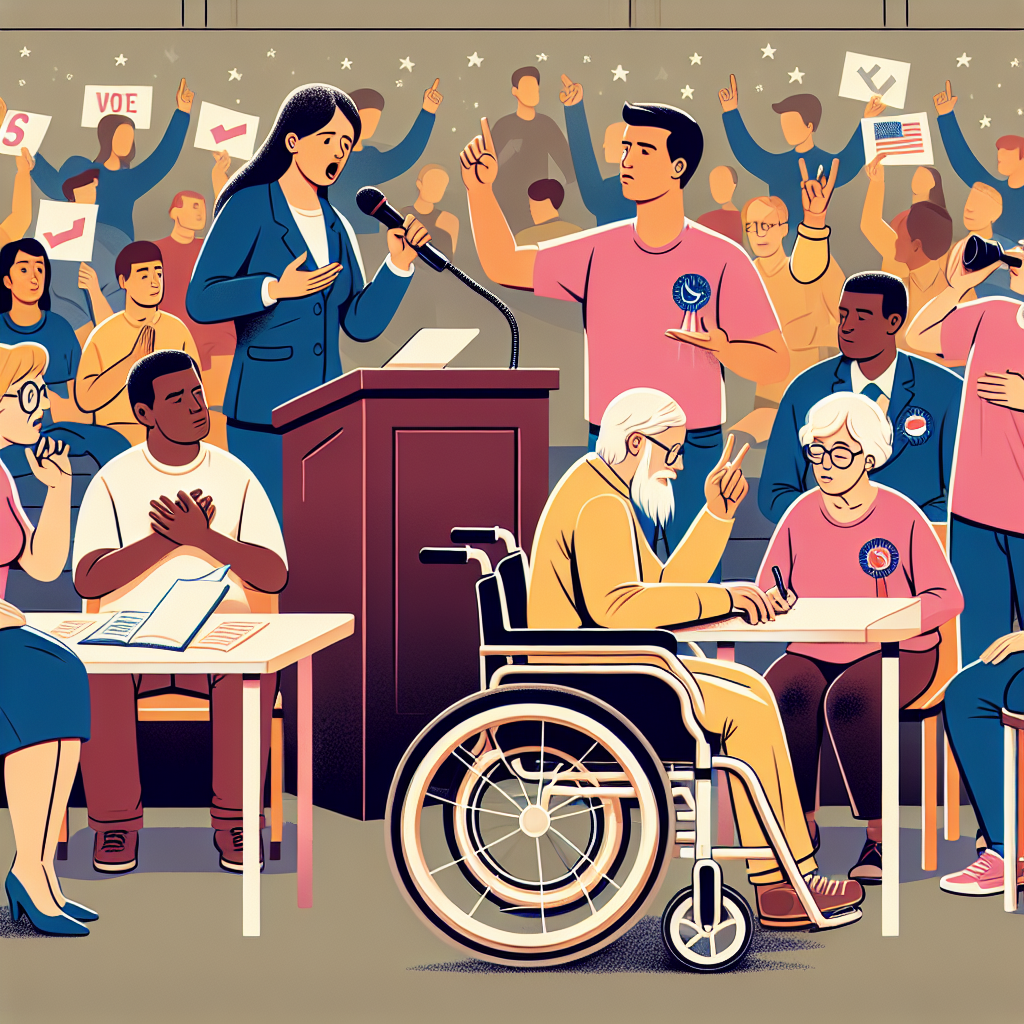
The right to participate in political campaigns is another crucial aspect of political life. The ADA requires that public and private entities, including political campaigns, make reasonable modifications to ensure accessibility for volunteers, employees, and participants. This can include providing sign language interpreters, ensuring physical accessibility for campaign events, and offering materials in accessible formats.
However, many political campaigns often overlook these requirements, either due to a lack of awareness or perceived financial constraints. Ensuring that campaign websites and social media are accessible to people with disabilities is another critical factor. Features such as screen reader compatibility, captioned videos, and easily navigable websites can make a significant difference in how inclusive a campaign is for people with disabilities. Greater awareness and stringent regulation are needed to ensure that political campaigns do not inadvertently exclude people with disabilities from engaging in the political process.
Holding Public Office
Another significant aspect of political participation is the ability to run for and hold public office. While the ADA provides broad protections against discrimination, people with disabilities still face substantial barriers when it comes to becoming candidates and holding public office. Physical access to governmental buildings is a fundamental requirement, but beyond that, attitudinal barriers often pose a significant challenge. The perception that individuals with disabilities cannot effectively serve in public roles persists and can undermine their candidacy.
Campaigns for public office can be highly demanding and often require significant resources. Individuals with disabilities may face added financial burdens related to accessibility needs, such as transportation costs, sign language interpreters, or personal assistance. Public policies and campaign finance laws could be adjusted to provide additional support for candidates with disabilities, thereby leveling the playing field.
Legislative Support and Advocacy
While the ADA provides a solid legal foundation, continuous legislative efforts and advocacy are essential in promoting the political rights of individuals with disabilities. Initiatives aimed at improving the accessibility of voting procedures, funding for accessible campaign resources, and enhancing public awareness about disability rights are necessary steps forward.
Advocacy groups play a pivotal role in driving this legislature and raising awareness. Organizations such as the American Association of People with Disabilities (AAPD) and the National Disability Rights Network (NDRN) actively work to protect and expand the political rights of individuals with disabilities. Public opinion and engagement can also support these efforts. The broader electorate needs to be aware of these issues and advocate for more inclusive political participation.
Public Awareness and Education
Education is a vital tool for fostering an inclusive political environment. Both the general public and people with disabilities can benefit from increased knowledge about the rights and opportunities available under the ADA. Public awareness campaigns can highlight the importance of political participation for people with disabilities and the barriers they face.
Accessible educational resources, such as online courses, workshops, and informational materials, can empower individuals with disabilities to take an active role in political life. Schools and educational institutions can integrate disability rights education into their curriculums to cultivate a more inclusive generation of future voters and candidates.
Conclusion
The ADA’s influence on political participation for people with disabilities cannot be overstated, but there remains much work to be done. Voting rights, accessible campaigns, the ability to hold public office, legislative support, and public awareness all constitute crucial elements of a truly inclusive democracy. Overall, the engagement and empowerment of individuals with disabilities in political processes enrich our society and strengthen our democratic institutions.
The challenges faced by people with disabilities in political participation are multifaceted. Achieving full compliance with ADA standards in voting and political campaign accessibility, fostering a culture of inclusivity, and providing support for candidates with disabilities are essential steps toward an equitable political landscape. Continuous advocacy and public education will play crucial roles in this journey.
As we look to the future, it is imperative that the rights established under the ADA are not only protected but expanded and fully realized. Only then can we ensure that individuals with disabilities are afforded the same opportunities to participate in the political process as everyone else, thereby enriching our democratic society.
Frequently Asked Questions
1. What rights do people with disabilities have under the ADA when it comes to political participation?
The Americans with Disabilities Act (ADA) is a crucial piece of civil rights legislation that protects individuals with disabilities from discrimination in diverse areas of public life, including political participation. Under the ADA, people with disabilities have the right to equal access to participate in political processes such as voting, attending public meetings, and running for public office. This means that any barriers—whether they are physical, communication, or attitudinal—must be addressed to ensure that individuals with disabilities can engage fully in political activities. The ADA requires polling places to be accessible, voting systems to accommodate disabilities, and election-related communications to be available in accessible formats. Additionally, public and private entities may need to make reasonable accommodations or modifications to policies and practices to allow for the full participation of individuals with disabilities in political life.
2. How does the ADA influence voting accessibility for people with disabilities?
Voting accessibility is a cornerstone of the ADA’s scope in political participation. The Act mandates that voting environments and procedures are accessible to people with disabilities. This includes ensuring that polling stations are compliant with accessibility standards, meaning they should have ramps, accessible parking, proper signage, and wheelchair-friendly spaces. Furthermore, voting machines must be equipped to allow individuals with different types of disabilities to vote independently and privately. If physical changes are not feasible, jurisdictions are required to provide reasonable alternatives to ensure accessibility. Moreover, the law calls for election officials to receive proper training on how to accommodate voters with disabilities, and voting materials must be available in formats suitable for individuals with visual impairments and other disabilities.
3. What challenges still exist for people with disabilities in political participation despite the ADA?
Despite the protections and provisions offered by the ADA, individuals with disabilities face ongoing challenges in political participation. Physical accessibility remains a widespread issue; not all polling places meet ADA standards, leaving many individuals unable to physically access them. Additionally, some voting machines and technology do not accommodate all types of disabilities, leading to difficulties in casting a ballot independently. Communication barriers also persist, as not all election-related materials—such as notices, ballots, or instructions—are available in accessible formats like Braille or large print. Attitudinal barriers, such as misconceptions about the capabilities of people with disabilities, also discourage participation. Lastly, there is a need for increased awareness and training among election officials to effectively support and accommodate individuals with disabilities.
4. What role does technology play in improving political participation for people with disabilities?
Technology plays a pivotal role in advancing the political participation of people with disabilities. Assistive technology, such as screen readers for the visually impaired and closed captioning for the hard of hearing, significantly enhances accessibility to election-related information and materials. Online voting and registration systems are increasingly incorporating accessible features to cater to those with disabilities, enabling greater participation. Digital platforms can offer elections information in multiple formats—videos with sign language interpreting, audio versions of text, and easy-to-read formats—which cater to varied needs. Additionally, apps and online resources designed specifically for people with disabilities help them navigate the voting process with ease, such as providing information on accessible polling locations and procedures.
5. What steps can be taken to further support people with disabilities in becoming active participants in political life?
To actively support the political participation of people with disabilities, several measures can be implemented. Awareness and education campaigns can help dismantle attitudinal barriers and foster a more inclusive political environment. Continuous monitoring and enforcement of the ADA are critical to ensure compliance at all levels of government and to update policies as necessary. It is also crucial to involve individuals with disabilities in the decision-making processes related to elections and voting, ensuring their voices and needs are directly represented and addressed. Enhanced training programs for election officials on accommodating diverse needs and leveraging technology can also improve the experience for voters with disabilities. Finally, promoting and financially supporting research into new assistive technologies and innovative solutions will pave the way towards a more inclusive political landscape for everyone.