The Americans with Disabilities Act (ADA), a landmark civil rights law, has been pivotal in ensuring people with disabilities enjoy the same opportunities as everyone else in all aspects of life, including housing. However, even with these legal protections in place, challenges continue to arise as individuals seek to exercise their rights. In this article, we’ll delve into the world of housing accessibility, exploring inspiring success stories that serve as powerful examples of how the ADA has been applied to make tangible changes. These real-world applications not only highlight individual triumphs but also shed light on systemic shifts in housing standards across the United States.
Access to safe, affordable, and accessible housing is a fundamental need for everyone, including those with disabilities. However, individuals with disabilities often face disproportionately higher barriers when it comes to securing housing that meets their needs. Whether it is due to physical accessibility, lack of inclusive design, or discriminatory practices, navigating the housing market can be fraught with difficulties. This is where the ADA comes into play, providing a legal framework for individuals to assert their right to accessible housing options.
In recent years, numerous cases have set precedents and provided clarity on what compliance with the ADA entails in the housing sector. From the construction of new accessible housing complexes to the retrofitting of existing structures, these cases demonstrate the diverse applications of ADA requirements. They offer a roadmap for communities and housing providers in addressing and rectifying accessibility challenges. By examining these success stories, we gain insights into the practical application of ADA regulations and appreciate the positive impact such changes have on the lives of individuals with disabilities.
Case Study: Redefining Urban Home Accessibility
One of the most compelling success stories comes from Seattle, Washington, where a community initiative successfully transformed an old apartment building into a fully accessible housing complex. The project, funded by both local government grants and private donations, aimed to address the severe lack of accessible housing in the city, particularly in urban areas where options were limited.
The building, originally constructed in the 1950s, lacked any form of accessibility. Narrow hallways, absence of elevators, and steps at every entrance posed significant barriers to potential tenants with disabilities. Recognizing these issues, local advocacy groups collaborated with city officials to draft a plan that not only renovated the building but also set a new standard for urban accessibility.
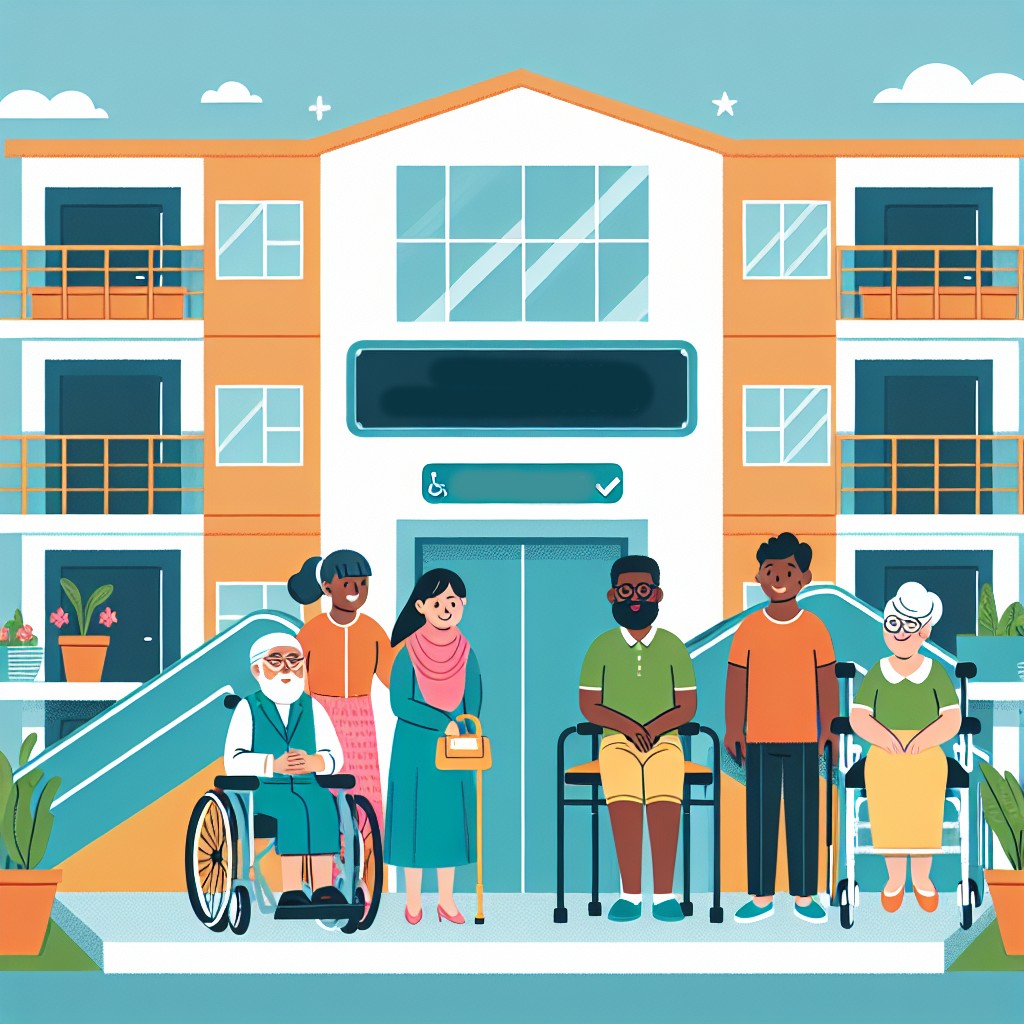
Following ADA guidelines, the renovation included installing ramps, widening doorways, and incorporating modern elevators. Each unit was equipped with accessible kitchens and bathrooms, and common areas were redesigned to accommodate mobility devices. The transformation of this building did not happen overnight; it was the result of relentless advocacy, community engagement, and strategic planning. Today, the renovated complex stands as a testament to what can be achieved when inclusivity becomes a priority in urban planning.
This initiative not only provided much-needed housing but also inspired similar projects across the nation. By showcasing the financial viability and community benefits of accessible housing, it encouraged stakeholders in other cities to pursue similar developments, significantly improving housing accessibility for people with disabilities.
Innovative Legal Advocacy: Fighting for Rights
Another noteworthy case involved a landmark legal battle in Chicago, Illinois, that resulted in significant changes to housing policies at both the state and national levels. The case centered around a family with a young child who had a severe mobility impairment, seeking to move into an apartment complex that advertised itself as ADA-compliant.
Upon moving in, they quickly discovered that the complex’s claim of compliance was severely overstated. Key amenities, like the communal pool and gym, were inaccessible, and emergency exits were not designed for use by anyone with mobility challenges. The family faced a critical decision — either they could quietly accept these conditions or challenge the management in court.
Choosing the latter, they teamed up with a renowned disability rights organization to file a lawsuit against the complex management. The case drew national attention, highlighting widespread issues of false ADA compliance claims in housing across the United States. After a prolonged legal battle, the court ruled in favor of the family, mandating immediate renovations to address the deficiencies.
This decision was more than a personal victory; it was a catalyst for policy review across the nation. Subsequently, housing complexes with similar claims were scrutinized, leading many to voluntarily upgrade their facilities to ensure genuine compliance with ADA standards. The dedication and determination of one family set a monumental precedent, demonstrating that legal advocacy can effect real-world change and empower others facing similar challenges.
Local Governments Making a Difference
Local governments have also played a crucial role in advancing housing accessibility, as evidenced by initiatives in cities like Austin, Texas. In an effort to make the city more inclusive, Austin implemented a city-wide accessibility initiative that required all new residential developments to incorporate universal design principles.
This initiative emerged from extensive consultations with disability advocates, urban planners, and the community at large. By mandating that new housing units must be universally accessible from the outset, the city aimed to prevent the need for costly retrofitting in the future, ensuring that all residents possess equal opportunities to secure housing.
The policy addressed a myriad of accessibility features, such as zero-step entrances, wide doorways, and adjustable countertop heights. It also set guidelines for shared spaces like parking areas, ensuring they were designed with consideration for those with mobility impairments. The ripple effects of Austin’s strategy have been significant; not only does the city boast a more inclusive housing landscape, but it also serves as a model for other local governments seeking to implement similar initiatives.
Residents of Austin’s newly built accessible housing developments report improved quality of life and stronger community ties, as these spaces promote greater social interaction and engagement. This success underscores how city-led initiatives can lead to substantial improvements in accessibility, inspiring hope and action across other municipalities.
Empowering Individual Advocacy
Success stories aren’t confined to large-scale initiatives or prominent legal battles; they also reside in the everyday actions of individuals advocating for their right to accessible housing. Personal advocacy has proven instrumental in fostering change at the grassroots level, proving that every voice matters and can make an impactful difference.
Consider the story of a young college student in Portland, Oregon, who waged a campaign for accessible dormitories on campus. Initially, her requests for accessible living arrangements were met with reluctance by the university administration, citing budgetary constraints as a primary hurdle. Unfazed, she rallied fellow students, disability advocates, and local media to spotlight the issue, leveraging the power of collective advocacy to bring her cause to the forefront.
The campaign, which gained significant traction and support, resulted in university administrators reallocating funds to upgrade several dormitories to be fully accessible. This triumph not only secured accessible housing for her but also paved the way for future students requiring similar accommodations. Her determination and leadership exemplify how personal advocacy can catalyze institutional change and shine a light on the necessity of accessible practices in educational settings.
Such stories encourage others to speak up, advocate for their rights, and work towards eliminating barriers that hinder access to housing and other essential services. The collective impact of these personal successes contributes to a broader societal understanding of the importance of accessibility, driving forward the mission of the ADA one step at a time.
The Role of Technology in Advancing Accessibility
Technology has played an increasingly important role in enhancing housing accessibility for individuals with disabilities, offering innovative solutions that ease the process of finding and securing accessible accommodations. The advent of mobile applications and websites dedicated to listing ADA-compliant properties is revolutionizing the housing search experience.
Platforms like these aggregate property data and allow users to filter results based on specific accessibility features, such as wheelchair accessibility, braille signage, or auditory assistance devices. Moreover, virtual tours and detailed photo galleries help prospective tenants evaluate the suitability of a property from the comfort of their current residence, a critical feature for individuals with mobility restrictions.
Developers have also integrated accessibility features directly into the home environment through smart home technologies. These advancements include voice-activated assistants that control lighting and appliances, customizable alerts for doorbells and alarms, and sensor-based lighting that adapts to the user’s needs. Such technologies empower individuals with disabilities to live independently, making daily tasks more manageable and enhancing their overall quality of life.
The rapid pace of technological innovation suggests that the future of accessible housing will continue to improve, with even more sophisticated and user-friendly solutions on the horizon. As technology companies collaborate with housing advocates and policymakers, the potential to redefine what it means to live independently in an adaptable home environment is immense.
Conclusion
Through the lens of real-world applications and case studies, we’ve seen how the ADA has been instrumental in advancing housing accessibility across the United States. From ambitious urban renewal projects to landmark legal decisions and grassroots advocacy, these success stories illuminate the ongoing efforts to ensure equitable housing opportunities for all.
While significant progress has been made, the journey towards universal housing accessibility continues. It demands persistent advocacy, creative solutions, and a commitment from all sectors of society. The lessons drawn from these success stories underscore the importance of community involvement, legal empowerment, innovative policies, and technological advancements in overcoming barriers.
The stories shared here serve as reminders that disability inclusion in housing is not merely a legal requirement, but a moral imperative. By fostering environments that respect and embrace diversity, we create communities that are stronger, more resilient, and reflective of the values enshrined in the ADA.
As we celebrate these achievements, we must also remain vigilant, aware of the challenges that persist and motivated by the promise of a more inclusive future. The examples within this article inspire hope and action, illustrating that when rights are put into action, significant and positive change is within reach for everyone.
Frequently Asked Questions
1. What is the significance of the Americans with Disabilities Act (ADA) in housing accessibility?
The Americans with Disabilities Act (ADA) is a groundbreaking civil rights law enacted in 1990, designed to prohibit discrimination against individuals with disabilities and ensure equal opportunities in various spheres, including housing. The ADA’s significance in housing accessibility lies in its ability to address and dismantle barriers that prevent people with disabilities from obtaining fair and adequate housing. By mandating that housing facilities accommodate the needs of individuals with disabilities, the ADA plays a critical role in shaping environments that are inclusive and accessible. It ensures that architectural obstacles, discriminatory practices, and inaccessible facilities are addressed, enabling individuals with disabilities to exercise their right to housing without impediments.
For instance, the ADA has led to the development of housing projects that include ramps, elevators, and widening doorways, making housing more accessible to wheelchair users. These modifications do not just serve as compliance measures; they essentially promote independence and quality of life for those who have previously been marginalized. Furthermore, the ADA has been pivotal in fostering a societal culture that recognizes and respects the diverse needs of individuals with disabilities, reinforcing the ideology that access to adequate housing is a fundamental right for everyone.
2. How have housing accessibility success stories impacted communities?
The success stories emerging from housing accessibility initiatives under the ADA have had profound impacts on communities. These stories are powerful narratives that not only highlight the positive outcomes of legislative actions but also inspire change and motivate communities to prioritize inclusivity. When communities witness tangible changes, such as the reformation of public housing units to accommodate individuals with varying disabilities, it encourages them to evaluate and improve their own practices.
Communities benefit from these success stories as they often catalyze broader societal change. When housing accessibility is achieved, it increases community diversity, enriches interaction, and fosters understanding among residents of all abilities. It can lead to increased participation of individuals with disabilities in community activities, as they become more empowered to lead independent and fulfilling lives. For the non-disabled, these stories can challenge misconceptions and facilitate empathy, sparking advocacy for further improvements. On a broader scale, the increased visibility of successful housing accessibility projects may also influence policymakers, prompting legislative enhancements that further support inclusive practices.
3. Can you provide an example of a housing accessibility success story?
One notable housing accessibility success story involves the transformation of an older apartment complex that was deemed nearly impossible to make wheelchair accessible. A determined group of advocates worked collaboratively with architects, engineers, and local governments to remodel these facilities. This complex was initially built in the 1970s, long before the ADA’s guidelines, featuring narrow hallways and numerous stairs that prohibited access for those using wheelchairs or walkers.
Through innovative design and dedication, the team was able to install elevator systems and create external ramps that harmonized with the building’s architectural style. Inside, they expanded hallways and doorframes and retrofitted interior spaces to accommodate the needs of residents with various disabilities. As a result, this apartment complex not only complied with ADA regulations but also became a benchmark project for other residential developments seeking transformation.
The success of this story lies not just in the structural changes but also in the community engagement it sparked. It fostered a local narrative about inclusion and accessibility, and how advocacy and collaborative problem-solving can break boundaries. Many residents who initially could not access or comfortably live in such spaces found these modifications life-changing, demonstrating firsthand how housing accessibility enhances personal independence and overall quality of life.
4. What challenges do individuals still face despite ADA protections?
Even with the comprehensive protections offered by the ADA, individuals with disabilities often face numerous challenges when it comes to securing housing. One significant challenge is the lack of awareness or understanding of ADA requirements among landlords and property owners, leading to non-compliance and inadequate housing options for individuals with disabilities. This often results in individuals encountering housing that is technically ‘available’ but practically inaccessible due to non-compliant design and amenities.
Additionally, there are instances where financial constraints hinder the implementation of necessary modifications. Even with the best intentions, landlords or housing authorities may lack the resources to make comprehensive accessibility upgrades. This financial barrier often stifles the potential for low-income or public housing to meet all ADA standards. Furthermore, the intersectionality of socio-economic factors can exacerbate challenges, as individuals with disabilities also face barriers related to income, race, or age—factors that compound housing accessibility issues.
Moreover, there is often inadequate enforcement of ADA regulations. Limited oversight can lead to non-compliance going unchallenged, leaving individuals without recourse in cases of discrimination or inaccessible living conditions. The complexity of legal processes can also deter individuals from pursuing their right to accessible housing, as they may lack the knowledge or resources to navigate these processes effectively.
5. How can individuals advocate for improved housing accessibility in their communities?
Individuals can play a pivotal role in advocating for improved housing accessibility by first educating themselves and others about the ADA and its implications for housing rights. Knowledge is a critical tool that can empower individuals to recognize non-compliant practices and advocate for necessary changes. Engaging with local advocacy groups or forming community action committees dedicated to accessibility issues can provide collective strength to these efforts.
Proactive engagement with local government officials, policymakers, and housing authorities is another effective strategy. Individuals can attend town hall meetings, participate in public forums, and make their voices heard in discussions about residential planning and community development. Sharing personal stories and success stories from elsewhere can help underscore the importance of housing accessibility and demonstrate its impact on quality of life.
Additionally, individuals can support or initiate collaborative projects that aim to increase public awareness and drive change. By working with local businesses, architects, and planners, they can help design events or campaigns that highlight successful accessibility projects and inspire further innovation. Finally, individuals can engage in social media advocacy, where they can share information, interact with broader audiences, and galvanize public support for accessible housing initiatives. Through persistent advocacy and community involvement, individuals can significantly advance the cause of housing accessibility in their communities.