In recent years, the realm of accessible transportation has experienced a significant transformation thanks to advancements in technology. The Americans with Disabilities Act (ADA), enacted in 1990, laid the foundation for equality and accessibility in public transportation, compelling the industry to adapt and innovate continually. Today, new breakthroughs in technology are further enhancing the mobility of individuals with disabilities, offering them unprecedented levels of independence and freedom.
From intelligent assistive devices to fully integrated smart city infrastructures, the landscape of accessible transportation is evolving at an impressive pace. This development is not only ensuring that people with disabilities have greater access to transportation but also making these systems more efficient and user-friendly for everyone.
In this article, we explore recent developments in accessible transportation technologies and examine how these innovations are significantly impacting the lives of people with disabilities across the United States.
Accessible Transportation Innovations
In the wake of the ADA’s guidelines, technology has played a key role in the evolution of transportation systems tailored to individuals with disabilities.
One significant advancement is the emergence of smart wheelchair technology, which integrates sensors, IoT connectivity, and AI-powered analytics to provide users with greater control and safety. These smart wheelchairs are equipped with features such as obstacle detection, autonomous navigation, and smartphone app connectivity, allowing users to manage their mobility more effectively.
Additionally, transportation apps specifically designed for individuals with disabilities are becoming increasingly prevalent. These applications incorporate accessibility options such as audio cues, visual aids, and real-time bus and train tracking, allowing users to plan their journeys with greater precision and confidence.
These technological advancements empower individuals with disabilities to move more freely while simultaneously enhancing overall transportation systems, making them more inclusive and efficient.
Public Transportation Accessibility
The ADA has been instrumental in ensuring public transportation systems are accessible to individuals with disabilities.
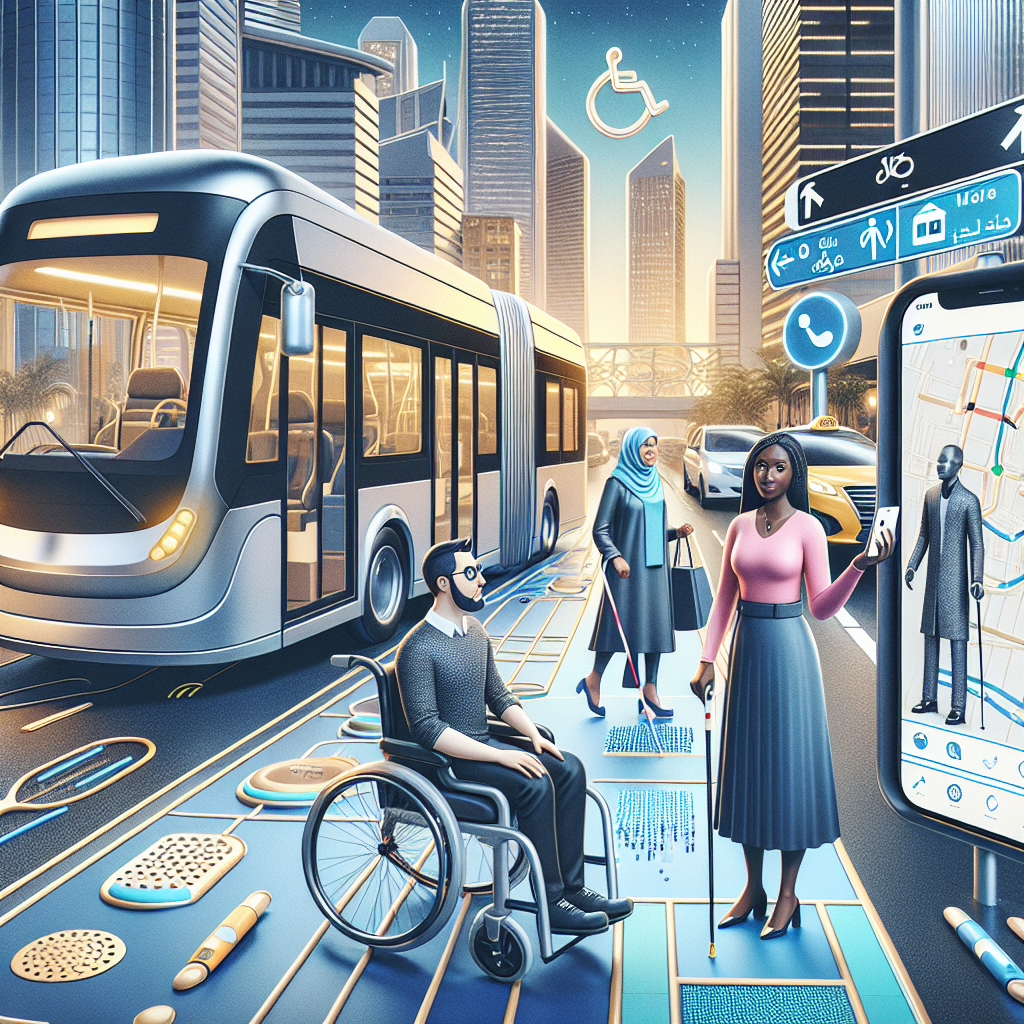
Recently, there have been remarkable strides in this area, with smart city infrastructure playing a crucial role. Municipalities across the country are adopting technologies like real-time onboard announcements and signage designed for individuals with visual and hearing impairments.
Transportation agencies have also inaugurated universal design standards to accommodate users of all abilities, including those with mobility, visual, and cognitive challenges. These standards prioritize the development of:
- Accessible transit stations
- Well-marked pathways
- Elevators and ramps
Moreover, the incorporation of advanced green technology ensures that while meeting accessibility needs, transit systems remain sustainable. By prioritizing accessibility, cities are making strides toward inclusivity, ensuring that all citizens, regardless of physical ability, can equitably partake in society.

Innovative Ride-Sharing Solutions
The ride-sharing industry has also seen dramatic advancements in providing accessible transportation options.
Popular services such as Uber and Lyft have introduced accessible ride options for wheelchair users and individuals with other disabilities. These services often include trained drivers who understand the unique needs of disabled passengers.
Furthermore, ride-sharing companies are investing in the development of automated and autonomous vehicles equipped with sophisticated technologies to cater to diverse needs. The promise of autonomous vehicles offers the potential to revolutionize mobility by providing convenient door-to-door service, particularly beneficial for individuals who find traditional public transportation limiting.
Technology for Personal Vehicles
In addition to public transportation, personal vehicle accessibility has progressed significantly thanks to technological innovations.
Adaptations such as:
- Voice-command systems
- Joystick steering
- Custom vehicle modifications
have transformed the driving experience for individuals with disabilities, granting greater independence.
Modern technology enables seamless integration of various assistive devices with personal vehicles, optimizing them for comfort and safety. Features like advanced GPS systems and adaptive cruise control tailored for individuals with disabilities make personal vehicle operation more manageable.
The automotive industry is increasingly recognizing the need for inclusivity, driving forward research and development to expand and refine accessible vehicle technologies.
Innovative Technologies in Air Travel
Air travel, historically a challenging mode of transportation for individuals with disabilities, is undergoing an accessibility transformation.
Airlines, in collaboration with regulatory bodies, are actively incorporating technology-enabled solutions to meet ADA standards. Recent advancements include:
- Lift-equipped boarding platforms for individuals with mobility impairments
- Mobile applications that guide passengers from check-in to boarding
- Virtual reality tools that create tailored in-flight experiences for people with sensory impairments
These advancements ensure that individuals with disabilities can navigate complex airport environments with ease and enjoy a more comfortable and dignified travel experience.
Conclusion
Recent developments in accessible transportation technologies represent a remarkable shift toward a more inclusive society, aligning closely with the principles of the Americans with Disabilities Act.
From enhanced public transportation systems and innovative ride-sharing services to advanced personal vehicle technologies and improved air travel experiences, these innovations collectively empower individuals with disabilities. They guarantee that transportation becomes more accessible, reliable, and independent for all users.
Despite the significant progress made, ongoing research, innovation, and advocacy are essential to address the unique challenges faced by individuals with disabilities. The future holds even more transformative developments, driven by revolutionary technology and dedicated stakeholders, ensuring a society where mobility is truly universal.
Frequently Asked Questions
1. What recent technological advancements are making public transportation more accessible for individuals with disabilities?
In recent years, technology has transformed the landscape of accessible transportation. There has been an incredible shift thanks to innovations like real-time navigation apps that help individuals with disabilities to plan and adjust their trips on public transport dynamically. These apps often include features tailored specifically for accessibility needs, such as locating the nearest wheelchair-accessible entrances or exits, alerting riders to service disruptions, and providing step-by-step guidance in stations with complex layouts.
Moreover, advancements in vehicle design are also noteworthy. Modern buses and trains are increasingly being designed with low-floor entry, making them more wheelchair-friendly. Newer models may also feature audible and visual announcements to accommodate a range of sensory disabilities.
Autonomous vehicle technology also holds promise for improving accessibility further. These driverless vehicles can potentially offer door-to-door transport solutions tailored to the needs of individuals with disabilities, thus extending the convenience and independence currently afforded to able-bodied passengers.
2. How does the Americans with Disabilities Act (ADA) continue to influence the development of accessible transportation technologies?
The ADA has been a cornerstone in ensuring accessibility and non-discrimination for people with disabilities. Its guidelines compel transportation providers to offer necessary accommodations, which propels ongoing innovations in the industry. For instance, the law requires public transportation systems to be equipped with features such as ramps, lifts, and priority seating for individuals with disabilities.
In response, technology developers have been inspired to innovate further, seeking more efficient and user-friendly ways to meet these mandates. This is where smart technology enters the scene, enabling more seamless integration of required amenities while simultaneously enhancing the user experience.
The ADA not only sets minimum standards but also influences policy changes and funding for research and development of sophisticated systems that allow a broader swath of the population to enjoy public transportation without barriers. As technology evolves, so too do the implementations of ADA provisions, ensuring that accessibility grows ever more robust.
3. What is the role of real-time data in improving accessible transportation options?
Real-time data plays an essential role in modernizing and personalizing accessible transportation. By leveraging real-time information, transportation systems can provide live updates that are critical for individuals with disabilities who may need to make quick adjustments in their travel plans. This can include updates on service delays, the availability of accessibility features in transit vehicles, or real-time occupancy levels indicating space for wheelchairs or other mobility aids.
These data-driven technological enhancements thereby improve the reliability and efficiency of public transportation for individuals who rely on detailed planning and flexibility. Such data can be accessed through smartphone applications, electronic signage, and other devices, making it possible for users to have increased control over their travel experiences.
The real-time aspect ensures that users have the most accurate information at their fingertips, reducing stress and empowering them to make informed decisions in a timely manner. Therefore, the importance of real-time data cannot be overstated when it comes to creating a truly accessible transportation framework.
4. How are smart cities contributing to the advancement of accessible transportation?
Smart cities use Internet of Things (IoT) technology and other cutting-edge innovations to create urban spaces that prioritize not just efficiency but also inclusivity. In the context of transportation, smart city infrastructure is increasingly being designed with accessibility at its core. This includes the installation of smart traffic systems that accommodate pedestrian needs, particularly for those with mobility, auditory, or visual impairments.
Transportation hubs in smart cities may offer interactive kiosks with accessibility features, such as voice commands and braille, integrated with accessible apps to guide users effectively through transit networks. By employing AI algorithms and connected sensor technologies, smart cities can dynamically adjust operations, like delaying elevator closures or adjusting bus stop announcements, to meet the needs of all users.
Through data collection and analysis, these cities are able to continually improve accessibility. AI-driven technologies understand passenger flow and can optimize transportation systems accordingly, ensuring that every logistical aspect, from mode of travel to traffic policies, is inclusive of people with different mobility needs.
5. Is there any impact of accessible transportation technologies on the independence of individuals with disabilities?
Absolutely, the development and enhancement of accessible transportation technologies have a profound impact on the independence of individuals with disabilities. With the integration of user-centered design in technological solutions, transportation systems are becoming more intuitive and accommodating. This distinct shift grants travelers with disabilities the empowerment to navigate their environment with greater ease and confidence.
Apps that provide tailored advice and real-time updates allow individuals to independently manage their itineraries, minimizing the anxieties associated with relying on others for information or assistance. Automated transport solutions, such as driverless cars, envisage an era where needing to depend on a chauffeur or taxi service is a thing of the past.
Beyond just personal travel, these advances also revolutionize employment accessibility, as individuals with physical challenges gain greater mobility and thus more opportunities to pursue careers and activities beyond the traditionally limiting geographic proximity of accessible transportation. The overarching theme within these technology advancements is not solely on mobility assistance but on crafting an equitable society where disability does not predicate dependency. Each new technological breakthrough contributes to crafting environments that celebrate independence, aligned with the core ambition behind accessible transportation innovations.