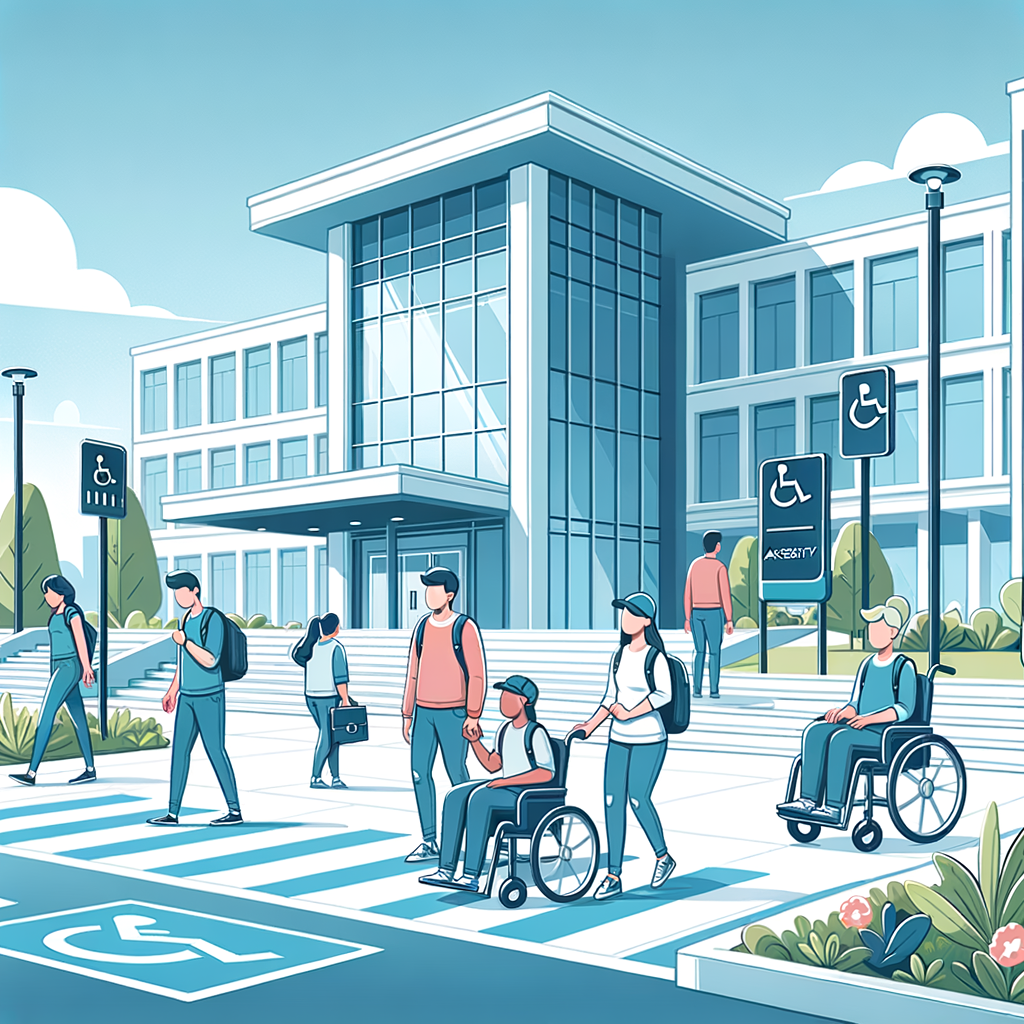
In recent years, Artificial Intelligence (AI) and Machine Learning (ML) have revolutionized many sectors, and their impact continues to grow. From healthcare to finance, AI and ML enhance efficiency, productivity, and decision-making. When it comes to accessibility, these technologies play a unique and transformative role, especially concerning the Americans with Disabilities Act (ADA). The ADA aims to prevent discrimination against individuals with disabilities, ensuring they have equal access to public and private services, facilities, and employment. Given the rapid digitalization of services and information, ensuring ADA compliance has become more complex and crucial. Leveraging AI and ML for enhanced ADA compliance offers unprecedented opportunities to make services more inclusive and accessible to all individuals, regardless of their disabilities.
AI and ML provide tools to analyze vast amounts of data, recognize patterns, and automate processes that can be labor-intensive and prone to human error. These technologies also enable businesses and organizations to predict potential accessibility barriers and proactively address them. Furthermore, AI can enhance user experiences by offering personalized assistance and adaptations to meet individual needs. The fusion of AI and ADA compliance is not merely about meeting legal mandates. It promotes innovation, supports inclusivity, and reflects business responsibility and foresight. This synergy potentiates a world where digital services and physical spaces are navigable and usable by everyone, fostering a more equitable society.
In this exploration, we delve into how AI and ML contribute to enhanced ADA compliance. We will investigate the ways technology can address accessibility issues, automate compliance checks, optimize user interfaces, and improve experiences for individuals with disabilities. This article aims to provide a comprehensive understanding of the mechanisms through which AI and ML can and are being used to uplift ADA compliance efforts, driving forward the vision of an inclusive future.
Automating Compliance Checks with AI
One of the most significant challenges in achieving ADA compliance is ensuring that all facets of a business or organization’s digital presence adhere to accessibility standards. Manually reviewing websites for compliance is not only time-consuming but also prone to human oversight. This is where AI comes into play with its ability to automate compliance checks. Digital platforms can benefit from AI-driven audits that consistently and rapidly examine vast amounts of web content.
AI algorithms are being designed to scan websites and diagnose accessibility issues, such as insufficient alt text for images, inadequate contrast ratios, and the absence of keyboard navigation support. These systems are equipped to evaluate a site against established standards like the Web Content Accessibility Guidelines (WCAG), which detail necessary criteria for ensuring web accessibility for people with disabilities. By utilizing machine learning, AI systems continually evolve and improve in their ability to detect more subtle compliance issues, adapting to new internet trends and website architectures.
Moreover, AI-enabled tools provide actionable insights and recommendations to rectify identified issues. For instance, AI can suggest alternative text descriptions for images, or recommend design changes for better contrast, making the process more efficient for web developers and content managers. These tools help organizations proactively maintain compliance and avoid the pitfalls of potential legal challenges associated with ADA infractions, ensuring continuous accessibility without manual, repetitive efforts.
Enhancing User Experiences
A critical aspect of ADA compliance is crafting an inclusive experience that allows users with different abilities to navigate and interact with services seamlessly. AI contributes vastly to this domain by offering personalized experiences. Through machine learning algorithms, AI can analyze user behavior and preferences to offer tailored interactions. For instance, AI systems can adjust website interfaces based on individual needs—a user with visual impairments might automatically be presented with a high-contrast mode upon visiting a service.
Furthermore, AI-driven speech recognition and text-to-speech technologies have dramatically improved the accessibility of web content. These technologies help users with visual impairments engage with digital content more independently by reading out on-screen text and processing user commands verbally. Similarly, AI applications can provide real-time captioning and translation services for users with hearing impairments, thereby enhancing communication and understanding during video conferences or online media consumption.
AI’s role in predictive text and sentiment analysis also makes digital platforms more navigable for users with cognitive disabilities. By offering anticipatory text options and analyzing user input to provide affirmed direction or empathy-driven responses, AI helps bridge gaps in communication and comprehension, enriching the user experience significantly.
Optimizing Physical Space Compliance
While digital accessibility is a significant focus, ADA compliance also pertains to physical spaces. AI and ML play a role in optimizing these environments for better accessibility. AI-driven data analysis can help organizations understand and improve public facilities, walkways, and transportation systems. Machine learning can identify patterns in how disabled individuals navigate public spaces, which can inform better building codes, layout designs, and service offerings.
Computer vision, a subset of AI, allows for the automation of identifying physical barriers within public or business venues. With advancements in sensors and imaging technologies, AI systems can map spaces and model these environments to ensure compliant pathways, signage, and emergency protocols. These insights drive data-backed decisions about renovations or redesigns needed to enhance compliance, leading to safer, more accessible spaces for everyone.
Moreover, robotics empowered by AI hold potential in the form of physical assistance—be it through robotics-enabled navigational aids, or service robots that assist with physical tasks, delivering items to individuals with mobility impairments, making public or private spaces not only compliant but also user-friendly for individuals with disabilities.
Facilitating Assistive Technologies
AI’s role extends to the development and enhancement of assistive technologies that aid individuals in overcoming barriers posed by disabilities. Innovation in AI-driven assistive devices helps individuals perform tasks that might otherwise be difficult or impossible. Modern application of AI in assistive tech ranges from sophisticated prosthetics equipped with machine learning for adaptive user movements, to AI-powered hearing aids that filter noise to improve clarity and understanding.
Additionally, AI assists in the development of alternative communication devices. For individuals with speech impairments, AI-driven solutions improve communication by learning and predicting usage patterns to facilitate more accurate, real-time voice synthesis. These AI systems enable easier interaction by adapting to individual speech patterns and enhancing communication efficiency.
Moreover, AI’s involvement in virtual reality (VR) environments fosters inclusivity by allowing training and simulation in an accessible manner. VR can create immersive, inclusive experiences for individuals with disabilities, often indistinguishable from real-life experiences, thus preparing them for varied scenarios ranging from employment to social interactions.
Predictive Analytics and Prevention
Predictive analytics powered by AI and ML fine-tune ADA compliance by forecasting potential accessibility issues before they arise. Predictive models identify patterns in past accessibility data, recognizing what factors have historically led to compliance challenges. By doing so, organizations can preemptively address these issues, adapting infrastructure, digital interfaces, or even service delivery before the development of a problem.
For example, AI can predict future hotspots requiring rigorous accessibility oversight as urban landscapes grow. This foresight helps city planners and public service providers in preempting the construction of accessible facilities, like ramps or elevators, effectively reducing barriers for individuals with disabilities in new developments.
Furthermore, predictive analytics assist in resource allocation, ensuring that investment in accessibility improvements is directed where it will yield the most significant impact. By analyzing data patterns and use trends, AI provides recommendations on resources needed—be it additional ADA training for staff, digital overhauls, or physical renovations—thus, optimizing operations while upholding compliance mandates.
Conclusion
AI and ML offer profound potential to enhance ADA compliance, making accessibility a comprehensive and automated staple in organizational frameworks. These technologies support the efficient identification of accessibility issues, improve user experiences, optimize the design of physical structures, bolster assistive technologies, and predict potential compliance challenges. As society continues to embrace digital interactivity, businesses, and service providers must prioritize inclusivity as a foundational principle. With AI and ML, organizations can stay ahead of accessibility requirements, not merely out of obligation or to avoid legal ramifications, but to contribute actively to the creation of a universally accessible world.
The deployment of AI in ensuring ADA compliance is a reflection of broader societal values. Companies that pursue accessibility initiatives contribute to an inclusive culture, improving brand reputation and ensuring their services are available to a wider audience. Ultimately, AI and ML are far more than mechanisms for treating digital symptoms—they represent the key to a future where accessibility is integrated into the very fabric of technological evolution. By leveraging these advanced tools, stakeholders take a decisive step toward uniting technical progress with social responsibility, paving the way for a more inclusive future.
In summary, the convergence of AI, ML, and ADA compliance is reshaping how we view accessibility—moving from a reactive compliance mindset to a proactive and innovative approach. Embracing these technologies not only affirms compliance with legal standards but also capitalizes on new opportunities to foster inclusivity, creativity, and technological advancement. As AI continues to evolve, its impact on enhancing ADA compliance promises a future that significantly elevates accessibility standards worldwide.