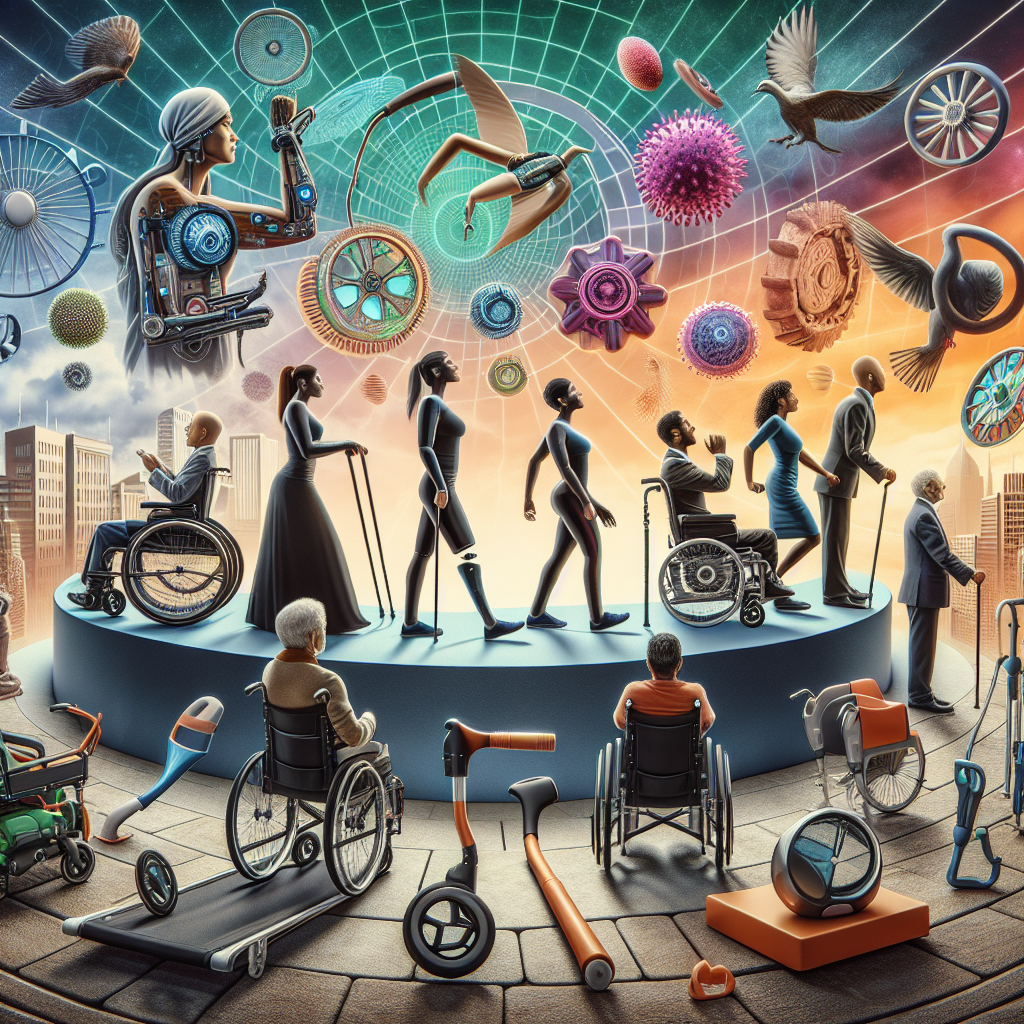
Technology has a profound impact on daily life, paving the way for new innovations that enhance human ability and bridge the gap to accessibility. As the world becomes more digitally connected, the push towards making environments accessible for people with disabilities grows stronger. This is particularly significant as innovations in mobility aids continue to evolve, offering hope and empowerment to millions. In the realm of technological advancements, understanding these changes through the lens of the Americans with Disabilities Act (ADA) is crucial. This legislation serves as a foundation for ensuring that all individuals, regardless of their physical capabilities, enjoy equal access to opportunities and environments across America.
The ADA was enacted in 1990 and marked a monumental shift in how society perceives and accommodates individuals with disabilities. This federal law prohibits discrimination and ensures equal opportunities in public places, employment, transportation, and beyond. Over the years, the ADA has changed alongside technological advancements, adapting to ensure that new innovations align with its core values of accessibility and inclusivity. With technology growing at an unprecedented pace, especially in the field of mobility aids, it is worth exploring how these innovations are modifying the landscape of accessibility, enhancing lives, and promoting independence for people with mobility impairments.
The Evolution of Mobility Aids: A Historical Overview
Understanding the trajectory of mobility aids starts by looking at their past. From the early days where basic walking sticks and wheelchairs were employed, to the futuristic devices available today, mobility aids have witnessed significant transformations. The wheelchairs of ancient times, for instance, were rudimentary, often too large or too cumbersome for practical use. Over the centuries, these devices evolved through numerous designs reflecting societal attitudes and technological capabilities.
The major turning point in the evolution of mobility aids came in the 20th century. The development of lightweight, collapsible wheelchairs revolutionized markets, offering unprecedented independence to people with mobility limitations. With every step, from manually operated to power chairs, the focus was on improving ease of use, comfort, and autonomy. However, it was the advent of electronic and computer technologies that truly redefined the scope and potential of mobility solutions, leading to immense innovation well into the 21st century. In more recent years, the integration of advanced materials, robotics, AI, and IoT technology has continued to shape this landscape profoundly.
ADA’s Role in Facilitating Technological Advancements
Since its inception, the ADA has been pivotal in guiding the trajectory of technological progress in mobility aids. Its primary mission is to guarantee that innovations serve everyone’s needs, removing societal barriers that once existed for individuals with disabilities. However, technology alone doesn’t resolve accessibility issues; it requires a framework that encourages developers, businesses, and policymakers to adopt inclusion as a priority.
The ADA’s mandates offer invaluable direction by stipulating standards for products and services impacting accessibility. This has driven companies in all sectors, particularly technology and healthcare, to align their objectives with such standards of inclusivity. Thus, the ADA fosters an ecosystem where innovation thrives alongside a strong commitment to accessibility. Within this compliant framework, creativity does not have restrictions but is instead focused on harnessing breakthroughs that tangibly enhance the lives of individuals with disabilities and promote social equity.

Breakthrough Technology in Mobility Aids
Innovation knows no bounds in the realm of mobility aids, with groundbreaking solutions emerging in rapid succession. Today’s smart wheelchairs equipped with AI and IoT capabilities can autonomously navigate through various environments, alleviating the burden of manual operation and providing unmatched freedom and independence. These devices are designed to learn and adapt, offering personalized user interactions that enhance comfort and usability.
Robotics has opened up exciting possibilities in mobility solutions as well. Exoskeleton devices, for instance, leverage robotic technology to assist walking, offering assistance in rehabilitation settings and significantly improving mobility for individuals with paralysis or severe muscle weakness. Such advancements are empowering millions worldwide by redefining the concept of what mobility aids can accomplish.
3D printing technology is also contributing to this evolution. It offers customized, cost-effective solutions that meet individual preferences and needs. The ability to print tailored footbeds, seat cushions, or even entire wheelchair frames signifies a leap towards personalized care, enhancing user comfort and promoting greater mobility with bespoke solutions.
Addressing Accessibility Challenges with Technology
The ADA not only champions technological advancement but also emphasizes addressing ongoing challenges to accessibility head-on. Becoming accessible isn’t merely about designing a product; it’s about ensuring that users can engage without obstacles. In this vein, augmented reality (AR) and virtual reality (VR) solutions are making strides in creating accessible learning environments, eliminating geographical and physical barriers to education and training for individuals with disabilities.
Integration of voice-activated systems and assistive software solutions further fosters independence. These innovations allow for seamless operation of mobility devices, empowering users by providing alternative ways to interact with new environments or communicate. Such solutions must still conform to ADA standards, ensuring that all these technologies are available to individuals with diverse needs and from various demographics.
The Future of Mobility Aids Innovation
As we look to the future, the landscape of mobility aids is expected to continue its dynamic evolution, defined by its increasingly symbiotic relationship with technology. There’s a promising frontier in using brain-computer interfaces, which could allow for direct communication between individuals’ neural activity and their mobility devices, minimizing user exertion and optimizing ease of use. Such advances afford promising implications for autonomy and interaction with the environment.
Moreover, the continued refinement and application of AI technologies pose exciting prospects. With AI, future mobility devices may offer predictive assistance, faster adaptations to user preferences, and higher customization options based on real-time data analysis. Yet, the pursuit of these advances demands conscientious consideration of ethical and privacy implications, which the ADA can help guide by fostering innovation that respects individuals’ rights and dignities.
Conclusion: Navigating Toward Greater Accessibility
The Americans with Disabilities Act stands as more than just a legal framework; it is a beacon for technological innovation aligned with inclusivity. As the mobility aid market continues to integrate cutting-edge technologies, the role of the ADA becomes even more vital in balancing innovation with social responsibility. The legislation ensures that as the capabilities of technology grow, so too do the opportunities for individuals with disabilities to live, work, play, and participate fully in society.
The future of mobility innovations is both exciting and promising, with the intersection of design, technology, and policy creating a positive trajectory towards inclusivity. Through continued innovation, coupled with the dialogue and advocacy driven by the ADA, we move closer to a society where everyone can achieve their fullest potential—irrespective of their mobility challenges. As consumers, technologists, and policymakers alike forge ahead, it’s essential to uphold the principles of the ADA to cultivate thriving, accessible environments in the coming years and beyond.
Frequently Asked Questions
1. What are some of the latest innovations in mobility aids?
In recent years, the field of mobility aids has seen a wave of innovative solutions driven by technological advancements. One of the prominent innovations is the development of smart wheelchairs, which incorporate advanced sensors and connectivity features to improve maneuverability and safety for users. These wheelchairs can be controlled via smartphones or tablets, offering users more control and independence in navigating their environments.
Another significant innovation is the introduction of exoskeletons. Exoskeletons are wearable devices that enhance mobility and offer support to individuals with limited mobility. They are particularly beneficial for people with spinal cord injuries or conditions like muscular dystrophy. These devices can assist with walking, standing, and even carrying heavy loads, thereby providing more freedom and reducing the dependency on caregivers.
Additionally, mobility aids such as robotic prosthetic limbs are becoming more sophisticated. These prosthetics can mimic natural movements and provide sensory feedback, helping users regain a sense of touch and better control of limb movements. These innovations are revolutionizing how people with disabilities interact with their surroundings, fostering independence and enhancing their quality of life.
2. How do these innovations align with ADA regulations?
The Americans with Disabilities Act (ADA) aims to ensure that people with disabilities have equal access to public spaces and are not discriminated against in everyday activities. The latest innovations in mobility aids are designed with ADA compliance in mind to empower individuals and promote inclusivity.
For instance, smart wheelchairs and exoskeletons are developed to meet ADA requirements by providing accessible interfaces and controls that are easy for users with varying levels of mobility to navigate. These devices often include features like adjustable seating and height settings, catering to different needs and ensuring comfort and usability.
Furthermore, advances in mobility technology focus on enhancing public accessibility features, such as automatic doors and elevators that seamlessly interact with these devices. Incorporating AI and IoT technology into mobility aids means they can communicate with smart infrastructure, effectively promoting an ADA-friendly environment. This aligns perfectly with the ADA’s goal of removing barriers for people with disabilities and allowing them full participation in their communities and workplaces.
3. What role does digital connectivity play in modern mobility aids?
Digital connectivity is at the heart of modern mobility aids, serving as the backbone of many innovative features that cater to individual needs. With the integration of IoT (Internet of Things) technology, mobility aids are becoming smarter and more interconnected, providing numerous benefits to users.
Connectivity allows for real-time monitoring and data collection, which can be extremely useful for understanding a user’s movements and needs. For example, sensors in smart wheelchairs can track usage patterns and suggest optimal routes or alert caregivers if an individual requires assistance, making the journey more efficient and safer.
Moreover, connected mobility devices can seamlessly integrate with smart home systems, granting users control over household appliances and settings through their mobility aid interfaces. By leveraging apps and voice commands, users can adjust lighting, heating, or control entertainment systems with ease. These advancements significantly improve autonomy, enabling users to perform daily activities with minimal assistance.
4. How do these innovations improve the daily lives of individuals with disabilities?
Innovations in mobility aids are transformative, improving not only the physical capabilities of individuals with disabilities but also enhancing their emotional well-being and social inclusion. The increased autonomy and efficiency these aids provide reduce the reliance on caregivers and family members, promoting a greater sense of independence.
Modern mobility aids enable users to engage in activities they once found challenging or inaccessible. This can include everything from simple tasks such as grocery shopping to more complex activities like traveling independently. As a result, users are often able to pursue educational and professional opportunities they previously couldn’t access, broadening their horizons and contributing to society in meaningful ways.
Additionally, psychological benefits stem from using these devices, as individuals gain confidence in their ability to navigate and interact with the world around them. The empowerment from using advanced mobility aids can reduce the stigma often associated with disabilities, fostering a more positive self-image and enhancing their social lives.
5. What challenges still remain despite these technological advancements?
Despite the significant progress in mobility aids, several challenges remain that need to be addressed to ensure these innovations benefit everyone equally. One of the primary challenges is affordability. Cutting-edge technology often comes with a high price tag, which can make these innovative devices inaccessible to many individuals who would benefit the most from them.
Moreover, there’s a disparity in the accessibility of advanced mobility aids across different regions and socio-economic groups. While urban areas may offer more resources and options, rural communities can face limitations in accessing the latest technologies, creating an inequality in benefits received.
Another significant challenge is the lack of awareness and adapted training for users to get the most out of these new technologies. Comprehensive training programs and support systems are essential to ensure users feel comfortable and confident with new devices.
Furthermore, technological integration with existing infrastructure across various settings—such as transportation and public spaces—remains a work in progress. Ongoing efforts to raise awareness, reduce costs, and enhance infrastructure compatibility will help bridge these gaps, paving the way for a more inclusive future that fully embraces the potential of mobility technology.


