
The landscape of education has undergone significant transformations over the past decades, with the rapid integration of technology into learning environments. Online education, which has seen exponential growth, provides access to learning resources and opportunities for millions of students around the globe. However, as digital education becomes a mainstay, it’s crucial to ensure it remains inclusive and accessible to all learners, especially those with disabilities. This is where the Americans with Disabilities Act (ADA) plays a critical role.
Originally enacted in 1990, the ADA was a groundbreaking piece of civil rights legislation designed to prohibit discrimination against individuals with disabilities in all areas of public life. With its five major titles, the ADA addresses employment, public service, public accommodations, telecommunications, and other miscellaneous provisions. Over time, as society evolves and technology advances, the ADA has undergone various updates to keep pace with these changes. Recent ADA updates have increasingly focused on digital accessibility, significantly impacting online education.
The Evolution of ADA Standards in Online Education
In the realm of online education, ADA standards have evolved in response to technological advancements and the increasing recognition of the importance of online learning as a primary mode of education. The concept of digital equity has come to the forefront, ensuring that students with disabilities have equal access to digital educational resources. The Department of Justice (DOJ) and the Office for Civil Rights (OCR) within the Department of Education have been instrumental in reinforcing these standards through guidelines and policies.
One major development is the Web Content Accessibility Guidelines (WCAG), which have become a cornerstone for digital accessibility. Originally crafted by the World Wide Web Consortium (W3C), WCAG has been frequently referenced by the DOJ when interpreting ADA compliance for digital content. These guidelines outline methods to make online content more accessible to people with disabilities, offering standards in areas like text alternatives for non-text content, adaptable content, and distinguishable audio and visuals.
Educational institutions delivering online courses must stay abreast of these standards to avoid ADA non-compliance risks. Noncompliance may lead to legal challenges, fines, and damage to institutional reputation. By aligning online platforms with WCAG guidelines, institutions ensure inclusivity, allowing all students to engage fully in their educational pursuits.
The ADA and Legal Implications for Online Education
The legal implications of ADA compliance for online education institutions are far-reaching. As lawsuits targeting non-compliance have become more frequent, many educational institutions have found themselves embroiled in legal battles. Most legal disputes revolve around websites or online resources that are inaccessible to students with disabilities, particularly affecting visually or hearing-impaired individuals.
Notable court cases have set precedents, highlighting the judiciary’s increasing recognition of digital spaces as public accommodations under the ADA. The demand for compliance is clear—educational institutions must act to make all online learning environments accessible. Failure to do so not only risks legal repercussions but also alienates students who rely on accessible technologies to learn.
To avoid litigation and foster an inclusive educational environment, institutions are advised to routinely audit their online platforms and resources. This includes implementing accessibility features such as screen reader compatibility, captioned video content, and navigable website architecture. Legal experts often suggest forming dedicated compliance teams to oversee these efforts and secure expert advice on ADA compliance.
Technological Innovations Facilitating ADA Compliance
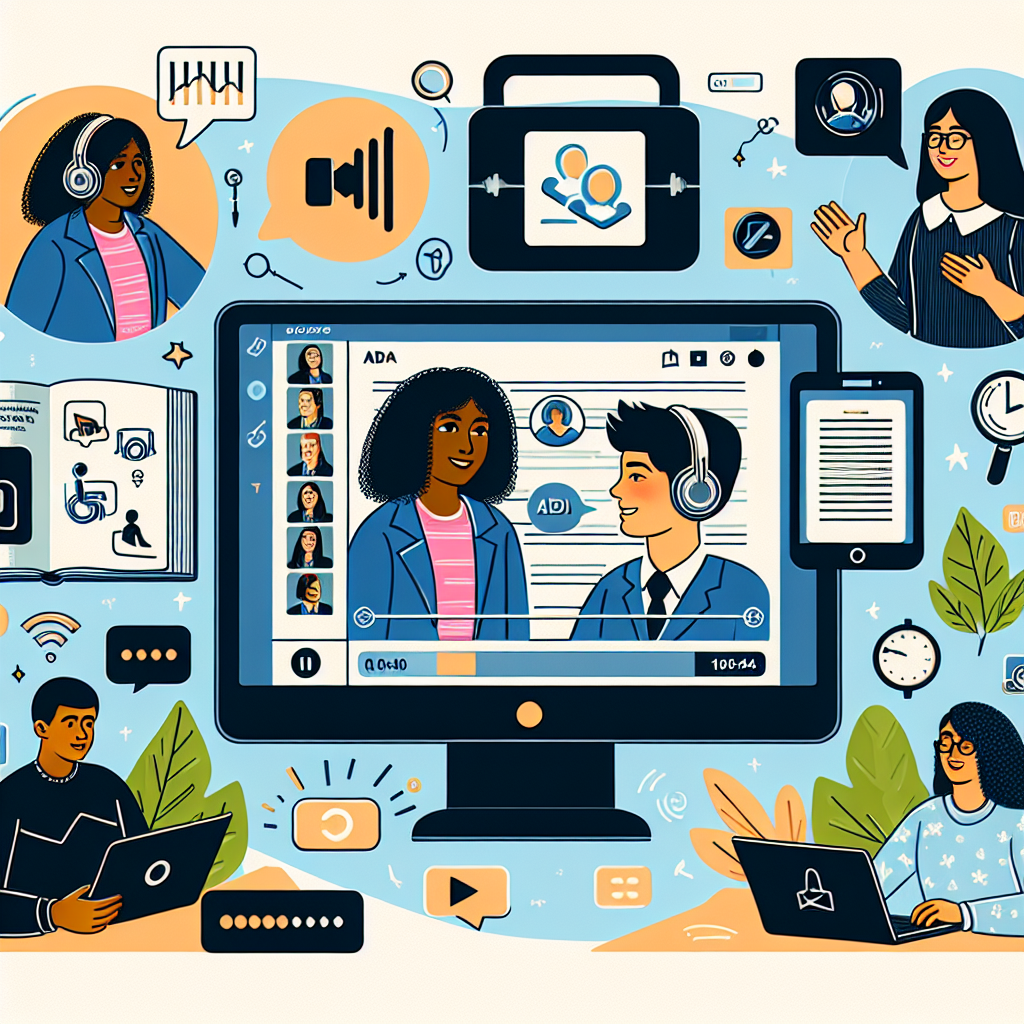
As the demand for online education grows, technological innovations play a pivotal role in supporting ADA compliance. Educational technology companies are increasingly developing tools designed specifically to enhance accessibility. Solutions such as Learning Management Systems (LMS) now often come equipped with ADA-compliant features, easing the burden on institutions to independently implement accessibility solutions.
Assistive technologies continue to advance, improving how individuals with disabilities interact with educational content. Screen readers, speech-to-text applications, and adaptive keyboard devices are becoming more sophisticated, providing seamless user experiences for students with disabilities. Additionally, AI-driven tools are emerging as formidable allies, offering automatic captioning and transcriptions, enhancing the accessibility of video content.
These technologies not only serve compliance but also significantly enrich the learning experience for all students. By embracing these innovations, educators ensure that all students can benefit from online education’s vast potential, eliminating barriers that might otherwise impede their academic success.
The Role of Educators and Institutions
Educators and institutions play a fundamental role in the effective implementation of ADA standards in online education. Their understanding and commitment to accessibility can greatly influence the educational outcomes for students with disabilities. Educators are encouraged to undergo training that enhances their ability to create and deliver accessible content.
Institutions are urged to establish a robust framework to support educators in these endeavors. This includes providing resources, tools, and professional development opportunities focused on accessibility. By cultivating a culture of inclusivity and accessibility, institutions demonstrate a commitment to equity, aligning with ADA values and principles.
Moreover, institutions can foster a collaborative approach by engaging with students with disabilities, seeking their input on accessibility needs, and incorporating feedback into their digital strategies. This participatory approach ensures that ADA compliance efforts resonate with the actual experiences and challenges faced by disabled students.
Best Practices for Ensuring ADA Compliance in Online Education
To effectively ensure ADA compliance in online education, institutions can adopt several best practices. First and foremost, accessibility must be integrated into the design and development phase of online courses. By emphasizing accessibility from the outset, institutions avoid the pitfalls of retrofitting, which can be costly and less effective.
Regular audits and assessments of digital content and platforms are indispensable. These assessments help identify potential accessibility barriers and guide necessary adjustments. Moreover, continuous feedback loops involving students and educators can inform ongoing improvements and innovations in accessibility strategies.
Institutions should also prioritize transparency, openly communicating their commitment to accessibility and the measures taken in this regard. By doing so, they not only meet ADA requirements but also cultivate trust and inclusivity within their learner communities. Finally, investing in collaborations with experts in digital accessibility ensures that institutions remain at the forefront of compliance and innovation.
Conclusion
As online education continues to expand its reach, ensuring accessibility for disabled students is more important than ever. Recent updates to the ADA underscore the necessity of fostering inclusive educational environments that accommodate the diverse needs of all students. Institutions and educators must proactively engage with ADA guidelines and technological innovations, embracing their legal and ethical responsibilities in this digital era.
By prioritizing accessibility, educational institutions not only adhere to legal compliance but also enrich the educational experience for everyone. This commitment ensures that online education remains a transformative and empowering tool for learning, breaking down barriers and opening doors of opportunity for all students, regardless of their abilities.
Frequently Asked Questions
1. What are ADA updates and why are they important for online education?
The Americans with Disabilities Act (ADA) ensures that individuals with disabilities have equal access to all aspects of society, including education. In the context of online education, ADA updates are crucial because they adapt the guidelines to reflect technological advancements and the growing prevalence of digital learning platforms. These updates are important as they mandate that online education providers implement accessible design principles. This means ensuring that content is perceivable, operable, understandable, and robust for all users, regardless of their abilities. By reinforcing these guidelines, the ADA helps eliminate barriers that students with disabilities might face, allowing them to participate fully alongside their peers. Failure to adhere to these standards might not only lead to legal ramifications but can also alienate a segment of potential learners who are eager to participate in digital education.
2. How do ADA updates specifically impact the design of online courses?
ADA updates impact online course design by promoting a more inclusive framework. Course developers must ensure that their resources comply with specific accessibility criteria, such as providing alt text for images, ensuring that videos have accurate captions, and designing interfaces that are navigable by keyboard alone for those unable to use a mouse. Additionally, course layouts should accommodate assistive technologies like screen readers. All text should have a readable font size and contrast level for those with visual impairments. Furthermore, interactive elements must be straightforward and instructions clear to aid learners with cognitive disabilities. These measures not only support inclusivity but also enhance the overall user experience, making courses more engaging and effective for everyone.
3. What are some common challenges educators face when implementing ADA updates in online education?
Educators often encounter several challenges when integrating ADA updates into online education. One of the primary issues is the lack of awareness or understanding of accessibility guidelines and how to apply them effectively. This knowledge gap can lead to unintentional oversight of key accessibility features. Additionally, some educators may face budgetary constraints or limited technical resources to implement necessary accommodations such as professional captioning services or acquiring consultation from accessibility experts. There’s also the challenge of retrofitting older content to adhere to new standards, which can be a time-consuming and technically demanding process. Lastly, keeping up with the continuous evolution of technology and corresponding ADA updates can be daunting, requiring ongoing training and education for educators and course developers alike.
4. How can online education institutions benefit from adopting ADA updates?
Adopting ADA updates provides numerous benefits for online education institutions. Primarily, it aligns them with legal requirements, minimizing the risk of potential lawsuits and penalties associated with non-compliance. Beyond legal compliance, embracing accessibility leads to a broader reach, allowing institutions to cater to a more diverse student body, including learners with disabilities. This inclusivity can enhance the institution’s reputation as a progressive and equitable learning environment. Furthermore, accessible design principles often lead to improvements in the overall quality of educational content. For instance, videos with captions not only assist those with hearing impairments but can also aid in comprehension and engagement for all students. Such enhancements can improve student retention and satisfaction, ultimately benefiting the institution’s educational outcomes and credibility.
5. What steps can educators take to ensure their online courses comply with ADA guidelines?
Educators can take several proactive steps to ensure their online courses comply with ADA guidelines. First, they should familiarize themselves with the Web Content Accessibility Guidelines (WCAG), which provide a comprehensive framework for making digital content accessible. Educators should strive to create content that is perceivable, operable, understandable, and robust. This involves using clear, simple language, offering text alternatives for visual material, and ensuring all content is compatible with assistive technologies. Secondly, regular training and workshops on accessibility can help educators stay updated with the latest ADA requirements. Conducting accessibility audits and testing courses with real users can identify potential issues before they impact students. Additionally, collaborating with instructional designers and accessibility experts can provide valuable insights and support. Lastly, maintaining an open feedback loop with students can lead to timely improvements and adjustments, ensuring courses remain accessible and user-friendly. Through these efforts, educators not only meet ADA standards but also demonstrate a commitment to providing an inclusive learning environment for all students.