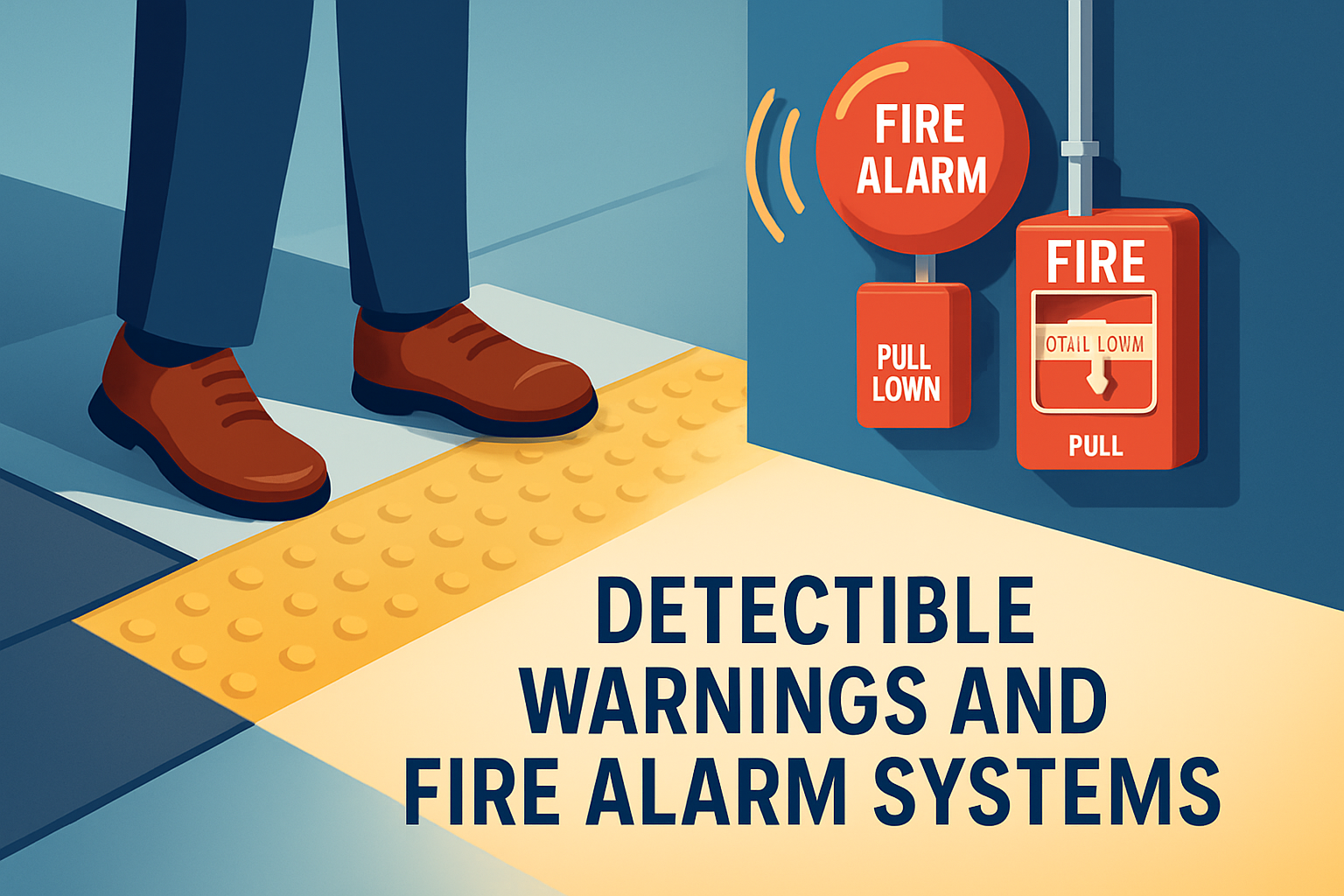
Introduction to Detectible Warnings and Fire Alarm Systems
Detectible warnings and fire alarm systems play crucial roles in ensuring safety and accessibility in our built environments. Detectible warnings are standardized surface features that alert visually impaired individuals of imminent hazards, aiding their navigation in public spaces. In contrast, fire alarm systems provide early warnings of fire hazards, ensuring safe and timely evacuation from buildings. Understanding these systems’ significance is vital as they prioritize public safety and accessibility in both architectural design and urban planning.
Detectible warnings primarily consist of tactile surfaces featured at the edge of roadways, on transit platforms, or near dangerous drop-offs. Required by the Americans with Disabilities Act (ADA), these warnings help visually impaired individuals discern changes in the environment, enabling them to navigate safely. Fire alarm systems, meanwhile, are a fundamental feature of any building’s emergency preparedness protocol. These systems include smoke detectors, manual pull stations, and audible and visual alarms designed to alert occupants promptly to evacuate or take necessary action during fire-related emergencies.
The importance of understanding and properly implementing both detectible warnings and fire alarm systems cannot be overstated. These features mitigate risks of accidents and injuries, conform to legal standards, and enhance public safety and welfare. They are especially crucial in public buildings, transportation systems, and areas with significant human traffic. As an architect, building manager, or policy-maker, effectively integrating these systems represents a commitment to inclusivity and safety.
Component Parts of Detectible Warnings and Their Implementation
Detectible warnings, also known as tactile paving, encompass a variety of features to aid visually impaired individuals. Their primary component is raised truncated domes, typically arranged in a grid pattern. These domes serve as a tactile cue to alert pedestrians to curb edges, transit platform edges, and other potential hazards.
In urban environments, these warnings are commonly found at the ends of sidewalks or transit platforms. The tactile feedback received by a cane or foot differentiates the warning surface from regular pavements, thus providing crucial navigational information. For example, on a busy New York City street, detectible warnings alert pedestrians of the approach to intersections, providing critical cues for crossing safely.
These surfaces must adhere to stringent standards. The ADA mandates a specific dome size, spacing, and height to ensure they are universally perceivable. Moreover, the contrast in color between the detectible warning surface and the surrounding ground further enhances visibility for partially sighted individuals. In implementing these systems, careful attention must be paid to local regulations and environmental conditions to ensure effectiveness and durability.
Real-World Applications and Importance of Fire Alarm Systems
Fire alarm systems are versatile, comprising several key components that work collectively to detect and alert building occupants of any fire hazards. Smoke detectors act as the first line of defense, sensing smoke before a fire becomes uncontrollable. Manual pull stations allow individuals to alert building occupants to a fire emergency manually.
Visual and audible alarms, typically consisting of strobe lights and loud sirens, ensure all building occupants, including those with sensory impairments, can receive the alarm signal. For instance, the fire alarm system in a high-rise building in downtown Chicago is equipped with interconnected alarms that provide immediate alerts across all floors, ensuring timely evacuation and minimizing chaos during a fire outbreak.
Fire alarm systems are critical in reducing fire-related casualties and damage. In commercial settings, advanced systems can relay information directly to fire departments, expediting emergency response times. Regular maintenance and testing of these systems are essential to ensure reliability during an emergency. Building codes generally require regular testing and the installation of fire alarms, emphasizing their pivotal role in public safety.
The Interconnection Between Detectible Warnings and Fire Alarm Systems
While detectible warnings and fire alarm systems serve distinct purposes, their integration enhances overall safety in public spaces. Detectible warnings ensure safe navigation for everyone, including during evacuations prompted by fire alarms. By combining these systems, urban planners and architects can create environments that are both accessible and secure.
Consider a scenario in a university campus building: detectible warnings guide a visually impaired student safely to an exit while a fire alarm system alerts others to evacuate. This interconnectedness provides a comprehensive safety solution catering to diverse needs.
- Detectible warnings offer tactile cues for hazard identification.
- Fire alarm systems provide early alerts, facilitating quick evacuations.
- Together, they enhance a building’s overall safety infrastructure.
Ultimately, the design and implementation of both systems should consider factors such as building layout, occupant demographics, and local safety regulations to optimize effectiveness and ensure comprehensive safety measures are in place.
Challenges in Implementing Detectible Warnings and Fire Alarm Systems
Despite their importance, several challenges can arise when implementing detectible warnings and fire alarm systems. Compliance with regulatory standards, technical complexities, and budget constraints are common challenges in both domains.
For detectible warnings, ensuring compliance with ADA standards is paramount, requiring precise installation practices and materials that withstand environmental factors. For fire alarm systems, intricate wiring and integration with other safety systems necessitate expert installation to achieve functionality across varied building layouts.
For example, in the renovation of historical buildings, installing fire alarm systems can involve logistical challenges due to architectural constraints. Similarly, the retrofitting of detectible warnings into existing infrastructure without disrupting existing traffic patterns or pedestrian pathways requires meticulous planning.
| Challenge | Detectible Warnings | Fire Alarm Systems |
|---|---|---|
| Regulatory Compliance | ADA Standards | Building Codes |
| Installation Complexity | Environmental Durability | System Integration |
| Budget Constraints | Cost of Materials | Advanced Technology Costs |
Addressing these challenges typically requires coordination among designers, architects, engineers, and regulatory bodies to ensure both systems efficiently uphold safety standards while customizing their implementation to suit specific sites and budgets.
Conclusion and Next Steps
Detectible warnings and fire alarm systems are integral components in constructing environments that prioritize safety and accessibility. These systems highlight the commitment of builders and designers to creating spaces that cater to the diverse needs of society. Detectible warnings offer vital navigational aids for the visually impaired, while fire alarm systems ensure timely warnings and safe evacuations.
To maximize the effectiveness of these systems, stakeholders must adhere to regulatory standards, address challenges associated with implementation, and continuously seek advancements in technology that enhance safety features. It is paramount to engage experienced professionals to customize these systems, ensuring they perform optimally in a given setting.
Readers, whether involved in construction, urban planning, or public policy, should prioritize the incorporation of both detectible warnings and fire alarm systems in their designs and consider these features fundamental to any development project. By doing so, they significantly contribute to creating inclusive and secure environments for everyone.
Initiate a review of your existing safety measures by consulting experts who can assess current installations and recommend updates or additions where needed. Together, we can build safer communities prepared for unexpected hazards.
Frequently Asked Questions
1. What are detectible warnings, and why are they important?
Detectible warnings are textured surface features found in public spaces to alert individuals who are visually impaired of potential hazards ahead. They are often seen as raised, truncated domes, usually laid out on the edges of sidewalks, train platforms, and other transitional spaces. These surface changes are easily perceptible by cane or underfoot, serving as a crucial navigational aid.
The importance of detectible warnings cannot be overstated. They enhance accessibility, allowing visually impaired pedestrians to navigate urban environments with greater independence and safety. By clearly indicating hazards or changes in walking conditions, detectible warnings prevent accidents and facilitate a more inclusive public space for all members of society.
2. How do fire alarm systems work, and what are their key components?
Fire alarm systems are designed to detect fire hazards at an early stage. They operate by monitoring environmental changes associated with combustion. The key components of a standard fire alarm system include:
- Sensors/Detectors: These are sensitive to smoke, heat, or carbon monoxide, depending on their specific type, and transmit signals to the control panel if anomalies are detected.
- Control Panel: Acts as the system’s brain, receiving information from detectors and triggering alarm devices if a potential fire is detected.
- Alarm Devices: These include bells, sirens, and flashing lights that alert occupants to evacuate the premises.
- Manual Pull Stations: Allow building occupants to manually trigger the alarm in case of fire, ensuring quick response even if detectors fail.
Fire alarm systems are crucial for ensuring timely evacuation and potentially saving lives by providing an early warning, allowing occupants to exit the building before conditions become too dangerous.
3. How should public spaces implement detectible warnings?
To effectively implement detectible warnings in public spaces, it is essential to follow guidelines and regulations, often provided by accessibility standards like the Americans with Disabilities Act (ADA). These guidelines stipulate specific dimensions, colors, and placements:
- Placement: Detectible warnings should be placed at the edge of sidewalks, the start of ramps, and other areas where they can alert pedestrians about transitions or hazards.
- Size and Pattern: Usually, warnings are made up of an array of high-contrast tactile bumps or truncated domes laid out to be detectable to touch and textured notice.
- Color Contrast: The color of detectible warnings should contrast with the surrounding surface to be easily noticeable, especially by those with partial sight.
By following these implementation protocols, public spaces can offer maximum utility and safety, ensuring accessibility for all users.
4. What maintenance is necessary for fire alarm systems to ensure they function properly?
Regular maintenance of fire alarm systems is critical to ensuring they perform optimally when needed. This involves a combination of regular testing, inspection, and replacement of parts:
- Testing: Fire alarms should be tested at least monthly. This ensures that the sensors are functioning and that the alarm can be triggered soundly.
- Inspection: A thorough annual inspection by a qualified technician involves checking all system components, including the alarms, detectors, control panel, and power sources.
- Replacement and Repairs: Detectors have a lifespan and should be replaced every 10 years as a standard guideline. Any faulty parts identified during inspections should be repaired or replaced immediately.
- Battery Checks: If the system components run on batteries, regular checks and replacement of these batteries are necessary.
Such diligent maintenance ensures that the system remains reliable and minimizes the risk of malfunction during an actual emergency.
5. Are there any specific regulatory standards for detectible warnings and fire alarm systems?
Yes, both detectible warnings and fire alarm systems are governed by specific regulatory standards to ensure their effectiveness and safety. For detectible warnings, The Americans with Disabilities Act (ADA) in the United States provides a set of regulations that dictate the proper placement, size, and visibility for elements designed to aid those with visual impairments.
Similarly, fire alarm systems are subject to numerous standards, including those set by the National Fire Protection Association (NFPA). NFPA 72, known as the National Fire Alarm and Signaling Code, is a comprehensive guideline that covers all aspects of fire alarm systems, from design and installation to testing and maintenance.
Compliance with these standards is not only required by law in many jurisdictions but also provides peace of mind that these systems will function correctly to protect lives and property, supporting overall public safety and accessibility.