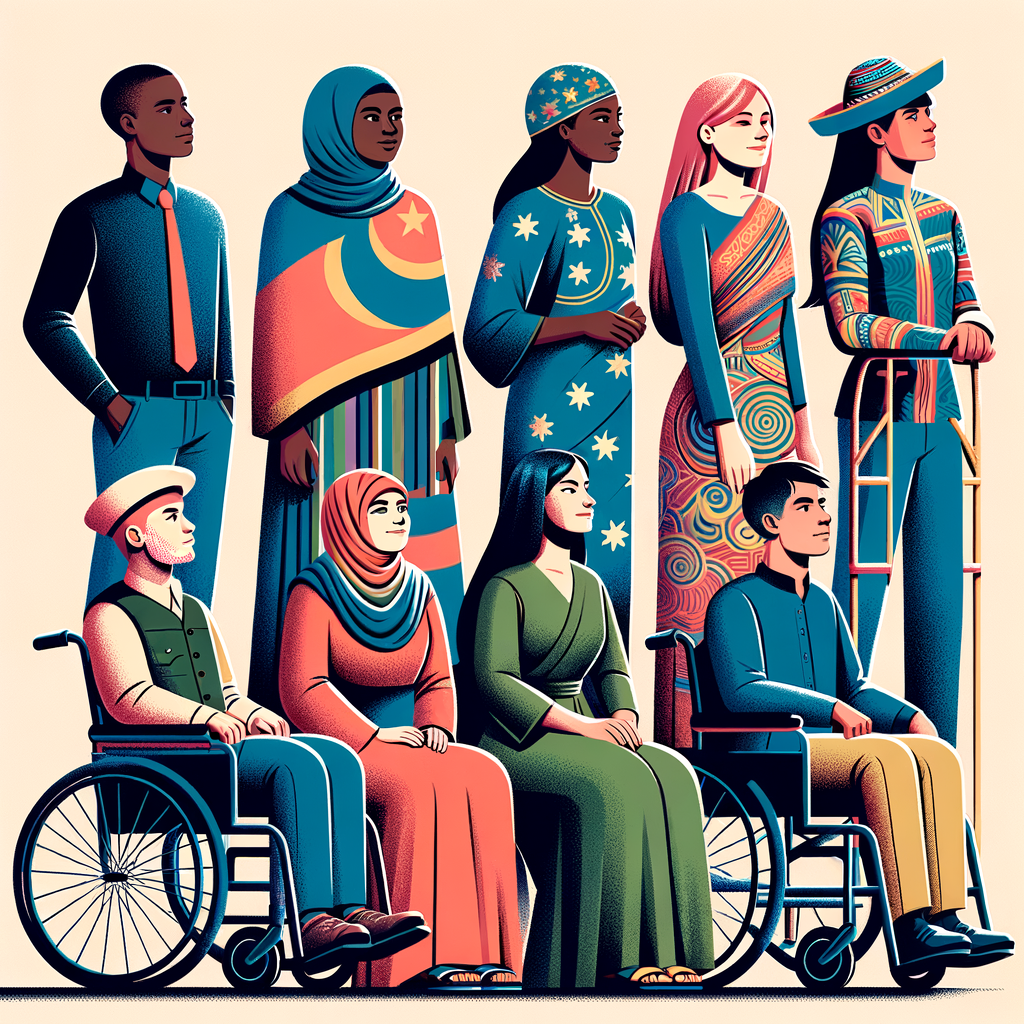
In today’s interconnected world, understanding the diverse cultural perspectives on disability is crucial for fostering inclusivity and empathy. Disability, defined as a physical or mental condition that limits a person’s movements, senses, or activities, is perceived and addressed differently across the globe. The ways in which societies interpret disability can deeply influence their policies, social integration, and the daily lives of individuals. By exploring these perspectives, we can gain insights into how different cultures support or hinder the inclusion of individuals with disabilities, ultimately leading to more informed and compassionate global attitudes.
The Western Approach to Disability: Moving Towards Inclusion
In many Western countries, especially the United States and parts of Europe, disability is increasingly viewed through the lens of human rights and inclusivity. The focus is on providing equal opportunities and access for all individuals, regardless of their abilities. An example of this approach can be seen in the United States’ Americans with Disabilities Act (ADA) of 1990, which prohibits discrimination against individuals with disabilities in all areas of public life, including jobs, schools, transportation, and all public and private places open to the general public.
The emphasis in these regions is on enabling individuals with disabilities to participate fully in society. This is achieved through legislation, technological assistive devices, and inclusive education systems. The goal is to minimize barriers, both physical and social, thereby empowering individuals with disabilities to live more independently.
- Emphasis on equal access and non-discrimination
- Legislation such as the Americans with Disabilities Act
- Use of technology to support independent living
- Inclusive education models
Asia: Balancing Tradition and Modernization
In several Asian countries, traditional attitudes towards disability, often influenced by religious beliefs and historical contexts, coexist with modern efforts to promote inclusivity. In countries like Japan, disability is sometimes seen as a personal tragedy that brings shame to the family, a belief rooted in certain cultural and historical narratives. However, Japan is also making strides toward inclusivity by developing accessible public transportation and promoting disability awareness through media campaigns.
Similarly, in India, while traditional views can often stigmatize disability, there is a growing movement for empowerment and legal advocacy. The Rights of Persons with Disabilities Act, passed in 2016, aims to ensure equality and non-discrimination. This legislation supports the advancement of various support systems and educational reforms, seeking to change societal perceptions and dismantle outdated stigmas.
- Coexistence of traditional beliefs and modern inclusivity efforts
- Efforts to increase accessibility in urban planning
- Growing legislative frameworks supporting equality
- Media’s role in changing public perceptions
African Perspectives: Community Backbone and Challenges
In many African countries, cultural perspectives on disability can vary significantly from one region to another. Often, community plays a significant role in the support system for individuals with disabilities. In places where formal infrastructure is lacking, community networks are essential. For example, in Uganda, grassroots organizations like the National Union of Women with Disabilities of Uganda (NUWODU) work to empower women with disabilities, advocating for their rights and fostering community support.
However, these communities face numerous challenges, including inadequate healthcare, limited access to education, and low economic opportunities for individuals with disabilities. Cultural beliefs can sometimes hinder progress, as disabilities are occasionally viewed as the result of curses or divine punishment. Efforts focusing on education and challenging misconceptions are gradually leading to better understanding and acceptance.
- Strong community networks supporting individuals
- Challenges include healthcare, education, and economic opportunities
- Grassroots organizations advocating for change
- Cultural beliefs impacting perceptions
The Scandinavian Model: Comprehensive Welfare and Integration
Scandinavian countries like Sweden, Norway, and Denmark are often cited as exemplary in their approach to disability, due to robust welfare systems and inclusive policies. These countries emphasize not only the rights of individuals with disabilities but also their integration into all facets of life. The focus is on universal design principles, which ensure that environments and products are accessible to all people to the greatest extent possible.
In Sweden, the Swedish Discrimination Act includes direct support measures for people with disabilities to ensure equal opportunities. This is complemented by a strong emphasis on educational inclusion, where students with disabilities are integrated into regular classrooms, supported by specialized staff as needed. The model highlights the importance of systemic support to ensure practical inclusion at all levels of society.
- Universal design principles for accessibility
- Strong welfare systems supporting individuals
- Focus on integration in education
- Legislation promoting equality and inclusion
Latin America: Progress Amidst Socioeconomic Challenges
In Latin American countries, addressing disability often involves overcoming significant socioeconomic barriers. Some nations, like Brazil, have enacted progressive laws to support individuals with disabilities. The Brazilian Law of Inclusion, also known as the LBI, aims to promote the rights and fundamental freedoms of people with disabilities and their social inclusion and citizenship.
Despite such legislation, challenges remain due to economic disparities and varied implementation across regions. Many individuals with disabilities face barriers in education and employment. However, social movements and advocacy groups are increasingly active in raising awareness and pushing for policy changes that support more inclusive environments.
- Legal frameworks like Brazil’s LBI support inclusion
- Economic disparities impact implementation
- Growing social movements advocating for rights
- Challenges in education and employment access
Middle Eastern Outlook: Bridging Tradition and Modern Perspectives
In the Middle East, perspectives on disability are complex and often influenced by religious beliefs and traditional values. Historically, disability might have been viewed through a charity model, where individuals with disabilities often rely on family support. However, modern shifts are evident in countries such as the United Arab Emirates, where disability is increasingly seen as a social issue needing governmental support and systemic intervention.
The UAE has been proactive in creating accessible environments and promoting awareness through campaigns and dedicated policies, such as the ‘National Policy for Empowering People with Disabilities’. These efforts aim to transform Dubai into a disability-friendly city by 2020 and beyond, showcasing a blend of respecting traditions while embracing modern inclusive practices.
- Influence of religion and tradition on perspectives
- Trend towards governmental support and policies
- Efforts to create accessible urban environments
- Rising awareness and inclusion campaigns
Concluding Reflections and Path Forward
As we’ve explored, cultural perspectives on disability are nuanced and shaped by historical, religious, and socio-economic factors unique to each region. Despite these differences, a global trend towards inclusivity and equal rights for individuals with disabilities is apparent. This growing awareness results in more supportive policies, community initiatives, and wider social acceptance.
The importance of understanding these varied perspectives cannot be understated. For global citizens, businesses, and policymakers, recognizing and respecting cultural differences in addressing disability can lead to more effective strategies in promoting international inclusivity. As a call to action, it’s crucial to continue advocating for inclusive policies, support grassroots organizations, and engage in cross-cultural dialogues to enhance living conditions for individuals with disabilities worldwide.
By fostering these global exchanges and learning from diverse cultural practices, the dream of a world respectful of all individuals, regardless of their abilities, becomes a tangible reality. Let this knowledge empower each of us to take active steps in advocating for change within our communities and beyond.
Frequently Asked Questions
1. How do different cultural perspectives on disability influence policy-making around the world?
When we start talking about cultural perspectives on disability, what’s often overlooked is just how much these views can shape and influence public policy. In many countries, culture is the backbone that frames policy-making processes, directly affecting legislation related to disability rights, accessibility, and integration into society. For instance, in countries where disabilities might be perceived as a form of divine will or karmic balance, such as seen in parts of South Asia, there might be less governmental momentum towards creating robust, inclusive infrastructure or welfare systems. Conversely, in nations where disability is approached as a societal challenge rather than an individual misfortune, government policies might focus on promoting inclusivity and accessibility comprehensively, as is often the case in many Western countries. These cultural underpinnings, therefore, become critical in determining how much resources and effort are invested in disability rights, which ultimately shapes the everyday life of individuals facing disabilities. From inclusive education systems to workplace adaptations, understanding these cultural influences can provide insights into global disparities in disability policy-making.
2. What are some examples of how disability is perceived and managed in Asia compared to Western countries?
Diving into specific geographical comparisons, cultural perspectives in Asia can starkly contrast with those in Western countries regarding disability. For example, in Japan, there’s an inherent cultural emphasis on harmony and social hierarchy, which often translates into strategies that focus on accommodating individuals with disabilities without disrupting societal norms. In practice, this might mean society often expects individuals with disabilities to conform to existing systems, rather than systems being adapted around them. Meanwhile, in Western societies like the United States or parts of Europe, the general perspective frames disability through a lens of human rights, emphasizing accommodation and adaptability. This mindset leads to proactive policies mandating physical accessibility in public spaces, anti-discrimination laws in employment, and significant investments in assistive technology. Another contrasting point is the societal stigma associated with disabilities; in many Asian contexts, persons with disabilities may experience stronger social exclusion, influenced by traditional values. In Western societies, however, there’s an increasing push towards celebrating diversity and inclusion, even within prime-time media representation.
3. In what ways do religious beliefs impact the cultural views on disability?
Religion often acts as a cultural compass that shapes moral and ethical norms within societies, including views on disability. In Christianity, for many, disability may be perceived as an opportunity for expressing compassion and charity, framing those with disabilities as being closer to the divine. This belief can instigate both positive support and charity drives as well as unintended social segregation based on pity. In contrast, Hinduism may regard disability from a karmic perspective, seen as a consequence of actions in past lives, resulting in both stigmatization and a sense of philosophical acceptance. The implications of these views manifest in how communities engage with and support individuals facing disabilities—whether through structured religious-based organizations or through culturally induced informal community support systems. Understanding these religious influences provides us with a deeper awareness of how acceptance, inclusion, or exclusion is organically nurtured within communities worldwide.
4. How do traditional and indigenous cultures view and treat disabilities?
Traditional and indigenous cultures hold a wealth of varied perspectives towards disability that are greatly tied to their unique histories and spiritual views. In some indigenous communities, individuals with disabilities might be viewed as having special spiritual connections or possessing unique insights, often holding respected positions as healers or visionaries. For example, certain Native American tribes may consider individuals with disabilities to be integral, knowledgeable keepers of tradition and history. However, not all traditional contexts are so positive. In some African traditional contexts, disabilities might be linked to spiritual afflictions or bad omens, leading to stigmatization or exclusion. Family structures might come into play significantly here, where the responsibility and decision-making about care and social engagement is approached collectively rather than individually. Gathering insights into these diverse cultural narratives offers a pivotal understanding of how integration, care, and the dignity of individuals with disabilities can be addressed in a culturally sensitive manner.
5. How can understanding these diverse cultural perspectives help us promote inclusivity and better policies worldwide?
Grasping the plethora of cultural perspectives on disability equips us with the foundational knowledge needed to craft more empathetic, comprehensive, and tailored solutions to disability challenges globally. When we understand how different societies view disability, we can bridge gaps between policy frameworks and individual experiences, ensuring that international aid, partnerships, and policymaking aren’t exclusively Western-centric but celebrate diversity and address actual needs across cultures. It also means recognizing the value of local knowledge and cultural nuances when developing programs aimed at enhancing the inclusion of individuals with disabilities. By respecting and incorporating cultural perspectives, policymakers and advocates are better positioned to foster environments where everyone’s rights and needs are met, and where differences are viewed as an asset rather than an obstacle. Furthermore, this understanding encourages cross-cultural collaborations and sharing of best practices, leading to a more inclusive future where societies worldwide benefit from a holistic embrace of diversity.