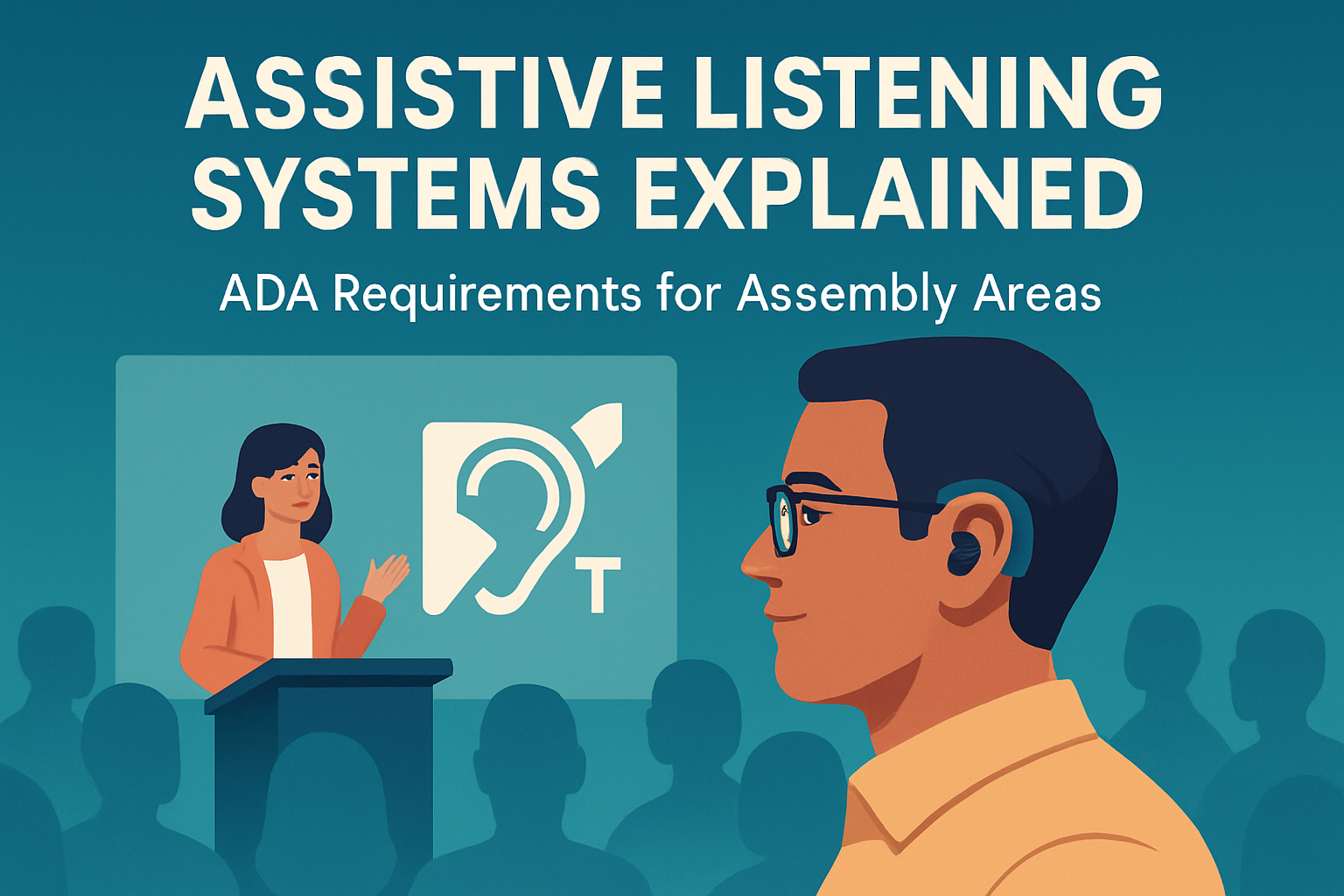
Introduction to Assistive Listening Systems and the ADA Requirements
In today’s diverse and inclusive society, accessibility has become a vital concern, particularly in assembly areas where events, performances, or public gatherings take place. One critical aspect of accessibility is ensuring that individuals with hearing impairments can participate and engage fully. Assistive Listening Systems (ALS) are technological solutions designed to address this need, making auditory information more accessible to everyone, regardless of hearing ability.
Assistive Listening Systems refer to technologies that amplify and transmit sound directly to personal hearing aids, cochlear implants, or specialized receivers, thereby reducing background noise and enhancing sound clarity. These systems are essential in settings such as theaters, lecture halls, stadiums, and places of worship. The Americans with Disabilities Act (ADA), a landmark piece of civil rights legislation, imposes specific requirements for assistive listening in assembly areas to ensure equal access for individuals with hearing loss.
Understanding and implementing ADA requirements for ALS is crucial for building operators, event planners, and accessibility advocates. It ensures compliance with federal law, demonstrates a commitment to inclusivity, and enhances the overall experience for all attendees. In this article, we will explore what ALS entails, the ADA mandates associated with it, and practical guidance on how to meet these requirements effectively.
The Foundations of Assistive Listening Systems
Assistive Listening Systems, as defined, are designed to bridge the gap for those with hearing impairments in public venues. Understanding how these systems work is the first step toward implementing them successfully. ALS typically consists of a transmitter that picks up sound through microphones and sends it via radio waves or infrared signals to a receiver used by the listener.
- FM Systems: These systems use frequency modulation to transmit sound directly to listeners. They provide high-quality audio and are effective in environments with a lot of background noise.
- Infrared Systems: Utilizing light waves, these systems offer privacy as the signals don’t pass through walls, making them suitable for sensitive locations like courthouses.
- Induction Loop Systems: Popular in Europe, these systems use electromagnetic fields to transmit sound, which can be received by hearing aids equipped with a T-coil.
For instance, a large state university installed an induction loop system in its main auditorium. This setup significantly improved audio clarity for hearing-aid users, allowing students with hearing impairments to participate more fully in lectures and conferences. Understanding these systems’ components and functionalities aids venue operators in choosing the best options for their specific environments.
Understanding ADA Requirements for ALS in Assembly Areas
The ADA establishes clear guidelines for accessibility in assembly areas, which include specific provisions for installing and maintaining ALS. According to ADA regulations, venues accommodating 50 or more fixed seats must provide a certain number of assistive listening systems. This requirement is tiered based on seating capacity, ensuring proportional availability.
The emphasis is on ensuring that individuals with hearing disabilities receive the same level of service as those without. The system requirements outlined by the ADA focus not only on quantity but also on quality and availability. For example, in a community theater seating 150 patrons, the ADA mandates a minimum of two ALS receivers equipped with neck loops for those without hearing aids.
| Seating Capacity | Minimum ALS Receivers Required |
|---|---|
| 50-200 | 2+Neckloops |
| 201-500 | 4+Neckloops |
| 501-1000 | 8+Neckloops |
| 1001+ | 1% of Total Seats |
This table illustrates the ADA’s requirements for ALS implementation based on different seating capacities. Compliance not only involves the installation of these systems but also includes maintaining them in good working order and ensuring they are available upon request.
Implementation Strategies for Compliance with ADA Requirements
To comply with ADA requirements, implementing ALS within assembly areas requires a strategic approach. This involves assessing the venue’s acoustical challenges, system selection, and stakeholder engagement. Venue operators often start by consulting with accessibility experts and audiologists to determine the best ALS type for their needs.
Consider the example of a historic church that needed to balance preservation concerns with modern accessibility standards. By opting for a cutting-edge infrared system, they maintained the church’s aesthetic while ensuring services were accessible to hearing-impaired congregants.
Furthermore, staff training is an integral part of successful ALS implementation. Staff need to know how to operate the systems, assist patrons in using them, and handle equipment maintenance. For a streamlined process, many venues implement signage and information points where users can easily access ALS devices or seek assistance.
The Benefits of Proper ALS Implementation
The successful implementation of Assistive Listening Systems goes beyond mere compliance. It fosters inclusivity, enhances user experience, boosts community participation, and demonstrates an organization’s commitment to accessibility. Patrons who previously faced barriers can now enjoy performances or participate in discussions on equal footing with others.
In addition to meeting legal obligations, having ALS in place can significantly enhance the reputation of a venue. For example, a local cinema that installed a state-of-the-art FM system reported increased attendance and positive feedback from audiences with hearing impairments. This system not only improved customer satisfaction but also attracted a new demographic of patrons.
The integration of ALS contributes to broader societal goals of inclusivity and equal access, ensuring that everyone has the opportunity to participate in community life fully.
Conclusion: Key Takeaways and Action Steps
Assistive Listening Systems serve a crucial function in making assembly areas accessible to individuals with hearing impairments. Understanding the types of ALS available, the ADA requirements, and the strategies for implementation empowers organizations to take meaningful steps towards compliance and inclusivity.
Key takeaways from implementing ADA-compliant ALS include improved accessibility for all attendees, enhanced reputation and community image, and compliance with federal law. These benefits highlight the importance of integrating ALS into venues high on accessibility agendas.
For those responsible for public venues, the next step involves evaluating your current facilities, consulting with ALS professionals, and mapping out a plan to integrate assistive listening solutions. By taking proactive measures to improve accessibility, you not only ensure compliance but also enrich the experience of all visitors, fostering an environment that values and supports diversity and inclusion.
Don’t wait until non-compliance becomes an issue. Actively invest in assistive listening systems today and join the movement towards a more inclusive future.
Frequently Asked Questions
1. What are Assistive Listening Systems and why are they important in assembly areas?
Assistive Listening Systems (ALS) are technological solutions that enhance audio accessibility for individuals with hearing impairments, particularly in assembly areas where amplified sound is used, such as theaters, lecture halls, and conference rooms. They work by transmitting sound through specific channels directly to a listener’s personal receiving device, such as a hearing aid or a headset. ALS are essential because they help bridge the gap for individuals who may struggle to hear clearly in large, noise-ridden, or echo-heavy spaces, ensuring that everyone, regardless of their hearing abilities, can fully participate in and enjoy public events and performances. By implementing ALS, venues not only comply with the Americans with Disabilities Act (ADA), which mandates accessibility in public spaces but also demonstrate a commitment to inclusivity and equal access.
2. What specific ADA requirements must assembly areas meet regarding Assistive Listening Systems?
The Americans with Disabilities Act (ADA) outlines specific requirements for assembly areas to ensure they are accessible to individuals with hearing impairments. These requirements include the obligation to provide ALS in venues with fixed seating and an audio amplification system. The number of ALS receivers available must be based on the seating capacity, with a minimum percentage set to cater to individuals with hearing difficulties. For example, in a venue with a seating capacity of up to 50, at least two ALS receivers should be provided. Venues must also ensure a portion of these receivers are hearing aid-compatible. Additionally, the ALS devices should be easily accessible, and signage indicating the availability of ALS must be prominently displayed. Meeting these ADA requirements helps ensure that individuals with hearing impairments are not excluded from full participation in public events and gatherings.
3. How do Assistive Listening Systems work in practice, and what are the different types available?
Assistive Listening Systems operate by transmitting audio signals directly to personal hearing devices, bypassing ambient noise and minimizing sound distortion. This improves clarity and enables individuals with hearing impairments to engage more effectively with the content. There are several types of ALS, each employing different technologies:
– **Induction loop systems (hearing loops):** Utilize a wire loop installed around the area to transmit sound electromagnetically to hearing aids equipped with T-coils.
– **Infrared systems:** Transmit sound via infrared light waves, suitable for venues requiring privacy, as the signal doesn’t pass through walls.
– **Frequency modulation (FM) systems:** Use radio waves to send sound to individual receivers, effective in both indoor and outdoor settings.
Each system type has specific advantages based on the venue’s acoustics, size, and privacy requirements.
4. What challenges or considerations should venues keep in mind when implementing ALS according to ADA guidelines?
While implementing ALS fulfills a vital aspect of accessibility, there are challenges and considerations to address, aligning with ADA guidelines. First, venues must analyze their specific acoustical environment and choose an ALS type that offers the best performance. Consideration of the ambient noise levels, potential interference, and whether the usage scenario is indoors or outdoors should guide the selection process. Additionally, training staff to operate ALS equipment and guide users is crucial to ensure seamless functionality and user comfort. Venues must also maintain equipment adequately and instruct users on availability and use, as well as adhere to required regular checks. Special attention should be paid to the proportion of receivers that are hearing aid-compatible, ensuring availability as per ADA stipulations. Implementing clear and visible signage to inform visitors about ALS and how to access it is another important component.
5. What impact does an effective implementation of Assistive Listening Systems have on venue inclusivity and audience experience?
Implementing an effective Assistive Listening System has a profound impact on both venue inclusivity and the overall audience experience. By ensuring individuals with hearing impairments can clearly access auditory content, ALS fosters an inclusive environment where everyone can participate fully and equitably. This enhancements to audience experience not only benefit those using the ALS but also positively affect the venue’s reputation, demonstrating a meaningful commitment to diversity and accessibility. Additionally, when visitors feel accommodated and respected, they are more likely to return and advocate for the venue, expanding its reach and community engagement. Moreover, compliance with ADA requirements through ALS not only avoids potential legal liabilities but also strengthens public trust and inclusivity initiatives. Ultimately, effective ALS implementation enriches cultural, educational, and social interactions among diverse audience groups.