The case of Albertsons, Inc. v. Kirkingburg represents a pivotal moment in the landscape of employment law concerning disability rights under the Americans with Disabilities Act (ADA). Initiated in the realm of vision standards in employment, this case fundamentally examines the intersection of medical qualification standards and disability protection. Understanding its implications requires a grasp of fundamental concepts, namely the ADA’s definition of disability, the scope of reasonable accommodation, and the necessity standards for employment.
The ADA is a critical law enacted in 1990 aimed at prohibiting discrimination against individuals with disabilities in all areas of public life, including jobs, schools, and public accommodations. A key component of the ADA is its stipulation that employers must provide reasonable accommodations to qualified employees with disabilities, as long as it does not impose undue hardship on the operation of the business. Defining disability under the ADA involves considering whether an individual has a physical or mental impairment that substantially limits one or more major life activities.
The significance of Albertsons, Inc. v. Kirkingburg lies in its exploration of these concepts within the framework of a specific disability—visual impairment—and how medical standards for jobs intersect with ADA mandates. This case is particularly important as it challenges how employers set and justify medical qualification standards, which could inadvertently exclude individuals with disabilities from employment opportunities. It sharpens scrutiny on result-oriented standards that may not directly relate to job functions. The resolution of such cases shapes how employers across the nation interpret and apply accommodations, influencing workplace inclusivity and fairness.
The Facts of the Case
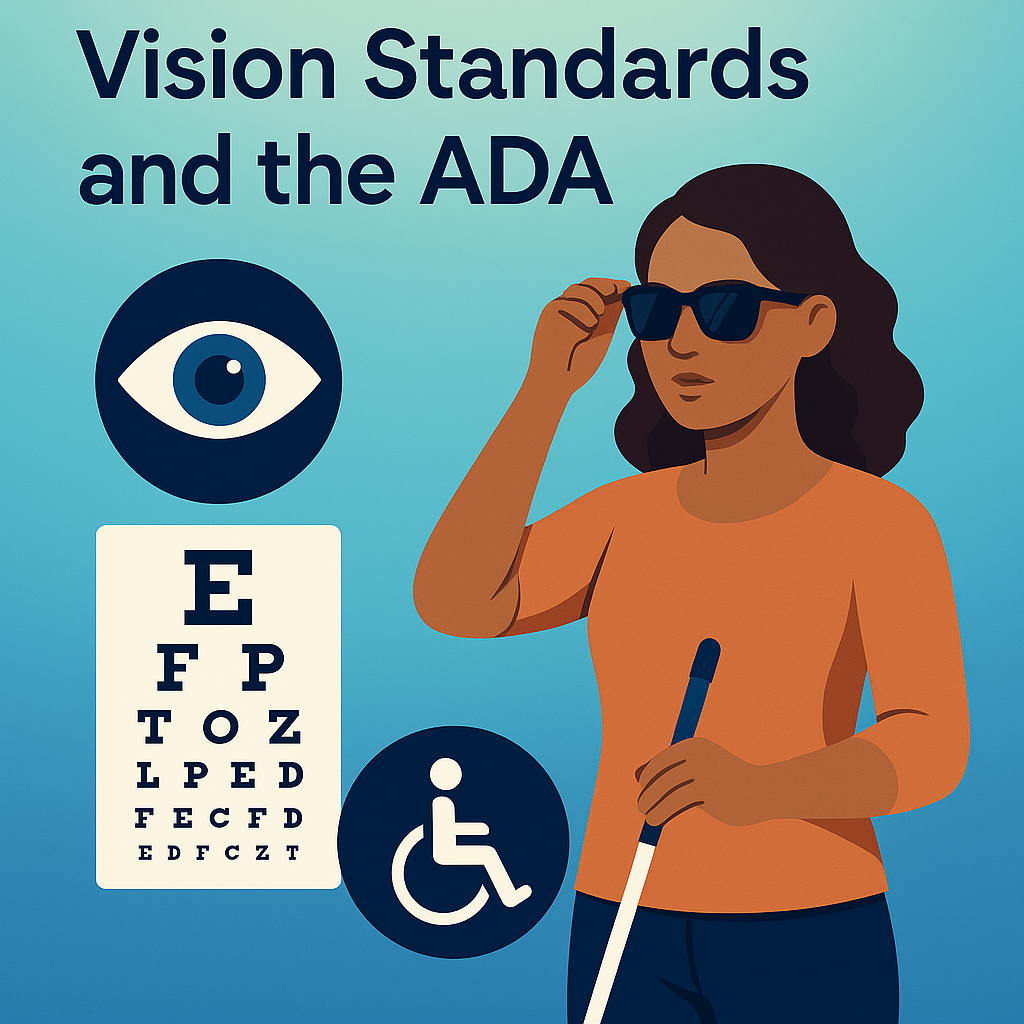
The legal battle involves a delivery truck driver, Mario Kirkingburg, employed by Albertsons, Inc., who possesses monocular vision—a type of visual impairment where vision is effectively functional in only one eye. Although Kirkingburg was able to fulfill his duties and held a commercial driver’s license, Albertsons dismissed him based on non-compliance with Department of Transportation (DOT) vision standards. Kirkingburg asserted that his dismissal was a violation of the ADA, given that he had managed to compensate for his impairment and perform his job proficiently.
Albertsons, in defense, argued that the DOT standards were essential to ensuring public safety, particularly for roles involving the operation of commercial vehicles. The case posed the question of balance between an employer’s obligation to uphold federal safety standards and the rights of disabled individuals to be judged based on their actual ability to perform job duties.
Understanding the ADA’s Definition of Disability
One of the pivotal discussions in this case revolves around interpreting the ADA’s definition of disability, particularly the phrase “substantially limits one or more major life activities.” The court had to decide if Kirkingburg’s monocular vision constituted a disability under the ADA, considering he had developed natural compensatory mechanisms. The ADA seeks to protect individuals whose impairments are seen as substantially limiting, but the distinction becomes complex with conditions an individual has adjusted to successfully.
During the proceedings, Albertsons highlighted that Kirkingburg’s compensatory capabilities invalidated his claim since he was not substantially limited by his impairment. This reflects a common employer stance that challenges the expansive inclusion criteria under ADA, emphasizing instead an outcome-focused view of disability—where only those who remain functionally impaired without accommodation are covered.
Employer’s Justification for Medical Standards
A significant aspect of the decision was whether an employer could enforce qualification standards based solely on medically recognized assessments, such as those from the DOT. The ruling required evaluating if such standards are genuinely related to the specific job duties or unnecessary barriers to employment for individuals with disabilities.
The Supreme Court, upon review, sided with Albertsons, affirming that compliance with DOT standards was legitimate under the argument of ensuring safety and reliability in job performance. The decision underscored the importance of job-relatedness and business necessity as critical components of defense against ADA claims—a notion that holds employers accountable to justifying employment criteria beyond arbitrary medical norms.
| Criteria | Justification Required |
|---|---|
| Job-Relatedness | Standards must relate directly to job duties |
| Business Necessity | Standards must be essential to business operations |
The Role of Accommodations in Employment
The ADA mandates the provision of reasonable accommodations to qualified employees with disabilities. In Albertsons, Inc. v. Kirkingburg, the notion of accommodation is tested against the rigid structures of set medical qualifications. Despite Kirkingburg’s ability to perform effectively, the judgment fell on whether his adjustment compensated adequately under standardized conditions without accommodation.
This outcome emphasizes the need for employers to distinguish between individual capabilities and codified qualifications. The pursuit of inclusivity in employment necessitates a flexible understanding of qualifications while recognizing the valid constraints of safety and regulatory standards.
Implications for Employers and Employees
The resolution of Albertsons, Inc. v. Kirkingburg serves as a reference point for how disability claims are approached in the workforce, particularly concerning safety-related positions. Employers must tread a line between ensuring compliance with regulatory standards and offering equitable employment opportunities to individuals with disabilities. This decision highlights the obligation of employers to revise medical standards critically and align them with actual job requirements rather than generalized health criteria.
For employees, the ruling accentuates the need for strong evidence demonstrating the impact of impairments on job-related functions and a compelling case for accommodations. It encourages those affected by visual impairments or similar conditions to gain a thorough understanding of both their rights under the ADA and the responsibilities employers have towards ensuring job-related qualifications are documented and defensible.
Conclusion
Albertsons, Inc. v. Kirkingburg remains a seminal case in the interpretation of the ADA concerning employment qualifications and disability rights. It specifies the parameters within which employers can set medical standards, ensuring these are directly tied to job duties and backed by legitimate business necessities while protecting the interests of employees with disabilities.
The continued advocacy for workplace inclusivity has momentum through such precedents, reminding both employers and policymakers of their duty to maintain a balance between operational safety and nondiscrimination. As we proceed, employees should work collaboratively with human resource professionals to ensure that employment practices evolve in line with both regulatory standards and the spirit of the ADA.
For those interested in the nuances of disability law, staying informed and engaged with ongoing legal developments is crucial. Reading related case laws and seeking expert insights form the foundation of a more informed and fair employment landscape, fostering environments where all individuals have equal opportunities to grow and succeed.
Frequently Asked Questions
1. What was the main issue at the heart of the Albertsons, Inc. v. Kirkingburg case?
The primary issue in the Albertsons, Inc. v. Kirkingburg case was the interpretation of the Americans with Disabilities Act (ADA) concerning vision standards required for job positions and how these standards align with the protections afforded to individuals with disabilities. Specifically, the case addressed whether an individual’s monocular vision (vision in only one eye) should be considered a disability under the ADA. The case called into question whether the vision standards set by an employer could be normatively challenged under the ADA’s stipulations on reasonable accommodations and discrimination against individuals with disabilities. Essentially, this case probed the balance between necessary job qualifications and protecting the rights of individuals within the workforce who may not meet typical health and ability criteria due to a disability.
2. How does the ADA define “disability,” and how did this definition play a role in the Kirkingburg case?
The ADA defines a disability as a physical or mental impairment that substantially limits one or more major life activities. This definition played a pivotal role in the Kirkingburg case as the court had to determine whether monocular vision, which scientifically affects depth perception and field of vision, constituted a substantial limitation on the individual’s major life activities—and subsequently, whether it qualified as a disability under ADA standards. Albertsons argued that their job requirements, which were in line with Department of Transportation (DOT) standards at the time, necessitated specific vision qualifications for safety and efficiency, thus challenging whether monocular vision could be considered a protected disability within the defined legislative framework.
3. What were the arguments presented by Albertsons, Inc. regarding employee vision standards?
Albertsons, Inc. argued that their imposed vision standards were necessary to ensure safety and efficiency in job performance, particularly for positions requiring driving duties. They posited that these standards were aligned with the Department of Transportation’s (DOT) established medical qualifications, which stipulated that drivers must meet specified vision benchmarks to operate a commercial vehicle safely. Albertsons contended that adhering to these regulations protected both the company and the public by ensuring only qualified individuals, based on physiological capabilities such as vision, were considered for roles where impaired vision could pose a significant risk. They maintained that this necessity superseded the application of the ADA since their standards were consistent with federal safety requirements.
4. What are “reasonable accommodations” under the ADA, and how did they factor into this case?
“Reasonable accommodations” under the ADA are adjustments or modifications provided by an employer to enable people with disabilities to have an equal opportunity to enjoy the benefits and privileges of employment. In the context of Albertsons, Inc. v. Kirkingburg, the discussion of reasonable accommodations revolved around whether it was feasible or justified to alter the established vision standards, or otherwise adjust the job functions or requirements, to accommodate Kirkingburg’s monocular vision. The complexity lay in determining if any potential accommodations could effectively mitigate the risks associated with failing to meet the established vision norms without compromising job performance or safety standards. This became a point of legal analysis to understand whether such accommodations were practically possible and legally necessary under ADA provisions.
5. What was the Supreme Court’s decision in the Albertsons, Inc. v. Kirkingburg case, and what implications did it have?
The Supreme Court ruled in favor of Albertsons, Inc., stating that the company’s decision to adhere to DOT vision standards was justified and not in violation of the ADA. The Court recognized that monocular vision could be classified as a disability, but emphasized the need for the plaintiff to demonstrate how it substantially limited major life activities, beyond mere physical impairment. Furthermore, the Supreme Court upheld a standard whereby mitigation measures and other techniques applied by individuals to correct or compensate for impairments should be considered when determining ADA eligibility. This decision had significant implications, reinforcing the notion that employers could set qualification standards aligned with safety regulations, providing these standards are not discriminatory, and must (or could) consider mitigating measures when determining ADA protection. This case highlighted the nuanced interpretation of what constitutes a disability and the extent of employer obligations under federal safety and disability laws.