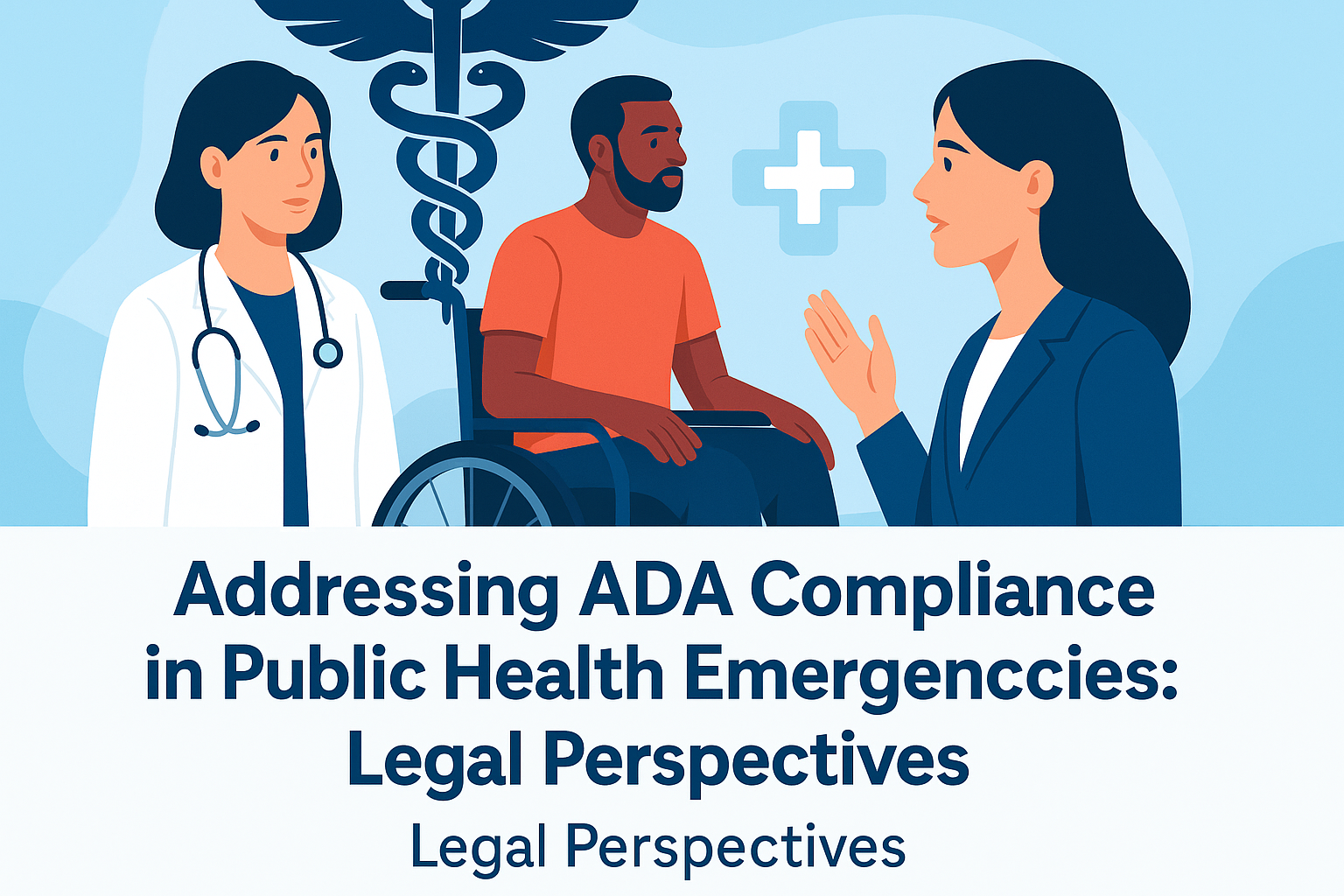
Ensuring compliance with the Americans with Disabilities Act (ADA) during public health emergencies is a critical issue that requires attention and action. The ADA, a cornerstone of civil rights legislation, mandates equal access and opportunities for individuals with disabilities, including during crises such as pandemics or natural disasters. These emergencies expose and sometimes exacerbate existing vulnerabilities faced by people with disabilities, making ADA compliance even more crucial. The importance of addressing ADA compliance in these situations is underscored by the need to safeguard the rights and well-being of a diverse population, ensuring that all individuals have the necessary access to information, resources, and emergency services. Understanding the legal perspectives surrounding ADA compliance not only assists governmental and healthcare agencies in fulfilling their obligations but also empowers individuals to advocate effectively for their rights during emergencies.
Understanding ADA Compliance in Public Health Emergencies
In the context of public health emergencies, ADA compliance becomes a multifaceted challenge, involving accommodation and accessibility across numerous fronts. The legal perspective involves interpreting ADA guidelines and implementing them in real-time emergency conditions. For instance, during the COVID-19 pandemic, many public health measures such as quarantine and social distancing affected the lives of disabled individuals disproportionately. Yet, compliance involves more than just physical access; it concerns equal access to information and resources.
A real-world example of this is the need for emergency information in accessible formats—such as Braille, large print, or digital formats compatible with screen readers. This ensures that individuals with visual impairments receive timely and accurate information. In some instances, public health agencies failed to ensure these formats were available, leading to lawsuits and demands for immediate corrective action. This illustrates the complexities and importance of having robust ADA compliance measures in place during an emergency.
Key Legal Perspectives on ADA Requirements
The ADA’s legal requirements during emergencies center around the principle of non-discrimination and the provision of reasonable accommodations. Legal inquiries in this domain often involve assessing whether public health solutions equitably address the needs of all individuals, including those with disabilities. For example, during pandemics, access to medical facilities and services may require adaptations to accommodate disabled persons’ needs, such as ensuring wheelchair-accessible testing sites or providing sign language interpreters for public health announcements.
Legal perspectives in such contexts often consider precedent cases where ADA compliance was either upheld or failed. Judicial rulings emphasizing strict adherence to ADA guidelines serve as critical references for shaping future policies and practices in the emergency management sphere. The guidance provided by these rulings equips agencies and institutions with frameworks to avoid legal pitfalls and fulfill their obligations to the disabled community during emergencies.
Implementing ADA Compliance in Public Health Agencies
One of the pivotal challenges in achieving ADA compliance during public health emergencies lies within public health agencies themselves. Agencies must employ proactive measures to include disability considerations in their planning and response processes. Ensuring that emergency management personnel are trained in ADA requirements is fundamental. This prevents unintentional oversight and promotes an anticipatory approach to potential accessibility issues.
To illustrate, the Centers for Disease Control and Prevention (CDC) provides guidance materials that inform agencies about integrating disability perspectives into emergency planning. This includes recommendations for creating accessible communication channels, providing accessible transportation, and ensuring that evacuation procedures meet ADA standards.
| Agency | Compliance Focus | Example Action |
|---|---|---|
| Local Health Departments | Accessible Communication | Provide information in multiple formats |
| Emergency Management Agencies | Inclusive Planning | Conduct accessibility audits of shelters |
| Hospitals | Medical Access | Ensure TTY services are available |
The table above highlights various agencies and the focus of their compliance efforts, demonstrating the diversity in necessary actions. By aligning these efforts with ADA requirements, agencies enhance their ability to serve all citizens efficiently, even under stressful emergency conditions.
Challenges and Opportunities in Enforcing ADA Compliance
Enforcing ADA compliance during public health emergencies presents both challenges and opportunities. One significant challenge is the rapid and unexpected nature of emergencies, which can overwhelm existing resources and highlight weak points in compliance strategies. Furthermore, systemic barriers such as underfunding and limited awareness about disability rights compound these challenges.
However, these situations also create opportunities to innovate and improve systems. For instance, many public health systems have adopted telehealth solutions, which—if implemented with accessibility in mind—can enhance healthcare access for disabled individuals. Telehealth must be designed to be accessible, incorporating features such as captioning for video consultations and ensuring websites meet Web Content Accessibility Guidelines (WCAG). This proactive integration of technology in compliance strategies presents opportunities for creating more inclusive systems post-emergency.
Ensuring Emergency Preparedness Through ADA Compliance
An essential component of ADA compliance is emergency preparedness tailored to accommodate individuals with disabilities. Emergency preparedness involves comprehensive planning, which anticipates the needs of disabled populations during various types of emergencies. This requires a collaborative approach that includes the participation of people with disabilities in the planning processes to provide real-world insights.
A compelling example comes from the city of New York, which has implemented an inclusive approach to emergency planning, actively seeking input from disability advocacy groups and individuals with disabilities. This participatory approach has resulted in improved communication strategies and enhanced physical accessibility in emergency accommodations, such as shelters equipped with mobility aides and staffed with personnel trained in disability etiquette.
Conclusion: The Path Forward for ADA Compliance in Emergencies
In conclusion, addressing ADA compliance during public health emergencies is not just a legal obligation, but a moral imperative to ensure equity and dignity for all individuals, regardless of disabilities. Key takeaways include the necessity for proactive planning, incorporating disability perspectives into emergency management practices, and leveraging technology to bridge accessibility gaps. By focusing on these areas, agencies and individuals can collaboratively create more inclusive emergency responses and, by extension, a more equitable society.
The reader is encouraged to become aware of ADA guidelines related to public health emergencies and participate in advocacy and dialogue that promotes disability-inclusive policies. The next step is for governmental bodies, healthcare providers, and organizations to evaluate their current emergency plans, identifying and addressing areas that fail to meet ADA standards. Together, we can ensure that preparedness means preparedness for everyone.
Frequently Asked Questions
1. What is the significance of ADA compliance during public health emergencies?
Ensuring ADA compliance during public health emergencies is of paramount importance because these situations can disproportionately affect individuals with disabilities. The Americans with Disabilities Act (ADA) is a landmark civil rights law that guarantees equal access and opportunities for people with disabilities. During public health emergencies like pandemics or natural disasters, these rights take on added significance as the challenges and barriers faced by individuals with disabilities can intensify. Consider, for instance, an emergency shelter set up during a natural disaster. If the shelter does not have accessible facilities, individuals who rely on wheelchairs or other mobility devices could face significant barriers to accessing safety and resources. Furthermore, during a pandemic, clear and accessible communication about health guidelines and services is essential to ensure everyone, including those with disabilities, can protect themselves effectively. In essence, ADA compliance helps safeguard the dignity, autonomy, and rights of individuals with disabilities during times when they might otherwise be overlooked or marginalized.
2. How can public health agencies ensure ADA compliance in their emergency response plans?
To ensure ADA compliance in emergency response plans, public health agencies should adopt a proactive, inclusive approach. This begins with integrating accessibility considerations from the ground up in all planning processes. Agencies should conduct thorough assessments of their existing emergency response frameworks to identify and remedy any gaps that might impede accessibility for individuals with disabilities. Engagement with the disability community is crucial in this process. By consulting with advocacy groups, disability experts, and individuals with lived experiences, agencies can better understand the specific needs and challenges faced by those with disabilities. This collaboration can inform the design of emergency plans and services that are truly inclusive. Additionally, staff training is a vital component. Emergency responders and personnel must be educated on ADA requirements and the importance of non-discriminatory practices. Training should cover communication strategies, physical accessibility, and the provision of accommodations where necessary. Finally, regular drills and simulations that incorporate ADA considerations can help identify potential issues before real emergencies occur, allowing for timely interventions and updates to protocols.
3. What are some common challenges faced by people with disabilities during public health emergencies?
During public health emergencies, people with disabilities often encounter a range of challenges that can hinder their safety and well-being. One significant issue is the accessibility of emergency information and communications. Often, crucial alerts and instructions are not provided in formats accessible to individuals with hearing or visual impairments, such as sign language interpreters or closed captioning for videos, and braille or large print materials. Mobility can also become a pressing concern. Emergency shelters or evacuation centers might not be equipped with ramps, accessible restrooms, or other necessary facilities, making it difficult for individuals with mobility impairments to access these resources. For those who rely on personal assistance services or medical equipment, disruptions in these services due to infrastructural or logistic challenges can pose life-threatening risks. Additionally, individuals with cognitive disabilities might struggle with understanding complex emergency procedures if they are not clearly communicated or if additional support is not available. Overall, the lack of tailored support and accessible resources during emergencies can significantly heighten the vulnerability of people with disabilities, underlining the need for comprehensive ADA compliance in emergency planning.
4. What legal obligations do organizations have under the ADA during emergencies?
Under the ADA, organizations, including public health agencies and emergency responders, have a legal obligation to ensure that individuals with disabilities are not excluded from services or denied the benefits of emergency programs due to inaccessible facilities or practices. Specifically, the ADA requires that all programs, services, and activities conducted by public entities offer equal opportunity for persons with disabilities. This means that during an emergency, shelters, transportation, communication services, and health care facilities must be accessible. For instance, if a community sets up an emergency shelter, it must be accessible to individuals with mobility impairments, and information about the shelter should be available in multiple formats to accommodate all individuals—including those with visual, auditory, or cognitive impairments. Additionally, organizations are required to provide reasonable modifications to policies, practices, and procedures when necessary to avoid discrimination, unless such modifications would fundamentally alter the nature of the service or program. They must also remove communication barriers and furnish auxiliary aids and services to ensure effective communication with individuals with disabilities. Non-compliance can lead to legal repercussions, including litigation and penalties. More importantly, it can result in harm or insufficient support for individuals with disabilities in critical situations.
5. How can technology aid in meeting ADA compliance requirements during public health emergencies?
Technology plays a crucial role in achieving ADA compliance during public health emergencies by facilitating accessibility and communication. Assistive technologies, for instance, can help people with disabilities access information and services that might otherwise be unreachable. This can include screen readers for individuals with visual impairments, voice-to-text applications for those with hearing impairments, and easy-to-use communication devices for individuals with cognitive impairments. Emergency information systems can incorporate text alerts, video broadcasts with sign language interpretation, and real-time captioning to ensure that all community members receive vital updates. Websites and apps should be developed with WCAG (Web Content Accessibility Guidelines) compliance in mind to guarantee inclusivity in digital communications. Moreover, telehealth services can bridge gaps for individuals with disabilities who may have difficulty traveling to healthcare facilities during an emergency. By leveraging video consultations and remote monitoring tools, healthcare providers can ensure continuity of care. Technology also supports training for emergency personnel, providing virtual reality simulations and online courses on ADA compliance, preparing staff to better meet the needs of individuals with disabilities. Overall, technology enhances the capacity of public health responses to be truly inclusive and accessible.