In the United States, ensuring equal access in public spaces is more than just good practice—it’s the law. The American with Disabilities Act (ADA), enacted in 1990, is a significant piece of civil rights legislation that prohibits discrimination against individuals with disabilities in all areas of public life, including jobs, schools, transportation, and all public and private places open to the general public. One key aspect of the ADA pertains to the accessibility of storage and shelving, which are integral components of many environments, from offices and retail stores to libraries and hospitals.
It is essential to define some key terms to understand why ADA standards for storage and shelving are crucial. “ADA compliance” refers to adherence to the stipulations set out by the ADA to ensure accessibility for individuals with disabilities. “Storage and shelving” involves the design, organization, and placement of storage spaces and shelves in a manner that is usable and accessible to all, regardless of physical capability.
Why does this matter? Accessible storage and shelving are more than just functional elements in a building. They represent a commitment to inclusivity and accessibility. Properly adjusted, storage solutions that adhere to ADA standards ensure that every individual, regardless of disability, can access goods and services on an equal basis. This is not just beneficial for those who directly use these features; it benefits businesses, organizations, and communities as a whole, leading to greater participation and engagement by individuals with disabilities.
Understanding the Basics of ADA Standards for Shelving
The ADA outlines various guidelines for the installation and placement of shelving. These guidelines help to ensure that storage spaces are accessible to everyone, including wheelchair users and those with limited reach capabilities.
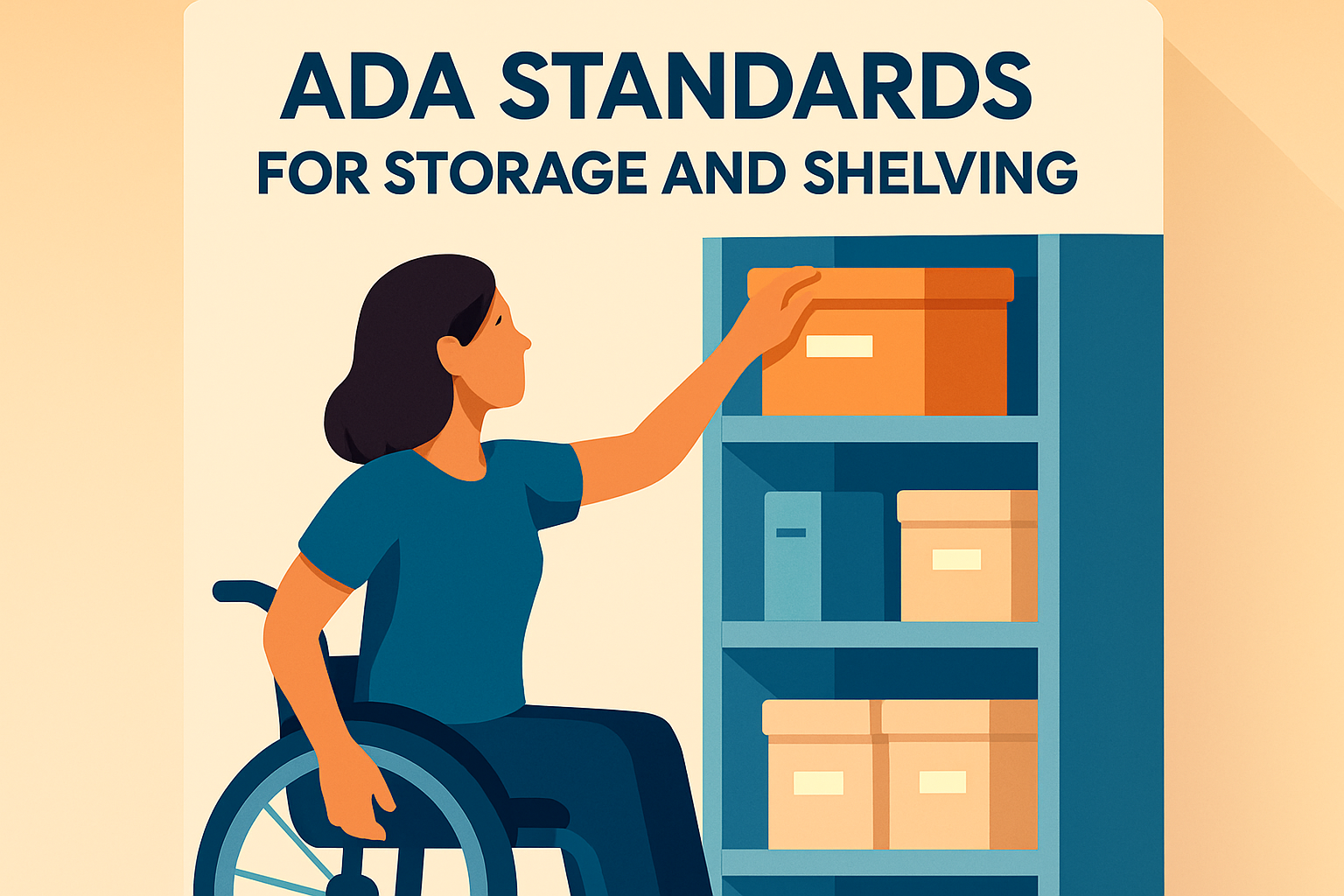
According to the ADA, the height at which items are stored is critical. For shelving to be considered accessible, the maximum high forward reach should be no higher than 48 inches. The minimum low forward reach is set at 15 inches. For side reach, the maximum high side reach should not exceed 54 inches, while the minimum low side reach is similarly 15 inches. These measurements ensure that even individuals in wheelchairs or with limited reach can access materials independently.
Consider the example of a public library. If the bookshelves are arranged too high or too low, it becomes challenging for those with disabilities to access the books they seek. By adhering to the ADA guidelines, libraries can create an inclusive environment that encourages education and ease of access for every patron.
Significance of Reach Range Specifications
The reach range specifications set by the ADA play a vital role in ensuring accessibility. These measures take into consideration the variety of abilities that individuals may have and aim to offer equal access. Reach ranges ensure that products, information, and services are within accessible distance, empowering individuals to maintain independence and utility.
A retail clothing store serves as a practical example. If items on a shelf are placed too high, customers using wheelchairs may require assistance for every purchase, detracting from their shopping experience and potentially reducing sales opportunities. By ensuring compliance with ADA reach range specifications, a store can cater to a wider range of customers and fulfill regulatory obligations.
- High Forward Reach: Maximum 48 inches
- Low Forward Reach: Minimum 15 inches
- High Side Reach: Maximum 54 inches
- Low Side Reach: Minimum 15 inches
Implementing ADA Compliant Storage in Businesses
For businesses, ADA compliance is not just a legal obligation but also an opportunity to demonstrate corporate social responsibility and enhance customer experience. Implementing ADA-compliant storage involves assessing the current configuration and modifying or redesigning spaces to meet ADA guidelines. This might include adjusting the height of shelves or altering layouts to provide greater maneuverability.
A case in the point is a restaurant kitchen. Ensuring that staff with disabilities can access storage compartments without obstruction and with ease is crucial to maintaining a smooth and equitable working environment. Installing adjustable shelving or using pull-out drawers can make storage more accessible and effective, reflecting an inclusive workplace culture.
| Parameter | ADA Standard |
|---|---|
| Forward Reach | 15 to 48 inches |
| Side Reach | 15 to 54 inches |
Addressing Common Challenges and Solutions
Adopting ADA standards for storage and shelving can present challenges, especially in older buildings or small spaces where redesigning interiors can be limiting or costly. Nevertheless, innovative solutions exist to address these obstacles.
For instance, modular shelving systems and tools like reach poles for higher shelves can serve as effective alternatives. Modifying existing furniture and using risers can adjust shelves’ reach appropriately. These adaptable solutions not only comply with guidelines but also increase the functionality of space.
A historical museum with limited room exemplifies how clever design can overcome spatial constraints. By integrating custom storage solutions that include retractable shelves and rotating displays, the museum maintains compliance while optimizing limited space, thus enhancing visitor experience.
The Benefits of ADA-Approved Storage Solutions
Implementing storage and shelving solutions that conform to ADA standards offers numerous advantages. First and foremost, such applications boost accessibility for people with different abilities, providing them with dignity and independence.
Moreover, maintaining ADA compliance reduces legal risks associated with non-compliance and potential fines or lawsuits. It shows an organization’s commitment to inclusivity, potentially enhancing their reputation and customer loyalty.
An electronics store that redesigns its layout in line with ADA standards likely experiences a broadened customer base, as patrons appreciate the ability to navigate and shop independently. This adherence not only fosters goodwill but can also increase sales by attracting a more diverse clientele.
Future Trends in ADA Compliant Storage
The future of ADA-compliant storage seems promising, as evolving technology and design innovations offer new opportunities. Smart storage solutions that use technology such as automatic height adjustment and voice activation are leading the way for more adaptable, inclusive environments.
In a university setting, for example, advanced technology-enabled storage solutions could enhance accessibility for students with disabilities in accessing study materials and equipment, ensuring they receive equitable educational opportunities.
As designers and architects increasingly prioritize inclusive design in new constructions, we expect that ADA compliance will become integral in the planning phase rather than an adjustment or afterthought.
Conclusion
The key takeaway from understanding ADA standards for storage and shelving is their fundamental role in ensuring equitable access and enhancing the quality of life within public and private spaces. By adopting these guidelines, spaces become more inclusive, empowering individuals with disabilities to navigate and utilize environments more independently and effectively.
Compliance not only benefits those directly using these systems but also enhances overall business credibility and operational efficiencies. Businesses and organizations must prioritize evaluating their current storage configurations and consider upgrading or redesigning them to maintain compliance.
For those looking to ensure compliance, starting with an audit of current violations, followed by a consultation with an ADA compliance expert, can be an effective course of action. With considered planning and action, the accessibility of storage and shelving solutions can lead to a more inclusive, equitable world.
Frequently Asked Questions
1. What are the ADA standards for storage and shelving?
The ADA standards for storage and shelving primarily focus on ensuring that individuals with disabilities have equal access to goods and products in public and private places. This includes ensuring that shelving and storage are within reach for people in wheelchairs or with mobility challenges. The standards specify that storage should be accessible within a range of heights: between 15 inches and 48 inches above the ground. This is crucial because it recognizes the varied reach of individuals depending on their disabilities. For example, a person using a wheelchair might not be able to access items placed too high or too low. There are also provisions for clear floor space and positioning to ensure that reaching storage or shelves does not necessitate undue strain or difficulty. Ensuring that compliance is met requires taking careful consideration of the layout and adjustability of shelving and storage areas, often accommodating the maximum number of users by keeping frequently accessed items within the optimal reach range.
2. How do the ADA standards impact businesses and public facilities?
The ADA standards have a substantial impact on how businesses and public facilities are designed and operated. For businesses, it means incorporating accessible designs into their operational blueprints. This might involve the modification of existing shelving units or the purchasing of new adjustable shelving systems that accommodate a wider range of users. For public facilities, adherence is crucial because the ADA not only impacts design but also affects overall usability and customer satisfaction. Compliance can result in better engagement with customers, fostering a more inclusive environment that reflects brand values of accessibility and equality. However, it’s not just about the layout—it’s also essential that these changes improve safety, comfort, and experience for individuals with disabilities. Penalties for non-compliance can be severe, including lawsuits, fines, and a compromised public image. Therefore, businesses and public facilities need to stay informed about updated guidelines and prioritize accessibility planning and audits.
3. How can I ensure my business is compliant with ADA shelving standards?
Ensuring compliance with ADA shelving standards involves several strategic steps. First, conduct a comprehensive audit of your current storage and shelving setup. This involves measuring the height and accessibility of all shelves, ensuring they fall within the 15 to 48 inches range specified by ADA guidelines. Consider installing adjustable or modular shelving systems that can easily adapt to different needs or changes in inventory requirements. Make sure there’s clear floor space in aisles for wheelchair access—at least 36 inches for corridors and 60 inches in diameter for turning space at junctions. It’s also beneficial to involve expert consultants or ADA compliance specialists who can provide detailed assessments and offer necessary adjustments or upgrades. Training employees on ADA requirements is also essential so they can assist customers and maintain compliant setups. Regularly monitoring and revising your storage policies, along with incorporating customer feedback, can significantly enhance compliance efforts, contributing to creating a truly welcoming environment for all clients.
4. Are there any exceptions to the ADA standards for storage and shelving?
Yes, there are some exceptions to the ADA standards for storage and shelving, though they are specific and limited. Generally, these exceptions consider the practicality and mission of certain facilities. For example, historic buildings that cannot accommodate changes without losing their cultural significance might have exceptions, though they are encouraged to maximize accessibility where possible. Similarly, the installation of certain types of storage, like safety or temperature-sensitive shelving, could limit adjustments strictly based on ADA standards. However, these exceptions do not negate the overarching responsibility to strive for accessibility whenever possible. Any exceptions should be supported by comprehensive documentation of the necessity and attempts to comply as closely as possible. It’s important to consult with legal and ADA compliance professionals to ensure your understanding and rationale align with the law’s intent, thereby reducing risks of penalties or civil actions.
5. What are the potential penalties for non-compliance with ADA standards on storage and shelving?
Non-compliance with ADA standards can lead to several serious penalties, which underscore the importance of ensuring that your storage and shelving conform to these guidelines. First, businesses and public facilities could face substantial fines and legal costs if caught in non-compliance. Such financial penalties can vary significantly, depending on the severity of the infraction and whether there are elements of habitual disregard or negligence. In addition, non-compliance can lead to costly legal actions initiated by affected individuals, which could further increase financial liabilities and negatively impact operations. The damage to the organization’s reputation can be equally costly, as failing to uphold ADA standards often leads to criticism from the public and an alienation of customer or community trust. Collectively, these repercussions emphasize the necessity of prioritizing ADA compliance as part of regular business operations and strategic planning to safeguard an inclusive and accessible environment for all customers and users. Whether it’s an established business or a new venture, integrating ADA consideration early into the business model can lead to not just compliance but also an enhanced reputation and customer loyalty.