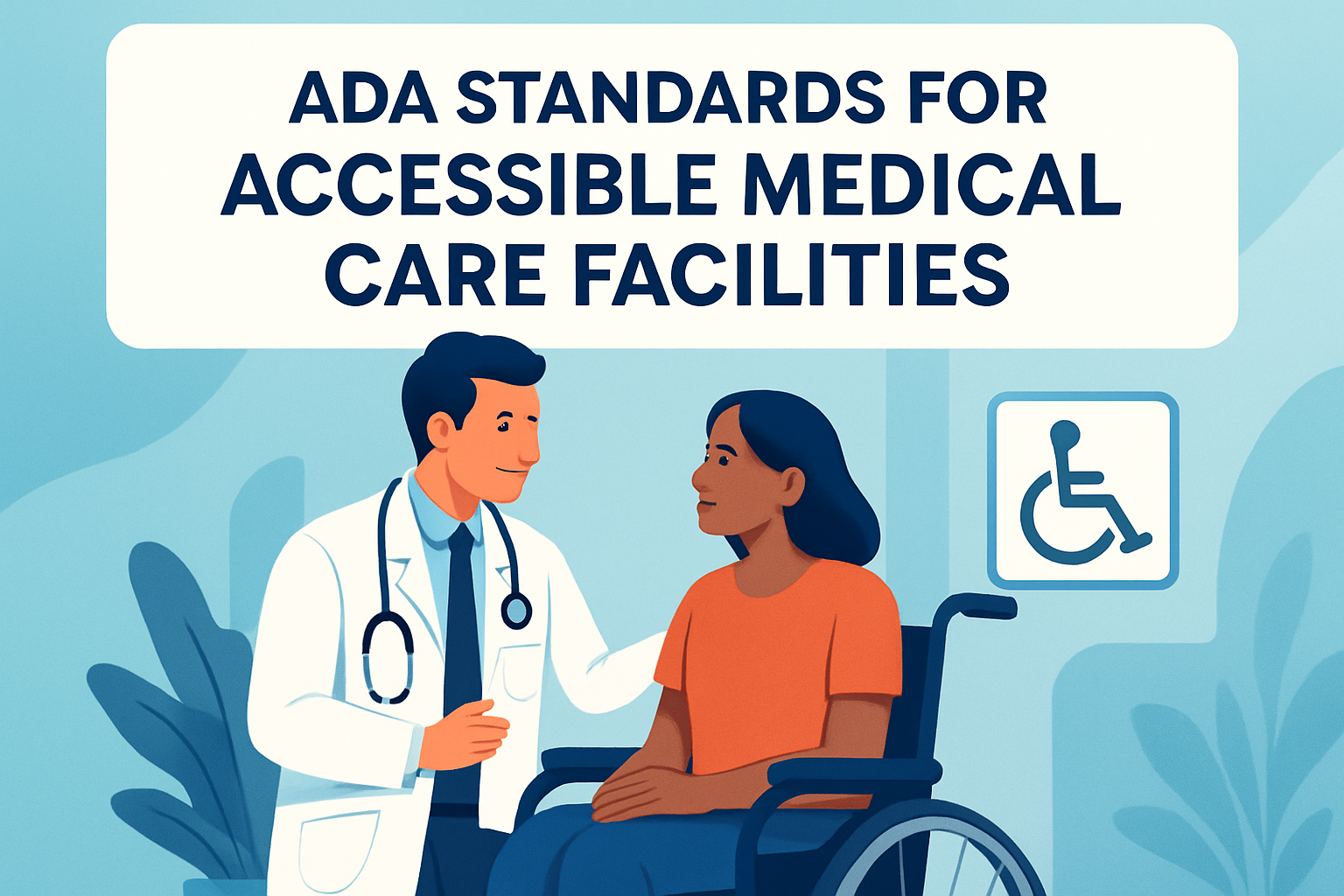
The Americans with Disabilities Act (ADA) Standards for Accessible Medical Care Facilities are a critical component in ensuring that healthcare services are equitable and accessible to every individual, regardless of physical ability. These standards serve as guidelines that medical facilities must adhere to in order to provide an environment that accommodates patients with disabilities. This accessibility not only covers physical spaces but also involves communication aids and practices, ensuring that every patient can receive medical care effectively and comfortably.
The ADA defines a disability as a physical or mental impairment that substantially limits one or more major life activities. To create an inclusive healthcare environment, medical facilities are required to make reasonable modifications in policies and practices and provide auxiliary aids to individuals with disabilities. The significance of these standards is underscored by the large number of individuals with disabilities; according to the Centers for Disease Control and Prevention, in the United States alone, approximately 61 million adults live with a disability.
The importance of these standards goes beyond legal compliance. Implementing ADA standards fosters a more inclusive society, enhances patient outcomes, and improves the quality of life for those with disabilities. Understanding and applying these standards can help healthcare providers create accommodating environments that respect the dignity and rights of all individuals.
The Essentials of Physical Accessibility
Physical accessibility is one of the most apparent aspects of the ADA standards. Medical facilities must ensure that their premises are accessible to individuals who use wheelchairs or other mobility aids. This includes features like ramps, accessible parking spaces, wide doors, and elevators.
For instance, a hospital in the Midwest enhanced its accessibility by installing automatic doors and constructing ramps leading to every entrance. This modification not only made the hospital compliant with ADA standards but also enhanced its reputation as an inclusive facility, which, in turn, attracted more patients appreciative of the accessible infrastructure.
Accessibility must also extend to amenities such as bathrooms, examination rooms, and patient waiting areas. Examination tables that lower to accommodate mobility-impaired patients and accessible restrooms fitted with grab bars are essential components. These features ensure that all patients can comfortably and safely access necessary healthcare services.
Effective Communication Strategies
Beyond the physical environment, ADA standards emphasize the importance of effective communication. This includes providing necessary auxiliary aids and services to ensure that individuals with vision, hearing, or speech disabilities can effectively engage in their healthcare. Examples include providing a sign language interpreter for a patient who is deaf or ensuring that patient information is available in braille or large print.
A real-world example is a community clinic that integrated a video relay service (VRS) for its patients. The VRS allowed patients who are deaf or hard of hearing to communicate with their healthcare providers via a video link and sign language interpreter. This enhancement significantly improved patient satisfaction and demonstrated the facility’s commitment to accessible communication.
Training Staff for Inclusivity
Staff training is another crucial aspect of ADA standards. Medical facility staff should be trained to understand and uphold the principles of accessibility and to interact appropriately with patients with disabilities. Training programs can cover topics like respectful communication, proper assistance with mobility aids, and awareness of invisible disabilities.
An urban clinic set a precedent by implementing a mandatory staff training program focused on disability empathy and sensitivity. This training empowered staff to provide better care and fostered a supportive environment for both staff and patients. Positive patient feedback has often highlighted the noticeable improvement in staff attitudes and interaction quality post-training.
Utilizing Technology in Accessibility
Advancements in technology have opened new avenues to enhance accessibility within medical facilities. From scheduling systems that accommodate additional appointment time for patients with disabilities to mobile applications that allow for personalized patient information management, technology serves as a bridge toward an inclusive healthcare environment.
Consider a sizeable hospital that adopted an app specifically designed for accessibility needs. The app allowed patients to check in, navigate the hospital with turn-by-turn directions, and manage their appointments. This innovation not only catered to ease and convenience but also underscored the hospital’s commitment to meeting ADA standards through technological integration.
| Feature | Description | Benefits |
|---|---|---|
| Automatic Doors | Sensors or buttons open doors for patients | Facilitates easy entrance and exit |
| Video Relay Services | Real-time video interpretation for sign language | Improves communication for those with hearing impairments |
| Accessible Examination Tables | Tables that can be lowered for easy access | Enhances comfort and safety for patients |
| Navigational Apps | Apps providing directions and appointment management | Increases independence and reduces stress |
Emergency Preparedness and Accessibility
In emergency scenarios, accessibility might inadvertently be overlooked; however, ADA standards require that preparedness plans also be inclusive. Emergency exits, communication during evacuation, and areas of rescue assistance must be fully accessible to individuals with disabilities.
For example, a coastal hospital developed an emergency plan inclusive of individuals with disabilities, ensuring that all exits were equipped with ramps and that staff were trained to provide assistance during evacuations. This comprehensive plan not only conformed to ADA standards but also provided peace of mind to patients and staff, knowing that emergency measures were inclusive of all patient needs.
Fostering Community Engagement and Feedback
Community engagement is a powerful tool in assessing and improving accessibility standards at medical facilities. Regularly seeking feedback from patients with disabilities can highlight areas for improvement and reinforce a facility’s commitment to accessibility.
A suburban medical center established a community advisory board, comprising patients with various disabilities. The board offered insights and feedback, which led to modifications like improved signage and adjustments in appointment scheduling processes. This interaction not only enhanced the center’s services but also solidified its reputation as a proactive, inclusive institution.
Conclusion
In conclusion, the implementation of ADA standards in medical care facilities is vital in ensuring equitable access to healthcare for individuals with disabilities. These standards encompass physical accessibility, effective communication strategies, staff training, technological integration, emergency preparedness, and community engagement. Through tangible real-world examples, it becomes evident that adhering to these standards not only fulfills legal obligations but also significantly improves patient experiences and outcomes.
The benefits of creating accessible medical care facilities are multifold — from fostering an inclusive community to enhancing the overall quality of healthcare services. As healthcare providers, the call to action is clear: commit to regularly assessing facilities and practices for accessibility, engage with the community, and remain open to adopting new strategies and technologies to provide truly inclusive care for all patients.
Frequently Asked Questions
1. What exactly are ADA Standards for Accessible Medical Care Facilities?
The ADA Standards for Accessible Medical Care Facilities are a set of guidelines established under the Americans with Disabilities Act to ensure medical facilities are accessible to all individuals, including those with disabilities. These standards cover a broad range of considerations to guarantee equal access to healthcare services. This includes the physical design of the facility such as ramps, elevators, and accessible restrooms, as well as communication aids for those with hearing, vision, or cognitive impairments. The objective is to create an inclusive environment where all patients can receive medical attention without facing obstacles due to their disabilities, thus promoting equity in healthcare access.
2. What are the key components of ADA compliance in medical facilities?
Compliance with ADA standards involves several key components. First, the physical accessibility of the building is paramount. This includes features like wide doorways and hallways, ramps, and wheelchair-accessible restrooms. Additionally, exam rooms should be large enough to accommodate mobility aids. Second, communication accessibility is critical. Facilities should provide auxiliary aids and services, such as sign language interpreters or closed captioning, to ensure effective communication with patients who have hearing, speech, or visual impairments. Lastly, policies and procedures should be in place to remove any barriers that impede access to healthcare services, such as inflexible scheduling for patients who may need additional time during appointments.
3. Why is it important for medical facilities to adhere to these ADA standards?
It’s crucial for medical facilities to comply with ADA standards because it ensures that all individuals, regardless of their physical abilities, have access to necessary medical care. This adherence not only meets legal requirements but also reflects a commitment to equity and inclusion in healthcare. When facilities are accessible, patients with disabilities experience increased independence and confidence in obtaining medical services. Moreover, adhering to these standards can prevent potential legal issues and enhance the reputation of the medical facility as a provider that values all members of the community. Compliance fosters a welcoming and supportive environment, which can improve patient outcomes and satisfaction.
4. How can a medical facility determine if it is ADA compliant?
Determining ADA compliance involves evaluating both the physical environment and the operational practices within the facility. A comprehensive ADA audit can be conducted to assess areas such as building accessibility, medical equipment usability, and the availability of communication aids. It might be beneficial to consult with an ADA compliance expert or architect who understands the intricate details of the guidelines. Additionally, receiving feedback directly from patients with disabilities can provide valuable insights into areas that may need improvement. It’s an ongoing process, ensuring that new regulations are met, and modifications are made as needed to address any deficiencies.
5. What are the consequences for a medical facility if it does not comply with ADA standards?
Non-compliance with ADA standards can have significant consequences for medical facilities. Legally, facilities may face lawsuits or fines, as individuals with disabilities have the right to file complaints against inaccessible facilities. Beyond legal repercussions, non-compliance can harm the facility’s reputation, leading to a loss of patients and trust within the community. It can also have serious implications for patient care and safety, as those with disabilities may not receive the necessary services or treatment. It is in every facility’s best interest to voluntarily comply with ADA standards not only to avoid legal issues but to ensure that they are providing equitable and high-quality care to all patients.