The Americans with Disabilities Act (ADA) is a critical piece of legislation that aims to eliminate discrimination against individuals with disabilities and ensure equal opportunities for them in all areas of public life. Since its enactment in 1990, the ADA has set forth comprehensive guidelines for businesses, public entities, and private sectors to follow in order to accommodate the needs of people with disabilities. When it comes to recreational facilities and parks, ADA compliance is especially vital as it ensures that everyone, regardless of their physical abilities, can enjoy natural and recreational resources. This article will provide an introduction to ADA compliance for recreational facilities and parks, discuss key aspects of implementation, and highlight best practices to ensure accessibility and inclusiveness for all visitors.
Introduction to ADA Compliance
ADA compliance is not just a legal requirement, but also a moral imperative to create a more inclusive society. Recreational facilities and parks provide essential recreational, social, and health benefits for individuals and communities. Ensuring these spaces are accessible to everyone mandates the removal of physical barriers and implementation of specific design features that accommodate individuals with disabilities. ADA-compliant amenities include accessible paths, restrooms, parking, playgrounds, and more.
Understanding the fundamentals of ADA compliance requires familiarity with the ADA Standards for Accessible Design. These standards establish the minimum requirements for newly designed and newly constructed or altered public facilities. Recreational managers, city planners, architects, and other stakeholders must ensure that their facilities meet these standards to promote equality and prevent discrimination.
Key Standards and Requirements
One of the key standards set by the ADA for recreational facilities includes the need for accessible routes and entrances. These routes provide access to different areas of the park and should be designed to accommodate wheelchairs, scooters, and other mobility devices. Curb ramps, pedestrian crossings, and pathways must meet certain slope, width, and surface texture requirements to ensure ease of movement. Furthermore, entrances to buildings and key areas such as pavilions and restrooms within the park should be equipped with automatic doors or be wide enough for wheelchair access.
Another critical component of ADA compliance is accessible parking. Designated parking spots for individuals with disabilities must be conveniently located near entrance routes and be sufficiently wide to accommodate wheelchair users. These spots should be marked with appropriate signage to indicate availability for disabled visitors.
Seating areas, whether in pavilions, picnic areas, or stadiums, also must adhere to ADA standards. This includes ensuring that a certain percentage of seats in any given area are accessible, providing clear sightlines for wheelchair users and distributing accessible seating areas evenly throughout the facility for inclusivity.
Playgrounds and Recreational Spaces
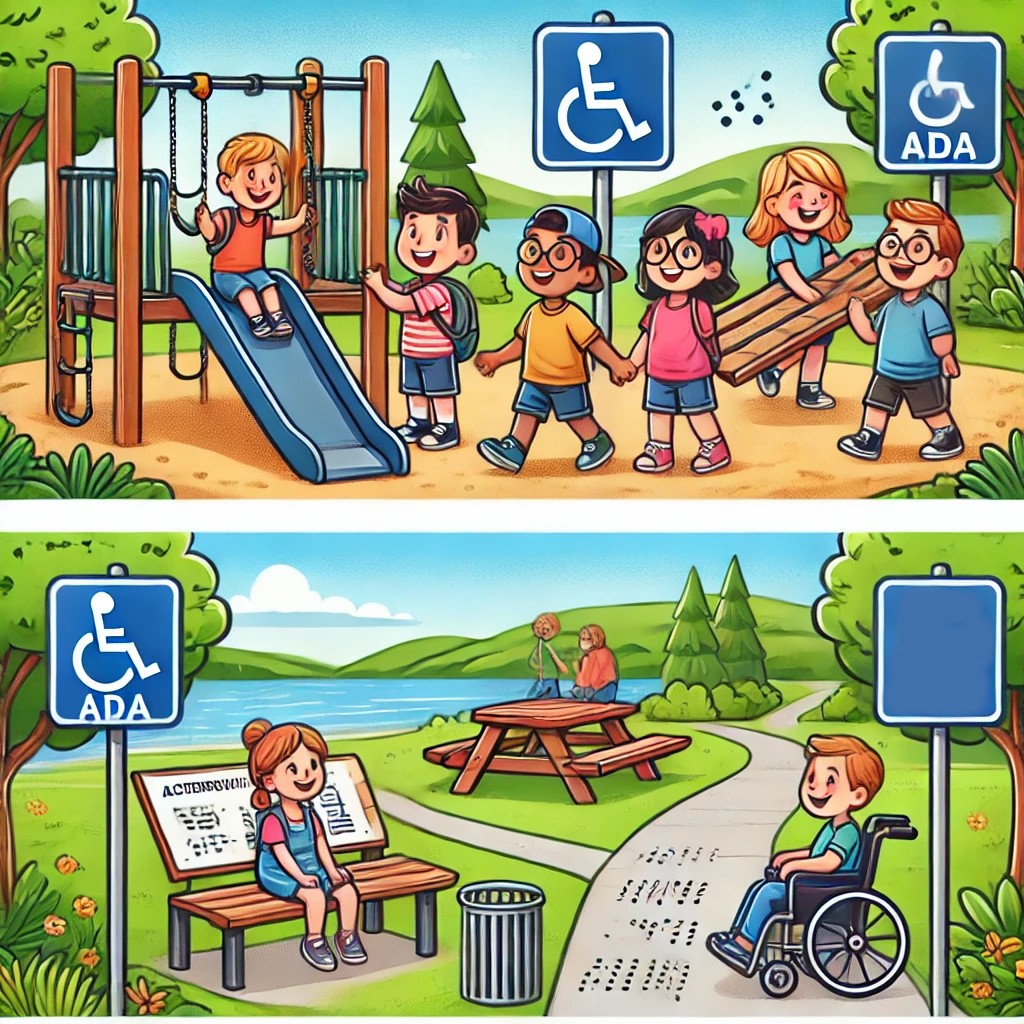
Playgrounds are fundamental recreational spaces for children and emphasizing their accessibility is crucial. ADA-compliant playgrounds feature equipment that is usable by children with various disabilities, including those with mobility impairments, sensory disorders, or developmental disabilities. Ground-level play components like swings, slides, and sandboxes must be accessible and designed for easy use.
Moreover, playground surfaces should be firm, stable, and made of materials that allow for wheelchair movement. Rubberized surfaces or engineered wood fibers are common choices that meet ADA standards. Additionally, ramps and transfer platforms can offer access to elevated play structures, ensuring that children with disabilities can engage in the same play activities as their peers.
Other recreational spaces in parks, such as sports fields, pools, and trails, should also be accessible. Sports fields may need appropriately designed bleachers, while pools should have lifts or sloped entries for those with mobility impairments. Trails should have smooth and stable surfaces, with signage to indicate accessibility features and challenges.
Restrooms and Facilities
Accessible restrooms are a paramount aspect of ADA compliance in recreational facilities. These restrooms should have enough space to accommodate a wheelchair user and provide features such as grab bars, low-mounted sinks, and hand dryers that are easy to reach. Unisex or family restrooms can provide additional privacy and support for visitors with caregivers.
Other facilities like drinking fountains, picnic areas, and information centers should also follow ADA guidelines. Drinking fountains must have spouts at a height that wheelchair users can access easily and be operable with one hand. Picnic tables should have spaces for individuals using wheelchairs to sit comfortably and participate in activities.
Ensuring accessibility in all facilities helps create an inclusive environment where visitors with disabilities feel welcomed and can enjoy the amenities the park has to offer. Small additional touches like braille signs and tactile maps can further assist individuals with visual impairments in navigating the space.
Staff Training and Awareness
A critical component of ADA compliance is ensuring that staff and volunteers are aware of accessibility needs and trained to assist visitors with disabilities. Staff members should be knowledgeable about the accessible features of the facility and be prepared to offer assistance when needed. Regular training sessions can help familiarize staff with disability etiquette and best practices in providing respectful and effective service.
Additionally, staff should be trained to handle emergency situations, ensuring that individuals with disabilities can safely and swiftly evacuate or receive aid during unforeseen events. Emergency preparedness plans should include specific procedures for accommodating and evacuating individuals with disabilities from the facility or park.
Creating a welcoming atmosphere goes beyond physical modifications and relies heavily on the behavior and attitudes of the facility’s personnel. Through comprehensive training and a commitment to inclusivity, facilities can enhance the experiences of all visitors and foster a supportive and accommodating environment.
Challenges and Solutions
Implementing ADA compliance in recreational facilities and parks can come with its set of challenges. Budget constraints often pose a significant hurdle in retrofitting existing structures to meet accessibility standards. However, grants and funding opportunities are available to support such important initiatives. Working with advocacy groups can guide facility managers in locating financial resources.
Another challenge is the potential for disruption during renovation or construction works to improve accessibility. Proper planning and clear communication with the public can help mitigate these disruptions. Offering temporary accessible facilities or alternative arrangements during this period can ensure that visitors with disabilities continue to have access to the park.
Maintaining compliance is an ongoing process that involves regular assessments and updates to facilities. Changes in ADA guidelines may necessitate new modifications, and it’s essential to stay informed and proactive about implementing these changes. Conducting accessibility audits can help identify areas needing improvement and ensure that facilities remain compliant with current standards.
Conclusion: Commitment to Accessibility
ADA compliance in recreational facilities and parks is a commitment to accessibility and inclusivity. It’s about more than just adhering to legal standards; it involves an ongoing dedication to creating spaces where everyone, regardless of their abilities, can enjoy leisure activities and the benefits of nature. By understanding and implementing ADA guidelines, facility managers, city planners, and other stakeholders can make important strides towards fostering equitable and inclusive environments.
Whether you’re involved in the planning, design, or management of recreational facilities and parks, the principles of ADA compliance should guide your efforts. Through accessible routes, inclusive play spaces, accommodating restrooms, and trained staff, recreational facilities can embody the spirit of the ADA and offer enriching experiences for all visitors.
It’s also essential to engage with the community and receive feedback from individuals with disabilities. Their input can provide valuable insight into how facilities can be improved and serve as a reminder of the importance of maintaining compliance. By continuously striving to meet and exceed ADA standards, we can ensure that recreational facilities and parks remain welcoming spaces for everyone.
Frequently Asked Questions
1. What is ADA compliance and how does it apply to recreational facilities and parks?
ADA compliance refers to adherence to the regulations set forth by the Americans with Disabilities Act. These guidelines are designed to ensure that individuals with disabilities have equal access to facilities and services. In the context of recreational facilities and parks, ADA compliance means that these spaces must be accessible to individuals with various disabilities, which may include physical, sensory, and cognitive impairments. This can involve installing ramps, providing accessible pathways, offering braille signage for visually impaired visitors, ensuring that restrooms and facilities accommodate wheelchairs, and much more. The goal is to provide an inclusive environment where everyone, regardless of their abilities, can enjoy recreational activities and the natural beauty of parks.
2. What are the specific requirements for ADA compliance in playgrounds within parks?
Playgrounds have specific ADA requirements to ensure they are inclusive and accessible to children with disabilities. These requirements address both the accessibility of the play area itself and the play equipment. Park designs should incorporate a variety of play components that are accessible by children with different needs, such as elevated play structures that include ramps or transfer stations. Furthermore, the surface under and around the playground equipment should be firm, stable, and slip-resistant, often made from materials like rubber mats or engineered wood fiber, to accommodate mobility devices such as wheelchairs. Entry points to the playground should also have wide enough paths and access points to allow for easy navigation by children and parents using mobility aids.
3. How do swimming pools in recreational facilities ensure ADA compliance?
ADA compliance for swimming pools includes providing accessible entry and exit points for individuals with disabilities. This typically involves one or more accessible means of entry, such as ramps with handrails, transfer walls, or pool lifts, which allow individuals with mobility impairments to safely enter and exit the pool. Larger pools typically require more than one accessible entry point, while smaller pools may only require one. Additionally, recreational facilities should consider accessible seating and pathways around the pool area to ensure full participation in poolside activities such as sunbathing or spectating. Proper signage should also be provided to direct individuals to the accessible routes and facilities.
4. Are there requirements for accessible restroom facilities at parks and recreational areas?
Yes, there are specific ADA standards for restrooms in parks and recreational areas to accommodate individuals with disabilities. Restrooms must provide enough space for a person using a wheelchair to maneuver, which often means adjusting stall dimensions to include wider doorways and turning space. Grab bars must be installed near the toilet for support and safety, and sink heights should be appropriate for use from a seated position. Additionally, faucet levers should be easy to operate by individuals with limited hand mobility, and at least one accessible stall should be available in every restroom. The access pathways to these restroom facilities should be level and easy to navigate, ideally with ramps for any elevation changes.
5. How can outdoor areas like hiking trails and picnic sites be made ADA compliant?
To make outdoor areas like hiking trails and picnic sites ADA compliant, several strategies can be employed. For trails, the focus is on creating pathways that accommodate various mobility aids, which may involve adjusting the width, grade, and surface material of the trail to ensure it’s stable and accessible. This often means minimizing steep inclines, using compacted natural surfaces or gravel that’s suitable for wheelchairs, and providing clear, unobstructed paths. As for picnic sites, accessible tables that accommodate wheelchairs must be provided, ideally with flat, firm ground surface and shade if possible. Additionally, accessibility should be factored into the route to these outdoor features, ensuring paths are clear, well-marked, and easy to traverse for individuals with different abilities. Signs and information should also be available in multiple formats, such as braille and tactile markers for the visually impaired, to improve accessibility for all visitors.