Introduction to ADA Standards and Accessibility
The Americans with Disabilities Act (ADA) plays a crucial role in ensuring accessibility for individuals with disabilities across various spaces and sectors. Introduced in 1990, the ADA is a civil rights law that prohibits discrimination and promotes equal opportunity, particularly in public accommodations, commercial facilities, and private entities that offer specific courses or examinations. One of the most impactful areas where ADA standards come into effect is in the design of bathrooms, including showers and bathtubs. Accessibility in these everyday facilities is vital as it affects the independence, dignity, and safety of many individuals.
Key terms to familiarize oneself with in this context include “accessible design,” which refers to creating environments that can be used by all people, to the greatest extent possible, without the need for adaptation. “ADA compliance” refers to adherence to the rules and standards set forth by the ADA. Another important term is “universal design,” which aligns closely with ADA’s goals, aiming for products and environments to be accessible and usable by everyone, regardless of their age, size, ability, or disability.
This topic emerges as a matter of personal significance for millions of Americans relying on accessible designs for their daily comfort and independence. With the aging population and the increasing recognition of disabilities, integrating ADA standards into showers and bathtubs is not only a compliance issue but also a moral and safety necessity. Understanding these standards deeply and applying them thoughtfully is crucial for architects, builders, business owners, and even homeowners renovating their space to ensure they cater to everyone’s needs.
Detailed Breakdown of ADA Standards for Showers and Bathtubs
Understanding ADA Standard Dimensions for Showers
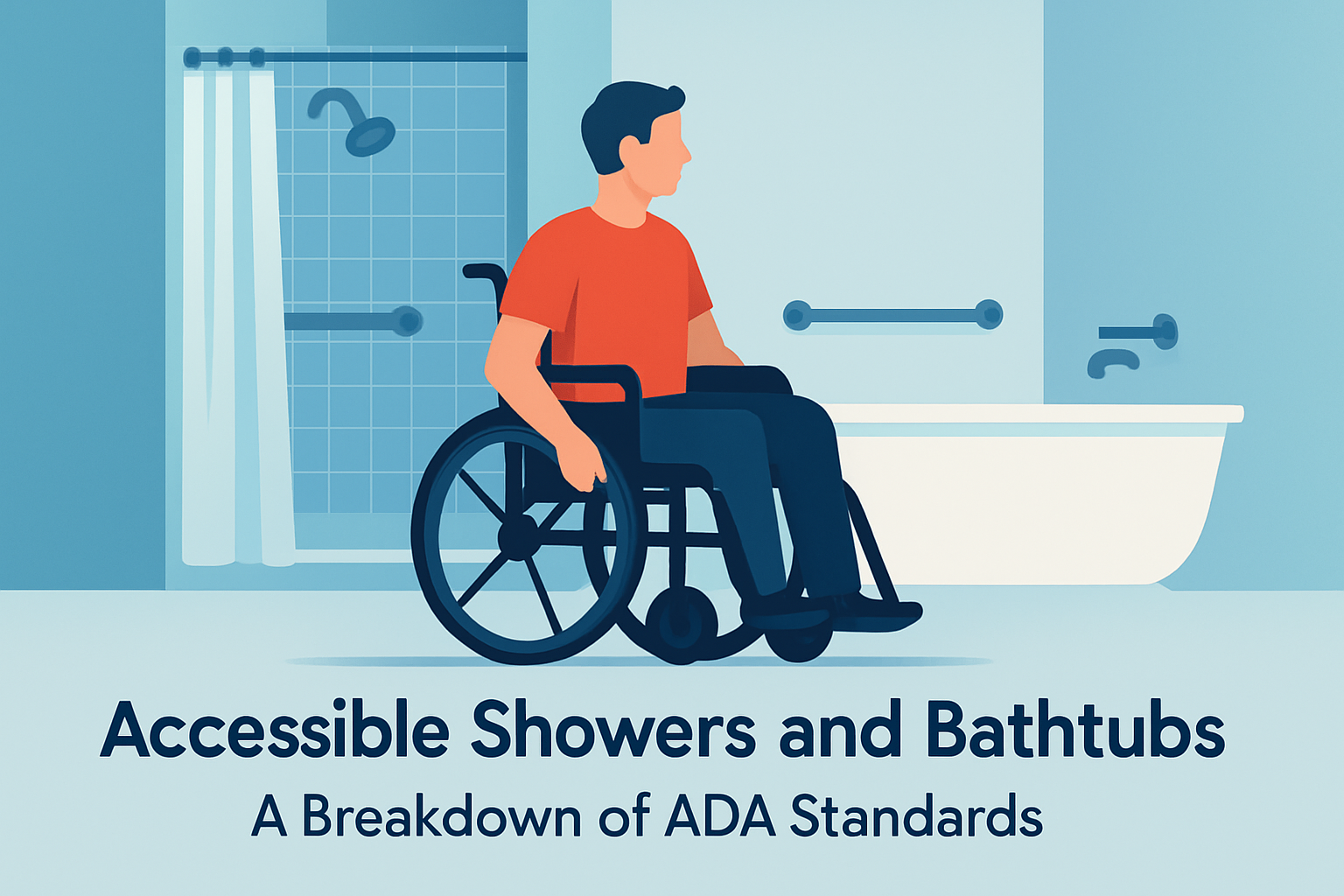
The ADA outlines specific dimensions and characteristics that define an accessible shower. Roll-in showers, for instance, must have clear floor space of at least 30 by 60 inches, allowing a wheelchair user to enter comfortably. There should be no curb or door that might impede access. Grab bars, non-slip floors, and handheld showerheads are vital components, as they provide stability and convenient reach for users. Consider a local gym renovating its facilities to include ADA-compliant showers. The gym consulted the ADA standards, ensuring that both roll-in and transfer showers were installed with non-slip surfaces and strategically positioned grab bars, enhancing accessibility for many users.
Understanding ADA Standards for Bathtubs
In the context of bathtubs, the ADA requires that accessible bathtubs must have seats that are securely mounted and located at the head of the bathtub. Like showers, bathtubs need to have configured grab bars: one at the front and two at the ends, aiding users in entering and exiting safely. The hotel industry often sets a good example by maintaining ADA-compliant bathtubs in their accessible room options. A well-managed hotel ensures both leisure and safety for guests with disabilities, providing peace of mind and fostering loyalty among patrons who rely on such accommodations.
Importance of Grab Bars and Shower Seats
Grab bars must be installed at specific heights and angles to accommodate users of varying needs and enhance safety. ADA standards specify that grab bars should be installed horizontally between 33 and 36 inches from the floor in public toilets, including public showers and bathtubs. These bars must withstand at least 250 pounds of force, rendering them robust and reliable. A community center in a suburban area recently remodeled its public restrooms and integrated ADA-compliant grab bars around all its fixtures. Users noted a profound improvement in their confidence and comfort while utilizing the spaces.
Leveraging Handheld Showerheads for Compliance
Handheld showerheads play a pivotal role in maintaining ADA compliance. These devices must be reachable, operable with minimal effort, and equipped with a non-slip grip. The flexibility they offer is significant; they can be adjusted for height, making them suitable for individuals who are seated or have restricted mobility. Consider a retirement community that recently revamped its resident bathrooms, including adjustable handheld showerheads. This upgrade made showering simpler and more pleasant for residents, accommodating a wide range of users without additional assistance.
Essential Components for ADA-Compliant Design
For facilities to be ADA compliant, they must incorporate various elements. Below is a list outlining these essential components:
- Grab Bars: Essential for safety and must be installed at approved heights and capable of supporting adequate weight.
- Seating: Sturdy and slip-resistant shower and bath seats to facilitate ease of use and safety.
- Handheld Showerheads: Allow easy use for individuals seated or standing; should be within reach and operable with one hand.
- Clearance: Adequate turn and approach space, without obstacles, for wheelchair access.
- Non-slip Surfaces: Ensures safety, preventing slips and falls.
Comprehensive Layout Considerations
The layout is a critical aspect of accessible bathrooms. Here, attention to clearance—both in terms of space and fixtures—is vital. Wheelchair users should have enough room to maneuver from their chair to a shower bench or bathtub. Often, these spaces must be larger than standard designs to accommodate various use scenarios. A hospital recently upgraded its patient rooms, incorporating wider bathrooms and ADA-compliant layouts, facilitating easier transitions for patients requiring assistance while maintaining the privacy and independence of those able to manage independently.
Maintaining Safety and User Comfort through ADA Design
Compliance goes beyond mere installation—it encompasses integration into daily use, considering fixture characteristics like non-slip surfaces, and focusing on providing a comfortable experience for each user. Facilities that prioritize not just technical compliance but also practical usability make a genuine difference in the lives of those they serve. A family-owned nursing care facility consulted ADA experts to not only comply but also innovate within those frameworks, resulting in a space universally praised for its thoughtful design and commitment to resident welfare.
Summary and Next Steps
Integrating accessible showers and bathtubs aligned with ADA standards is a vital endeavor for any space utilized by the public or individuals with specific needs. Each element, from dimensions and seating to grab bars and handheld showerheads, is meticulously designed to afford safety, dignity, and ease of use. Incorporating these standards serves as a clear testament to inclusivity and a commitment to enhancing quality of life for everyone.
For those in charge of maintaining or constructing these crucial spaces, understanding the depth of ADA standards is critical. For professionals and homeowners alike, the advantages of investing in accessible showers and bathtubs cannot be overstated—from safeguarding user well-being to fostering a truly inclusive environment. Whether updating a commercial property or planning a home renovation, implementing these standards consistently delivers favorable outcomes. Take steps today to ensure your spaces are compliant, accessible, and welcoming to all.
Frequently Asked Questions
1. What are the essential ADA requirements for accessible showers?
Accessible showers under the ADA require compliance with certain standards to ensure they meet the needs of individuals with disabilities. These requirements include providing proper clear floor space outside the shower to allow for wheelchair turning space, typically a minimum of 36 inches by 48 inches. Inside the shower, a permanent or temporary stool is recommended, allowing users to sit while showering. The shower should be equipped with a handheld shower wand on a sliding vertical bar mounted between 48 and 72 inches above the floor. Grab bars must be installed horizontally on all walls of the shower, positioned at a height between 33 and 36 inches from the shower floor. It is critical that these grab bars can support at least 250 pounds of pull force. Moreover, the shower controls must be easy to operate, without requiring tight grasping or twisting of the wrist. Additionally, the shower floor should be slip-resistant, and the entry to the shower should be low or barrier-free without any steps to facilitate easy access for wheelchair users.
2. What makes a bathtub ADA compliant, and are there different types to consider?
An ADA compliant bathtub adheres to specific guidelines to ensure accessibility for individuals with mobility impairments. Generally, ADA standards dictate that a bathtub must provide a clear floor space of at least 30 by 48 inches outside the tub for wheelchair maneuvering. The most significant features of ADA-compliant bathtubs include a transfer seat, grab bars, and an accessible height for easy entry and exit. The rim of the tub should not be higher than 17-19 inches above the floor to allow easy transfer from a wheelchair. These tubs also require grab bars on multiple sides, with positions ranging between 33 to 36 inches above the floor. Different types of ADA bathtubs include walk-in tubs, which have doors to facilitate entering and exiting without stepping over the rim. Walk-in tubs are particularly beneficial for those who have limited balance or coordination. Another variety is the transfer tub, which incorporates a built-in seat that makes lateral transfer from a wheelchair safer and more manageable.
3. Can existing bathrooms be renovated to meet ADA standards? If so, how?
Absolutely, existing bathrooms can be adapted to meet ADA standards, though the scope and scale of renovations might vary depending on the current layout and the specific needs of the user. To begin, assessing the space for potential modifications is essential. One might need to widen doorways to at least 32 inches to allow for wheelchair access. Installing or lowering the thresholds to a maximum height of half an inch can also facilitate ease of access. For the shower, replacing a standard bath with a roll-in shower might be necessary, deploying necessary grab bars and non-slip flooring. Relocating or adjusting the height of fixtures such as sinks, mirrors, and toilets can also help keep them within ADA compliance, considering dimensions that facilitate reach for someone in a wheelchair. If a bathtub is to be included, replacing a standard tub with a walk-in tub or one with a transfer seat might be an option. It’s always advisable to consult with a professional who is knowledgeable about ADA regulations for a thorough assessment and appropriate implementation of changes.
4. Why are grab bars important in ADA-compliant showers and bathtubs, and how should they be installed?
Grab bars are critical components in ADA-compliant showers and bathtubs because they provide stability and support, significantly reducing the risk of falls and injuries. This safety feature is especially important for individuals with mobility challenges or those who require additional support due to age or disability. According to ADA standards, grab bars must be installed to withstand at least 250 pounds of force, ensuring durability and reliability for users. The bars should be installed horizontally and positioned 33 to 36 inches above the bathroom floor. In showers, grab bars should be positioned along all walls, ensuring they are within reach when standing or sitting. For bathtubs, at least two grab bars should be mounted both vertically and horizontally, facilitating easy transfer in and out of the tub. Their correct placement ensures that users can always find a point of leverage while maintaining their balance, thereby promoting confidence and independence in performing daily hygiene tasks.
5. Are there any design considerations for making showers and bathtubs more user-friendly beyond ADA requirements?
While adhering to ADA requirements is essential, further design considerations can enhance user experience, making showers and bathtubs even more accessible and functional. Incorporating user-friendly features such as anti-scald valves can help maintain water temperature at a safe level, preventing burns. Installing lever-style handles for shower controls and taps can allow for easier operation, particularly beneficial for individuals with limited hand strength. Additionally, using a contrasting color scheme for grab bars and controls helps visually impaired users identify them more readily. Lighting is another crucial consideration; ample, well-distributed lighting improves visibility and safety within the bathroom. Moreover, placing shelves within reach but out of the way can offer additional storage for bath products without creating obstacles. Customizable features like adjustable shower heads and height-adjustable benches can also cater to the personal preferences and needs of different users, further enhancing the accessibility and usability of the space.