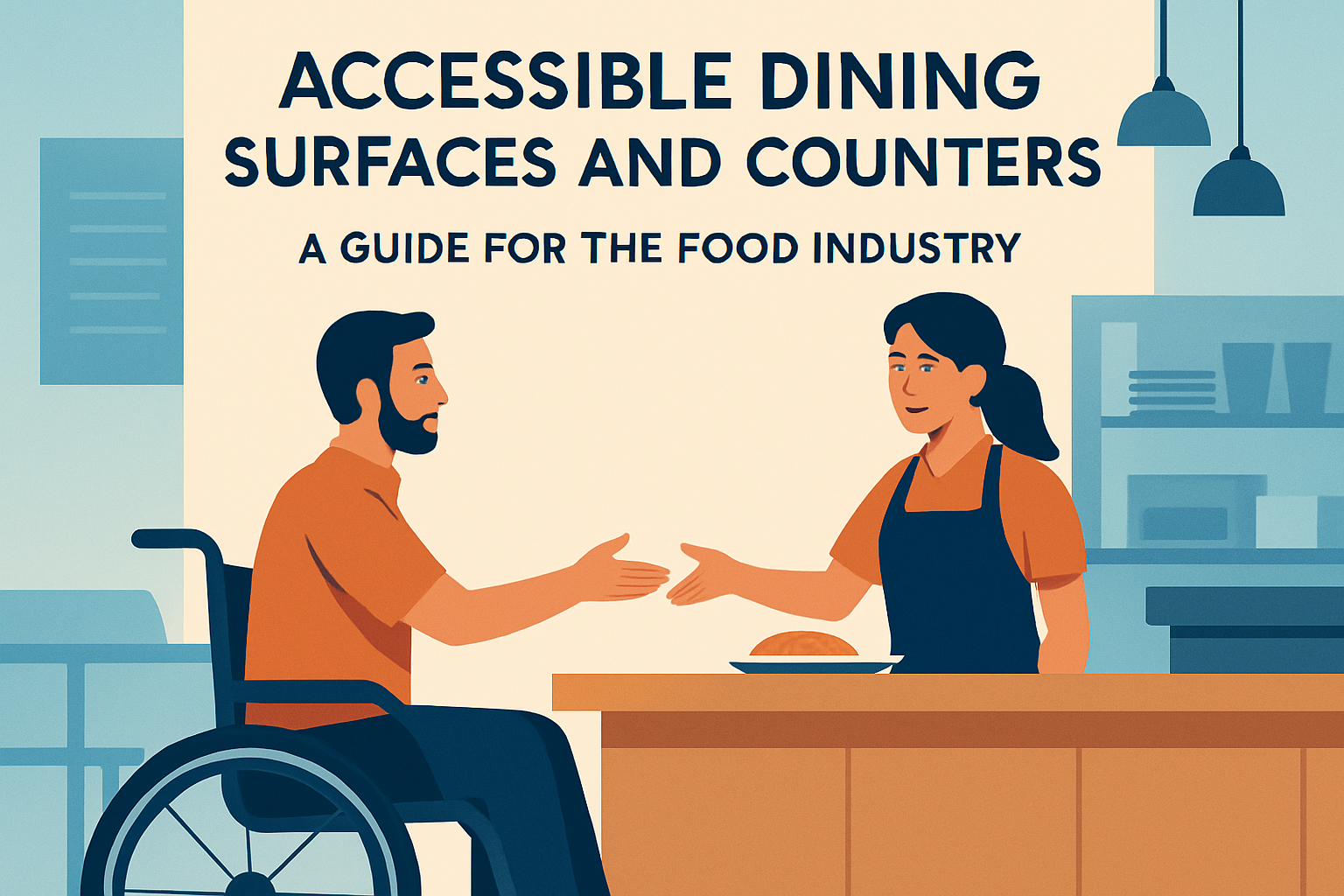
Accessible dining surfaces and counters shape whether a restaurant, café, hotel buffet, or food hall genuinely welcomes every guest, because usability is determined not only by menus and service but also by the physical points where people eat, order, pay, and interact. In food service design, accessible dining surfaces include tables, bars, checkout counters, tray slides, condiment stations, and service desks built so people with disabilities can approach, reach, and use them with dignity. I have worked with operators during renovations where owners focused heavily on finishes and branding, yet the biggest guest complaints came from table heights, knee clearance, crowded circulation paths, and inaccessible pickup counters. That pattern is common across the industry. Accessibility in this context means aligning layout and fixtures with recognized standards, especially the Americans with Disabilities Act Standards for Accessible Design, while also thinking beyond minimum code. It matters because accessible counters directly affect guest independence, legal compliance, service speed, and brand trust. A dining room can look modern and still exclude wheelchair users, people of short stature, guests with limited upper-body reach, older adults, or parents managing mobility equipment. When surfaces are thoughtfully designed, the practical benefits are immediate: easier ordering, safer transfers, better line flow, and less staff intervention. For operators, that translates into fewer barriers, lower complaint risk, and a more consistent guest experience across lunch rushes, family dining, and quick-service peaks.
What Makes a Dining Surface or Counter Accessible
An accessible dining surface or counter is one that a guest can approach, reach, and use without unreasonable assistance. In practice, that means providing suitable height, clear floor space, knee and toe clearance where required, and an unobstructed route. Under the 2010 ADA Standards, dining surfaces and work surfaces intended for use by the public generally need a top between 28 and 34 inches above the finish floor, with adequate knee clearance so a wheelchair user can pull in. Accessible sales and service counters often require at least a 36-inch-long portion no higher than 36 inches. Those numbers are the baseline most architects, facility managers, and health care hospitality teams work from, and they are the first figures I verify on plan reviews. However, real accessibility is not only dimensional. Edge profiles, pedestal bases, overhanging aprons, table leg placement, and undercounter storage can make a technically compliant fixture frustrating in actual use. I have seen operators install decorative support rails beneath stone tops that wiped out knee clearance. Others placed QR code stands, napkin caddies, or POS hardware on the only lowered section of a service counter, effectively removing access. A useful rule is simple: if the accessible portion becomes the dumping ground for accessories, it is not accessible in operation. The most effective designs preserve both compliant dimensions and practical usability throughout service.
Core ADA Measurements Food Businesses Should Know
Food operators do not need to become code consultants, but they do need to understand the measurements that repeatedly drive accessibility outcomes in dining rooms and ordering areas. The table below summarizes the dimensions I most often review with restaurant teams before procurement and installation.
| Element | Typical ADA Reference | Why It Matters in Food Service |
|---|---|---|
| Dining or work surface height | 28 to 34 inches above floor | Allows seated guests to eat, sign receipts, or use condiments comfortably |
| Accessible counter height | 36 inches maximum for accessible portion | Makes ordering, payment, and pickup possible without excessive reach |
| Accessible counter length | 36 inches minimum | Provides usable space for trays, payment devices, and guest interaction |
| Knee clearance height | 27 inches minimum | Lets wheelchair users pull under a table or counter |
| Knee clearance width | 30 inches minimum | Prevents table bases and legs from blocking approach |
| Clear floor space | 30 by 48 inches minimum | Creates a usable approach area at tables, self-service, and payment points |
These measurements come up in nearly every concept type, from quick-service chains to fine dining. Yet compliance depends on conditions around the fixture. A 34-inch table is not truly usable if banquette spacing leaves no turning room. A lowered POS ledge fails if queue stanchions block the 30-by-48-inch clear floor space. For this reason, accessibility reviews should happen after furniture plans, equipment schedules, and merchandising plans are layered together, not before.
Dining Room Layout, Seating Mix, and Guest Experience
Accessible dining is never solved by ordering one compliant table and placing it in the least desirable corner. The ADA requires a dispersed seating approach in many contexts, and good hospitality demands more than minimum quantity. Guests should have real choice in location, view, party size, and proximity to service zones. In my experience, the strongest layouts blend accessible two-tops, four-tops, communal tables with usable end positions, and bar alternatives for guests who cannot use raised seating. This is especially important in full-service restaurants where social experience is part of the value proposition. If the only accessible table is next to the kitchen swing door, the business has met neither the spirit of inclusion nor the expectations of modern diners.
Layout also affects acoustics, safety, and service timing. When aisles are too narrow or furniture is overpacked, guests using wheelchairs, walkers, or service animals encounter constant friction. Servers carrying trays then have to negotiate around constrained paths, increasing collision risk. Operators often chase seat count, but the extra revenue from one more table can disappear quickly if the room becomes difficult to navigate and negative reviews follow. I have advised owners to model circulation during peak service using actual chair pull-out dimensions, not just plan symbols. That exercise often reveals that a room which appears efficient on paper becomes unworkable once high chairs, booster seats, delivery bags, and waiting guests are added. Accessible seating should be integrated near windows, booths with removable chairs, and standard table zones so guests are not segregated.
Accessible Service Counters, Ordering Points, and Payment Areas
Counters are where accessibility failures become visible fastest because every guest must use them. In quick-service and fast-casual settings, the most common problem is a beautifully finished front counter with no meaningful lowered transaction area. Designers may specify a narrow shelf that meets the drawing but does not accommodate a tray, card reader, and handoff space at the same time. For practical accessibility, the lowered portion should be wide enough to support conversation, payment, and product exchange without forcing the guest to shift sideways. Portable card terminals can help, but they should not be the only solution because batteries die, cords fail, and staff habits vary.
Self-order kiosks add another layer. If a restaurant uses kiosks, at least one should be positioned with accessible reach ranges, clear floor space, and screen visibility for seated users. The same logic applies to beverage stations, salad bars, utensil dispensers, and pickup shelves. Reach range matters: a guest may technically approach a station but still be unable to obtain lids, straws, sauces, or to-go bags if they are stored too high or too deep. Coffee shops often overlook this issue at condiment bars, where milk pitchers, stirrers, and trash openings are clustered on elevated counters. Better practice is to place high-use items within comfortable forward reach and avoid creating a separate inaccessible finishing step after purchase. In a compliant, well-run operation, a guest should be able to order, pay, collect essentials, and dine without relying on staff rescue for routine tasks.
Materials, Furniture Selection, and Operational Durability
Choosing accessible tables and counters is not only about dimensions; it is also about whether the fixture performs under commercial use. Restaurants need tops that resist heat, cleaning chemicals, moisture, and impact, but they also need edge conditions that are comfortable for forearm support and easy to grip around. Thick decorative aprons, central columns with oversized bases, and rough reclaimed surfaces frequently create barriers. I generally recommend reviewing shop drawings for underside conditions just as carefully as top finishes. A table can appear perfect from above and fail from below because support framing intrudes into knee space.
Furniture flexibility is another practical factor. Freestanding tables often outperform fixed millwork because they can be reconfigured for parties and cleaning while preserving access. However, light tables that slide easily can create instability for guests transferring weight. The right answer is usually commercial-grade bases with stable footprints and predictable leg placement. In bars and food halls, providing some accessible-height ledges or communal counters near standing zones preserves the social energy of the concept while broadening usability. Materials should also support visual contrast. Guests with low vision benefit when counter edges, table boundaries, and transaction ledges are easy to distinguish from surrounding finishes. Matte surfaces can reduce glare from daylight and pendant lighting, which matters more than many operators realize during breakfast and lunch periods.
Common Compliance Mistakes and How to Prevent Them
Most accessibility failures in food environments are preventable because they result from coordination gaps rather than impossible constraints. One recurring mistake is treating accessibility as a last-minute checklist item after millwork fabrication has begun. By then, changing heights, overhangs, or support locations becomes expensive. Another frequent error is confusing “ADA-inspired” furniture with verified compliant dimensions. Vendors may label a table accessible without accounting for pedestal encroachment, apron depth, or actual installed height after glides and tops are assembled. I always advise operators to request cut sheets with full dimensional data and to field-verify a sample before approving a large order.
Operators also forget that temporary conditions can break compliance. Queue ropes, merchandise displays, stacked high chairs, seasonal décor, and mobile trash units often migrate into clear floor spaces. Staff training matters because a perfect layout can be undermined during a busy shift. Build accessibility checks into opening and closing side work: confirm that lowered counter sections are clear, accessible tables are not combined into inaccessible formats, and aisles remain unobstructed. Maintenance is equally important. Wobbly tables, damaged flooring transitions, and warped tabletops can turn a nominally accessible area into a frustrating or unsafe one. The best prevention strategy is to make accessibility part of routine operational audits, just like food safety and restroom checks. When managers inspect the guest path weekly, small issues are corrected before they become complaints or legal exposure.
Designing Beyond Minimum Code for Better Hospitality
Minimum code is the floor, not the goal. The food businesses that earn strong guest loyalty usually design beyond strict compliance by considering comfort, independence, and choice. That can mean offering more accessible seating types than required, lowering a larger section of a pickup counter, using handheld payment devices proactively, or ensuring buffet labels are readable from seated height. Hotels and senior living dining venues often lead here because they understand that accessibility intersects with aging, temporary injury, and family dining patterns. Mainstream restaurants can learn from that approach.
There is also a business case. Inclusive design widens the customer base and reduces service friction for many people who do not identify as disabled but still benefit from better ergonomics. Parents with strollers, travelers with luggage, delivery couriers, and older adults all move more easily through generous layouts and usable counters. From an SEO and discoverability standpoint, accessibility information can support location pages, FAQs, and reservation content. If your site clearly explains accessible seating availability, counter service accommodations, and entry features, you answer high-intent search queries directly and reduce uncertainty before the visit. Review your dining room, order point, and pickup process with the same seriousness you apply to menu engineering. Then document improvements, train staff, and invite feedback. Accessible dining surfaces and counters are not a niche upgrade; they are a core hospitality standard that makes service smoother, compliance stronger, and every guest more likely to return.
Frequently Asked Questions
What makes a dining surface or counter truly accessible in a food service environment?
An accessible dining surface or counter is one that people with a wide range of disabilities can approach, reach, and use comfortably, independently, and safely. In practical terms, that means more than simply providing a lower table somewhere in the room. Accessible design in restaurants, cafés, hotel buffets, and food halls should consider clear floor space for wheelchair users, usable surface heights, knee and toe clearance under tables or counters, and enough circulation space so guests using mobility devices can move through the area without difficulty. A surface may look modern and attractive, but if a guest cannot pull up to it, reach items placed on it, or complete a transaction without strain, it is not genuinely accessible.
Accessibility also includes how the surface functions during real service. For example, a host stand, self-service station, condiment counter, or payment counter should be designed so a person who is seated, has limited reach, or uses one hand can still access what they need. Materials and edges matter as well; stable, smooth, and well-supported surfaces are easier and safer to use. In short, accessible dining surfaces and counters are not defined by one measurement alone. They are defined by whether they support dignified, inclusive use at every point where guests eat, order, pay, or interact with staff.
Which types of dining surfaces and counters should food businesses prioritize for accessibility?
Food businesses should think beyond guest tables and address every touchpoint where a customer interacts with the space. Dining tables are an obvious priority because they directly affect whether guests can sit and eat comfortably. However, accessible design should also extend to order counters, cash wrap and payment stations, bar-height seating alternatives, buffet counters, tray slides, beverage stations, pickup shelves, condiment areas, and service desks. If a guest can enter the building but cannot place an order, carry a tray, pour a drink, add utensils, or pay without assistance, the experience is still limited.
Prioritization should be based on both frequency of use and importance to customer independence. For example, in quick-service environments, ordering and pickup counters may be just as critical as seating. In hotels or institutional dining settings, buffet lines and beverage stations may require special attention because they often involve reaching, balancing, and moving through tight spaces. In bars and cafés, it is important to offer accessible alternatives to exclusively high-top seating or tall service counters. A thoughtful operator evaluates the entire guest journey from entrance to exit and identifies where physical barriers appear. The goal is not to create one compliant feature in isolation, but to build an environment where accessibility is integrated into the core customer experience.
How do accessible counters and dining surfaces improve the guest experience and business performance?
Accessible counters and dining surfaces improve the guest experience by reducing frustration, preserving independence, and making guests feel respected rather than accommodated as an afterthought. When a guest can approach a table easily, place an order without stretching awkwardly, and pay at a counter designed for comfortable interaction, the experience becomes smoother and more welcoming. This is especially important for wheelchair users, older adults, people with limited mobility, individuals with balance or stamina challenges, and many others whose needs may not be immediately visible. Accessibility often benefits companions and family members as well, making group dining more comfortable and reducing service delays.
From a business perspective, accessible design supports broader customer reach, stronger brand reputation, and better service efficiency. Guests remember when a venue is easy to navigate and use, and they also remember when it is not. Inclusive dining environments encourage repeat visits, positive word of mouth, and stronger loyalty among customers who value equitable access. Accessibility can also reduce awkward service workarounds for staff, such as needing to carry payment terminals around barriers or rearrange furniture on the spot. In a competitive hospitality market, accessibility is not only a compliance issue; it is a customer experience strategy and a sign of operational professionalism.
What are common mistakes restaurants and other food businesses make when designing accessible dining areas?
One common mistake is assuming that accessibility is achieved by adding a single lower table or one lowered section of counter without reviewing how the entire space functions. A restaurant may technically include an accessible table, but place it in a cramped corner, block it with movable furniture, or position it along a circulation route where it feels temporary or inconvenient. Another frequent issue is focusing only on seated dining while overlooking ordering, self-service, payment, and pickup points. Guests need access throughout the full service process, not just once they sit down.
Other mistakes include using pedestal or base designs that interfere with wheelchair positioning, selecting decorative overhangs or supports that reduce knee clearance, installing counters that are visually appealing but too high for practical use, and crowding aisles with chairs, displays, or queue barriers. Self-service areas often create problems when essential items such as cups, utensils, napkins, lids, or condiments are placed out of reach. High-top concepts can also unintentionally exclude guests if no equivalent accessible seating or service option is available. The most effective way to avoid these issues is to assess accessibility during planning, not after installation, and to review spaces from the perspective of real use rather than blueprint assumptions alone.
How can operators evaluate and improve existing dining surfaces and counters without a full renovation?
Many meaningful accessibility improvements can be made without undertaking a complete remodel. Operators can start by auditing the guest journey and observing how people actually use the space. Check whether guests using wheelchairs or walkers can reach and use tables, whether payment devices are easy to access, whether self-service items are within reasonable reach, and whether queue lines and furniture layouts create bottlenecks. Sometimes the biggest barriers come from operations rather than architecture, such as tables being rearranged too tightly, portable signage blocking approach space, or supplies being stored on lowered counter sections.
Practical improvements may include reconfiguring furniture layouts to create better clearances, ensuring a consistent number of accessible tables remain available, relocating frequently used items to more reachable positions, adding portable payment options, adjusting service procedures, and training staff to recognize and maintain accessible features. Businesses can also review whether lowered sections of counters are truly usable or simply decorative, and whether accessible seating is distributed across the venue rather than isolated in undesirable locations. For larger improvements, consulting an accessibility specialist or experienced design professional can help identify upgrades with the greatest impact. The most successful operators treat accessibility as an ongoing operational standard, not a one-time construction detail.