Introduction to Accessible Checkout Aisles
Accessibility in retail is not just about compliance with legal requirements; it is an ethical commitment to inclusivity. One crucial area that often needs more attention in terms of accessibility is checkout aisles. But what exactly are accessible checkout aisles, and why are they important? Accessible checkout aisles are designed to accommodate customers with disabilities, ensuring an equal and seamless shopping experience for everyone. These aisles feature adequate width for wheelchair users, lowered counters for easy reach, and clear signage for individuals with visual impairments. Making checkout aisles accessible demonstrates a retailer’s dedication to serving all customers, and it can drastically improve the shopping experience for individuals who might otherwise face physical barriers.
Implementing accessible features is essential as the world gravitates towards inclusivity. According to the World Health Organization, over one billion people worldwide experience some form of disability, and they represent a significant portion of the consumer market. Optimizing checkout aisles for accessibility not only complies with legal standards, such as the Americans with Disabilities Act (ADA) in the United States but also reflects a brand’s values. Improving these aisles is an investment in customer satisfaction and loyalty, ensuring that every shopper feels welcomed and valued. This article breaks down various aspects of ensuring accessible checkout aisles, delves into some real-world examples and provides comprehensive guidance for retailers looking to enhance their stores’ accessibility.
Designing Accessible Checkout Aisles
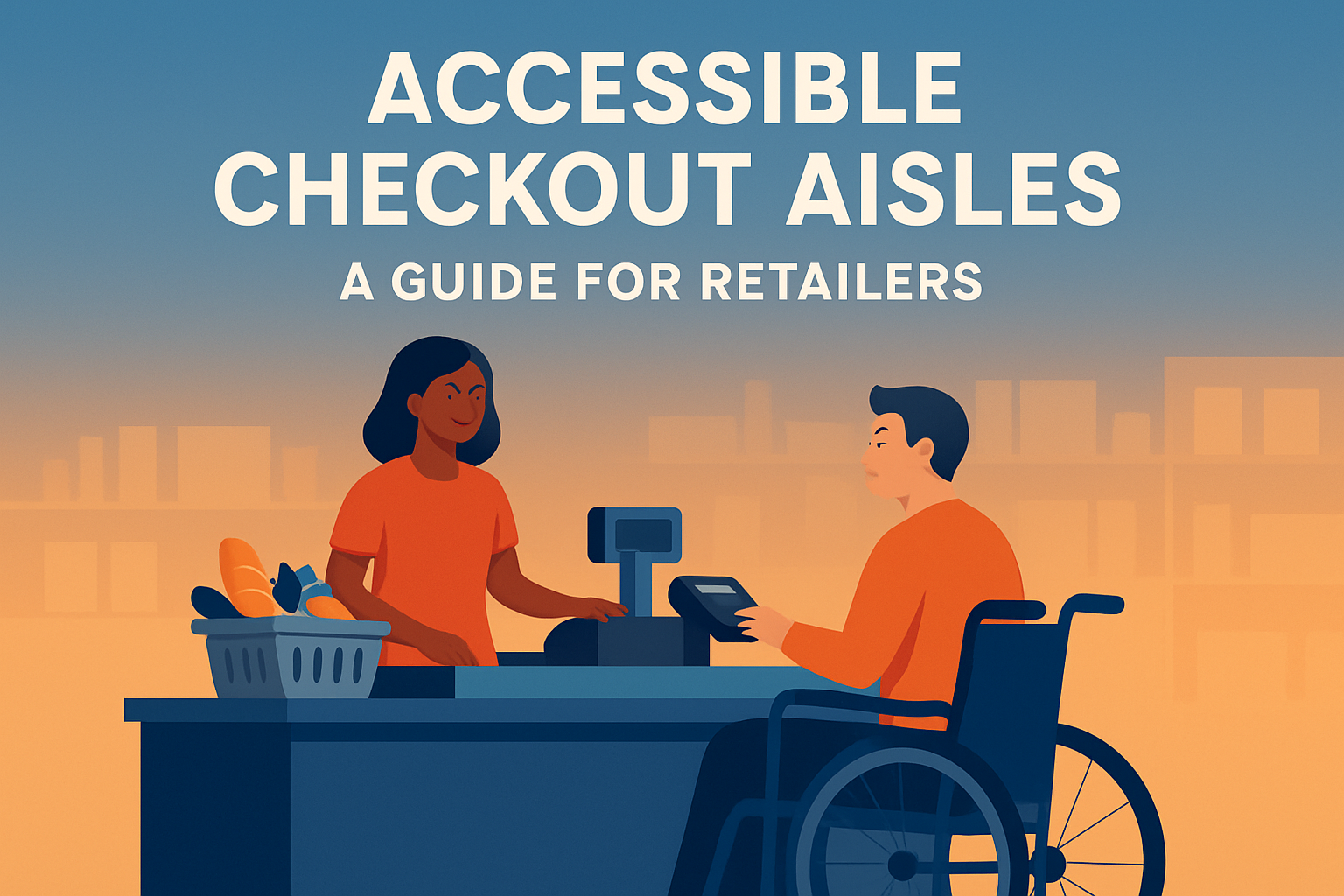
Design is the cornerstone of accessibility at the checkout. Accessible aisles must be wide enough for wheelchair users, provide enough space for individuals to maneuver comfortably, and be free of obstructions. The ADA recommends a minimum aisle width of 36 inches. This width accommodates most mobility devices, ensuring smooth navigation. Additionally, the height of checkout counters should be reconsidered, with an optimum height being around 34 inches or lower. Features such as lowered card readers and accessible reach for bagging stations are equally important.
Real-world examples reveal how retailers are implementing innovative designs to maximize accessibility. Target, a leading American retail corporation, has incorporated wider aisles in many of its stores and actively redesigns spaces to enhance comfort for all shoppers. Their next step includes digital touchpoints, allowing self-checkout kiosks to offer adjustable screen heights. Retailers must remember that design isn’t just about meeting minimum specifications; it’s about exceeding customer expectations and creating a positive shopping experience for everyone.
Technology and Accessibility
The intersection of technology and accessibility has opened new avenues for improving checkout experiences. Integrating technologies such as speech-to-text and text-to-speech at checkout stations is increasingly important. These features assist customers with disabilities, such as those affecting vision or hearing. Automated checkout systems can provide voice guidance, while display screens should have adjustable contrast options for better visibility.
For example, the British supermarket chain Tesco has embraced technology to boost accessibility. They have equipped their self-service machines with touch interfaces optimized for use by customers with dexterity challenges and installed voice assistance systems. These technological advancements ensure that checkout remains a convenient and accessible process for everyone. Investing in technology enables retailers to accommodate diverse customer needs and reflects a commitment to leveraging innovation for inclusivity.
Training and Customer Support
Beyond physical and technological adjustments, staff training is a crucial element in creating accessible checkout aisles. Employees must be educated on the importance of accessibility and trained to offer assistance where needed. Understanding how to operate accessible features, providing clear communication, and being empathetic towards customers with disabilities are essential skills for retail staff.
- Conduct regular training sessions focusing on accessibility.
- Train staff on how to operate accessibility features on checkout machines.
- Promote awareness of the challenges faced by individuals with disabilities.
- Implement procedures to assist customers effectively and kindly.
Whole Foods is an exemplary model of prioritizing such initiatives. The company regularly organizes training workshops, emphasizing inclusivity and accessibility. This commitment ensures a supportive environment where employees are well-prepared to assist any customer, regardless of their needs. Retailers should consider creating and reinforcing policies that emphasize accessibility as integral to customer service. Such practices build an inclusive culture and empower employees to deliver exceptional support.
Evaluating and Improving Accessibility
Accessibility is an ongoing process that requires continuous evaluation and improvement. Retailers should regularly assess the effectiveness of their accessible checkout aisles to ensure they meet evolving standards and customer needs. Gather feedback from customers, especially those with disabilities, to identify areas needing enhancement. Regular audits and assessments can offer valuable insights into potential improvements. These evaluations should consider design, technology, staff training and customer feedback.
| Evaluation Aspect | Considerations | Improvement Opportunities |
|---|---|---|
| Design | Width, Height, Layout | Redesign for better maneuverability in tight spaces |
| Technology | Voice Assistance, Screen Adjustment | Upgrade to incorporate AI-driven assistance tools |
| Training | Skill Learning, Empathy | Develop comprehensive, ongoing training programs |
| Customer Feedback | Surveys, Direct Feedback | Establish a feedback loop for continuous improvements |
A case in point is Amazon, which actively seeks out customer and employee feedback to evaluate its processes. Through rigorous assessments, they have improved their accessibility features across various platforms, including physical locations. This proactive approach serves as a benchmark for retailers interested in enhancing accessibility. Embracing assessment offers a clear roadmap for improvement and underscores a retailer’s dedication to maintaining high accessibility standards.
Conclusion
Accessible checkout aisles are more than a design requirement; they epitomize inclusivity and respect for the diverse nature of modern consumers. This guide highlights the critical aspects of designing, implementing, and improving accessibility in retail settings. By focusing on these elements, retailers can foster an environment where every shopper is valued and accommodated. Enhancing accessibility is not just a compliance issue; it is about enriching the customer experience and being at the forefront of inclusive retail practices.
Retailers must move beyond compliance and embrace accessibility as a core business value. In doing so, they not only adhere to legal requirements but also appeal to a broader customer base. A simple yet profound call to action for retailers is to conduct a comprehensive accessibility audit of their stores and identify areas for improvement. Take the first step today towards cultivating an inclusive and welcoming retail environment for all customers, regardless of their physical abilities. By prioritizing accessibility, retailers ensure a robust, accommodating shopping experience while solidifying their reputation as champions of inclusive practices.
Frequently Asked Questions
1. What defines an accessible checkout aisle in a retail setting?
An accessible checkout aisle is specifically designed to accommodate customers with disabilities, ensuring that everyone has the opportunity for a smooth and efficient checkout process. These aisles are wider than typical ones to allow easy navigation for those using wheelchairs, walkers, or other mobility aids. They are also equipped with features like lower countertops and accessible payment terminals that can be reached comfortably by individuals with various disabilities. By considering these aspects, retailers create an inclusive environment that respects the dignity of all customers and demonstrates a commitment to equal service for everyone.
2. Why are accessible checkout aisles important for retailers to implement?
Accessible checkout aisles are critical for a plethora of reasons. Firstly, they ensure compliance with legal standards such as the Americans with Disabilities Act (ADA), which mandates that public spaces, including retail stores, must be accessible to individuals with disabilities. More importantly, they represent an ethical responsibility towards inclusivity. By implementing accessible checkout aisles, retailers not only foster a positive shopping experience for customers with disabilities but also enhance their brand image by showing they care for every customer’s needs. Additionally, failing to provide accessible options can lead to negative customer experiences and potential legal consequences. Overall, accessible checkout aisles contribute to a more welcoming environment that invites a wider customer base, benefiting both customers and businesses alike.
3. How can retailers ensure their checkout aisles are truly accessible?
To ensure that checkout aisles are genuinely accessible, retailers should engage in comprehensive planning and frequent evaluation. This starts with designing aisles that meet width requirements to accommodate various mobility devices. It’s also important to lower countertop heights and adjust the placement of credit card readers and cash registers for ease of use. Retailers should also provide adequate signage to indicate accessible aisles, ensuring they are clearly visible. Staff training plays a crucial role in this process as well. Employees should be trained to assist customers with disabilities with respect and awareness of their specific needs. Additionally, retailers can seek feedback directly from customers with disabilities to make continuous improvements and demonstrate genuine commitment to accessibility.
4. Are there any common misconceptions about accessible checkout aisles?
Yes, several misconceptions can hinder the effective implementation of accessible checkout aisles. A prevalent myth is that only large retailers need to implement these changes; however, accessibility requirements apply to all retail settings, regardless of size. Another misconception is that accessibility is prohibitively expensive. While there may be some upfront costs, these are often offset by the increased customer base and enhanced reputation. Additionally, some believe that accessible aisles are only useful to those with visible disabilities, ignoring the needs of individuals with hidden disabilities, such as cognitive impairments or chronic pain conditions. It’s essential to approach accessibility holistically, recognizing that different customers have different needs, and that accessibility benefits everyone by creating a more streamlined and inclusive shopping experience.
5. What are the benefits of having accessible checkout aisles beyond legal compliance?
Beyond legal compliance, accessible checkout aisles expand the potential customer base by welcoming people with disabilities into the store, thus increasing sales opportunities. They also enhance customer satisfaction and loyalty, as people are more likely to return to businesses where they feel accommodated and respected. Additionally, these aisles serve as a tangible demonstration of a retailer’s commitment to inclusivity and diversity, positively impacting a company’s public image and setting it apart from competitors. Furthermore, creating an accessible environment can inspire other businesses to follow suit, contributing to a broader culture of accessibility and inclusiveness in retail. Investing in accessibility updates can lead to long-term benefits that extend well beyond immediate financial gains, including fostering community goodwill and building a rapport with consumers who value inclusivity as a core principle.