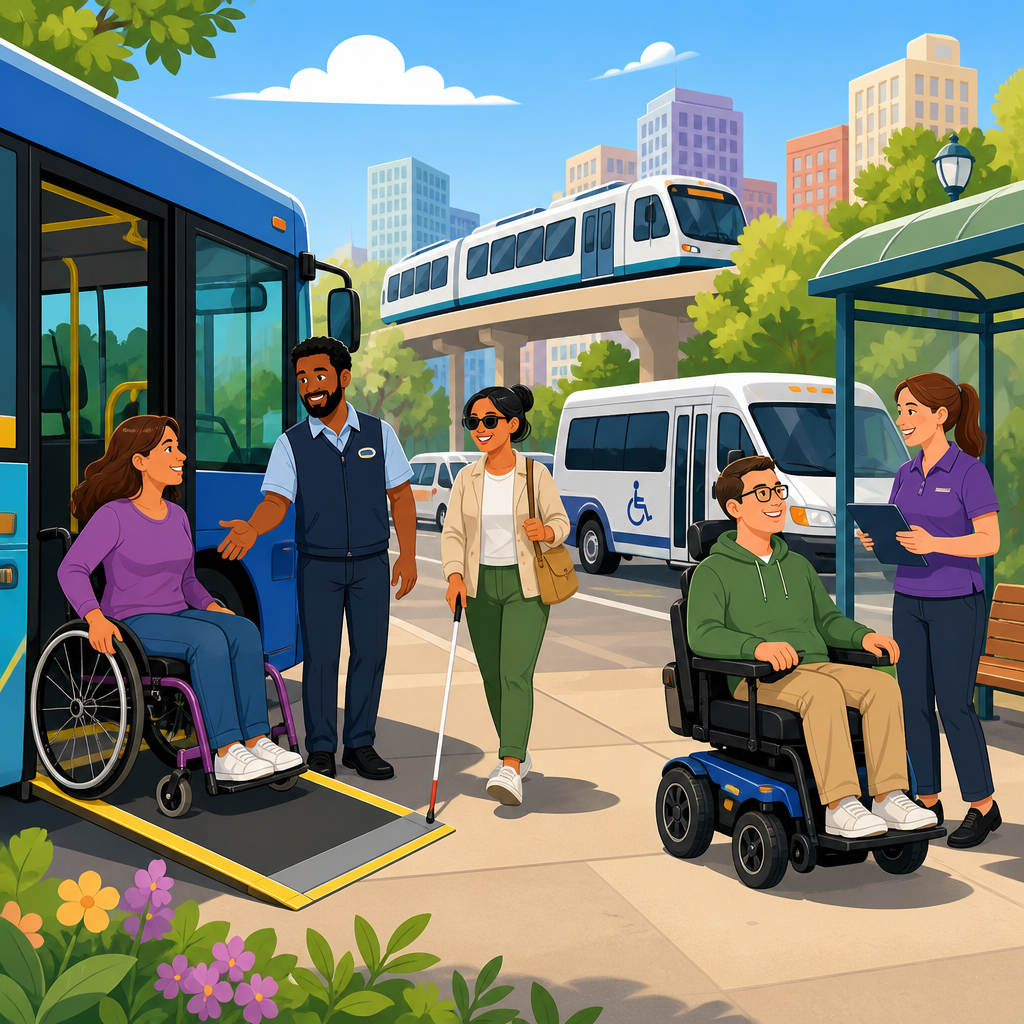
Transportation accessibility resources for riders and operators are the practical tools, standards, programs, and support systems that make public and private transportation usable for people with disabilities. In the ADA context, transportation accessibility means more than adding a lift to a bus or painting a curb ramp. It includes policy compliance, trip planning, stop design, driver training, complaint handling, digital information access, maintenance of accessibility features, and coordinated support when a rider needs an accommodation. When I have reviewed transit programs and rider materials, the strongest systems were always the ones that treated accessibility as an operating requirement, not a side service. That distinction matters because an accessible network improves independence, protects civil rights, reduces service failures, and helps agencies manage risk.
The Americans with Disabilities Act established the baseline framework for accessible transportation in the United States, but implementation depends on many linked resources. Riders need clear eligibility guidance for paratransit, accessible trip planners, fare information in usable formats, and reliable channels to report barriers. Operators need vehicle specifications, stop accessibility checklists, preventive maintenance procedures for lifts and securement areas, staff training modules, and processes aligned with Federal Transit Administration oversight. Specialized ADA resources and support sit at the center of this work because they connect legal requirements to day-to-day service delivery.
This hub article explains the essential categories of transportation accessibility resources for riders and operators, with a focus on specialized ADA resources and support. It covers what riders can use before, during, and after a trip; what agencies, contractors, and mobility providers must maintain internally; and how accessibility support should be organized across fixed route, complementary paratransit, demand responsive service, rail, microtransit, and customer information systems. If you are building a rider resource center or updating an operator accessibility program, this page provides the structure you need and points to the most important components to include.
Core ADA transportation requirements every accessibility resource should support
Any hub on specialized ADA resources and support should begin with the rule set that governs decisions. For public transit, key sources include the ADA statute, U.S. Department of Transportation regulations in 49 CFR Parts 27, 37, and 38, and Federal Transit Administration guidance. Part 37 covers transportation services for individuals with disabilities, including complementary paratransit requirements, while Part 38 sets accessibility specifications for transportation vehicles. The practical takeaway is straightforward: riders must have an accessible path to information and service, and operators must maintain accessible features in operative condition.
For fixed-route bus and rail service, core requirements include accessible vehicles, stop announcements, lift or ramp deployment when needed, priority seating, and boarding assistance policies that do not discriminate. For complementary paratransit, agencies must provide service that is comparable to fixed-route service for eligible riders who cannot use the fixed-route system because of disability. Comparability touches response time, fares, trip purpose, hours and days of service, geographic coverage, and capacity constraints. These are not abstract ideas. They determine whether a rider can get to dialysis, school, work, or a courthouse without facing avoidable barriers.
Operators should also tie accessibility resources to related standards. The Web Content Accessibility Guidelines support digital access for websites and trip tools. PROWAG concepts influence pedestrian access, even where formal adoption varies by project type and jurisdiction. ADA transition plans, Title VI complaint channels, and reasonable modification policies should work together rather than live in separate silos. In practice, the best resource centers cross-link these topics so a rider looking for an accessible bus stop can also find curb ramp reporting, elevator outage alerts, travel training, and paratransit eligibility information in one place.
Rider-facing resources: what people need before, during, and after travel
Riders need accessibility support across the full trip lifecycle. Before travel, the most important resources are accessible route maps, elevator and escalator status alerts, stop accessibility details, fare program explanations, and trip planning support that accounts for mobility devices, transfer distances, and service animals. A rider with low vision may need audio-ready schedule information and consistent stop naming. A wheelchair user may need to know whether a station has a functioning elevator and whether the destination stop has a boarding pad connected to a sidewalk. A rider with an intellectual or developmental disability may benefit from simple-language guides and one-on-one travel training.
During travel, support shifts toward real-time reliability and front-line assistance. Accessible customer service channels should include phone, web, relay-compatible options, and where possible text support. Vehicle operators need clear procedures for securing mobility devices, announcing stops, assisting riders who request ramp deployment, and handling reasonable modifications. Riders also need to know what to do when accessibility equipment is unavailable. For example, if a station elevator is out of service, a strong resource page explains alternate boarding options, shuttle arrangements, refund procedures, and how to receive outage notifications.
After travel, complaint and resolution tools become critical. The most effective systems offer a simple way to report missed pickups, inoperative lifts, inaccessible stops, denial of service animal access, no-show disputes, or operator conduct issues. Agencies should publish investigation timelines, appeal rights, and contact details for ADA coordinators. I have seen agencies reduce repeat complaints simply by rewriting these pages in plain language and adding examples of common problems. Riders are more likely to use formal channels when they understand what evidence to provide and what remedy the agency can realistically offer.
Operator resources: policies, training, maintenance, and internal controls
For operators, specialized ADA resources and support should function like an operating manual backed by compliance records. The foundational elements are policy documents, standard operating procedures, employee training materials, maintenance schedules, service monitoring tools, and escalation paths when something fails. A transit agency cannot rely on general goodwill. It needs documented procedures for lift cycling, securement inspections, stop announcement systems, elevator maintenance coordination, eligibility determinations, no-show adjudication, and reasonable modification decisions.
Training deserves special attention because many accessibility failures happen at the point of contact between staff and rider. Bus and rail operators should be trained on disability etiquette, boarding assistance, mobility aid securement, stop announcements, and what ADA rules actually require. Dispatchers need training on paratransit scheduling constraints, subscription trip limits, pickup windows, and denial avoidance. Customer service teams need scripts and decision trees for accommodations, complaints, and outage communication. Contractors must be held to the same standards through procurement language, performance metrics, and corrective action protocols.
Maintenance is equally central. DOT regulations require accessibility features to be maintained in operative condition, and isolated failures do not excuse systemic neglect. The agencies that perform best track lift and ramp reliability, mean time to repair, elevator uptime, securement equipment condition, and preventive maintenance completion rates. They also maintain spare parts inventories and define when a vehicle should be pulled from service. A support hub for operators should include checklists, incident forms, sample audit templates, and links to FTA technical assistance so staff are not forced to improvise during service disruptions.
Complementary paratransit resources and eligibility support
Complementary paratransit is often the most complex ADA transportation topic for both riders and operators, so it should have a prominent place in any hub article. Riders need a clear explanation of who may be eligible, how the application process works, what functional assessment may be required, and how conditional eligibility is determined. Eligibility is not based on medical diagnosis alone. The central question is whether the person can use the fixed-route system for some or all trips. That is why well-designed applications ask about barriers such as inaccessible paths of travel, inability to navigate transfers, or conditions that make independent fixed-route use impossible under certain circumstances.
Operators need equally detailed support because paratransit compliance failures create immediate rider harm and significant legal exposure. Eligibility teams should use consistent interview guides, appeals procedures, and recertification timelines. Scheduling teams need guardrails that prevent prohibited capacity constraints, including excessive hold times, long telephone waits, substantial numbers of trip denials, or consistently untimely pickups. The best programs publish rider guides that explain pickup windows, companion policies, personal care attendant rules, fare payment, and the difference between same-day flexibility and ADA minimum requirements.
| Resource area | What riders need | What operators need |
|---|---|---|
| Eligibility | Application forms, functional criteria, appeal instructions | Assessment protocols, reviewer training, documentation standards |
| Booking | Reservation deadlines, pickup windows, cancellation rules | Scheduling software settings, call center scripts, no-show review process |
| Service delivery | Driver assistance expectations, PCA and companion rules | On-time performance tracking, manifest accuracy, complaint triage |
| Trip problems | Missed-trip reporting, refund and appeal pathways | Incident logs, corrective action workflows, trend analysis |
Real-world examples show why these resources matter. A rider with multiple sclerosis may qualify conditionally, using fixed route on good days and paratransit during extreme heat or fatigue episodes. A rider who can ride a bus independently may still need paratransit when the destination lacks an accessible pedestrian path. Resource materials should explain these scenarios plainly, because misunderstanding conditional eligibility leads to unnecessary appeals and frustrated customers. For operators, case examples improve consistency and reduce the risk of overly broad denials.
Accessible information, digital tools, and travel training
Information access is transportation access. If a rider cannot independently find route changes, stop locations, elevator outages, or paratransit rules, the service is functionally less accessible even when the vehicle itself meets technical standards. That is why specialized ADA resources and support must include digital accessibility, alternative formats, and human assistance. Websites and mobile apps should support screen readers, keyboard navigation, clear heading structures, sufficient contrast, captioned videos, and form labels that work with assistive technology. PDF-only posting is rarely enough unless the documents are fully tagged and tested.
Travel training is another underused resource with outsized value. Many agencies offer individualized or small-group instruction that teaches riders how to read schedules, identify landmarks, board with a mobility aid, request stop announcements, and recover from missed connections. For older adults and people with cognitive disabilities, repeated practice can be the difference between total dependence and independent travel. I have seen travel training programs reduce avoidable paratransit demand while improving rider confidence, but only when agencies promote the service clearly and coordinate it with customer support, family outreach, and community organizations.
Digital tools should also support operators, not just riders. Internal dashboards can flag broken accessibility equipment, reveal complaint clusters by route, and track outage communication speed. Common tools include CAD/AVL systems, paratransit scheduling platforms such as Trapeze or Ecolane, maintenance management systems, and CRM platforms for customer contacts. These systems are only as useful as the processes behind them, so a strong support hub explains data ownership, update frequency, and who is responsible for acting on alerts.
Partnerships, oversight, and continuous improvement
No agency delivers transportation accessibility alone. Specialized ADA resources and support are strongest when transit providers coordinate with local governments, disability advocacy groups, metropolitan planning organizations, human service agencies, and private contractors. Municipal public works teams may control sidewalks and curb ramps that determine whether a bus stop is usable. Rail station accessibility may depend on facilities departments and third-party elevator vendors. Community-based organizations often identify barriers faster than formal audits because they hear directly from riders navigating the system every day.
Oversight should be structured, routine, and evidence-based. Useful practices include fixed-route ride checks, mystery rider programs, stop accessibility inventories, quarterly lift reliability reviews, and complaint trend analysis by route, time period, and contractor. Agencies should monitor whether accessibility incidents concentrate around specific garages, supervisors, vehicle series, or operator runs. That level of detail turns complaints into operational intelligence. Federal Transit Administration triennial reviews and state management reviews also create opportunities to tighten documentation and correct gaps before they become chronic failures.
Continuous improvement depends on publishing the right resources and updating them consistently. A hub page should point to policies, forms, service alerts, training programs, and contact channels, but it should also display the last review date and responsible office. Outdated accessibility information causes preventable harm. If an elevator has been out for three weeks, a stale web page is not a minor communications issue; it can strand riders. The most trustworthy programs treat accessibility content like service data: time-sensitive, owned, monitored, and corrected quickly.
Transportation accessibility resources work best when they are designed as a connected support system for both riders and operators. Riders need accurate, accessible information, reliable assistance, fair paratransit eligibility processes, and straightforward ways to resolve problems. Operators need documented policies, recurring training, maintenance controls, usable data, and partnerships that address barriers beyond the vehicle. Specialized ADA resources and support bring these pieces together so accessibility is delivered consistently rather than left to chance.
For a sub-pillar hub under Resources and Support, the main benefit of this topic is clarity. It helps riders find the exact help they need, and it helps agencies organize compliance and customer service around real travel barriers. Use this page as the starting point for deeper articles on paratransit eligibility, reasonable modifications, accessible stop design, elevator outage response, digital accessibility, complaint procedures, and travel training. Then review your own transportation accessibility resources and update the gaps that matter most to daily service.
Frequently Asked Questions
What are transportation accessibility resources, and who are they meant to help?
Transportation accessibility resources are the tools, standards, services, and support systems that help make transportation usable for people with disabilities. They serve both riders and operators. For riders, these resources can include accessible trip-planning information, paratransit eligibility support, travel training, wayfinding tools, real-time service alerts in accessible formats, complaint processes, and assistance programs that help people understand their rights under the Americans with Disabilities Act (ADA). For operators, accessibility resources often include ADA compliance guidance, staff training materials, vehicle and stop design standards, maintenance checklists, communication protocols, and procedures for handling accommodation requests or service concerns.
Importantly, accessibility is not limited to one feature, such as a lift, ramp, or priority seating area. A transportation system can only be considered truly accessible when the full rider experience is addressed. That includes sidewalks and curb ramps leading to stops, boarding areas that are stable and navigable, announcements that are both audible and visible, websites and mobile apps that work with assistive technology, employees who know how to assist passengers respectfully, and policies that are consistently applied. These resources are meant to support people with mobility, sensory, cognitive, developmental, and invisible disabilities, while also helping agencies, contractors, and private providers build systems that are safer, more reliable, and more inclusive for everyone.
What accessibility features and services should riders look for when using public or private transportation?
Riders should look for a combination of physical, operational, and information-based accessibility features. On vehicles, this may include ramps or lifts, securement areas for wheelchairs and other mobility devices, handrails, stop request systems within reach, priority seating, and clear signage. At stops and stations, riders should expect accessible paths of travel, curb ramps, boarding pads, tactile warnings where appropriate, elevators or level boarding when needed, good lighting, and accessible shelter design. For people with visual or hearing disabilities, reliable audio and visual announcements are especially important, along with accessible customer service channels and printed or digital materials that can be read by screen readers or provided in alternate formats.
Service features matter just as much as equipment. Riders should pay attention to whether schedules, maps, rider alerts, fare payment systems, and trip-planning tools are easy to access and understand. They should also check whether the provider offers paratransit or demand-response service, travel training, reduced-fare programs, language assistance, or support for riders who need reasonable modifications in policy or practice. In private transportation settings, such as taxis, shuttles, and certain on-demand services, riders may also want to verify whether accessible vehicles are available, how to request one, and whether wait times or fares differ from standard service. A strong accessibility program is one where these features are not treated as exceptions, but as a routine and dependable part of service delivery.
How do transportation operators maintain ADA compliance beyond simply purchasing accessible vehicles?
ADA compliance in transportation is a systemwide responsibility, not a one-time equipment purchase. Accessible vehicles are essential, but they are only one part of compliance. Operators must also maintain lifts, ramps, securement systems, announcement equipment, elevators, and other accessibility features in operative condition. When equipment fails, agencies need clear repair procedures, backup service plans, documentation practices, and communication methods that inform riders promptly and accessibly. Regular inspections and preventive maintenance are critical, because an accessibility feature that exists but does not work reliably can create the same barrier as not having it at all.
Operators also need strong policies, training, and oversight. Drivers and frontline staff should be trained on boarding assistance, mobility device securement, service animal policies, respectful communication, stop announcements, reasonable modification requests, and complaint handling. Agencies should review stop accessibility, station design, digital content accessibility, and procurement standards for vendors and contractors. They also need documented ADA procedures, a designated ADA coordinator when applicable, and a process for receiving, investigating, and resolving complaints. In practice, sustained compliance comes from treating accessibility as an operational standard woven into planning, maintenance, customer service, capital improvements, and performance monitoring rather than as a separate or occasional obligation.
Why are accessible communication and digital tools so important in transportation?
Accessible communication and digital tools are essential because riders need information before, during, and after a trip. A fully accessible bus stop or train platform is not enough if a rider cannot access schedule changes, detour notices, route maps, fare instructions, or emergency alerts. Websites, mobile apps, kiosks, PDFs, and customer portals should be designed so they work with screen readers, keyboard navigation, captioning tools, magnification, and other assistive technologies. Information should also be written clearly and organized logically so that riders with cognitive or learning disabilities can use it without unnecessary confusion.
Communication accessibility also affects safety, independence, and trust. Riders need timely announcements for upcoming stops, delays, transfer points, platform changes, and service disruptions in formats that are both audible and visual. Customer support should be reachable through multiple channels, such as phone, email, chat, relay services, and in-person assistance. When communication is inaccessible, riders may miss stops, lose trip confidence, arrive late, or avoid using the system entirely. For operators, investing in accessible digital and communication tools reduces misunderstandings, improves service consistency, supports legal compliance, and helps ensure that accessibility is built into every stage of the travel experience rather than treated as an afterthought.
What should riders and operators do when accessibility problems occur?
When accessibility problems occur, the most effective response is prompt documentation, clear communication, and a structured follow-up process. Riders should record the date, time, route or vehicle number, location, and nature of the issue, whether it involved inoperable equipment, a missed stop announcement, denial of boarding, inaccessible information, unsafe stop conditions, or poor staff response. If possible, they should report the problem through the provider’s official customer service or ADA complaint channel and request a case number or confirmation. Many agencies also have ADA coordinators, civil rights offices, or accessibility staff who can review concerns in more detail. Reporting matters not only to address one incident, but also to identify recurring patterns that may signal training, maintenance, or policy failures.
Operators should treat every reported accessibility issue as an opportunity for corrective action and system improvement. That means investigating quickly, preserving records, checking whether the incident reflects a one-time problem or a broader operational gap, and responding in a way that is understandable and accessible to the rider. Depending on the issue, corrective action may include equipment repair, employee retraining, stop upgrades, policy clarification, contractor oversight, or changes to digital content and communications. Operators should also track complaint trends, audit recurring barriers, and coordinate across departments so that maintenance, planning, IT, operations, and customer service all contribute to resolution. Accessibility problems are rarely isolated to one department, so effective solutions usually require coordinated action and a commitment to continuous improvement.


