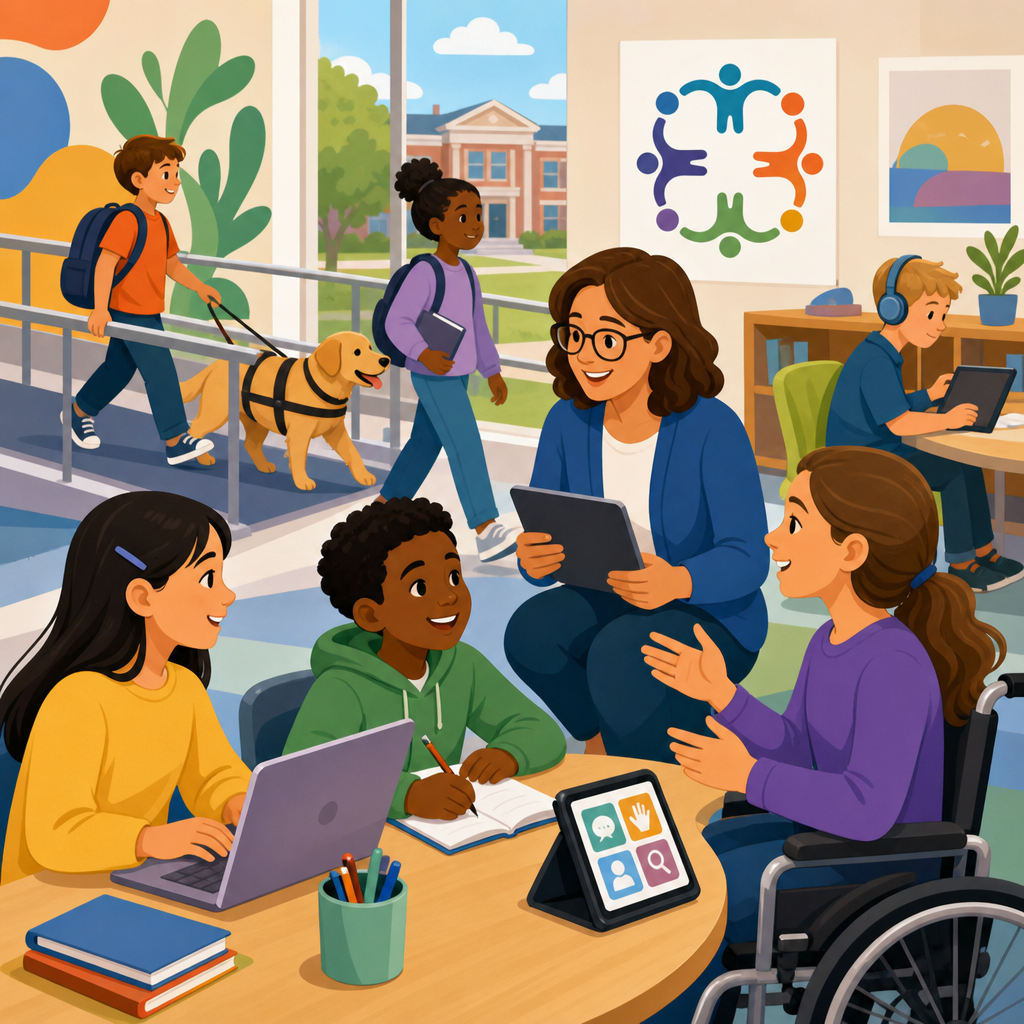
Recent ADA developments in education settings are reshaping how schools, colleges, and universities design access, deliver services, manage technology, and respond to disability-related complaints. In practical terms, the Americans with Disabilities Act, along with Section 504 of the Rehabilitation Act and related federal guidance, sets the baseline for equal access in academic programs, campus life, digital content, transportation, athletics, housing, and communication. In recent years, the most important changes have involved web accessibility expectations, testing accommodations, mental health disabilities, effective communication for students who are deaf or hard of hearing, service animal questions, and the relationship between disability law obligations and broader inclusion efforts. For administrators, faculty, compliance officers, and families, these developments matter because enforcement has become more specific, documentation standards have tightened, and inaccessible systems now create immediate legal and operational risk. I have worked with institutions updating disability policies after complaints, and the common lesson is simple: schools rarely get into trouble for trying to provide access quickly and thoughtfully, but they often do when processes are slow, fragmented, or built around outdated assumptions.
Understanding recent ADA updates and developments begins with a clear definition of the legal framework. Title II applies to public education entities, including public school districts and public colleges. Title III applies to private schools and private postsecondary institutions that qualify as places of public accommodation, though religious institutions may fall outside some ADA provisions while still facing other obligations. Section 504 applies where federal funding is involved, which covers most education institutions. The ADA Amendments Act already broadened the definition of disability years ago, but its practical effects continue to unfold as schools address anxiety, depression, ADHD, autism, chronic health conditions, concussion recovery, and episodic impairments. The current compliance environment is shaped less by a single dramatic statute than by updated regulations, Department of Justice enforcement activity, Department of Education Office for Civil Rights resolutions, and a growing expectation that accessibility must be proactive rather than reactive. This hub article explains the most significant shifts, the standards schools are expected to use, and the policy areas educators should review now.
Digital accessibility now sits at the center of ADA compliance
The most significant recent ADA development in education settings is the move from general accessibility expectations to far more concrete digital requirements. In 2024, the Department of Justice issued a final rule under Title II requiring state and local governments, including public schools, colleges, and universities, to make web content and mobile apps accessible using WCAG 2.1 Level AA, subject to limited exceptions and phased deadlines. That rule matters because it converts what many institutions treated as best practice into a defined compliance standard. Even where Title III entities are not covered by that specific regulation, private institutions still face substantial exposure through litigation and enforcement based on inaccessible websites, learning platforms, admissions forms, payment portals, and course materials. In day-to-day operations, this means accessibility can no longer be delegated only to disability services; it requires procurement review, IT governance, content author training, captioning workflows, and regular auditing.
Schools often underestimate how many digital touchpoints create barriers. Admissions microsites may have unlabeled form fields. PDFs posted by faculty may be image-based and unreadable by screen readers. Video lectures may lack captions or accurate transcripts. Library databases, third-party proctoring tools, and campus safety apps may fail keyboard navigation or color contrast requirements. I have seen institutions focus heavily on classroom accommodations while leaving registration systems, orientation modules, and financial aid content inaccessible, which defeats access before a student even reaches class. The strongest recent compliance strategies use enterprise inventories, accessibility statements tied to remediation plans, and contractual language requiring vendors to provide VPATs based on the Voluntary Product Accessibility Template. Schools should also remember that WCAG conformance is not the whole story. Effective access depends on whether students can independently complete critical tasks, from applying to registering for housing to submitting assignments.
Testing, course access, and accommodation processes are under closer scrutiny
Another major area in recent ADA updates and developments is the administration of accommodations. The legal standard remains individualized assessment, but enforcement trends show increasing attention to delays, inconsistent documentation demands, and faculty-level resistance. Students with ADHD, learning disabilities, psychiatric disabilities, and chronic medical conditions are requesting accommodations in growing numbers, especially in higher education. Common accommodations include extended testing time, reduced-distraction environments, flexibility with attendance policies when disability-related flare-ups occur, note-taking support, adaptive technology, and accessible course materials. Problems arise when institutions treat every request as suspect, require excessive historical records, or force students through multiple offices before any interim support is offered. OCR resolutions repeatedly emphasize prompt, interactive processes and decisions grounded in current functional limitations rather than stereotypes about a diagnosis.
In education settings, not every requested accommodation is reasonable, and that nuance matters. A school does not have to waive essential program requirements, lower academic standards, or accept documentation that provides no basis for a request. But schools must be able to explain, with evidence, why a requirement is essential and why an alternative would fundamentally alter the program. That analysis must involve relevant academic decision-makers, not just a reflexive denial. For example, if a nursing program denies a clinical accommodation request, it should identify the actual competencies at issue, review whether assistive technology or modified scheduling would preserve those competencies, and document the reasoning. Faculty should not decide accommodation requests informally on their own, because ad hoc decisions create inconsistency and liability. The best systems centralize review, provide faculty guidance on implementation, and allow rapid appeal when time-sensitive exams or placement deadlines are involved.
| Issue Area | Recent Compliance Expectation | Practical School Response |
|---|---|---|
| Website and app access | WCAG 2.1 AA conformance for many public entities, with ongoing monitoring | Audit sites, remediate templates, train content owners, review vendors |
| Testing accommodations | Prompt interactive review based on functional limitation | Use clear timelines, standard forms, interim measures when needed |
| Mental health disabilities | No blanket exclusion based on diagnosis or hospitalization history | Conduct individualized safety and support assessments |
| Auxiliary aids | Communication must be as effective as for others | Provide interpreters, CART, captions, and accessible materials |
| Housing and campus life | Equal access extends beyond the classroom | Coordinate disability services with housing, dining, and student affairs |
Mental health, attendance flexibility, and safety decisions require individualized analysis
Mental health disabilities remain one of the fastest-moving areas of ADA compliance in education. Colleges and K-12 systems alike have faced pressure to improve how they handle students with anxiety disorders, depression, PTSD, bipolar disorder, eating disorders, and suicidal ideation. The central legal principle is that schools cannot rely on generalized fear, assumptions about risk, or one-size-fits-all leave policies. Instead, they must make individualized assessments based on current medical knowledge or the best available objective evidence. That approach affects return-from-hospitalization policies, involuntary leave decisions, behavioral intervention responses, and classroom attendance adjustments. OCR and DOJ scrutiny has increased where schools automatically remove students after mental health crises or require broad medical clearances that are not tied to actual participation standards. Institutions that once believed they were acting cautiously have learned that caution without individualized analysis can itself become discriminatory.
Attendance is a particularly difficult issue because many academic programs view regular participation as essential. In my experience, disputes often come down to whether a school has defined what “essential” means for a specific course or simply repeated a standard syllabus phrase. Flexibility may be reasonable in lecture-heavy courses with asynchronous options, while frequent in-person participation may be essential in labs, performance courses, or clinical placements. The answer should come from course design, accreditation requirements, and learning outcomes, not faculty preference alone. Schools should also connect disability accommodation processes with student support functions such as counseling, case management, and threat assessment teams, while maintaining confidentiality and role clarity. Threat assessment teams should be trained on disability law so that concerning behavior triggers evidence-based review rather than assumptions that disability equals dangerousness. That distinction is critical both legally and ethically.
Effective communication standards continue to shape classroom and campus obligations
Recent ADA developments in education settings also reinforce the longstanding requirement of effective communication. For students, parents, and members of the public who are deaf, hard of hearing, blind, have low vision, or have speech disabilities, schools must provide auxiliary aids and services when needed for equal participation. In practice, this can include qualified sign language interpreters, CART captioning, accessible electronic documents, Braille or tactile materials in limited cases, screen reader-compatible portals, and timely captioning for live and recorded video. Timeliness is often the decisive factor. A captioned recording delivered weeks after the lesson may be technically accessible but functionally useless. Likewise, assigning another student to relay lecture content is not an acceptable substitute for an appropriate auxiliary aid. DOJ settlements and OCR agreements consistently emphasize that communication must be as effective as communication with others, not merely better than nothing.
Education settings create special communication challenges because access extends beyond academic content. Orientation, disciplinary meetings, parent-teacher conferences, campus police interactions, emergency alerts, graduation ceremonies, extracurricular programs, and health center visits all implicate communication rights. One recurring issue is whether institutions can rely on automated captions. They can assist, but they are often inaccurate enough to fail in high-stakes contexts such as science lectures, legal proceedings, or student conduct hearings. Another issue involves primary consideration in public entities, which generally means honoring the communication method requested by the individual unless an equally effective alternative exists or a recognized defense applies. Schools should maintain centralized procedures for requesting interpreters and captioning, but they also need after-hours protocols for emergencies and decentralized events. Accessibility failures often occur not in formal classrooms but in student life, athletics, and campus events organized outside academic departments.
Program access now extends more clearly to housing, athletics, transportation, and technology vendors
A mature ADA compliance program in education looks beyond classrooms because equal access applies to the full student experience. Recent enforcement trends show heightened focus on accessible student housing, meal plans, service animal policies, transportation routes, athletic facilities, and online systems purchased from outside vendors. Housing offices must address disability-related requests such as emotional support animals under applicable law, accessible room configurations, visual alarms, dietary modifications coordinated with dining, and assignment changes linked to medical needs. Athletic departments face issues involving accessible seating, locker room routes, communication access for team meetings, and inclusive policies for disabled spectators and participants. Transportation departments must consider lift-equipped buses, route planning, and paratransit coordination where required. Each of these areas can generate complaints when disability services offices are siloed and lack authority over other operational units.
Third-party technology is now one of the largest unresolved risks. Schools increasingly depend on learning management systems, remote proctoring platforms, bookstore tools, library software, AI tutoring products, and student engagement apps. When those tools are inaccessible, institutions generally remain responsible because they selected and deployed them. Procurement reform is therefore one of the most important recent developments. Stronger institutions require accessibility review before purchase, ask vendors for current VPAT documentation, test products with assistive technology, and include remediation timelines or termination rights in contracts. They also maintain an exception process for rare cases where no accessible equivalent exists, paired with documented alternate access plans. This work is technical, but it is not optional. If a student cannot complete a quiz because a proctoring tool blocks screen reader use or flags disability-related movements as cheating, the problem is both pedagogical and legal, and it must be fixed quickly.
What education leaders should do now to respond to recent ADA updates and developments
The most effective response to recent ADA updates and developments is a coordinated compliance structure rather than isolated fixes. Schools should start with a current legal inventory: applicable titles of the ADA, Section 504 obligations, state accessibility laws, and any settlement commitments already in place. Next, they should conduct enterprise risk assessments covering websites, mobile apps, forms, classroom technology, procurement practices, accommodations workflow, emergency communication, housing, and student conduct processes. Written policies should define request channels, documentation standards, timelines, interim measures, appeal routes, and responsibility for implementation. Training must be role-specific. Faculty need practical guidance on exam changes, attendance flexibility, and accessible course materials. IT teams need standards for PDFs, media, and software review. Student affairs staff need protocols for housing, events, and behavioral interventions. General annual training is useful, but targeted operational training changes outcomes.
Leaders should also use data. Track accommodation response times, captioning turnaround, digital remediation status, grievance themes, and recurring vendor failures. Review whether students are encountering barriers at admission, orientation, registration, advising, field placement, and graduation, not just in class. Build relationships among disability services, general counsel, risk management, IT accessibility staff, counseling, and academic leadership before a complaint arrives. Most importantly, treat accessibility as a design requirement. Retrofitting after complaints is slower, more expensive, and harder on students. The core benefit of taking recent ADA developments seriously is not simply avoiding enforcement. It is creating an education environment where students can participate independently, predictably, and with dignity across every part of school life. For institutions updating policies under this hub topic, the next step is clear: review your systems now, prioritize the highest-impact barriers, and implement a documented accessibility plan with accountable owners and deadlines.
Frequently Asked Questions
1. What are the most important recent ADA developments affecting education settings?
Recent ADA developments in education settings largely center on a broader, more practical view of accessibility. Schools, colleges, and universities are being expected to move beyond reactive accommodation and toward proactive access across the full student experience. That includes academic programs, online learning platforms, admissions processes, campus websites, mobile apps, housing, athletics, transportation, events, and communication with students, parents, and the public. Institutions are also facing increased scrutiny over whether accessibility is built into their systems from the beginning rather than added only after a complaint is filed.
One of the biggest developments is the heightened focus on digital accessibility. As instruction, registration, financial aid, advising, library services, and student engagement increasingly rely on technology, inaccessible digital tools can create immediate barriers for students with disabilities. Federal enforcement trends and guidance have made it clear that accessibility applies not just to classroom instruction, but to the full ecosystem of educational technology. That means learning management systems, third-party software, videos, PDFs, testing platforms, kiosks, and public-facing web content all need attention.
Another major shift is stronger coordination between the ADA and Section 504 of the Rehabilitation Act. In practice, institutions often need to consider both. The ADA broadly prohibits disability discrimination, while Section 504 applies to recipients of federal funding and requires equal access and effective accommodations. Recent enforcement activity reflects a more integrated approach, especially in disputes involving communication access, service animals, mental health disabilities, attendance policies, housing modifications, and disciplinary processes. Educational institutions are expected to have clear procedures, knowledgeable staff, and consistent implementation across departments.
There is also growing emphasis on effective communication and individualized assessment. Schools cannot rely on blanket assumptions about what students with disabilities need or can do. Instead, they are generally expected to evaluate requests case by case, engage in an interactive process when appropriate, and avoid policies that unnecessarily exclude qualified individuals. Overall, the trend is toward accountability, documentation, cross-campus accessibility planning, and a recognition that disability access is a core compliance and inclusion issue, not a side function.
2. How do the ADA and Section 504 apply to K-12 schools, colleges, and universities?
The ADA and Section 504 both play central roles in disability access in education, but they apply in slightly different ways depending on the institution. Public K-12 schools, public colleges, and public universities are generally covered by Title II of the ADA, which applies to state and local government entities. Private schools, colleges, and universities may be covered by Title III of the ADA if they qualify as places of public accommodation, although religious institutions may have different coverage considerations under the ADA. Section 504 applies more broadly to educational institutions that receive federal financial assistance, which includes most public schools and many private colleges and universities.
In practical terms, both laws are aimed at ensuring that qualified students with disabilities have equal access to educational opportunities. That can include physical access to classrooms and facilities, academic adjustments, auxiliary aids and services, accessible technology, non-discriminatory admissions practices, and equal participation in extracurricular activities. The exact obligations can vary depending on the setting. For example, K-12 schools often operate within a framework that overlaps with special education law, while higher education institutions generally focus on reasonable modifications, effective communication, and academic adjustments without fundamentally altering essential program requirements.
A key point is that compliance is not limited to the classroom. These laws reach student housing, dining, recreation, athletics, transportation, counseling services, internships administered by the school, campus events, and online services. If a student cannot effectively access the systems and services that other students use, the institution may face significant compliance concerns even if the core instructional program appears accessible on paper.
Educational institutions also need to understand that legal compliance depends heavily on process. They should have accessible grievance procedures, trained disability services personnel, published accommodation processes, and decision-making practices that are consistent and individualized. Whether the issue involves note-taking support, testing accommodations, captioning, mobility access, flexible attendance, or accessible housing, institutions are expected to respond promptly and fairly. The laws do not require schools to lower academic standards or eliminate essential requirements, but they do require a serious and informed effort to ensure equal access.
3. Why is digital accessibility becoming such a major issue for schools and universities?
Digital accessibility has become one of the most important disability compliance issues in education because so much of modern learning and campus life depends on technology. Students apply, register, submit assignments, take quizzes, view lectures, communicate with instructors, access library resources, request financial aid, review grades, sign up for housing, and attend virtual events through digital platforms. If those systems are not accessible, students with disabilities can be excluded from essential parts of the educational experience in ways that are immediate and far-reaching.
Recent federal attention has reinforced that digital access is not optional. Educational institutions are increasingly expected to ensure that websites, mobile apps, course materials, videos, and interactive tools are usable by people with a range of disabilities, including students who are blind or have low vision, students who are deaf or hard of hearing, students with mobility limitations, and students with cognitive or learning disabilities. Common barriers include missing captions, poor screen-reader compatibility, image-only PDFs, inaccessible forms, keyboard navigation problems, color contrast issues, and testing software that does not work with assistive technology.
Another reason digital accessibility has become so important is the widespread use of third-party vendors. Schools often rely on outside platforms for learning management, remote proctoring, tutoring, attendance tracking, counseling, and student engagement. But outsourcing a function does not eliminate the institution’s responsibility for access. If a required platform is inaccessible, the school may still face liability or enforcement risk. As a result, institutions are increasingly expected to evaluate accessibility during procurement, include accessibility requirements in contracts, and create processes for testing and remediation.
From a practical standpoint, digital accessibility is also about risk management and educational quality. When accessibility is addressed early, institutions reduce complaints, avoid rushed last-minute fixes, and create a more usable experience for everyone. Captions help more than deaf students. Clear navigation helps all users. Accessible documents are easier to read and share. In that sense, digital accessibility is not just a legal obligation; it is part of good educational design. Schools that treat it as an institution-wide responsibility rather than a disability office problem are generally in a much stronger position.
4. What should schools do when responding to disability accommodation requests or ADA complaints?
When a school receives a disability accommodation request or an ADA-related complaint, the most important first step is to respond promptly, thoughtfully, and in a documented way. Delays, inconsistent communication, or informal decision-making can quickly turn a manageable issue into a legal problem. Institutions should have clear intake channels, trained personnel, and a process that allows them to gather relevant information without placing unnecessary burdens on the student or complainant. A respectful, organized response often makes a major difference in both compliance and trust.
For accommodation requests, schools should generally focus on individualized assessment. That means looking at the student’s limitations, the barriers involved, the nature of the academic or campus requirement at issue, and possible modifications or auxiliary aids that would provide equal access. In higher education especially, this often involves an interactive process between the student and the disability services office, sometimes with faculty or housing staff as needed. The institution should avoid categorical refusals based on assumptions, such as saying certain accommodations are never allowed or that a diagnosis automatically entitles or disqualifies a student from a particular adjustment.
For complaints, institutions should take them seriously even when they appear informal. A complaint may involve inaccessible technology, denial of interpreting services, housing barriers, discriminatory comments, retaliation, or a failure to implement approved accommodations. Schools should investigate in a neutral and timely manner, preserve relevant records, identify whether immediate interim steps are needed, and communicate outcomes clearly. If the issue reveals a broader policy or system failure, the response should include corrective action, not just a resolution for one individual.
Documentation is critical throughout the process. Schools should maintain records of requests, communications, decisions, rationales, implemented accommodations, and follow-up actions. They should also train faculty, administrators, coaches, residence life staff, and IT personnel so that disability-related issues are routed correctly and handled consistently. A strong response framework does more than reduce legal exposure. It helps institutions demonstrate that they are acting in good faith, applying the law carefully, and taking equal access seriously across the entire campus or school community.
5. What are the biggest compliance risks for educational institutions under the ADA right now?
The biggest compliance risks for educational institutions today usually arise where accessibility expectations are high but implementation is fragmented. Digital accessibility is at the top of the list. Many schools still operate websites, portals, classroom materials, and vendor platforms that are not fully accessible, even though these tools are now essential to academic participation and campus life. Because digital barriers can affect large groups of students and members of the public at once, they are especially likely to generate complaints, investigations, and remediation costs.
Another major risk area is inconsistent accommodation practices. Problems often occur when disability offices approve accommodations but faculty or staff fail to implement them, or when different departments apply different standards to similar requests. Attendance modifications, testing adjustments, housing accommodations, dietary accommodations, communication access, and mental health-related requests are common flashpoints. Institutions can also face risk


