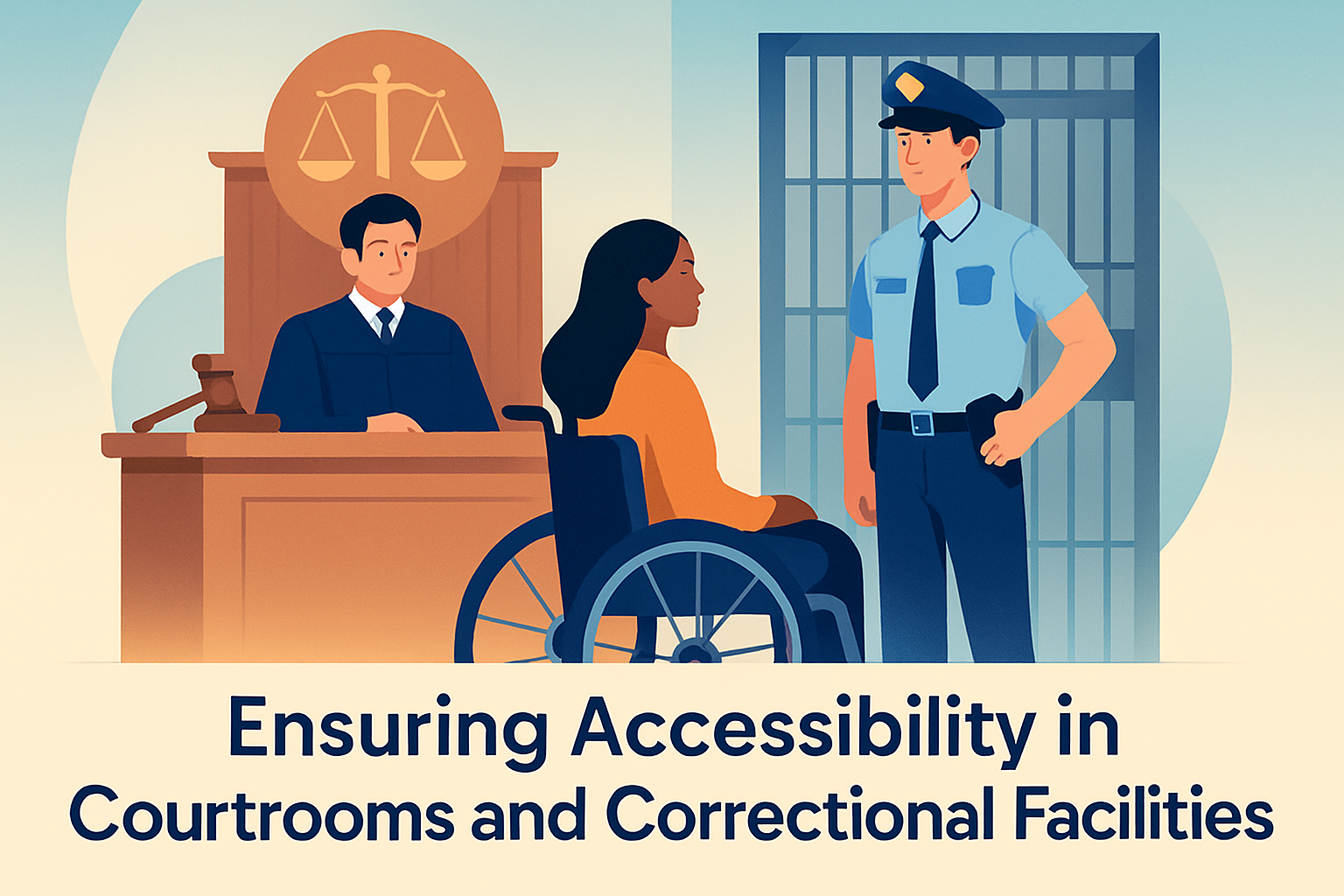
Ensuring accessibility within courtrooms and correctional facilities is critical to upholding fundamental human rights and ensuring justice for all citizens, regardless of their physical abilities or limitations. Accessibility in this context refers to the design of facilities that enable individuals with disabilities to navigate, participate in, and benefit from the services provided therein. This includes features like wheelchair ramps, assistive listening systems, and accessible restrooms. These measures are not merely a matter of legal compliance but are vital to ensuring that justice is equitable and that all individuals, regardless of their physical condition, have equal access to legal proceedings and correctional services. Proper accessibility ensures an inclusive society and emphasizes the importance of catering to the needs of the disabled community. This level of inclusiveness is a cornerstone of justice and represents a commitment to treating all individuals with respect and dignity.
Creating Accessible Courtrooms
Creating accessible courtrooms is crucial not just for the compliance with legal requirements specified in legislations such as the Americans with Disabilities Act (ADA), but for fostering an inclusive judicial environment. Accessible courtrooms should provide features like designated wheelchair seating, adjustable-height features for witness stands, and appropriate signage in braille or other means for visually impaired individuals. For instance, in San Francisco, courtrooms are designed with wide entrances and assistive listening devices to accommodate both physical and auditory disabilities. Such settings illustrate how physical layout adjustments can directly influence the ability of all individuals to engage in judicial processes. Beyond modifications, implementing training programs for court staff ensures that personnel are prepared to assist individuals with special needs effectively. This holistic approach allows the judiciary to deliver justice without barriers or prejudices.
Addressing Accessibility in Correctional Facilities
The importance of accessibility extends into the realm of correctional facilities. Here, ensuring accessible facilities means providing disabled inmates with equal access to health care, rehabilitation programs, and other services. Unfortunately, many older facilities were not designed with these needs in mind, leaving them to catch up to modern standards. For example, the California Department of Corrections and Rehabilitation has been investing heavily in retrofitting older facilities to comply with ADA standards by adding features such as accessible showers and pathways. Accessibility enhancements in these environments are critical as they ensure rehabilitation and equitable treatment for inmates with disabilities. The equitable treatment and facilitation of programs can play a substantial role in the rehabilitation and reintegration efforts aimed at reducing recidivism.
Technological Solutions for Better Accessibility
Technological innovations provide significant advancements toward accessibility in courtrooms and correctional settings. Features such as video conferencing technology allow individuals with mobility restrictions to participate remotely in court proceedings. Additionally, speech-to-text applications and real-time captioning can support individuals with auditory impairments. In Kentucky, courts utilize electronic case management systems that allow for electronic filings and notices, accommodating individuals who find it challenging to attend physical court locations. Embracing technology is a game changer, offering adaptable solutions that can significantly benefit people with disabilities. By adopting these advancements, judicial and correctional systems can modernize their approach and cater effectively to the diverse needs of their constituents.
- Video conferencing technology
- Speech-to-text applications
- Real-time captioning systems
Funding and Policy Implementation Challenges
While the commitment to accessibility is clear, implementing these measures often encounters obstacles related to funding and policy establishment. Allocating resources for infrastructural changes or acquiring technology solutions may strain budgets, especially in underfunded jurisdictions. There is also often a lack of cohesive policy guidelines that unify accessibility standards across various facilities. Policymakers must prioritize these aspects, ensuring that funds are appropriately distributed and that there is an overarching strategy for accessible facility management. Effective policy-making can be guided through examples such as the European Union’s public sector body accessibility guidelines, which offer a framework for enacting laws that compel all public facilities to meet accessibility standards. Collaborative efforts are vital to managing the logistical and financial aspects of implementing comprehensive accessibility measures.
Conclusion: Commitment to Inclusive Justice
In conclusion, ensuring accessibility in courtrooms and correctional facilities is essential not only to comply with legislative requirements, but also to promote justice and equality. The inclusion of technological advancements and thoughtful infrastructure changes not only enhances the experience for individuals with disabilities but also affirms society’s commitment to uphold human rights. By committing to these enhancements, court and correctional systems can lay a foundation for equitable treatment and access. Stakeholders must advocate for these initiatives, ensuring that all voices are heard. It is crucial for readers, particularly those involved in the legal and correctional systems, to prioritize accessibility as a key part of their ethical and operational mandate. Awareness and action today can lead to widespread change, fostering an inclusive system where justice is accessible to all.
Frequently Asked Questions
1. Why is accessibility in courtrooms and correctional facilities important?
Ensuring accessibility in courtrooms and correctional facilities is vital for several reasons. Firstly, it’s a matter of upholding basic human rights—every individual, regardless of their physical capabilities, has the right to equal access to justice and public services. When courtrooms and correctional facilities are not accessible, individuals with disabilities face barriers that can prevent them from participating in legal proceedings or accessing necessary services, which can lead to inequalities in how justice is administered. Accessibility means that everyone can take an active role in legal processes, whether as plaintiffs, defendants, jurors, or even observers, without facing physical hindrances that prevent their full participation. Furthermore, for correctional facilities, accessibility ensures that incarcerated individuals with disabilities receive equitable treatment and the same opportunities for rehabilitation and services offered to all inmates. This not only reflects a fair and just justice system but also supports societal goals of rehabilitation and successful reintegration.
2. What features should be included to make courtrooms accessible?
To make courtrooms accessible, several key features must be considered. Wheelchair ramps and elevators are essential to facilitate movement within the building for individuals who use wheelchairs or have mobility impairments. Courtrooms should also have designated seating areas that are accessible for people using mobility devices. For those with hearing impairments, assistive listening systems should be installed to amplify sound during court proceedings. Sign language interpreters and captioning services can further ensure that all participants can follow the proceedings effectively. For individuals with visual impairments, braille signage and tactile markers can help with navigation. Accessible restrooms are another crucial component, ensuring that all attendees can use the facilities comfortably. Additionally, clear communication about accessibility features and how to request accommodations should be made readily available to remove potential barriers before individuals even set foot in the building.
3. Are there specific guidelines or regulations that dictate how accessible courtrooms and correctional facilities should be?
Yes, in many countries, specific guidelines and regulations are in place to ensure that public facilities, including courtrooms and correctional facilities, are accessible to people with disabilities. In the United States, the Americans with Disabilities Act (ADA) sets forth comprehensive standards for accessibility in public facilities. This includes requirements for architecture and design, communication aids, and service accommodations. The ADA mandates that people with disabilities must have the same opportunities to participate in public life, including legal proceedings, as anyone else. Similar legislation exists in other countries as well, and many international human rights treaties support these principles. Complying with these regulations is not just about legal obligation; it’s about recognizing the dignity and rights of all individuals to access justice equally. Facilities often need to review these guidelines regularly to ensure they meet or exceed the standards as technologies and best practices evolve over time.
4. How can stakeholders ensure that correctional facilities are accessible?
To ensure that correctional facilities are accessible, stakeholders such as facility administrators, architects, policymakers, and advocates must work together closely. It starts with recognizing and identifying the specific needs of prisoners with disabilities during the design phase of these facilities or when considering renovations. Ensuring physical accessibility is a top priority; this includes installing ramps, elevators where needed, modifying cells and common areas to accommodate mobility devices, and ensuring accessible showers and restrooms. Moreover, providing communication aids such as text telephones, visual alarms, and rehabilitation programs adapted for different abilities is essential. Training staff to recognize and support the needs of inmates with disabilities ensures they can assist appropriately. Regular audits and open forums for feedback from inmates and staff can also help identify areas for improvement and ensure ongoing compliance with accessibility standards. It’s about creating a culture of inclusion where the rights and needs of all individuals are respected and upheld as part of the facility’s operations.
5. What are the benefits of ensuring accessibility in legal settings?
The benefits of ensuring accessibility in legal settings are numerous and impactful. Primarily, it ensures that justice is served fairly and equitably, giving everyone the chance to be heard and to engage fully in their legal rights. This inclusivity boosts public confidence in the legal system, demonstrating a commitment to equity and fairness. Additionally, accessible environments promote participation and engagement, strengthening the democratic processes. For legal professionals, accessible courtrooms and facilities also facilitate communication, ensuring that arguments and testimonies are fully understood and considered. In correctional settings, accessibility supports the rehabilitation and reintegration of individuals with disabilities, increasing their chances of success after release. Moreover, by fostering a more inclusive environment, these facilities can reduce potential legal challenges related to discrimination, thus saving costs associated with lawsuits and non-compliance penalties. More broadly, societal inclusion and problem-solving are enhanced when everyone can contribute their perspectives and abilities without barriers.