Stairways and handrails are integral components of building design, ensuring safe passage and accessibility for all individuals. The Americans with Disabilities Act (ADA) sets the standards for these structures to ensure they are accessible to persons with disabilities. Understanding ADA compliance is crucial for architects, builders, and facility managers to create environments that are both safe and welcoming to everyone. Ignoring these standards can lead to safety hazards, legal liabilities, and fines. This comprehensive guide will shed light on the essential requirements, practical applications, and benefits of adhering to ADA guidelines for stairways and handrails.
Understanding ADA Standards for Stairways and Handrails
The ADA standards are a set of requirements established to ensure accessibility in public buildings and spaces. These standards cover a broad range of structural elements, including stairways and handrails, to cater to people with various mobility challenges. The intent is to prevent discrimination based on ability and ensure everyone can navigate spaces independently and safely.
One key requirement for ADA-compliant stairways is uniformity in riser heights and tread widths. These dimensions must be consistent to prevent tripping hazards. Additionally, nosings, the projecting edge of a stair, should have rounded edges to reduce the risk of injury. This straightforward guideline is critical in both private and public structures. For instance, consider a public library’s staircase, frequented by people of all ages. Inconsistencies in step dimensions could increase the risk of falls, leading to injury and potential liability issues for the establishment.
Design and Installation of ADA-Compliant Handrails
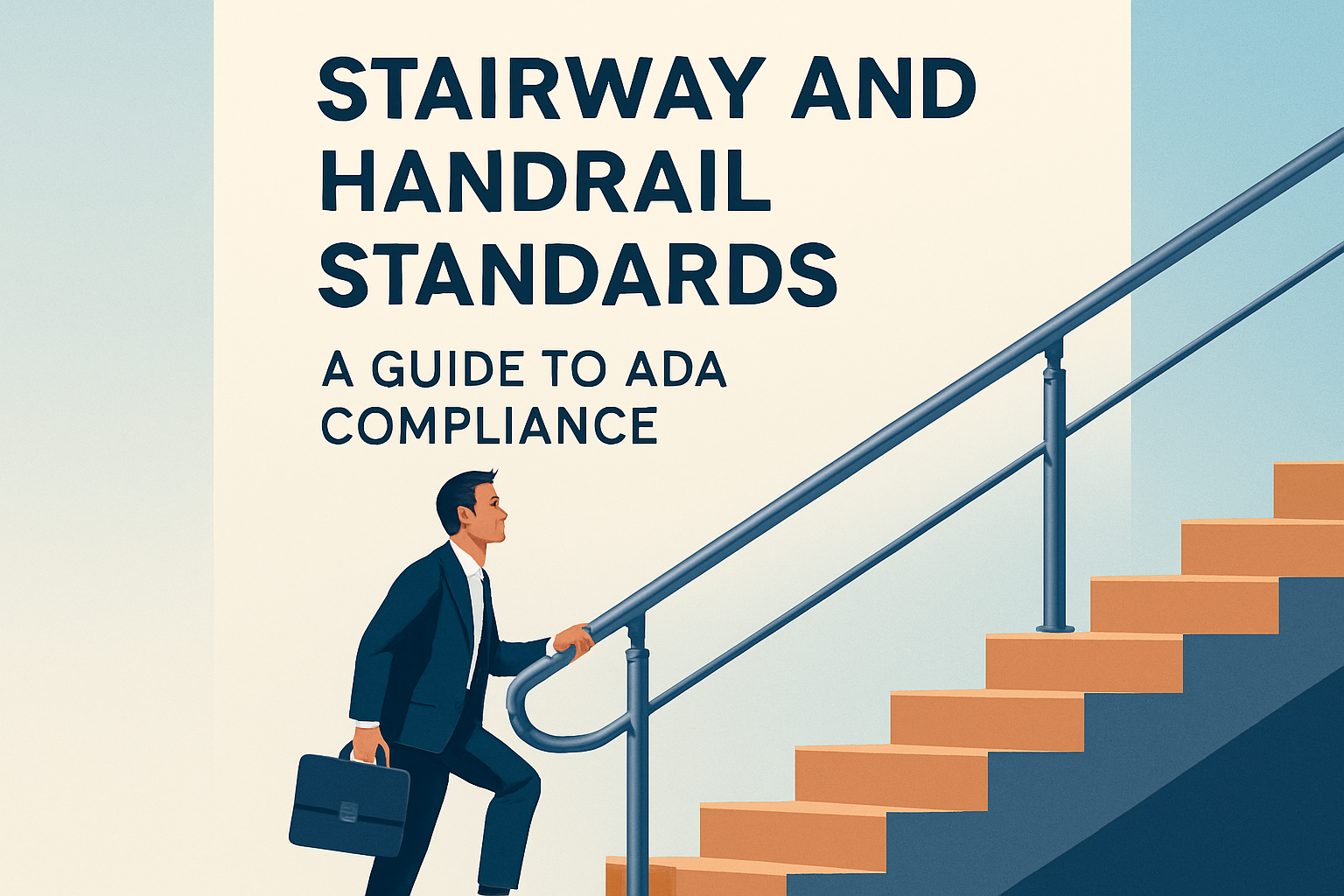
Handrails are not mere additions to stairways; they are essential components for safety and support, particularly for individuals with disabilities. ADA standards outline specific criteria for handrail design and installation. For example, handrails must be continuous along both sides of the stairway and must extend beyond the top and bottom of the stairs. The known world example of this guideline being ignored resulted in significant penalties for a large retail project. By not installing handrails at the correct height and length, they faced customer complaints and fines, detracting from their brand reputation and adding unnecessary costs.
Moreover, handrails must provide a clear grasping surface, typically 1.25 to 2 inches in diameter. The goal is to ensure that anyone, regardless of hand size or strength, can safely grasp the handrail. This rule significantly helps older adults or children who may not have the same grip strength as adults. By adhering to such standards, designers and builders can ensure stairway safety for a broad user base.
Practical Applications: Building a Safe Environment
Incorporating ADA standards into stairway and handrail design goes beyond compliance; it promotes safety, usability, and comfort for all building users. Consider an auditorium setting where quick and safe egress is vital. Here, stairways and handrails must comply with ADA regulations to guarantee that during emergencies, all patrons can exit swiftly and safely, regardless of their physical abilities.
Another practical example involves educational institutions where children of varying abilities need safe access to all areas. A well-designed stairway with ADA-compliant handrails ensures every child can access facilities confidently, fostering an inclusive environment. This approach not only aids mobility-impaired students but also enhances the overall safety for all pupils and faculty.
ADA Compliance Checklist for Stairways and Handrails
For professionals aiming to meet ADA standards, using a comprehensive checklist is invaluable. This ensures that all necessary elements are present and correctly executed. Below is a visual representation of a typical ADA compliance checklist for stairways and handrails:
| Requirement | Standard | Compliant? |
|---|---|---|
| Riser Height Consistency | Uniform in Height | Yes/No |
| Tread Depth | Minimum 11 inches | Yes/No |
| Nosings | Round Edge | Yes/No |
| Handrail Height | 34-38 inches | Yes/No |
| Handrail Diameter | 1.25-2 inches | Yes/No |
| Handrail Extend | Beyond Top/Bottom | Yes/No |
Challenges and Solutions in Achieving ADA Compliance
Achieving ADA compliance can pose several challenges, particularly in older buildings where retrofitting may be needed. However, the cost and effort are justified by the enhanced safety and accessibility that result. A useful strategy is conducting an accessibility audit with a certified professional who can provide insights and solutions tailored to specific building requirements.
For instance, a historic theatre recently underwent renovations to improve accessibility. Initial concerns about altering the character of the building were alleviated by innovative design solutions that integrated modern compliance without compromising historical aesthetics. The successful project highlighted that with creativity, ADA standards can be met without sacrificing style.
Understanding local building codes is also essential as they can sometimes be more stringent than ADA guidelines. Being well-versed in both sets of regulations ensures comprehensive planning and execution. Engaging with local authorities early in the design process can uncover specific requirements that may not be initially apparent, streamlining the path to compliance.
Benefits of ADA-Compliant Stairways and Handrails
The benefits of adhering to ADA standards for stairways and handrails extend beyond legal compliance. These standards enhance safety, user experience, and inclusivity, contributing to a positive perception of the building and its management. For property owners, this can translate into increased foot traffic and higher tenant satisfaction, contributing to elevated property values and stronger community ties.
For example, a shopping mall that recently upgraded its facilities to meet ADA standards reported a marked increase in patronage from families and seniors. The mall became known as an accessible and user-friendly environment, contributing to its success and reputation as a community hub.
Conclusion: Prioritizing Accessibility in Design
Understanding and implementing ADA standards for stairways and handrails is a fundamental aspect of contemporary building design. These standards not only foster inclusivity and accessibility but also significantly enhance user safety and comfort. By prioritizing ADA compliance, architects and builders can create environments where everyone, regardless of physical ability, can navigate freely and independently.
The key takeaway for professionals in the field is the undeniable value of incorporating ADA standards into all aspects of building design. From initial planning to execution, a focus on accessibility enriches the user experience and drives positive outcomes for everyone involved.
As the final steps, building owners and managers should regularly review and update their facilities to comply with evolving ADA standards. This commitment not only upholds legal obligations but also demonstrates a dedication to inclusivity and safety. Partnering with accessibility experts and utilizing comprehensive compliance checklists can facilitate this process, ensuring that all individuals can enjoy a seamless experience within the built environment.
Frequently Asked Questions
1. What are the fundamental requirements for stairway design according to the ADA standards?
Stairways are an essential aspect of building design, and when it comes to ADA compliance, several specific criteria must be met to accommodate individuals with disabilities. First, the riser height, which is the vertical measurement between the surfaces of two successive steps, should be uniform throughout the stairway. According to ADA standards, the riser height must not exceed 7 inches, with a minimum height of 4 inches. This consistency helps individuals, especially those with mobility challenges, predictably navigate stairs.
Equally important are the treads, which are the horizontal parts of the steps where users place their feet. The tread depth should be no less than 11 inches. This depth provides enough surface area for people, helping to avoid trips and falls. Furthermore, the slope of the tread should not be more than 1:48, ensuring the step is nearly level.
ADA guidelines also stipulate that stairways need to have a minimum clear width of 48 inches between handrails, ensuring that individuals using mobility devices, as well as those who assist them, have ample space to maneuver comfortably. Additionally, the nosing, or leading edge of the tread, should be smooth and rounded to prevent catching one’s foot while ascending or descending.
In summary, adhering to ADA stairway design requirements is not just about fulfilling legal obligations. It’s about creating inclusive, predictable, and safe traversal experiences for all, which is why attention to details concerning riser heights, tread depths, and overall dimensions is paramount.
2. Are there specific ADA requirements for handrails on stairways?
Handrails are a critical safety feature on stairways, and ensuring they comply with ADA standards is essential for fostering accessibility. According to ADA guidelines, handrails should be present on both sides of a stairway. This encourages usage by individuals with varying dominant sides, offering them security and support no matter which side is preferred.
The height of these handrails should measure between 34 to 38 inches above the tread nosings. This height range accommodates the majority of users, providing balance assistance and a safeguard against falls. Moreover, handrails should continuously extend along the full flight of stairs and should extend at least 12 inches beyond the top and bottom tread nosings. These extensions offer additional support when individuals step off from or onto the stairs.
Moreover, all handrails must feature a “graspable” profile. According to the ADA, the gripping surface should be smooth without any sharp edges, and it should allow users to comfortably and securely hold on with one hand. It’s recommended that round handrails have a diameter between 1.25 and 2 inches. If the handrail has a non-circular cross-section, it should offer an equivalent grip area.
Furthermore, handrails must have a 1.5-inch clearance from the wall, so users have enough room for comfortable grasping. In conclusion, handrail presence, placement, design, and spacing are critical elements for both compliance and safety when it comes to ADA standards, ensuring indoor and outdoor stairways remain accessible to all.
3. How does ADA compliance in stairways benefit individuals with disabilities?
ADA compliance in stairways significantly enhances accessibility, providing equal opportunities for individuals with disabilities to navigate spaces safely and independently. When stairways are constructed according to ADA guidelines, they address the various mobility challenges faced by individuals. For instance, uniform riser heights and sufficiently deep treads allow individuals with mobility issues, such as those using canes or prosthetics, to ascend and descend stairs without unnecessary strain or risk, minimizing the chances of tripping.
Handrails designed to meet ADA standards offer steady support, especially valuable to individuals who may have reduced balance, strength, or coordination. These handrails also provide psychological comfort, knowing that assistance is available if needed. Moreover, ADA-compliant stairways make public and residential buildings more inclusive, eliminating barriers that may have otherwise restricted access.
Ultimately, ADA compliance in stairway design transcends the functional aspect; it portrays a positive ethos that embraces accessibility and inclusivity. This compliance helps individuals with disabilities experience a sense of independence, dignity, and respect, making them feel valued and welcomed in various environments, from schools and workplaces to entertainment venues and healthcare facilities.
4. What legal consequences can arise from non-compliance with ADA stairway standards?
Failing to adhere to ADA stairway standards can lead to significant legal repercussions for property owners, architects, builders, and facility managers. One of the primary legal consequences is the risk of facing lawsuits due to accessibility discrimination. If a building does not provide accessible routes for individuals with disabilities, affected parties can file complaints under the ADA, leading to legal actions against the owners or operators.
In addition, non-compliance can result in hefty fines and penalties imposed by the Department of Justice or local building authorities. The specific amount can vary depending on the severity of the violation and the governing local ordinances. These financial penalties can be a substantial burden on the business or individual responsible for the non-compliant building.
Besides financial repercussions, non-compliance can damage the reputation of businesses and organizations. Negative public perception and potential media exposure of accessibility issues can deter customers and clients, adversely affecting the organization’s or brand’s reputation. This can, in turn, lead to loss of business and credibility in the market.
Ultimately, ignoring ADA stairway standards is not just a matter of legal and financial risk; it highlights a disregard for diversity and inclusion principles. Compliance fosters a fair and equitable society, where all individuals can freely access public spaces without inhibition. Therefore, it is in the best interest of stakeholders to prioritize ADA compliance to avoid legal ramifications and promote inclusivity.
5. What steps should architects and builders take to ensure ADA compliance in stairways and handrails during the design phase?
Architects and builders need to meticulously plan and execute specific measures to ensure ADA compliance during the design and construction of stairways and handrails. The first step is to familiarize themselves with the latest ADA Standards for Accessible Design and any relevant local building codes. Staying updated with this information is crucial, as codes can evolve over time to accommodate new insights and technologies related to accessibility.
During the design phase, architects should integrate ADA standards into their plans from the outset. This includes specifying the correct dimensions and materials for stair components like risers, treads, and handrails that meet ADA criteria. Incorporating these standards early in the design process helps avoid costly redesigns or modifications later.
Collaboration is another critical aspect; architects and builders should work closely with accessibility experts, contractors, and perhaps consult with representatives from the disability community. Their insights can provide practical perspectives that enhance design functionality and user accessibility.
Implementing simulations or mock-ups of the proposed stairway design can also provide valuable feedback before finalizing plans. Virtual or physical models can highlight potential accessibility issues, allowing architects and builders to rectify them proactively.
Finally, builders should ensure that during construction, all ADA specifications laid out in the design plans are adhered to accurately. Precise construction ensures that the finished stairway remains safe and accessible, reflecting the intended design. Combining knowledge, collaboration, and meticulous planning creates not only ADA-compliant stairways but also environments in which all users are valued and accommodated.