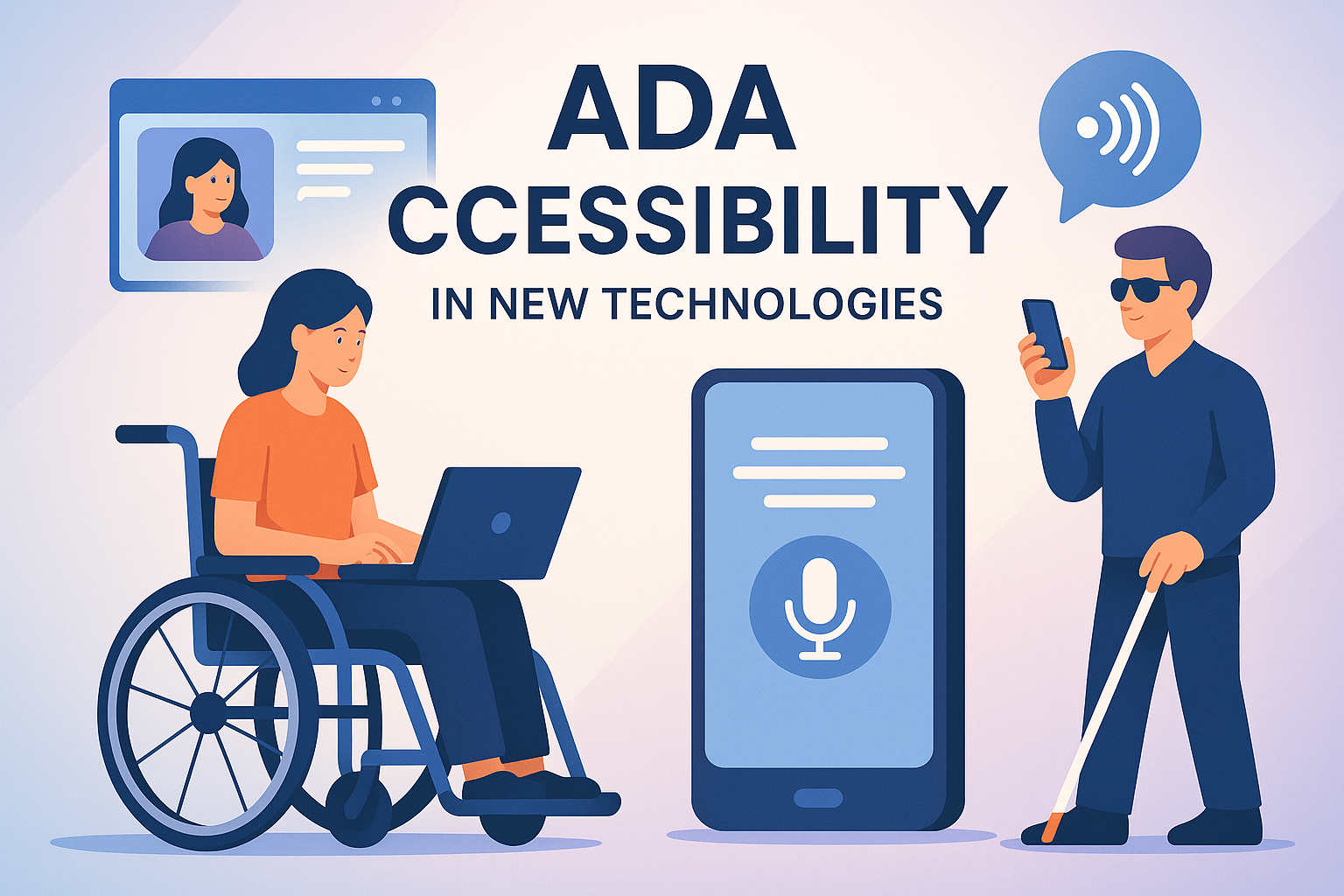
Introduction to ADA Accessibility in New Technologies
The Americans with Disabilities Act (ADA), enacted in 1990, is a pivotal piece of civil rights legislation in the United States, aimed at ensuring people with disabilities have equal opportunities in all areas of public life, including jobs, schools, transportation, and all public and private places open to the general public. With the exponential growth and integration of technology into daily life, ADA’s relevance in the digital realm has become increasingly crucial. In today’s digitally-driven world, technologies continue to evolve, and ensuring they are accessible to everyone, including individuals with disabilities, is essential. The convergence of ADA and new technologies presents a unique set of challenges and opportunities that matter not only for legal compliance but also for fostering an inclusive society.
Key terms in this discourse include “accessibility,” which refers to designing products or environments for individuals who might otherwise face barriers, and “new technologies,” which encompasses the latest advancements such as mobile applications, artificial intelligence, virtual reality, and the Internet of Things (IoT). ADA accessibility in new technologies is significant because it influences how individuals with disabilities can engage with and benefit from these innovations. This not only impacts their day-to-day activities but also their ability to participate in the broader cultural and economic life.
The Importance of ADA Compliance in Digital Services
As digital services become more ubiquitous, ensuring ADA compliance is vital to prevent discrimination and promote equal access. Websites and mobile applications are increasingly serving as the primary channels for communication and commerce. The absence of accessibility features on these platforms can lead to exclusion and potential legal ramifications. A prominent example is the case of Domino’s Pizza v. Robles. In this case, a blind man filed a lawsuit because Domino’s website and app were not accessible using screen reader technology. This led to significant legal discourse over whether ADA applies to digital content. This case underscored the broader understanding that digital accessibility is a legal necessity, not a choice.
Creating ADA-compliant digital services means incorporating features like alt text for images, keyboard navigation, screen reader compatibility, and ensuring that mobile apps can be used by assistive technology. Failing to do so could result in not only lawsuits but also the alienation of a sizeable portion of potential users, thus impacting brand reputation and business success.
Emerging Technologies and the Digital Barrier
Emerging technologies such as virtual reality (VR), augmented reality (AR), and the Internet of Things (IoT) present both exciting possibilities and significant challenges in terms of ADA compliance. These technologies are rapidly transforming how we interact with digital environments. However, their complex interfaces often lack consideration for accessibility. For instance, VR experiences that require precise hand movements or visual cues can exclude people with certain physical or visual impairments.
An illustrative case is the rollout of accessibility features in VR platforms by companies like Facebook’s Oculus. They have introduced features such as captions for audio content and the ability to adjust control settings to accommodate different physical abilities. These efforts indicate an industry shift towards more inclusive design principles, which should be a standard rather than an afterthought in developing new technologies.
Ensuring that developers and engineers of new technologies are aware of and incorporate accessibility standards from the outset can help avoid creating digital barriers. This means embedding accessibility into the DNA of technology development rather than retrofitting when issues are identified.
Challenges in Implementing ADA in Artificial Intelligence Systems
Artificial Intelligence (AI) presents a new frontier for ADA compliance. AI systems are increasingly used in areas such as hiring processes, customer service, and healthcare analytics. However, these systems often unintentionally incorporate biases that can disadvantage disabled individuals. For example, AI-powered recruitment tools that screen candidates based on speech patterns may inadvertently discriminate against those with speech impairments.
A notable example involved an AI hiring tool developed by a leading tech company, which was found to downgrade resumes from certain minority candidates unintentionally. This incident shed light on the broader implications of biases coded into algorithms. The challenge lies in ensuring that AI systems are trained on diverse datasets and evaluated for bias, which requires a nuanced understanding of ADA requirements in technology design.
To address these challenges, companies need to implement robust testing protocols that include input from people with disabilities. Building AI systems that recognize accessibility needs requires collaborative efforts, ensuring diverse voices are part of the development pipeline.
Precedents in Legal Judgments and Regulations
Legal precedents in ADA accessibility for new technologies play a crucial role in shaping compliance expectations. Various court decisions have helped define how ADA is applied in the digital context. For example, the ruling in the case of Gil v. Winn-Dixie was an important milestone. Although initially favoring the plaintiff, the appellate court later reversed the decision, prompting discussions about the definition of a “place of public accommodation” in cyberspace.
In response to such challenges, industry regulators like the Department of Justice (DOJ) have been working on formal guidelines to clarify ADA compliance in digital spaces. Although comprehensive regulations have yet to be introduced, the existing legal precedents have served as de facto guidelines, pushing businesses to adopt inclusive practices even in the absence of explicit legal mandates.
Companies are advised to stay informed of ongoing legal developments and proactively implement accessibility measures. Regular audits and the use of accessibility monitoring tools can help identify and address potential compliance issues before they escalate into legal disputes.
Practical Steps for Achieving ADA Compliance in Technology
Achieving ADA compliance in technology is not just about following regulations but embracing the principles of universal design, which can enhance user experiences for everyone. Companies can implement several practical strategies to ensure new technologies are accessible:
- Conducting accessibility audits of existing digital platforms to identify and rectify gaps.
- Integrating accessibility features such as alt text, voice commands, and scalable fonts into product design.
- Ensuring compatibility with assistive technologies like screen readers and captioning services.
An example of successful implementation can be seen in Microsoft’s Accessibility Features. Microsoft has embedded accessibility into its products, from Xbox adaptive controllers to Office 365’s inclusive design features. They conduct regular feedback sessions and collaborate with disability advocates to refine their offerings, setting a benchmark in the industry for other technology companies to follow.
Organizations can emulate such practices by fostering a culture of accessibility within their teams, encouraging continuous learning, and staying abreast of technological and legal evolution. This will not only prevent legal issues but also create innovative, user-friendly products that cater to diverse audiences.
Key Takeaways and Call to Action
The integration of ADA accessibility into new technologies is integral in creating a just, inclusive society. Legal challenges and precedents underscore the importance of proactive compliance to avoid litigation while also expanding user engagement. By embracing accessibility, companies can enhance their brand reputation, reach wider audiences, and drive innovation.
For businesses and developers, the key takeaway is simple: prioritize accessibility from the start. Consider it not just a legal obligation but an opportunity to lead in the marketplace. By ensuring products are designed with all users in mind, including those with disabilities, organizations can tap into the superior business and ethical benefits it yields.
If you are a stakeholder in technology development, it’s time to act. Review your current practices, engage with accessibility experts, and implement the necessary changes. Let’s build a digital world where technology truly serves, empowers, and includes everyone, ensuring no one is left behind in the digital revolution.
Frequently Asked Questions
1. What is ADA Accessibility and why is it important for new technologies?
ADA Accessibility, derived from the Americans with Disabilities Act (ADA) of 1990, ensures that individuals with disabilities have equal access to opportunities and services in areas spanning employment, education, transportation, and more. With new technologies continually reshaping how we live, work, and interact, ensuring ADA compliance in these domains has never been more crucial. These technologies include websites, mobile apps, and emerging tools such as virtual reality and AI-driven interfaces. The importance lies not only in legal compliance but also moral obligation; it’s about inclusivity, making sure that everyone, regardless of ability, can participate fully in our digital society. Beyond ethics, it’s also about widening market reach and avoiding costly legal penalties that might arise from non-compliance.
2. How do legal challenges and precedents shape ADA compliance in technology?
Legal challenges and precedents play a pivotal role in interpreting and enforcing ADA compliance within technology. As new digital platforms and gadgets emerge, there’s often ambiguity about how ADA standards apply. Over time, landmark lawsuits and court rulings have provided clearer guidelines and set crucial precedents. For instance, recent cases have addressed whether websites are considered “public accommodations” under the ADA. Courts have often ruled that they are, prompting businesses to ensure their sites are accessible to users with disabilities. Such legal precedents not only clarify the scope of ADA in technology but also drive innovation. Companies are urged to design more inclusively from the outset, considering alternative text for images, keyboard-accessible navigation, and screen-reader compatibility, among other features.
3. Can you share examples of key precedents or cases related to ADA compliance in technology?
Over the years, several key cases have significantly impacted ADA compliance in the digital realm. A notable one is the case against Winn-Dixie, a supermarket chain, where it was ruled that their website must be accessible to users with disabilities, specifically mentioning screen-reader accessibility. Another influential case involved Domino’s Pizza, which reached the U.S. Supreme Court, resulting in a ruling that websites and mobile apps must comply with ADA regulations. These decisions underscore the necessity of considering ADA guidelines in digital interfaces and services, catalyzing businesses to revise and redesign their technological platforms with accessibility in mind, ultimately driving innovation and inclusivity in the digital space.
4. What are the main components to consider for ADA compliance in digital platforms?
Ensuring ADA compliance in digital platforms involves several critical components. First and foremost, it’s vital to integrate accessibility from the design phase, employing a user-centric approach. Key aspects include ensuring that websites and apps are compatible with screen readers, providing text alternatives for images and non-text content, incorporating closed captioning in video content, and enabling navigation using keyboards for those unable to utilize a mouse. Moreover, the layout should avoid reliance on color alone to convey information, accommodating various vision impairments. Another significant aspect is regular audit and testing; using tools like WAVE or Lighthouse, and conducting manual accessibility reviews, helps identify areas needing improvement. Training for developers and content creators on accessibility principles also proves vital in maintaining compliance proactively.
5. What role does technology play in furthering ADA accessibility, and how can businesses leverage it?
Technology plays a transformative role in advancing ADA accessibility. Emerging innovations continue to provide new ways to assist individuals with disabilities. Voice recognition software, for instance, supports users with mobility challenges, while AI-driven tools can provide real-time subtitles and translations for the hearing impaired. For businesses, leveraging technology means more than just compliance; it’s about embracing a culture of inclusion. By integrating assistive technologies into their products and services, businesses not only adhere to legal requirements under the ADA but also broaden their user base and enhance brand reputation. They can use analytics tools to track how accessible their platforms are and identify patterns or areas needing improvement, promoting a cycle of continuous enhancement and adaptation to user needs. In short, adopting accessibility-focused technologies is a strategic opportunity to innovate and fulfill ADA requirements while championing societal inclusivity.


