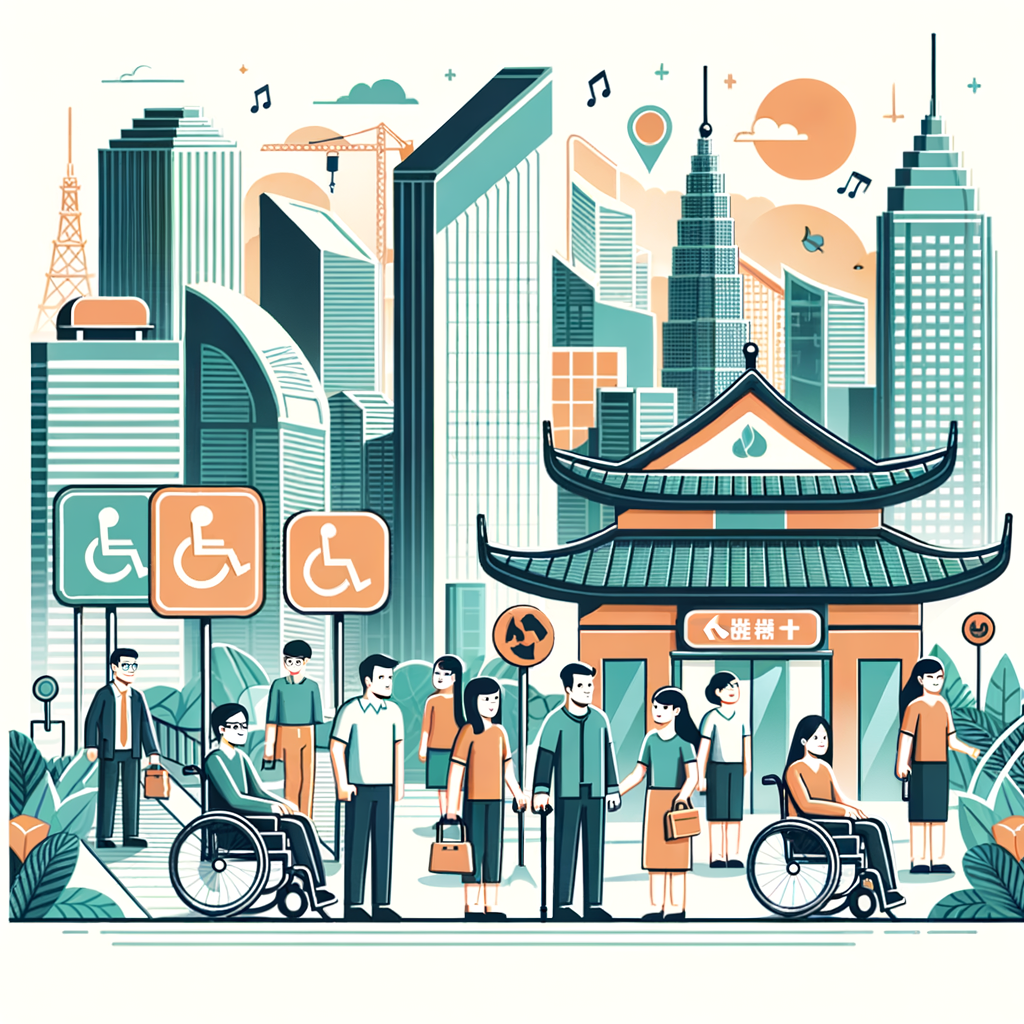
The topic of disability rights legislation in the Middle East is both compelling and crucial for understanding how diverse cultural, social, and political landscapes impact the lives of people with disabilities. In a region often characterized by its significant geopolitical issues, the topic of disability rights might not always take center stage but is paramount to creating inclusive societies. When we talk about disability rights, we refer to the laws, policies, and initiatives aimed at eliminating discrimination and improving accessibility for people with disabilities. These are essential not only for promoting equal opportunities but also for the moral imperative of respecting human dignity. The matter is gaining increasing relevance due to growing awareness and international pressure to ensure that countries uphold standards like those outlined in the United Nations Convention on the Rights of Persons with Disabilities (CRPD). Understanding the nuances of how various Middle Eastern countries approach this issue sheds light on broader questions of social justice and human rights, particularly in a region that is home to hundreds of millions and boasts a rich, diverse tapestry of histories and cultures.
The Foundation of Disability Rights in the Middle East
Disability rights in the Middle East are, in various stages of development, evolving rapidly as countries aim to comply with international standards. Many nations in the region have become signatories of the CRPD, committing to legally incorporate provisions that promote equality for people with disabilities. A noteworthy case is the Kingdom of Saudi Arabia, which ratified the CRPD in 2006. The Kingdom launched a national strategy for people with disabilities in 2018, focusing on sustainable development and full societal integration. This strategic shift is an example of how national commitments to global frameworks can impact domestic policy.
Other countries, such as Egypt, have enacted comprehensive disability legislation. In 2018, Egypt passed a significant law that outlines the rights of people with disabilities, emphasizing equal access to public services and buildings. The legislation also mandates that government entities dedicate a percentage of their employment opportunities to people with disabilities, reflecting a systemic approach to inclusivity. The focus on infrastructural and occupational equality demonstrates a shift towards broader societal integration.
Challenges in Implementation
Despite legislative progress, implementing effective disability rights remains a challenge in many Middle Eastern countries due to various hurdles. Some nations face difficulties in policy execution because of limited resources and infrastructure. For instance, Lebanon, despite having disability legislation, struggles with practical implementation due to economic constraints and sociopolitical tensions. The lack of accessible transportation and public infrastructure is a persistent issue, limiting the real-world impact of laws designed to assist those with disabilities.
Political instability is yet another factor impeding progress. Countries experiencing conflict, like Yemen, encounter monumental challenges in not only maintaining basic governmental functions but also implementing sophisticated disability rights policies. These situations result in a lack of services that cater to the needs of people with disabilities, thus exacerbating existing inequalities. Moreover, societal perceptions and cultural stigmas around disability can reinforce barriers, making it difficult for progressive laws to achieve their full potential.
International Influence and Agreements
International organizations and frameworks play a pivotal role in shaping disability rights legislation in the Middle East. The CRPD serves as a key driver for policy change, encouraging countries to align with international standards. In practice, this translates to countries amending or enacting legislation that aims to harmonize domestic policies with global norms.
Jordan, for instance, has taken significant steps influenced by international guidelines. The Protection of Persons with Disabilities Law, enacted in 2007, aligns closely with the principles of the CRPD. This law mandates that public and private enterprises adapt their workplaces to be inclusive and accessible, demonstrating the influence of international standards on national policy. Jordan’s efforts highlight how global advocacy can lead to specific, actionable outcomes within national contexts.
Examples:
- Saudi Arabia implementing a national strategy focusing on sustainable development.
- Egypt’s legislative mandate for employment opportunities.
- Jordan’s enforcement of inclusive workplace laws.
Impact on Education and Employment
Access to education and employment are pivotal areas where disability rights legislation can make a substantial impact. Implementing inclusive educational policies ensures that students with disabilities receive the support they need to succeed academically and socially. Qatar serves as an intriguing example of progressive educational policies in action. The country has invested heavily in special education programs and inclusive policies in line with their National Vision 2030. By providing specialized teacher training and inclusive curriculum guidelines, Qatar aims to create an educational environment conducive to all students.
In terms of employment, the role of legislation is similarly critical. Inclusive employment policies not only enhance economic contributions but also foster a sense of community integration for individuals with disabilities. For example, the UAE has introduced laws that mandate job quotas for people with disabilities, ensuring that a specific percentage of roles in certain sectors are reserved for them. These initiatives underscore the direct impact legislative measures can have on people’s day-to-day lives and essential contributions to national economies.
The Road Ahead: Future Directions and Recommendations
While significant strides have been made, the journey toward comprehensive disability rights in the Middle East is far from over. Future directions should emphasize not only the creation of new laws but also focus on the enforcement of existing regulations. Investment in public infrastructure to improve accessibility can create a more inclusive environment. Additionally, regional cooperation and knowledge-sharing initiatives could lead to cross-border strategies that tackle shared challenges.
Furthermore, engaging non-governmental organizations and communities will be crucial. These entities can play an instrumental role in advocacy and education, helping to shift societal perceptions and reduce stigma. In places like Turkey, where NGOs have actively contributed to policy development and awareness, such efforts have proven effective in promoting more inclusive societies. Emphasizing community involvement and grassroots movements is perhaps the most sustainable path forward.
Conclusion: The Path to Equality and Inclusion
The examination of disability rights legislation in the Middle East reveals a landscape rich with both opportunity and challenge. Legislative efforts informed by international standards like the CRPD have paved the way for meaningful change, but the implementation and enforcement of these laws remain crucial hurdles. Understanding the diverse circumstances of Middle Eastern countries underscores the importance of context-specific approaches while acknowledging the potential for regional collaboration. The key takeaway is the continuously evolving nature of disability rights, calling for sustained attention from policymakers, communities, and international bodies. As individuals and societies, encouraging the enforcement of these laws and advocating for further inclusion can make significant strides toward a more equitable future. The call to action is clear: adopt, adapt, and continually advance to ensure that people with disabilities across the Middle East have equal access to opportunities, participation, and human dignity.
Frequently Asked Questions
1. What is the current state of disability rights legislation in the Middle East?
The state of disability rights legislation in the Middle East varies significantly across countries. Some nations have begun to adopt comprehensive frameworks following international guidelines, such as the United Nations’ Convention on the Rights of Persons with Disabilities (CRPD), which aims to protect the rights and dignity of persons with disabilities. However, implementation and enforcement often lag due to a variety of factors including political instability, lack of resources, and societal attitudes towards disabilities.
Countries like the United Arab Emirates and Qatar have demonstrated strides towards creating inclusive environments with initiatives aiming to improve access to education, employment, and public facilities for individuals with disabilities. Meanwhile, other countries in the region are still in the nascent stages of legislative development, hindered by ongoing conflicts or socio-political hardships. The disparity is widely recognized, highlighting the need for more uniform advancements across the region to ensure comprehensive coverage and protections for all individuals with disabilities.
2. How do cultural attitudes in the Middle East affect the implementation of disability rights?
Cultural attitudes in the Middle East play a significant role in shaping how disability rights are perceived and implemented. In some places, disabilities are still surrounded by stigma, which can result in social isolation and discrimination against those who have them and their families. This cultural stigma can range from viewing disabilities as a personal tragedy to associating them with social shame, which can affect policy development and public support for enforcing disability rights.
However, this is slowly changing as awareness and advocacy groups work to shift perceptions. Increasingly, the focus is on ability rather than disability, with efforts being made to showcase the contributions that individuals with disabilities can make to society. Educational campaigns and advocacy are critical in changing these cultural narratives and fostering environments where legislative measures for disability rights can be more readily embraced and implemented.
3. What role do non-governmental organizations (NGOs) play in advancing disability rights in the Middle East?
Non-governmental organizations (NGOs) play a vital role in promoting disability rights in the Middle East, often acting as catalysts for change and providing essential support services that may not be fully covered by governmental bodies. These organizations engage in a range of activities, including advocacy, public education, and direct service provision. They help raise awareness about the rights and capabilities of persons with disabilities, campaign for policy changes, and offer training programs to increase employment opportunities.
Moreover, NGOs often bridge gaps in service provision, offering accessible educational resources, rehabilitation services, and adaptive technologies to those in need. They also provide platforms for individuals with disabilities to have their voices heard, fostering a sense of community and empowerment. In many instances, NGOs collaborate with international bodies and local governments to implement and monitor disability rights legislation effectively, ensuring that such initiatives are both practical and culturally sensitive.
4. How does regional conflict impact the advancement of disability rights in the Middle East?
Regional conflicts in the Middle East severely impact the advancement of disability rights, both exacerbating existing challenges and creating new ones. In conflict zones, the infrastructure necessary to support individuals with disabilities, such as accessible healthcare, education, and transportation, is often significantly disrupted or destroyed. In these settings, people with disabilities may face increased marginalization and vulnerability, lacking access to basic services and protection.
Moreover, conflicts can result in a higher prevalence of disabilities due to injuries sustained during violence or due to reduced access to necessary medical interventions. The chaotic environment and resource scarcity in such regions make it difficult to implement and enforce disability rights legislation. This emphasizes the need for targeted efforts to address the unique needs of individuals with disabilities in conflict-affected areas, often requiring international support and cooperation to ensure that these individuals receive essential protections and support.
5. Are there any success stories or examples of effective disability rights legislation in the Middle East?
Yes, there are several notable examples of successful disability rights legislation in the Middle East, illustrating the positive changes that can occur with dedicated effort. In the United Arab Emirates, for instance, the country has implemented laws and policies to promote inclusivity and accessibility, such as ensuring public spaces and transportation are accessible. The UAE government has also launched initiatives to increase employment opportunities for individuals with disabilities, integrating them further into the workforce and society.
Qatar, another progressive model in the region, has committed to developing a 2030 vision that includes comprehensive plans for the inclusion and empowerment of people with disabilities. This includes a focus on accessible infrastructure, education reform, and health services specifically designed to meet the needs of persons with disabilities. These countries demonstrate how a combination of effective legislation, political will, and cultural shifts can lead to substantial improvements in the lives of individuals with disabilities and can serve as models for other countries in the region.