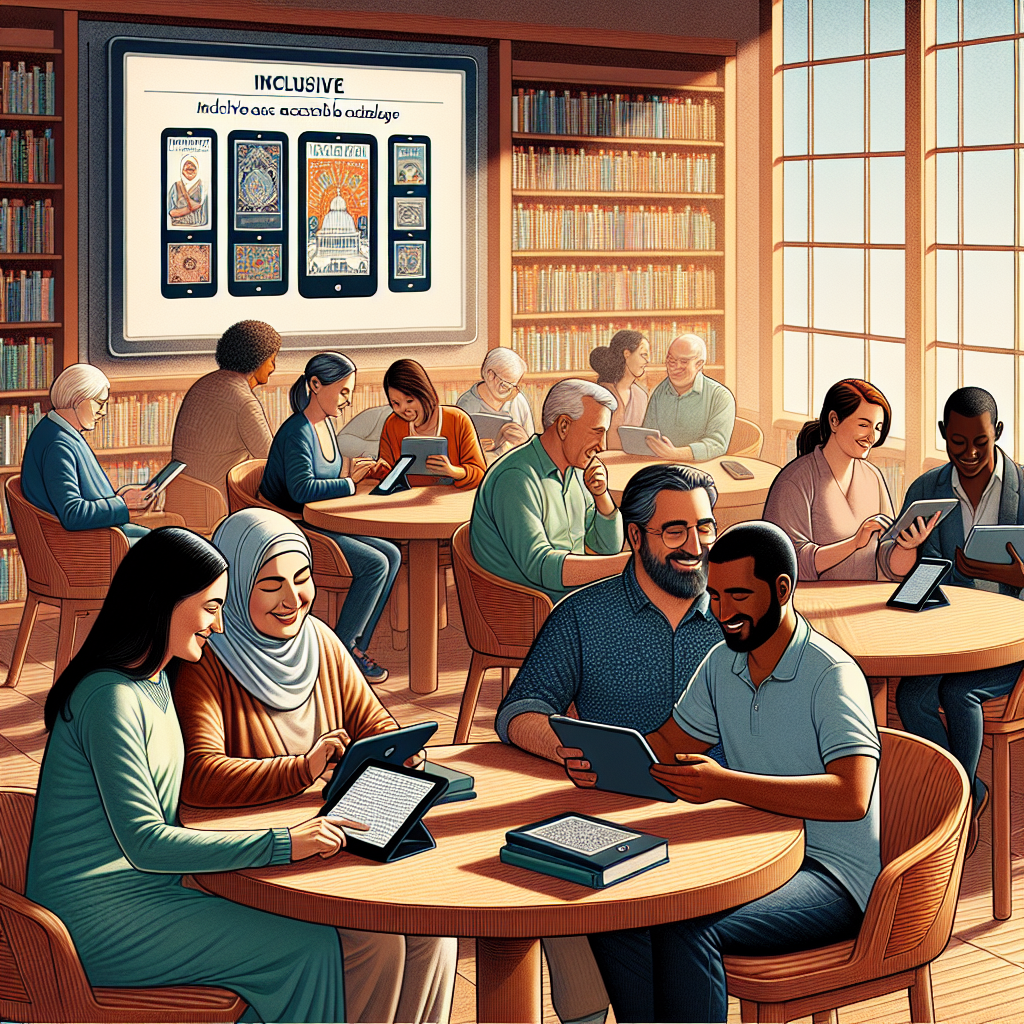
The realm of social media has experienced a massive transformation over the years, evolving from basic platforms for connecting people to advanced avenues where individuals from all walks of life engage, communicate, and share their lives openly. While these platforms continue to grow at an exponential rate, there’s an increasing emphasis on ensuring that social media environments are accessible to everyone, regardless of their physical or cognitive abilities. With the rise in awareness about digital inclusion, the future of accessibility in social media platforms presents both exciting possibilities and significant challenges. This article delves into the ongoing efforts, emerging technologies, and future trends in making social media platforms more accessible, thereby creating a more inclusive digital world for users everywhere.
Accessibility in social media isn’t just about adhering to legal standards or achieving corporate social responsibility; it’s about recognizing the diverse needs of users worldwide. Today, many people rely on social media as their primary mode of interaction, from the mundane sharing of daily events to significant exchanges of ideas and information. For the millions of people with disabilities, accessing these platforms can be challenging if they aren’t equipped with the necessary tools and features designed with inclusivity in mind. This highlights the importance of accessible designs and features that enable people with disabilities to participate equally and independently in the digital world.
The following sections will explore how accessibility issues in social media platforms are currently addressed, analyze the role of emerging technologies in facilitating better accessibility, and predict how these trends are set to shape the future. From adopting standardized guidelines and integrating assistive technologies to fostering a culture of inclusion within tech companies, the journey towards accessible social media is multifaceted. As the digital landscape continues its rapid evolution, the significance of accessibility will only become more pronounced, pushing developers, designers, and policymakers to innovate and implement solutions that cater to everyone.
Current Accessibility Initiatives and Challenges
Currently, many social media platforms are increasingly prioritizing accessibility by integrating features tailored to meet the needs of users with disabilities. For instance, platforms like Facebook and Twitter have made strides in enhancing their accessibility features by offering alternative text for images, screen reader capabilities, and customizable interface options for users with vision impairments. Social media giants recognize that providing accessible experiences is not only ethical but also broadens their user base and enhances user satisfaction overall.
Despite these advancements, numerous challenges persist. One major hurdle is the lack of uniform accessibility standards across platforms. While the World Wide Web Consortium (W3C) has developed the Web Content Accessibility Guidelines (WCAG), compliance varies significantly among social media companies. Furthermore, the dynamic nature of social media content—constantly changing, user-generated, and highly visual—presents additional difficulties in maintaining consistent accessibility standards.
Another significant issue is that of insufficient user testing involving individuals with disabilities. It’s imperative for platforms to conduct rigorous usability testing with diverse user groups, including those with disabilities, to ensure that features work as intended. This feedback loop is essential for identifying gaps and making improvements that truly address the users’ needs. However, many companies either overlook this step or lack the resources and expertise to carry it out effectively.
Moreover, comments, videos, and live streaming content often remain inaccessible to people with hearing impairments due to the absence of captioning and transcription services. The proliferation of rich media content requiring such features necessitates innovative solutions that can automatically accommodate individuals with hearing and cognitive disabilities without interrupting the user experience.
Emerging Technologies and Innovations
As technological advances continue to accelerate, a variety of emerging technologies promise to revolutionize accessibility in social media platforms. One such innovation lies in the use of Artificial Intelligence (AI). AI can significantly improve accessibility through features such as automatic image recognition and generation of alt text, voice recognition for those with physical disabilities, and natural language processing to convert text into formats suitable for a range of disabilities.
Machine learning algorithms are increasingly used to develop predictive text input methods and sentiment analysis tools to assist users with cognitive disabilities in articulating thoughts and preferences more effectively. AI also enables the automation of captioning and translation services in real-time, transforming how live video content and stories are consumed.
Virtual Reality (VR) and Augmented Reality (AR) offer another dimension to accessibility innovations. These technologies can create immersive experiences that allow users to interact with digital content in new and engaging ways. For people with disabilities, VR and AR can reduce barriers by providing simulated environments tailored to their needs, thus offering access in ways traditional interfaces cannot.
Furthermore, developers are increasingly leveraging open-source platforms and tools to foster innovation in accessibility. By tapping into collective expertise and sharing resources, companies can create more refined and inclusive accessibility features. This collaborative approach holds great promise for driving more rapid advancements in accessibility practices and solutions, benefiting users worldwide.
The Role of Policy and Regulation
To pave the path toward a more accessible future, regulatory frameworks and policies play a critical role. Governments across the globe are recognizing the importance of digital accessibility and are implementing policies that mandate compliance to accessibility standards. In several regions, access to digital platforms is now seen as a fundamental human right, necessitating legislative action to ensure equal access for individuals with disabilities.
Policies such as the Americans with Disabilities Act (ADA) in the United States and the European Accessibility Act are instrumental in guiding social media platforms toward improved accessibility practices. These regulations establish clear benchmarks for compliance, compelling companies to adopt accessible designs and inclusivity in their product development cycles.
However, the enforcement of these regulations remains inconsistent across borders and industries. While some companies have made commendable efforts to comply, others lag due to a lack of awareness or resources. Continuous monitoring, public awareness campaigns, and industry collaboration are necessary to bridge these gaps, ensuring that companies adhere to established standards and prioritize accessibility.
Moreover, policymakers need to consider the fast-paced nature of technological advancement, ensuring that regulations evolve to remain relevant and effective. This includes addressing new challenges as they emerge and adapting to innovative solutions that improve accessibility without stifling creativity and progress in the tech industry.
Fostering a Culture of Inclusivity
For social media platforms to genuinely become accessible, fostering a culture of inclusivity within organizations is fundamental. Encouraging diverse teams can lead to broader perspectives, understanding, and innovation in creating accessible features. Often, the very development of these features begins with the inclusion of individuals with disabilities in decision-making processes.
Training and education are vital components of nurturing an inclusive culture. Employees at all levels should be educated about the importance of accessibility and equipped with the knowledge and tools to develop inclusive solutions. Companies can benefit greatly from accessibility champions or specialized teams dedicated solely to improving the user experience for all, including marginalized and underrepresented users.
Partnerships with advocacy groups and organizations that focus on disability rights can provide invaluable insights and feedback from actual users, ensuring that accessibility features cater to the true needs of the community. By establishing a solid rapport with these groups, companies can build trust and credibility while advancing the cause of digital inclusion.
Conclusion
The future of accessibility in social media platforms lies at the intersection of technology, regulation, and culture. While significant strides have been made to accommodate users with disabilities, there is still much work to be done. The commitment toward accessibility must be unwavering, with efforts spanning multiple sectors and stakeholders striving to create environments where all individuals can engage freely and independently.
Emerging technologies like AI, VR, and AR herald new possibilities for making social media more accessible than ever before. As these technologies develop, they promise to remove barriers and unlock the full potential of digital platforms for people with diverse needs. Meanwhile, comprehensive policies and regulations will continue to be crucial in maintaining accountability and guiding the development of inclusive practices.
Ultimately, the pursuit of accessibility is not a single destination but a continuous journey requiring cooperation, innovation, and dedication. By adopting an inclusive mindset and leveraging the full power of technology, social media platforms can lead the charge in not only connecting the world but making it a place where every individual, regardless of ability, is welcomed and valued.
Frequently Asked Questions
1. What does accessibility in social media platforms entail?
Accessibility in social media platforms refers to the design and development of these platforms in such a way that they are usable by everyone, including people with disabilities. This involves implementing features that aid individuals with physical, cognitive, or sensory disabilities, ensuring they can access and engage with content as easily as those without disabilities. Common accessibility features include alt text for images, captions for videos, screen reader compatibility, flexible font sizes, and voice-activated navigation. These efforts ensure that social media is an inclusive space where all users can share and interact without barriers.
2. Why is it important to focus on accessibility in social media now more than ever?
As the use of social media becomes increasingly prevalent in everyday life, it’s vital to ensure that these platforms are inclusive and accessible to everyone. The digital divide can significantly impact social interactions, access to information, and opportunity equality for individuals with disabilities if not addressed. This focus on accessibility is important because it enables fair and equal participation, a sense of community inclusion, and access to information for all users. Additionally, as diversity and inclusion move to the forefront of our cultural and societal priorities, creating accessible platforms represents a commitment to these values and a recognition of the importance of universal design.
3. What are some innovative accessibility features being integrated into social media platforms?
Social media platforms are continuously innovating to improve accessibility. Some of the latest features being integrated include real-time captioning for live videos, which benefits individuals with hearing impairments by providing synchronized text representation of spoken words. There’s also increased use of AI to generate alt text for images, making visual content understandable to those using screen readers. Voice command functionality allows users to navigate platforms hands-free, benefitting those with mobility impairments or limited dexterity. Enhanced color contrast options and customizable text sizes are also being deployed to assist users with visual impairments. These features are part of ongoing efforts to break down barriers and support a diverse user base.
4. What challenges do developers face when implementing accessibility features on social media platforms?
One of the main challenges developers face when implementing accessibility features is the variability and complexity of disabilities—there’s no one-size-fits-all solution. Developers must consider a wide range of needs, which can be difficult to address in a cohesive, scalable, and efficient manner. Additionally, integrating advanced accessibility features can require significant technical investment and innovation, as well as cooperation and collaboration across various departments within a company. There is also the continuous need for testing and user feedback to ensure that these features are genuinely beneficial and meet the users’ needs. Keeping up with evolving standards and incorporating them into ever-evolving platforms adds another layer of complexity.
5. How can users influence improvements in accessibility on social media platforms?
Users can play a crucial role in enhancing accessibility on social media platforms by providing feedback and expressing their needs and usage experiences. Platforms often rely on user data and insights to refine their features, so constructive criticism and suggestions can lead to significant enhancements. Additionally, users can advocate for change by participating in discussions, promoting awareness about accessibility issues, and supporting initiatives aimed at improving accessibility. Engaging with platforms via forums, user surveys, and beta testing programs also provides critical insights that can help developers prioritize and implement necessary changes. Informed, vocal users can be powerful agents in driving accessibility forward in the digital sphere.