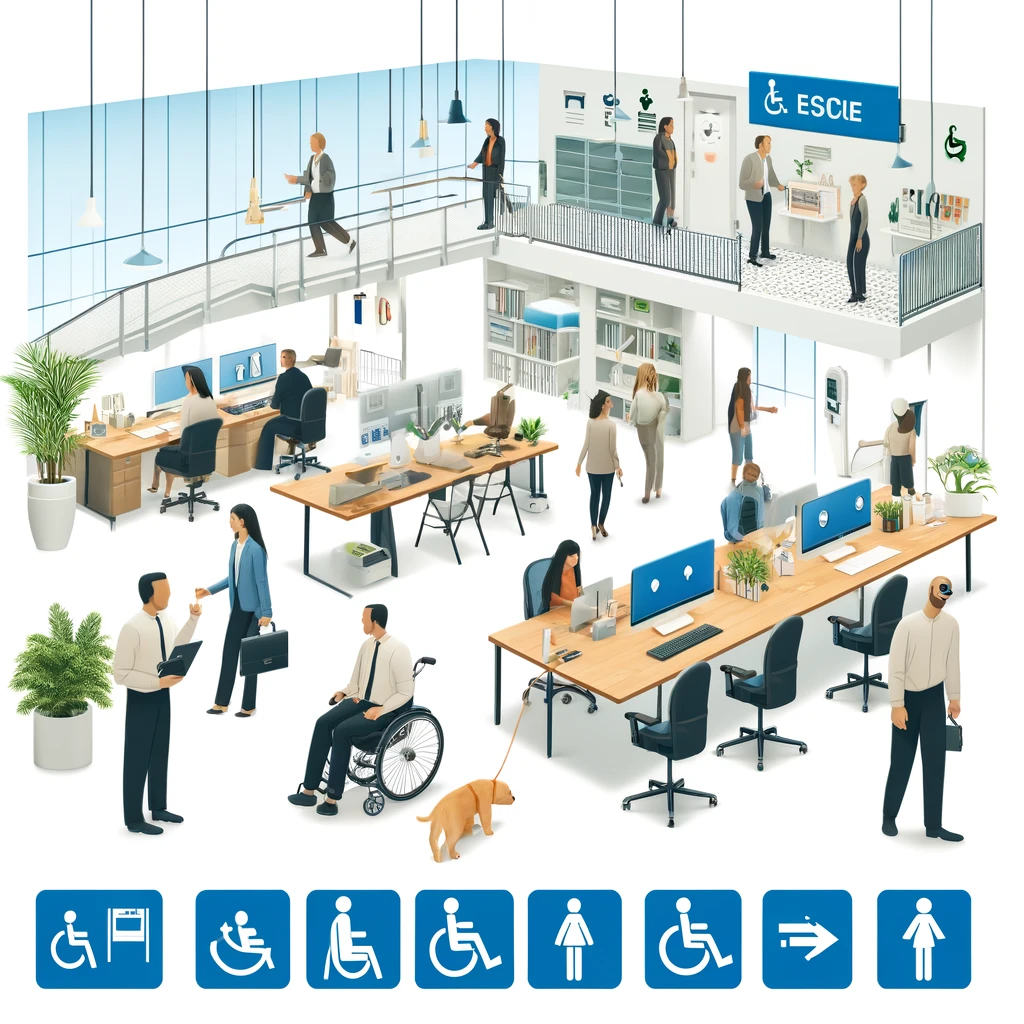
The Americans with Disabilities Act (ADA) was conceived to ensure that individuals with disabilities have equal access to public spaces and services. The commitment to inclusivity covers a broad spectrum of environments, including the bustling field of conference and event planning. Planning to meet ADA standards isn’t just about compliance; it’s an ethical commitment to creating accessible and welcoming spaces for everyone. Despite the complexities, prioritizing accessibility is integral to successful event management. With an ever-growing audience, event planners are compelled to consider numerous logistics, among which ADA compliance holds paramount importance. Understanding the nuances of ADA regulations becomes crucial in shaping the experiences of attendees who have disabilities, ensuring they receive the same level of access and engagement as their non-disabled counterparts. This article aims to explore the essential facets of ADA compliance in conference and event planning, offering detailed insights to professionals in the industry.
Meeting ADA standards spans various considerations, from site selection and facility design to communication accessibility and staff training. By doing so, not only do planners avoid legal repercussions, but they also create meaningful and enjoyable experiences for diverse audiences. An understanding of ADA guidelines and their implementation in the event planning process is indispensable. It helps planners in securing reputable venues, organizing accessible activities, and ensuring seamless experiences for all. In exploring this topic, we will underscore key challenges and solutions, the role of technology, and the proactive measures planners can adopt to stay ahead of ADA compliance. Creating inclusive environments is not just legally or socially right but encourages equitable participation enriching the entire event experience. Let’s delve into these important elements of ADA compliance to highlight best practices for event planning professionals.
ADA Compliance in Conference and Event Planning
Fulfillment of ADA standards involves a multi-faceted approach that encompasses many elements of conference and event planning. Planners must ensure that accessibility permeates all levels, from pre-planning stages through execution and evaluation. Let’s examine these critical aspects.
Site Selection and Layout
One of the foremost considerations in ADA compliance is selecting an appropriate venue. Compliance begins with the venue’s architecture, which must accommodate the diverse needs of individuals with disabilities. Event planners must conduct comprehensive site evaluations to ensure that selected venues provide the requisite accessibility features. These elements include, but are not limited to, parking facilities, paths of travel, and restroom accommodations. Event spaces should have designated ADA parking spots, curb ramps, and smooth pathways that grant barrier-free access from parking to venue entries. Interior design should feature compliant pathways, door widths, and maneuverable spaces.
The interior layout of an event venue should consider attendees with mobility, visual, or auditory impairments. Circulation pathways within the venue should be free of obstructions to facilitate easy movement. Seating arrangements, particularly in spaces like conference rooms or theaters, should provide enough room for wheelchairs and companions. Suitable ADA-compliant seating should be distributed evenly throughout the venue to prevent isolation. Additionally, seating should be adaptable to accommodate varying needs, including collapsible chairs or adjustable desk heights, ensuring adaptability and comfort for attendees.
Communication Accessibility
Effective communication is another pillar of ADA compliance. Ensuring equitable communication access involves catering to individuals who are deaf, hard of hearing, blind, or have other communication barriers. Event planners should provide auxiliary aids and services such as sign language interpreters, real-time captioning, and audio description services. Other accommodations may include offering materials in Braille, large print, or accessible digital formats to provide attendees with equal access to written information.
Technological solutions can play a significant role in supporting communication accessibility. Devices such as hearing loops and assistive listening systems can enhance the experiences of attendees with hearing disabilities. Mobile applications can be leveraged for screen reading and speech-to-text functionalities when providing information during conferences. Offering phone-based support, voice command systems, and interactive kiosks can further ensure that events are accessible to all participants. Additionally, all digital content, from websites to event apps, should follow the Web Content Accessibility Guidelines (WCAG) to ensure it is navigable and understandable by people with disabilities.
Program and Service Accessibility
Ensuring that event program content and services are accessible is essential for inclusive event planning. This involves ensuring that all presentations, activities, and sessions are structured to accommodate individuals with disabilities. Speakers and presenters should be briefed on accessibility guidelines, including speaking clearly, using visual aids that meet contrast and readability standards, and ensuring that all visual content includes descriptive text or explanations.
Service accessibility also includes assistance with registration and information desks. Trained staff or volunteers should be available to assist individuals with disabilities in navigating event spaces or locating sessions. Access to adaptable technology, like tablet devices equipped with speech recognition or text enlargement software, can enhance service deliverability. Proactively designing an event’s layout to include clear signage and wayfinding tools that utilize universal symbols can greatly add to a seamless experience for all attendees.
Staff Training and Engagement
Proper training for staff and volunteers is crucial in implementing ADA standards effectively. Staff should receive comprehensive training on ADA principles, disability awareness, and inclusivity best practices. By understanding the specific needs and rights of individuals with disabilities, staff can respond appropriately and ensure the best possible support during the event. Their familiarity with accessibility tools and equipment, in addition to sensitivity training, can significantly contribute to a positive and empowering environment.
Involving individuals with disabilities in the planning process can provide invaluable insights into potential accessibility challenges and solutions. It enhances organizational knowledge and aligns event strategies with genuine attendee experiences. Feedback mechanisms should be incorporated during and after events to continuously refine accessibility strategies. Knowing how well the needs of attendees were met can help organizers make necessary adjustments and prioritize inclusive practices in future events.
The Role of Technology in Enhancing Accessibility
Technology serves as a key facilitator for creating accessible environments in conference and event settings. Adoption of customized assistive technologies can ameliorate difficulties faced by attendees with disabilities. Live streaming options, for instance, can include simultaneous captions for remote attendees. Additionally, virtual reality (VR) and augmented reality (AR) options can create immersive experiences for those who cannot attend in person, breaking barriers that physical attendance posed traditionally.
Inventive tech solutions such as automated check-in systems and accessible ticketing solutions bypass physical constraints while simplifying the registration process for individuals with disabilities. Incorporating user-friendly, accessible websites and applications allows participants to interact seamlessly with event materials and schedules. Such technologies ensure uniform access, irrespective of an attendee’s specific needs. Ultimately, technology in today’s event landscape not only supports compliance but evolves to amplify the inclusivity and engagement of all participants.
Conclusion
Meeting ADA standards in event planning is imperative for nurturing an inclusive environment that respects the rights and needs of all individuals. By prioritizing accessibility, planners demonstrate a commitment to diversity and inclusivity, which enhances the overall experience for attendees with and without disabilities. Entrenching ADA compliance into every phase of event design and execution ensures that legal obligations are met and exemplifies moral accountability.
Creating a comprehensive access plan involves choosing venues with thoughtful design, implementing effective communication channels, ensuring program inclusivity, cultivating informed staff, and embracing technological advancements. Together, these elements form the backbone of accessible event planning, ensuring that all participants engage fully. As facilitators of knowledge exchange, networking, and community, events should epitomize inclusivity and accessibility, setting the standard for broader societal inclusivity.
Through continuous learning, engagement with disability advocates, and incorporation of feedback from attendees with disabilities, event planners can set benchmarks for accessibility that go beyond compliance – moving toward genuine equality and respect for all participants. Making accessibility a routine part of event architecture and planning represents both an opportunity and a responsibility for event planners, reinforcing a vision for widespread inclusivity in every event. Ultimately, the design and execution of events should embody the spirit and letter of ADA guidelines, promoting access, equity, and hope for a future where inclusion is standard, not exceptional.
[Word count: 1750]