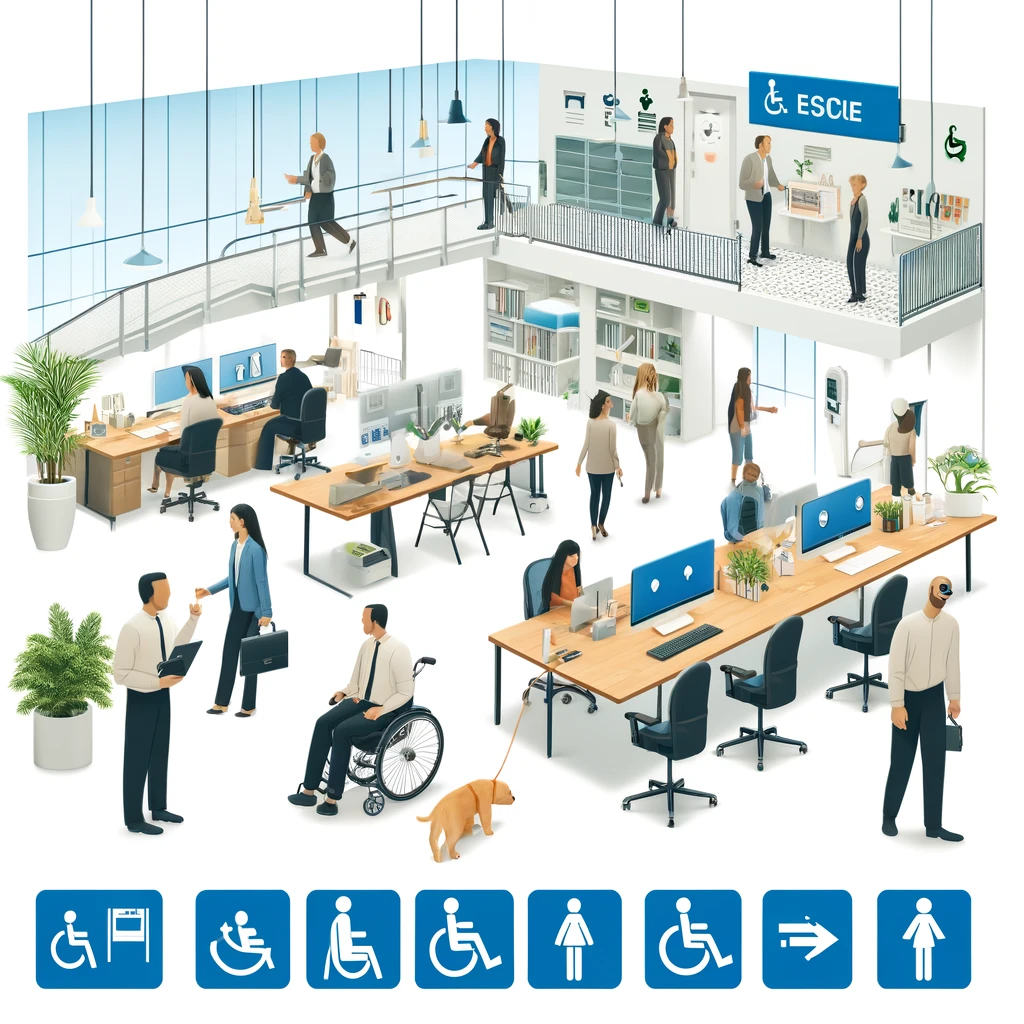
The Americans with Disabilities Act (ADA) has profoundly shaped efforts to ensure accessibility in various sectors since its enactment in 1990. Of particular importance is its impact on government buildings and public services, requiring them to be accessible to all individuals, regardless of their disability. The significance of ADA compliance in this sector cannot be overstated. Not only is it a legal necessity, but it also represents a commitment to inclusivity and equitable access to public resources. Government buildings and public services are integral to daily life, offering essential functions like civic engagement, public information, transportation, and community support. Ensuring these services comply with ADA guidelines means removing barriers that disable rather than enable, providing a level playing field for all citizens. This article delves into the intricacies of ADA compliance specifically for government buildings and public services, exploring the legal framework, specific requirements, challenges faced in implementation, and the benefits of compliance.
Understanding ADA compliance involves delving into its fundamental requirements, which cover physical and operational aspects. The law governs the construction, alteration, and modification of buildings, emphasizing structural accessibility like entrances, paths, and restrooms. Also crucial are the operational aspects, which include ensuring that programs, services, and activities provided by public entities are readily accessible to individuals with disabilities. While many private entities are required to follow similar standards, the demands on government facilities are distinct due to their public obligation. Government buildings house vital services such as courts, libraries, and municipal offices, making accessibility not just a service improvement, but a necessity. As society continues to recognize the importance of inclusivity, understanding and properly implementing ADA standards in these areas becomes crucial.
ADA Compliance: Legal Framework and Requirements
The ADA is a civil rights law intended to eliminate discrimination against people with disabilities. The Title II of the ADA pertains specifically to accessible design and is crucial for government buildings and public services. It extends protections against discrimination based on disability specifically to all services, programs, and activities provided by state and local governments. Under this title, public entities must comply with a range of accessibility standards developed to ensure their facilities and services are usable by all individuals. Adherence to these standards is monitored and enforced by the Department of Justice (DOJ) and, to some extent, by other federal offices.
Key areas addressed by ADA standards include physical access to buildings and services. For a building to be ADA compliant, physical barriers must be identified and eliminated wherever possible. This encompasses entryways without steps, wide enough doors for wheelchair passage, clearly marked parking spaces, accessible restrooms, and elevators. Significantly, the standard applied is whether a public entity’s facilities, taken as a whole, are accessible and usable by individuals with disabilities. While this might not mean retrofitting every detail, it requires substantive accessibility accommodations and modifications wherever feasible.
Another core element of ADA compliance involves communication access. This means ensuring that public entities communicate with persons with disabilities as effectively as they do with others. For example, auxiliary aids and services such as qualified interpreters, assistive listening devices, or technology must be offered when necessary to afford individuals with disabilities an equal opportunity to participate in and benefit from the entity’s programs, services, and activities.
The role of reasonable modifications is also highlighted under ADA guidelines. Public entities must make reasonable modifications in policies, practices, or procedures to avoid discrimination unless they can demonstrate that making such modifications would fundamentally alter the nature of the service, program, or activity they offer. These modifications could range from altering protocols for service animals to adjusting procedures for retrieving information during public meetings.
Challenges in Implementing ADA Compliance
Implementing ADA compliance across government buildings and public services presents numerous challenges. These can be broadly categorized into issues surrounding cost, infrastructure, complexity of regulations, and ongoing management. One of the most cited barriers is cost, as retrofitting existing structures to meet ADA standards may require significant financial resources. Buildings constructed before 1990—prior to comprehensive ADA guidelines—often require substantial modifications to meet compliance, involving substantial expenditure not only in construction but also in training and human resources.
Aside from financial constraints, governments face structural challenges, particularly in older facilities that must be extensively re-evaluated and possibly re-engineered to ensure accessibility. For instance, introducing ramps, elevators, or wider doorways can be complicated in historically significant buildings due to structural limitations or preservation regulations.
Navigating the complexity of ADA regulations is another challenge. The ADA encompasses a wide array of requirements, and each public entity may be subject to state-specific laws and additional federal standards that overlap with or differ from ADA guidelines. This intricate regulatory landscape requires thorough legal and architectural evaluations to ensure full compliance.
Furthermore, many government entities face challenges related to the ongoing management and operation of compliant services. Accessibility doesn’t stop at construction—staff must be trained adequately, and regular audits or inspections should be conducted to ensure continued compliance. Additionally, the integration of technology into public services raises new ADA compliance challenges, as digital accessibility becomes an increasing concern that requires addressing issues such as screen readers, compatibility, and online service access.
Benefits of Ensuring ADA Compliance
Despite the challenges, ensuring ADA compliance brings numerous benefits. Legally, it safeguards government entities from potential fines, lawsuits, and reputational harm resulting from non-compliance and discrimination claims. The DOJ can levy significant penalties for each instance of non-compliance, making preventive measures and proactivity economically sensible.
Beyond legal compliance, there are substantial social benefits. Ensuring accessibility promotes inclusivity, enhancing the quality of life for individuals with disabilities by providing equal access to essential services. This reinforces a commitment to human rights and social equity, creating environments that support all members of the community. Compliance with the ADA ensures that everyone has the opportunity to participate in civic life, including voting, jury duty, and other governmental and societal roles.
Government entities that comply with ADA standards often experience improved service delivery. More accessible services tend to be more efficient, streamlined, and user-friendly, benefiting not only individuals with disabilities but the public at large. This can also lead to higher customer satisfaction rates and a positive public image, reinforcing trust in government institutions.
Moreover, ADA compliance supports broader economic participation by including people otherwise marginalized from accessing employment, education, and public service opportunities. Accessibility can facilitate workforce diversity, educational access, and civic engagement, potentially leading to increased economic activity and community development.
Conclusion
In conclusion, ADA compliance is vital for government buildings and public services, ensuring that they are accessible and inclusive for all. The road to full compliance is replete with challenges, but the commitment to accessibility reflects a broader dedication to equity, respect, and civil rights. Implementing ADA standards not only mitigates legal risks and fosters social inclusion but also enhances the efficiency and reputation of public services. For government entities, it is not merely about fulfilling a legal obligation but about adhering to principles that underpin a just society. With ongoing changes in technology and demographic needs, staying informed and adaptively managing compliance will ensure that government facilities continue to serve all citizens effectively and equitably. As such, ADA compliance should be viewed not only as a legal necessity but as an opportunity to lead in accessibility and inclusivity, enhancing the fabric of society as a whole.
Ultimately, ADA compliance for government buildings and public services is an ongoing journey rather than a final destination. It requires consistent evaluation and updates to policies, physical infrastructure, and operations. By embracing these changes, public services can continue to act as beacons of accessibility and equity, ensuring that all citizens can fully participate in and benefit from the functions and resources they offer. As society evolves, so too must the commitment to creating and maintaining accessible environments that honor the diversity and capabilities of every individual. Through principled planning, thorough implementation, and a holistic understanding of ADA requirements, government entities can genuinely uphold their duty of ensuring access to all.