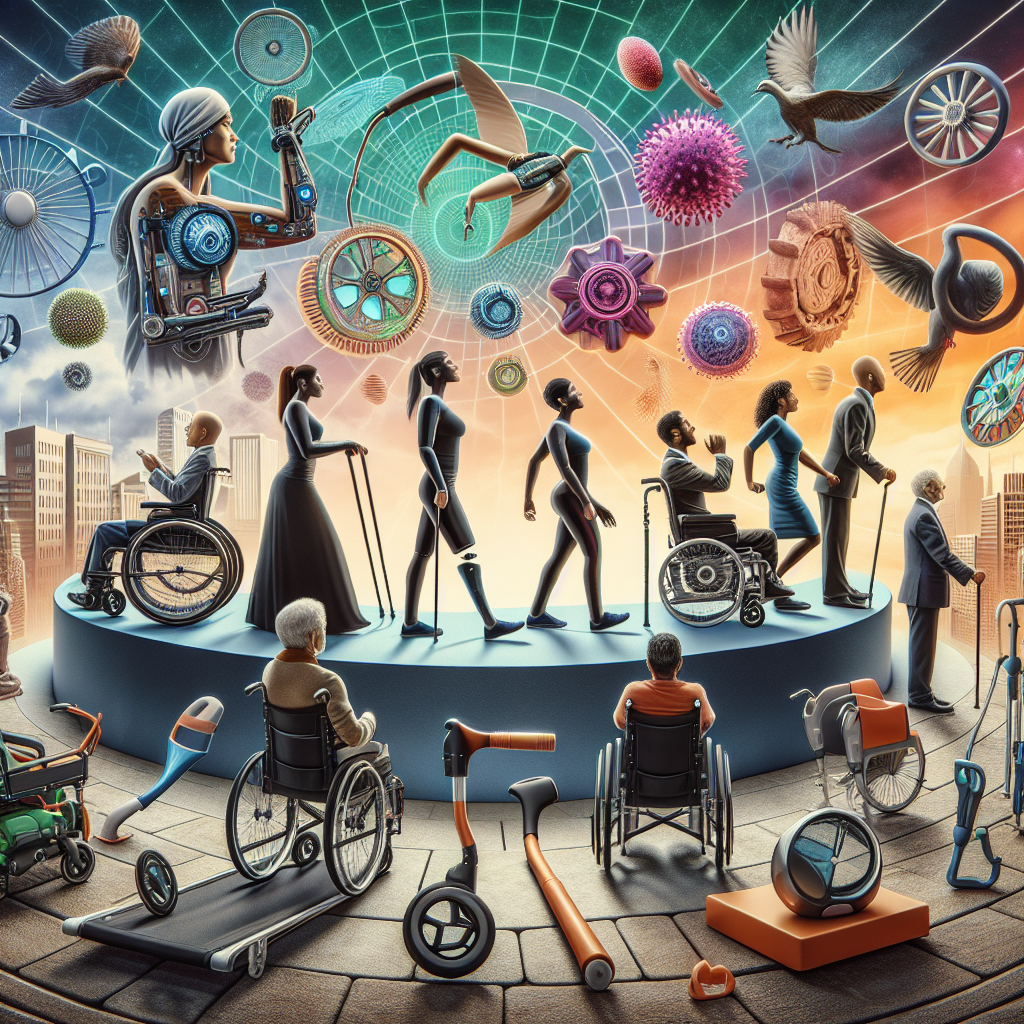
Advancing technologies are continuously reshaping how we perceive and interact with the world. In the realm of accessibility, assistive technology has become a cornerstone, providing individuals with disabilities or impairments essential tools to navigate their environment with independence and ease. Traditionally, assistive devices have included items such as hearing aids, mobility aids, and accessible software for reading and writing. However, the landscape is evolving at an unprecedented pace. Emerging innovations in assistive technology promise to revolutionize the experience for millions, propelling us towards a future where accessibility is seamlessly integrated into everyday life. By examining upcoming technologies, advancements in existing solutions, and breakthroughs in understanding user needs, we can appreciate the vast potential these technologies hold for creating an inclusive society. The purpose of this article is to explore these upcoming innovations and understand their implications on accessibility, thereby uncovering how technology is poised to close gaps while opening new opportunities for individuals with disabilities to thrive.
Emerging Technologies in Assistive Solutions
Let us delve into the world of emerging technologies that are setting new standards in assistive solutions. A few cutting-edge innovations are redefining the landscape, ensuring enhanced functionality, and delivering more personalized experiences to users.
Augmented and Virtual Reality
Augmented reality (AR) and virtual reality (VR) have primarily been associated with gaming and entertainment, but their applications in accessibility are gaining significant attention. For individuals with visual impairments, AR can assist in navigation within unfamiliar spaces by overlaying digital information onto physical environments, using only a smartphone or a specialized headset. Using sophisticated sensors and AI, these technologies can describe surroundings, guide the user through auditory cues, and even read signs or menus aloud.
Meanwhile, VR offers an immersive experience to individuals with mobility impairments. It enables them to explore environments they might not physically access, such as museums or nature trails. As VR technologies advance, developers are working on haptic feedback enhancements to provide tactile experiences in the virtual realms, potentially delivering rich, multi-sensory interactions for users with different abilities.
Artificial Intelligence and Machine Learning
AI and machine learning are spearheading numerous initiatives in assistive technology. These technologies power advanced speech recognition tools capable of understanding various accents and dialects, crucial for effective communication devices for those with speech impairments. Machine learning algorithms, trained with extensive datasets, enable software to predict and adapt to user preferences, ensuring that assistive devices cater to personalized needs.
For individuals with cognitive disabilities, AI is pivotal in creating adaptive learning platforms. These platforms personalize educational content based on user progress, improving engagement and comprehension. Moreover, AI assists in developing apps that provide real-time text descriptions for individuals with visual impairments, converting visual input into comprehensible voice narratives or Braille, depending on user preferences.
Wearable Technology
Wearable technology represents another growing field transforming assistive solutions. Smartwatches equipped with health monitoring capabilities can track vital signs, providing critical data for individuals with chronic conditions. Advances in sensor technology allow wearables to detect subtle movements, which can be interpreted to control devices or communicate messages, providing an essential tool for users with limited mobility or dexterity.
Furthermore, wearable technology empowers those with hearing impairments. Advanced wearables capable of translating spoken language into text in real-time, displayed directly on one’s wrist, are in the making. These wearables could revolutionize how individuals with hearing impairments interact in social and professional settings, granting them seamless communication assistance.
Exoskeletons and Mobility Aids
Exoskeleton technology holds great promise for enhancing mobility. Originally designed to aid in rehabilitation from injury, exoskeletons are now being tailored for everyday use to assist individuals with mobility impairments. These devices can help users regain autonomy, allowing them to complete daily activities with greater ease. Continuous research aims to enhance affordability and accessibility, while advancing features such as battery life and weight, ensuring that these devices are both practical and manageable.
Simultaneously, mobility aids like wheelchairs are experiencing technological improvements. Innovations such as wheelchairs with stair-climbing abilities and devices equipped with AI to predict tipping and adjust balance in real-time are transforming user experience, providing a greater sense of safety and independence.
Innovations in Communication Devices
Communication is a fundamental aspect of human interaction, and for individuals facing speech or language impairments, technology is offering new avenues to bridge this gap. Touch-responsive devices, which allow customizable interfaces tailored to individual abilities, enhance communication efficiency. Text-to-speech applications are advancing with AI’s aid, facilitating smoother and more natural conversations by predicting spoken disruptions and intelligently managing dialogue flow.
Additionally, brain-computer interfaces (BCIs) are surfacing as a revolutionary innovation. BCIs enable direct communication between the brain and external devices, offering the potential for those with severe disabilities to express thoughts or control devices merely through neural signals. Although in developmental phases, the prospect of BCIs marks a significant leap towards unlocking capabilities previously deemed unattainable.
Healthcare Integration and Smart Environments
The integration of assistive technology into healthcare systems and smart environments is on the rise, promising to extend the benefits beyond personal use to public spheres. Health monitoring technologies that sync with smart home systems can create environments that anticipate user needs, automating tasks to ensure safety and convenience. For instance, smart doors that automatically open upon recognizing a user can be especially beneficial for individuals using mobility aids.
Telehealth services, powered by assistive technologies, enhance healthcare accessibility, allowing individuals to attend appointments virtually. Remote patient monitoring and consultations cater to the needs of those with mobility restrictions, minimizing the need for travel without compromising healthcare quality.
Challenges and Ethical Considerations
While discussing upcoming innovations, it is also crucial to address challenges and ethical considerations intertwined with implementing these technologies. Accessibility in technology remains a hurdle, with some devices requiring high technical proficiency or presenting cost barriers, limiting widespread adoption. There is also a pressing necessity to safeguard user data, as most assistive technologies involve handling sensitive personal information.
Ethical approaches demand ensuring that innovations do not inadvertently exacerbate stigmas around disabilities. Striking a balance between innovation and cultural sensitivity, while focusing on empowering rather than labeling, is vital for fostering inclusivity.
Conclusion
The field of assistive technology is in its most dynamic phase, with an array of innovations poised to reshape environments and experiences for individuals with disabilities. From basic communication tools to sophisticated AI-powered devices, technology is unlocking doors to possibilities accessible to everyone. Pivotal advancements, such as augmented reality, AI integration, wearable technologies, and smart environments, signify significant leaps toward more inclusive societies.
However, while celebrating these innovations, there remains a responsibility to address challenges and imbue ethical perspectives into technological development. Affordability, accessibility, privacy, and cultural sensitivity are cornerstones that must be conscientiously upheld. As stakeholders—whether technologists, policymakers, or society members—collaborate to harness these innovations, it is essential to pursue a future where technological progress aligns with values of empathy and inclusion, uplifting those who require these solutions the most.
With continued dialogue, research, and innovation, the horizon is bright for achieving a world where everyone, regardless of their abilities, can participate fully and equally, empowered by the very technologies developed to assist them.
Frequently Asked Questions
1. What are some upcoming innovations in assistive technology for individuals with hearing impairments?
Assistive technology is breaking new ground when it comes to aiding individuals with hearing impairments. One of the exciting impending innovations is the advancement in hearing aids that utilize artificial intelligence (AI) to learn and adapt to the user’s unique environmental contexts and preferences. These sophisticated devices can autonomously adjust sound amplification, filter background noise in real-time, and even translate spoken language to text. Additionally, there is ongoing development of smart glasses equipped with real-time speech-to-text capabilities, which allow users to “read” conversations as they happen. Such innovations not only enhance auditory assistance but also significantly improve communication beyond traditional hearing aids, facilitating fuller participation in social and professional interactions.
2. How is assistive technology improving accessibility for individuals with mobility challenges?
For those with mobility challenges, assistive technology is ushering in a new era of enhanced independence and control. Innovative solutions include the development of robotic exoskeletons that can assist individuals in walking or provide the physical support needed for other mobility functions. These devices are becoming increasingly lightweight and adaptive, allowing for greater ease of use and personalization. Meanwhile, autonomous wheelchairs equipped with obstacle detection and avoidance technologies are improving safety and convenience for users. Additionally, advancements in smart prosthetics—integrated with sensors and AI—enable more natural movement and control, offering users a renewed level of activity and engagement with their surroundings.
3. What role does artificial intelligence play in assistive technology for accessibility?
Artificial intelligence (AI) is revolutionizing the landscape of assistive technology by powering smarter, more responsive devices and software. AI enables technology to learn user behavior, adapt to preferences, and predict needs, leading to a more personalized experience. For example, text-to-speech and speech-to-text solutions are becoming more sophisticated, allowing for real-time, seamless communication across various interfaces. AI-driven solutions are also enhancing visual recognition systems for the visually impaired, facilitating object and text recognition with remarkable accuracy. Beyond these, predictive AI can assist users in completing tasks by suggesting actions based on contextual understanding. The integration of AI within assistive technology not only augments accessibility but also significantly enhances user engagement and interaction.
4. Are there innovations in assistive software that can help with cognitive impairments?
Yes, there are numerous innovative software solutions aimed at supporting individuals with cognitive impairments. New assistive tools are harnessing the power of machine learning and AI to offer personalized support systems. These include cognitive training programs designed to enhance memory, attention, and problem-solving skills. Such software often gamifies therapeutic exercises, making them engaging and more effective. Furthermore, planners and task management applications are being developed with AI to offer intelligent reminders and organizational suggestions tailored to user needs. Some innovations also include sensory-friendly environments in digital formats, where users can interact without being overwhelmed by information. This shift towards personalized cognitive support opens up new possibilities for individuals seeking to maintain independence and enhance their quality of life.
5. How are wearable technologies transforming assistive devices for accessibility?
Wearable technologies are leading the charge in transforming assistive devices, making them more integrated and seamless with everyday life. Smartwatches and fitness trackers with health-monitoring capabilities can provide critical assistance and alerts for individuals managing chronic conditions or disabilities. For individuals with visual impairments, wearable devices equipped with cameras and sensors can offer guidance and navigation assistance, identifying hazards and providing spatial awareness through tactile feedback. Additionally, smart clothing embedded with sensors can monitor vital signs, track movements, and even expedite emergency communication when necessary. These innovations not only elicit greater independence but also integrate assistive functions into stylish, everyday attire, reducing any stigma associated with using assistive devices and promoting inclusivity across all aspects of life.