Introduction to the Case and Its Importance
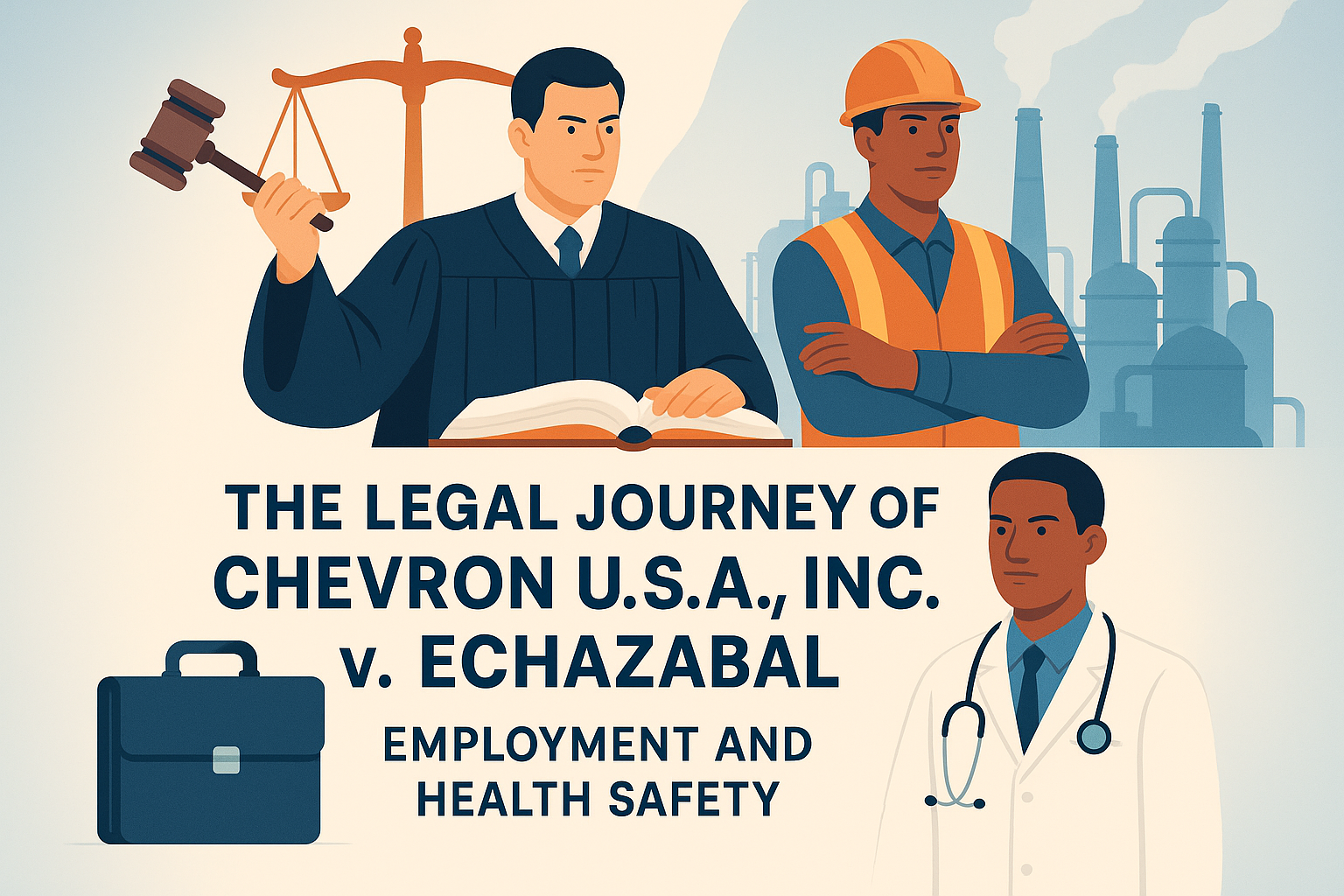
The legal case of Chevron U.S.A., Inc. v. Echazabal is a landmark decision that stands at the intersection of employment rights and health safety regulations in the workplace. This case revolves around the pivotal questions of whether an employer can lawfully refuse employment to an individual due to potential health risks, both to the individual and possibly to others. The significance of this case lies in its implications for both employee rights and employer responsibilities under the Americans with Disabilities Act (ADA).
Understanding this case is crucial because it delineates the boundaries between protecting an individual’s right to work and ensuring workplace safety. The ADA was established to prevent discrimination based on disabilities while fostering an environment where individuals with disabilities could have equal opportunities. However, the Chevron U.S.A., Inc. v. Echazabal case puts this principle to the test by discussing the extent to which an employer must accommodate a potential employee whose health condition could be exacerbated by the job itself.
As we delve into this case, we will explore several critical components, including the legal precedents set, real-world impacts, and how it affects both employers and employees today. This journey through Chevron v. Echazabal reveals the delicate balance between safeguarding individual rights and ensuring public health and safety within the workplace.
The Legal Context and Case Background
The Chevron U.S.A., Inc. v. Echazabal case arose at a time when workplace safety and disability rights were both highly prioritized on legal and social platforms. Mario Echazabal, a long-term temporary employee at a Chevron refinery, sought a permanent position. However, Chevron declined his application based on medical evaluations that indicated his liver condition, Hepatitis C, could worsen if he was exposed to the environmental conditions of the refinery, which were inherent to the job duties.
The critical issue at hand was whether Chevron’s decision constituted discrimination under the ADA, which prohibits discrimination against qualified individuals with disabilities. The ADA requires employers to provide reasonable accommodations to employees except where such accommodations would cause undue hardship. In this case, Chevron argued that hiring Echazabal could lead to a direct threat to his health and safety, a defense permitted under the ADA when the individual poses a “significant risk of substantial harm” that cannot be mitigated through reasonable accommodations.
This case worked its way through the legal system, leading to various interpretations and eventually to the U.S. Supreme Court. The conflict involved not only the legal definitions of “direct threat” and “reasonable accommodation” but also the extent of an employer’s responsibility in protecting an employee from harm, even if the employee is willing to take that risk.
Legal Analysis and Court Decisions
At the heart of the legal analysis in Chevron U.S.A., Inc. v. Echazabal was the definition of what constituted a “direct threat” under the ADA. The ADA does permit a company to deny employment based on health and safety risks, but such decisions hinge upon whether the threat is serious and whether it can be lessened by reasonable accommodations.
The Ninth Circuit Court initially ruled against Chevron, finding the company had not sufficiently justified its reliance on the direct threat defense. However, upon reaching the Supreme Court, the decision was reversed in Chevron’s favor. The high court ruled that employers could indeed reject applicants if the job would pose a significant risk to the applicant’s own health or safety. The key factor is whether the evaluation of risk is based on “reasonable medical judgment that relies on the most current medical knowledge and/or on the best available objective evidence.”
This ruling led to significant implications for ADA interpretations, making it clear that employers are not required to accept self-imposed risk by employees that could eventually lead the employees into harm’s way.
Real-world Implications and Employer Responsibilities
Following this landmark decision, employers were provided with a clearer framework regarding the permissible boundaries to protect not only the workplace but also the individuals themselves. The ruling underscored the importance of conducting thorough and objective medical assessments when determining whether a role poses a direct threat to an individual’s health.
For professionals working in human resources and legal fields, this case highlighted the necessity of continuously updating knowledge on medical conditions and related workplace implications. Employers learned the importance of documenting decisions regarding hiring and accommodations thoroughly using objective evidence and current medical advice.
The effect rippled across various industries, especially in roles involving exposure to potentially harmful environments, such as chemical plants or construction sites. Industries were forced to reassess policies on employment health checks and align them with ADA guidelines while preparing to back up their decisions with clear, documented evidence.
The case also ignited discussions on ethical considerations in employment, questioning how much responsibility an employer should bear for an employee’s personal health choices and the extent to which individuals can make informed decisions about their health risks in the workplace.
Case Outcomes and Lessons Learned
The outcome of Chevron U.S.A., Inc. v. Echazabal not only shaped legal interpretations but also ushered in a new era in understanding how ADA protections are applied within the spheres of health and safety. By affirming that employers could deny employment based on a direct threat to the employee’s own health, the ruling illustrated that employment rights must sometimes yield to health protection imperatives.
Key lessons learned include the necessity of developing comprehensive health and safety policies that respect employee rights while maintaining workplace safety. Moreover, the decision invited companies to pursue proactive approaches that minimize health risks through engineered safety changes or employee education, reducing reliance on exclusionary employment practices whenever possible.
For employees, particularly those with disabilities, the ruling highlighted the need for self-advocacy, encouraging them to seek clarity on health-related job requirements and how certain conditions might affect their job eligibility or working conditions. The case reiterated the importance of understanding one’s rights while balancing them with practical health considerations.
- Employers must evaluate “direct threat” based on objective, updated medical information.
- Decisions to deny employment based on health risks must be defensible with clear documentation.
- Employee willingness to assume health risks doesn’t absolve employer duty to ensure safety.
- Clear communication and documentation are essential in balancing workplace safety and rights.
Conclusion and Next Steps
The legal journey of Chevron U.S.A., Inc. v. Echazabal offers vital insights into employment law and health safety, illustrating the delicate balance required between allowing opportunities and ensuring protections. As the ruling continues to influence workplace policies, both employers and employees should use the lessons learned to foster environments that value both inclusion and safety.
Employers can enhance their understanding by participating in legal workshops or consulting with labor law experts to ensure compliance and to develop health-conscious employment practices. Employees, particularly those with disabilities, should familiarize themselves with their rights under the ADA and be proactive in discussions about their health capabilities and accommodations with potential and current employers.
Ultimately, while the case may legally prioritize safety over employment opportunities under specific conditions, it reminds us that fostering an environment where safety and rights co-exist harmoniously benefits society as a whole. Reading up on recent ADA amendments and similar case laws can also help all stakeholders stay ahead of developments in employment discrimination laws.