
The Americans with Disabilities Act (ADA) is without a doubt one of the most essential pieces of legislation in American history. Enacted in 1990, this landmark civil rights law aims to guarantee individuals with disabilities the same opportunities as everyone else. One crucial part of the ADA that often flies under the radar, yet significantly impacts lives, is Title IV. Title IV focuses on telecommunications and sets out to ensure that people with disabilities have equal access to telecommunications services, a critical aspect of modern life. This article delves deep into the significance of Title IV of the ADA and explores the future of accessible telecommunications.
Introduction: Understanding Title IV of the ADA
Title IV, the section of the ADA concerning telecommunications, specifically addresses the needs of people with hearing and speech disabilities. It mandates that telephone companies across the United States must provide Telecommunications Relay Services (TRS), enabling conversations between individuals with hearing or speech disabilities and those who use conventional telephones. Additionally, Title IV ensures that public service announcements made on television are fully accessible through closed captioning.
The impetus for Title IV stems from the recognition that communication is fundamental to every aspect of life, be it social, professional, or emergency situations. The inability to communicate effectively can be isolating and can hinder one’s ability to participate fully in society. By implementing Title IV, the ADA seeks to abolish these barriers, fostering an environment of inclusiveness and accessibility.
Enacted more than three decades ago, Title IV has evolved to encompass modern technologies while still maintaining its foundational goal of equal accessibility. While the initial focus was on TTY (Text Telephone), contemporary applications include Video Relay Services (VRS) and Real-time Text (RTT) among others. As technology progresses, the need for dynamic, adaptable solutions continues to grow, ensuring that no person is left behind in the digital age.
As communication technology advances rapidly, it opens new avenues for accessible services while also presenting unforeseen challenges. The future of telecommunications for people with disabilities involves a continuous process of innovation, legislation, and practical implementation. We’ll explore below how we’ve arrived at the current state of accessible telecommunications and what the future holds.
The Evolution of Relay Services
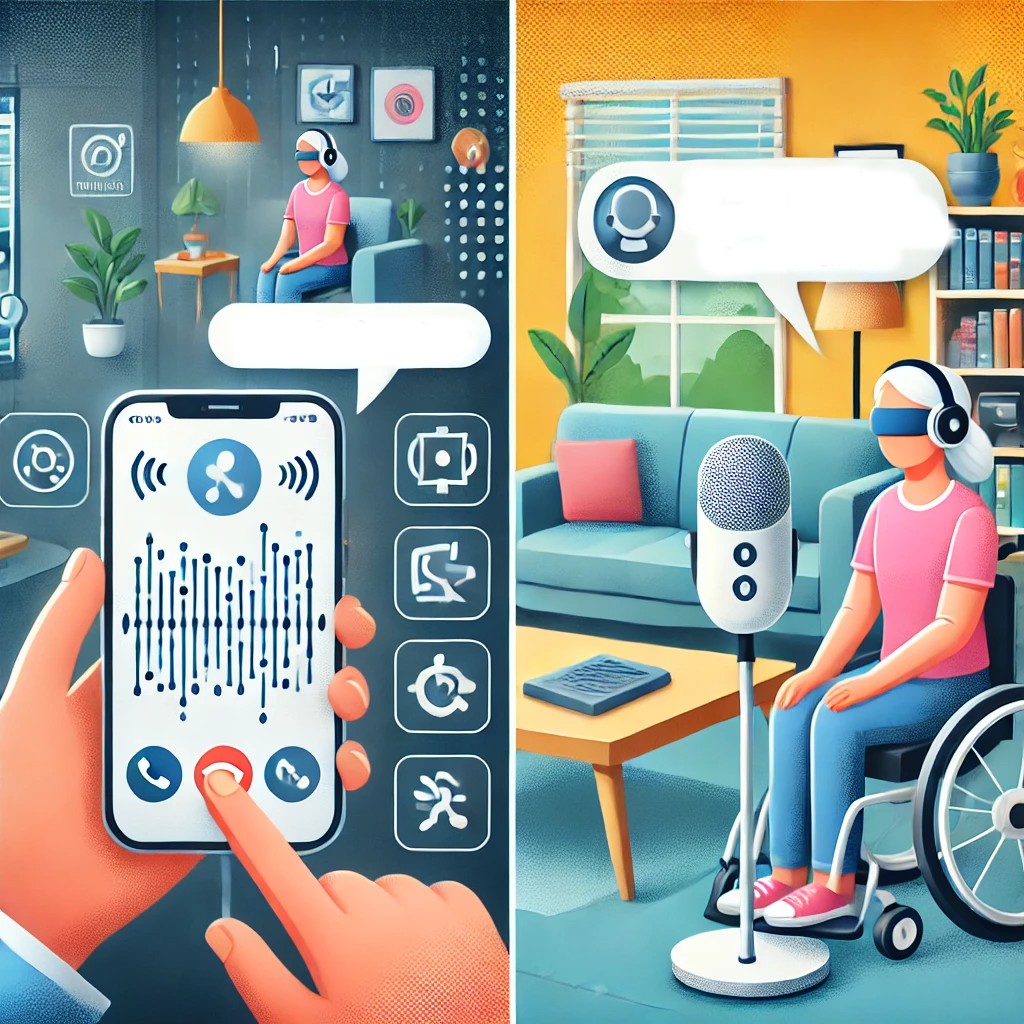
Telecommunications Relay Services (TRS) are the cornerstone of ADA Title IV. Initially, TRS allowed individuals using text telephones (TTYs) to communicate over the phone with others who use standard voice telephones. The intermediary in this form of communication was a relay operator, who would read text inputs aloud to the voice telephone user and type responses back to the TTY user.
Over the years, as technology advanced, so did relay services. Video Relay Service (VRS) emerged as a significant innovation, which fundamentally improved the quality of communication for individuals who use sign language. Instead of text, VRS uses video-based interpreters who translate conversations between spoken language and American Sign Language (ASL). This form of relay service provides a more natural and efficient method of communication for the deaf and hard of hearing community.
Another noteworthy development in TRS is the implementation of Speech-to-Speech (STS) relay services, designed for individuals with speech disabilities. In this system, specially trained relay operators assist by revoicing the speech of users, ensuring clearer and more comprehensible communication.
Moreover, the introduction of Real-time Text (RTT) has transformed text-based communication by allowing characters to be sent immediately as they are typed. This method mimics voice conversations more closely, improving the speed and fluidity of text communications. RTT is also integrated with wireless devices, expanding accessibility options significantly.
As we forge ahead, the future of relay services involves integrating cutting-edge technologies like artificial intelligence, machine learning, and advanced speech recognition. These innovations are poised to further enhance the accuracy, speed, and naturalness of relay communications.
Importance of Closed Captioning
Closed captioning forms another critical component of Title IV. This feature ensures that broadcasted public service announcements, television programs, and online videos are accessible to the deaf and hard of hearing community. Closed captions provide a textual representation of the audio content, including dialogues, sound effects, and non-speech elements like music or laughter.
Initially, closed captioning was available only on television. However, with the proliferation of online streaming services and social media platforms, there has been a significant expansion of this accessibility feature. Popular platforms like YouTube, Facebook, Netflix, and many others now offer closed captioning services, ensuring that their content is accessible to a wider audience.
Advancements in automatic speech recognition (ASR) technology have also played a pivotal role in expanding closed captioning services. ASR systems automatically generate captions by transcribing spoken words into text, significantly reducing the time and cost associated with manual captioning. Despite its progress, ASR technology still has room for improvement, especially in terms of accuracy and handling diverse accents and dialects.
The future of closed captioning looks promising with innovations aimed at improving ASR accuracy and integrating more languages and regional dialects. Furthermore, emerging technologies like augmented reality (AR) and virtual reality (VR) present new opportunities for enhancing captioning services in immersive environments, making these experiences more accessible to all users.
Telecommunications and Mobile Accessibility
The rise of mobile technology has revolutionized how we communicate, offering new possibilities for accessible telecommunications. Smartphones and tablets are equipped with a myriad of accessibility features, such as voice-over services, screen magnification, haptic feedback, and customizable interfaces. These features enhance the usability of mobile devices for individuals with various disabilities.
One significant advancement is the development of accessibility apps. These applications provide a range of services, including speech-to-text conversion, sign language translation, and communication aids for people with both hearing and speech disabilities. Apps like Ava, Google Live Transcribe, and Microsoft Translator have become essential tools in bridging communication gaps.
Moreover, mobile networks are continually evolving, with the rollout of 5G technology offering higher speeds, lower latency, and more reliable connections. This enhancement is particularly beneficial for services like Video Relay Services (VRS) and Real-time Text (RTT), ensuring seamless and uninterrupted communication.
As the integration of artificial intelligence and machine learning into mobile technology advances, we can expect even more innovative solutions for accessible telecommunications. Predictive text input, advanced voice recognition, and real-time language translation are just a few examples of how AI can enhance mobile accessibility in the future.
The ongoing collaboration between technology companies, advocacy groups, and regulatory bodies is essential in ensuring that these advancements continue to prioritize accessibility. Industry standards and compliance regulations play a crucial role in driving innovation while maintaining a focus on inclusivity.
Challenges and Opportunities Ahead
While significant progress has been made in accessible telecommunications, several challenges remain. One of the primary barriers is the affordability of accessible technology. High costs can limit access to essential devices and services for individuals with disabilities, underscoring the need for affordable solutions and subsidies.
Another challenge is the digital divide, particularly in rural and underserved areas where access to high-speed internet and advanced telecommunications services is limited. Bridging this gap is crucial to ensure that all individuals, regardless of their location, have equal access to communication services.
Legal and regulatory frameworks also need to adapt to rapidly changing technologies. Ensuring that new communication platforms and services comply with accessibility standards is an ongoing process that requires cooperation between lawmakers, technology providers, and advocacy organizations.
Despite these challenges, the future presents numerous opportunities for advancing accessible telecommunications. Emerging technologies like augmented reality (AR) and virtual reality (VR) offer the potential to create more immersive and inclusive communication experiences. For instance, AR can overlay real-time captions onto a user’s field of view, enhancing face-to-face interactions.
Additionally, the growing emphasis on universal design principles encourages the development of products and services that are inherently accessible to all users. This approach not only benefits individuals with disabilities but also improves the overall user experience for everyone.
Furthermore, increased awareness and advocacy efforts continue to drive positive change. Public campaigns, educational initiatives, and partnerships between organizations help raise awareness about the importance of accessible telecommunications and the rights of individuals with disabilities.
Conclusion: Paving the Way for the Future
ADA Title IV has been instrumental in ensuring that telecommunications are accessible to individuals with disabilities. From its inception, the Americans with Disabilities Act has made significant strides in breaking down communication barriers, thanks to the evolution of relay services, closed captioning, and mobile accessibility features.
As we move forward, the future of accessible telecommunications holds immense promise. Advances in technology, such as artificial intelligence, machine learning, augmented reality, and 5G connectivity, are set to revolutionize how we communicate and interact with the world. These innovations will further enhance the accessibility and inclusivity of telecommunications services, ensuring that no one is left behind.
However, achieving this future requires a collective effort. Collaboration between technology companies, advocacy groups, regulatory bodies, and the public is essential in driving innovation while maintaining a focus on inclusivity. Legal frameworks must adapt to keep pace with technological advancements, and affordability and accessibility need to be prioritized to bridge the digital divide.
Ultimately, the goal is to create a world where communication is barrier-free, empowering individuals with disabilities to fully participate in society. The ongoing commitment to accessibility and inclusivity is not only a legal and moral obligation but also a fundamental human right. By continuing to push the boundaries of accessible telecommunications, we can build a future where everyone can connect, communicate, and thrive.
Frequently Asked Questions
1. What is ADA Title IV and why is it important for telecommunications?
ADA Title IV is a pivotal section of the Americans with Disabilities Act, a critical piece of legislation that ensures individuals with disabilities have equal access to telecommunications. Enacted in 1990, this section specifically mandates that telecommunications services must be accessible to those with disabilities, taking into account the needs for hearing and speech impairments. The primary focus of Title IV is the implementation of relay services, which allow individuals using text telephones (TTYs) and other assistive devices to communicate via phone with those who do not have such devices. This part of the law acknowledges the fundamental right to communication for everyone, ensuring that technology does not become a barrier but rather a bridge for inclusivity, enabling millions of Americans to participate fully in activities that involve communication.
2. What are Telecommunications Relay Services (TRS) and how do they work under ADA Title IV?
Telecommunications Relay Services (TRS) are indispensable for many people with disabilities and are a central component of ADA Title IV. TRS enables individuals who are deaf, hard of hearing, deaf-blind, or have speech impairments to communicate with voice telephone users. Typically, TRS involves a third-party operator—often referred to as a communications assistant (CA)—who facilitates the call between the parties. Here’s a bit on how it works: when a TTY user wishes to make a call, they’ll dial the TRS and reach a CA. The CA then calls the receiving party and translates the typed communication into spoken words and vice-versa, allowing both parties to have a seamless and coherent conversation. As technology advances, so do the relay services. Video Relay Services (VRS), for example, allow the use of sign language through video as opposed to text, leveraging technology to provide even more accurate and personal communications solutions. The imposition of Title IV ensures such services are available and standardized, marking it an essential milestone in telecom accessibility.
3. How has technology improved accessibility in telecommunications since the enactment of ADA Title IV?
As technology has evolved, so has the landscape of telecommunications accessibility, and ADA Title IV has played a key role in driving these advancements. In the early 1990s, the main tool for accessible telecommunications was the TTY, which relied on text. Fast forward to today, and we have a wide array of innovative solutions that bolster communication access. For instance, Video Relay Services utilize video technology to allow real-time face-to-face conversations in American Sign Language (ASL), breaking down barriers that traditional text methods could not. Moreover, with the advent of the internet and smartphones, real-time text (RTT) and speech-to-text applications have become instrumental. Such innovations cater to not just the deaf and hard of hearing communities, but also those with speech disorders, thus embracing a wide spectrum of users. In short, technology has exponentially enhanced the ability of individuals with disabilities to engage in telecommunication by providing diverse and inclusive solutions over the decades.
4. What are the challenges that remain in achieving full accessibility in telecommunications?
Although substantial progress has been made, challenges remain in achieving complete accessibility in telecommunications. A significant hurdle is the consistency in the availability and quality of relay services across different states and providers. As new technologies emerge, it is crucial to ensure that they are inclusively designed from the onset. Additionally, affordability can be an obstacle; while some assistive devices and services are covered under ADA stipulations, others might not be, potentially creating a financial barrier for users. Another layer of complexity involves ensuring that accessibility features keep pace with technological advancements, like next-generation networks and 5G capabilities. One often overlooked aspect is awareness and education—ensuring that both service providers and end-users are informed about the features and services available to them. Addressing these challenges involves regulators, service providers, technologists, and advocates working cohesively to prioritize accessibility as a fundamental aspect of telecommunications innovation.
5. How does ADA Title IV impact future regulatory policies in telecommunications?
ADA Title IV set a precedent that has influenced regulatory approaches towards accessible telecommunications, both nationally and globally. It has established a legal framework within which newer policies can be formulated, continually pushing the envelope on what is considered accessible technology. Going forward, regulatory bodies like the Federal Communications Commission (FCC) are likely to build on these foundations to ensure that emerging technologies, such as internet-based communication platforms, comply with accessibility standards. The impact extends to advocacy and policy-making, encouraging more inclusive designs and robust audits of telecommunications projects to ensure they meet diverse user needs. As our communication methods continue to become more digital and interconnected, the influence of Title IV will be crucial in defining the guidelines that ensure innovative methods like artificial intelligence and machine learning in communication are accessible to everyone, reinforcing the ADA’s original mission while adapting to technological progress. Essentially, ADA Title IV acts as both a baseline and a catalyst in shaping how future technologies and policies foster an inclusive environment for communication accessibility.


